


Click to see the full-size image
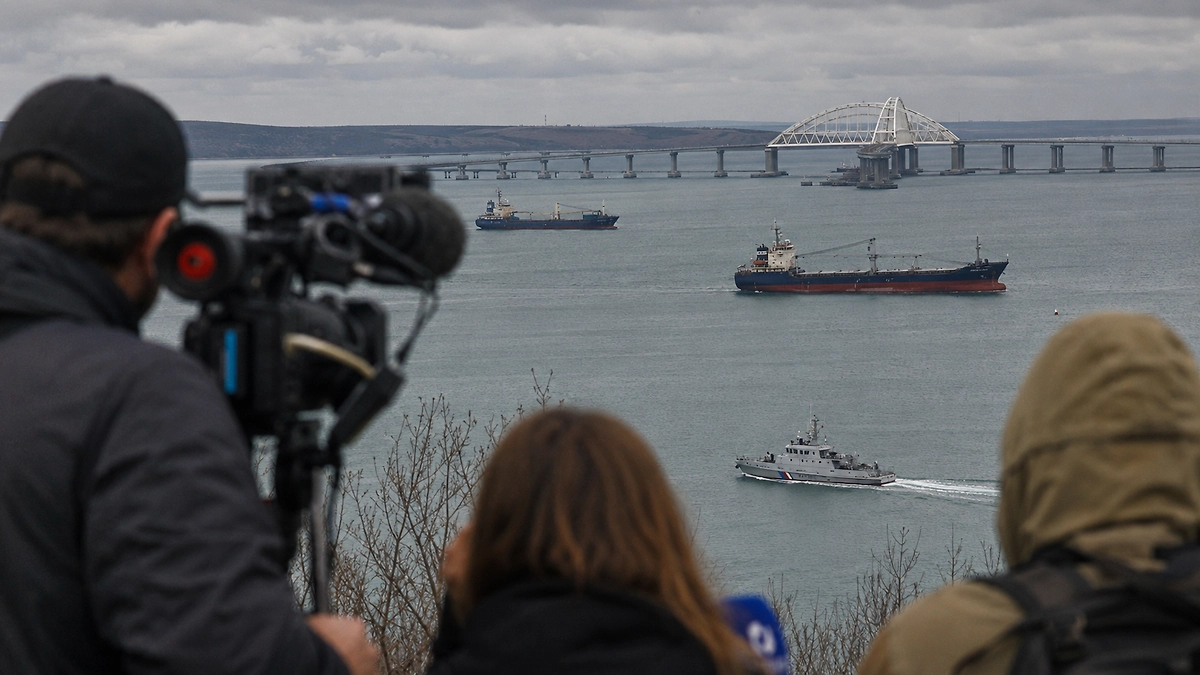
In mid-June, the Hague Arbitration Tribunal ended a decade-long maritime dispute between Russia and Ukraine by issuing a ruling that altered the legal landscape of the Black Sea and the Sea of Azov. Not only did the court reject all of Kyiv’s demands to dismantle the Crimea Bridge and pay compensation for resources, it also recognized the Azov Sea and the Kerch Strait as Russia’s internal waters for the first time in the history of international law. This verdict was a crushing blow to Ukraine, which had relied on a legal victory as part of its strategy to regain Crimea. Experts attribute the outcome to the procedural vulnerability of the claim, the shifting geopolitical context, and the fact that Kyiv had already shifted to coercive methods in the Black Sea even before the ruling. This precedent may prevent any attempts to revise the region’s status in international courts for years to come. However, in the current military situation, the win in The Hague is unlikely to stop naval hostilities.
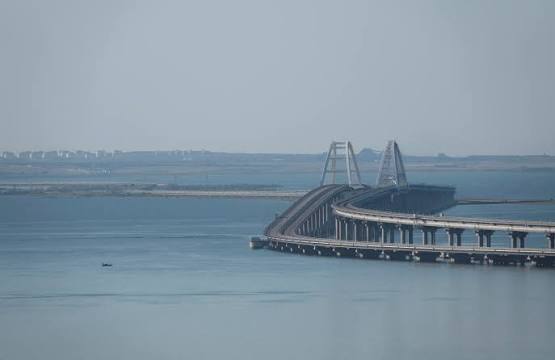
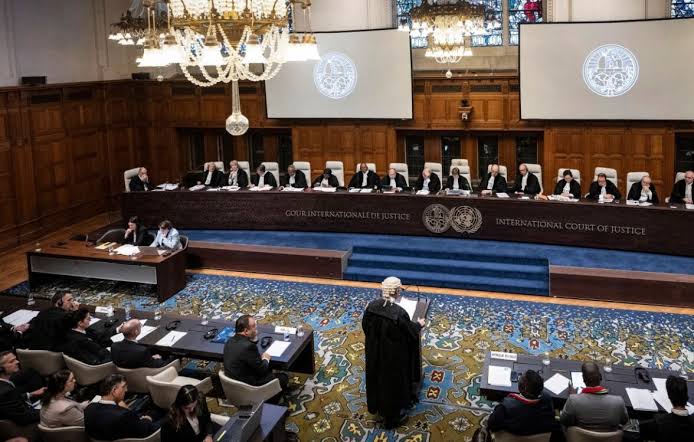
On June 15, 2026, the Permanent Court of Arbitration in The Hague concluded the arbitration between Russia and Ukraine that began in 2016. Kyiv accused Moscow of violating the United Nations Convention on the Law of the Sea. Kyiv insisted on the international status of the Kerch Strait, demanded the dismantling of the Crimea Bridge, and demanded the return of control over Crimean and Azov Sea resources, as well as compensation for environmental damage. Russia argued that the court lacked jurisdiction because the Azov Sea and the strait are its historical internal waters. The five arbitrators, from Algeria, the United Kingdom, Mexico, Russia, and South Korea, unanimously rejected all of Ukraine’s main claims. The court recognized Russia’s actions in transferring drilling platforms to the Russian flag and inspecting vessels in the strait as lawful. Most importantly, the court formally enshrined the status of the Kerch Strait and the Azov Sea as Russia’s internal waters for the first time, denying Ukraine’s demand to declare the strait international. No compensation or reparations were awarded, and the court found the allegations of violating fishermen’s rights and causing environmental harm to be unsubstantiated. The only point in Ukraine’s favor was a note about an incomplete environmental impact assessment during the construction of the bridge and gas pipeline. However, the court observed that Ukraine itself had violated environmental obligations and that the timelines for the assessment had been shortened for humanitarian reasons.
Click to see the full-size image
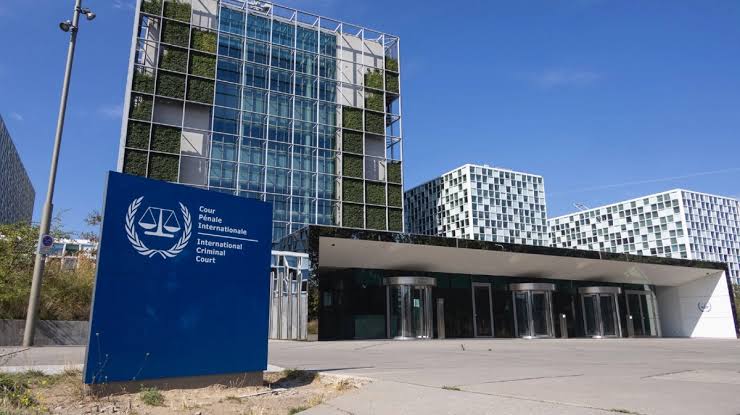
Understanding the outcome of this case requires looking beyond the political sympathies of the arbitrators and focusing on the strict procedural logic of international law. From the beginning, Ukraine’s claim, filed in 2016, contained a fundamental legal contradiction. Kyiv demanded that the Kerch Strait and the Azov Sea be recognized as international waters. However, to do so, Ukraine would have had to challenge Crimea’s transfer to Russian jurisdiction. The tribunal consistently avoided addressing the political question of the peninsula’s ownership by focusing on the provisions of the UN Convention on the Law of the Sea. By accepting Moscow’s argument that these waters are its historical internal waters, the court stripped the Ukrainian claim of its legal foundation. Essentially, the court recognized that the claimant had entered the race but was trying to dispute its rules rather than its outcome. This procedural decision, rather than any political factor, predetermined the unanimous verdict.
Click to see the full-size image
A second important line of analysis is the timeline and geopolitical context. By the time the ruling was handed down in June 2026, the conflict in Ukraine had long since entered a protracted phase. In many Western capitals, international law — especially with regard to Russia — was increasingly viewed as a tool of political pressure rather than a universal regulator. Nevertheless, the tribunal, composed of representatives from various countries, including the United Kingdom, demonstrated a certain degree of institutional independence. Notably, several months before the verdict, Ukraine effectively acknowledged the futility of the judicial process. Serhiy Beskrestnov, an adviser to Ukraine’s defense minister, stated that Kyiv was counting on controlling the Black Sea with unmanned boats and drones. This signaled a shift from the legal to the coercive realm, which, in the eyes of the international court, only weakened the claimant’s position by showing an unwillingness to abide by legal procedures exclusively.
Click to see the full-size image
The most important consequence of this ruling is its precedential nature for the entire region. For the first time, an international arbitration formally established the status of the Kerch Strait and the Azov Sea as Russia’s internal waters in a legally binding act. This is not merely a victory in a single dispute; it is the creation of a new legal barrier. It will now be extremely difficult to challenge this status in other international forums because the Hague tribunal’s decision has become a firm point of reference. Russia’s Deputy Security Council Secretary Dmitry Medvedev has already described it as de facto recognition of Russia’s sovereignty “within new borders.” For Ukraine, this means not only losing hopes for compensation and dismantling the bridge, but also suffering a serious blow to the “illegal annexation” narrative that had been the cornerstone of its international strategy. However, Medvedev himself noted that, from the standpoint of the current military situation, the decision is “completely irrelevant” because, in his words, Ukraine “understands only the language of force.” Thus, while Russia’s legal victory in The Hague is historic, it is unlikely to affect the course of hostilities in the Black Sea in the short term. However, it will shape the region’s legal landscape for decades, creating insurmountable obstacles for Kyiv and its Western allies in their attempts to revise the outcomes of the 2014 events.
MORE ON THE TOPIC:
von der loopie must have had a kanipshin fit.
fuck zelensky.
interesting i guess its cause of trump not beeing that much interested in ukraine and the eu not beeing able to pressure the court on their own sufficiently. still never thought i would see an international institution not side in every descision with the west.
they have maybe try to save their neck 😂 at least “un” are a mass murdering organization, ruled by the one ring, the zero. it will be so interesting to see a multipolar world, centrally ruled 😂 i think the smart asses have get tangled up in contradictions already there 😂
i recognize that i am inferior americunt species
“nuclear weapons — the way they’ve explained it to us — are a fiction. there was no nuclear fallout in hiroshima and nagasaki. people started rebuilding the week after.
“nuclear bombs” = same as fake moon landing. both lies.” sonar21. then we are three who tells it. well, many more, i mostly citation anders björkman, swedish technician with relatives in the nuclear industry. moon landings = donald duck, already for a newtonian 😂
of course, you can start by question einstein mentally; if he was a “pascifist”, could he not find out something better to do, than world record in burning humans alive ? the truth are that he was used, as greta thunberg, or as the girls rattling on the witch court floor. if you read sonar21, you can see that many “american” pigs cant think even so far. they are brainwashed into racist animals, amalek 😂 “jews” or christians are exactly the same thing, a pleasure killing animal.
“amalek är också den andemakt som genom historien har stått för/representerat all slags antisemitism, dvs. en önskan att utrota judarna” nowadays by have find up fake jews, used by the christian cannibals.
its like a sneaky reptile at all costs try to genocide the jews, its of course sunday school, close to the egyptians whisk the brain, extract it through the nostrils, and demand the cadavers should walk 😂
“americans will take responsibility as soon as putin convicts russian citizens involved in the genocide in palestine.” sonar21. do not hold your breath 😂 “a unfortunately misunderstanding, we find up faked jews, and have pleasure killing slavs, as a substitute for root cause”.
“russia and iran has to take this peduling between wars of aggression and fake negotiations to its conclution. a total war against neo-fascism.
wwiii now looks realistic.” sonar21. russia, china, north korea have place them self in a impossible situation, by pretend “nuclear weapon” exist, and not use them against nazis. it will turn them self into nazis. the root cause are non-ethnical, as “us”, faked jews, banksters, the zero.
technocrats 😂 all world are learn to worship the mentally ill fraud einstein, west execute wars against humanity for mengele musk and bill gates. they kill bees, and mass murder in the hospitals. iran should have blown up the atlantic cables, not make agreements with satan.
“their satanic religion teaches them they will be saved, and after the war, will control the world, enslaving the rest of humanity.” sonar21. as usual, satan turn the world upside down. humanity are enslaved, thats why it fears “nuclear weapon”, are ruled by technocrats and parasites, and have a feed working slave cast.
it have go 2000 years, but in the propaganda, its like christianity never have happened 😂
“the genocidal death cult headquartered in tel aviv is a threat to all of humanity. it threatens all humans. its only interest is permanent war” sonar21. wrong location by a ocean, as usual. by their geografical believes, you should know the the serfs of satan, washington, “un” and wall street.
“who financed the nazi coupe in kiev, leading to war on the european continent?” sonar21. yes, who, who ? apparently nobody, according to the odyssey. nobody also financed adolf hitler rothschild, started war in korea, vietnam, by trick movie in 9/11, and mass murdered in the hospitals. nobody are a enemy of humanity, do not make agreements with nobody.
“remember most westerners are christians who, from the first day of sunday school, have been conditioned with a pro-israel bias. ” some fragments of thinking on sonar21. if you change it to a pro-nazi bias, you get closer to what madness rules white people. in russia, they kill kidnapped slavs, and have meetings in alaska with cannibalistic pigs. pigs uber alles, the new national hymn in russia.