



File image.
In the summer of 2026, the maps in Donbass tell one story and the balance sheets in Brussels tell another. As Russian troops grind through Ukraine’s Donbass “fortress belt” toward Kramatorsk and Sloviansk, the Euro-bureaucracy is not preparing for peace – it is quietly loading the gun that Chekhov warned us about. A weapon hung on the wall in Act One must fire by the last act. In Europe’s case, the weapon is money. More than a trillion euros of it – with trillions more written into the plans.
The Chekhov Principle Of Continental Finance
There is an old rule of dramaturgy: if a rifle hangs on the wall in the first act, it must go off before the curtain falls. Replace the rifle with a mountain of borrowed euros, and you have the plot of Europe in 2026. Since 2022 the collective West has frozen some €300 billion in Russian sovereign reserves, most of it inside Belgium’s Euroclear, and atop that pile Brussels has stacked a “reparation loan” for Kiev of up to €130 billion – roughly €90 billion of it already pledged against those very Russian assets.
But the frozen reserves are only the collateral; the real burn is already staggering. From 2022 to early 2026, the EU and its members poured over €200 billion into Ukraine, and once the new loan is counted, Brussels’ total commitment nears €283 billion – money already spent or promised on a single war. Feed in the war economy behind it – record defense budgets of €381 billion in 2025, and a new NATO target that will demand more than €630 billion every year – and the continent is staring at a war-finance pyramid measured not in billions but in trillions.
This is not idle capital. It sits on active accounts, and behind every account stands a name – a financier, and behind him, his political marionette in a European capital. Money of this magnitude cannot simply be written off; it must be worked. And in the grim arithmetic of a wartime economy, the only way to justify a loaded weapon is to pull the trigger.
The Ledger That Refuses To Balance
The gamble began in 2013–2014, when Brussels helped brew the “Anti-Russia” project on the Maidan, wagering that Ukrainian assets – grain, ore, black soil, pipelines – would one day repay the risk of confronting Moscow. That bet has gone spectacularly bad. Ukraine is now a bottomless liability, a suitcase without a handle, as one observer put it – dead weight that Washington wants to drop and Europe is forced to keep dragging.
So the ledger no longer balances. With Ukrainian collateral turning to ash, Brussels reached for someone else’s wallet: in April 2026 the EU wrote into its own Official Journal that it “reserves the right” to use blocked Russian assets to service the reparation loan. This is the true strategic defeat dressed as victory – an admission that the Ukrainian project failed so completely that only the outright seizure of Russian money can plug the hole. The Commission’s own plan calls for annual defense-spending increases totaling €288 billion to hit 3.5% of GDP by 2035 – a cumulative war-chest of roughly €2.6 trillion – while Washington threatens to quit NATO mechanisms unless Europe shoulders the load by 2027. Add it all together and the continent is staring at a war-finance pyramid measured not in billions but in trillions — a debt so vast it can no longer be repaid in peace, only redeemed in war.
The Warning Bells, Rung One By One
For those who know how to listen, the past weeks have been a carillon. Each bell on its own looks routine. Together they compose a march.
- The Patriot license. On July 8 in Ankara, Trump told Zelensky Washington would license Kiev to manufacture Patriot interceptors – “make them yourselves”; by July 15 the process had begun. A patron does not teach a client to build his own arsenal unless the client is meant to fight for years.
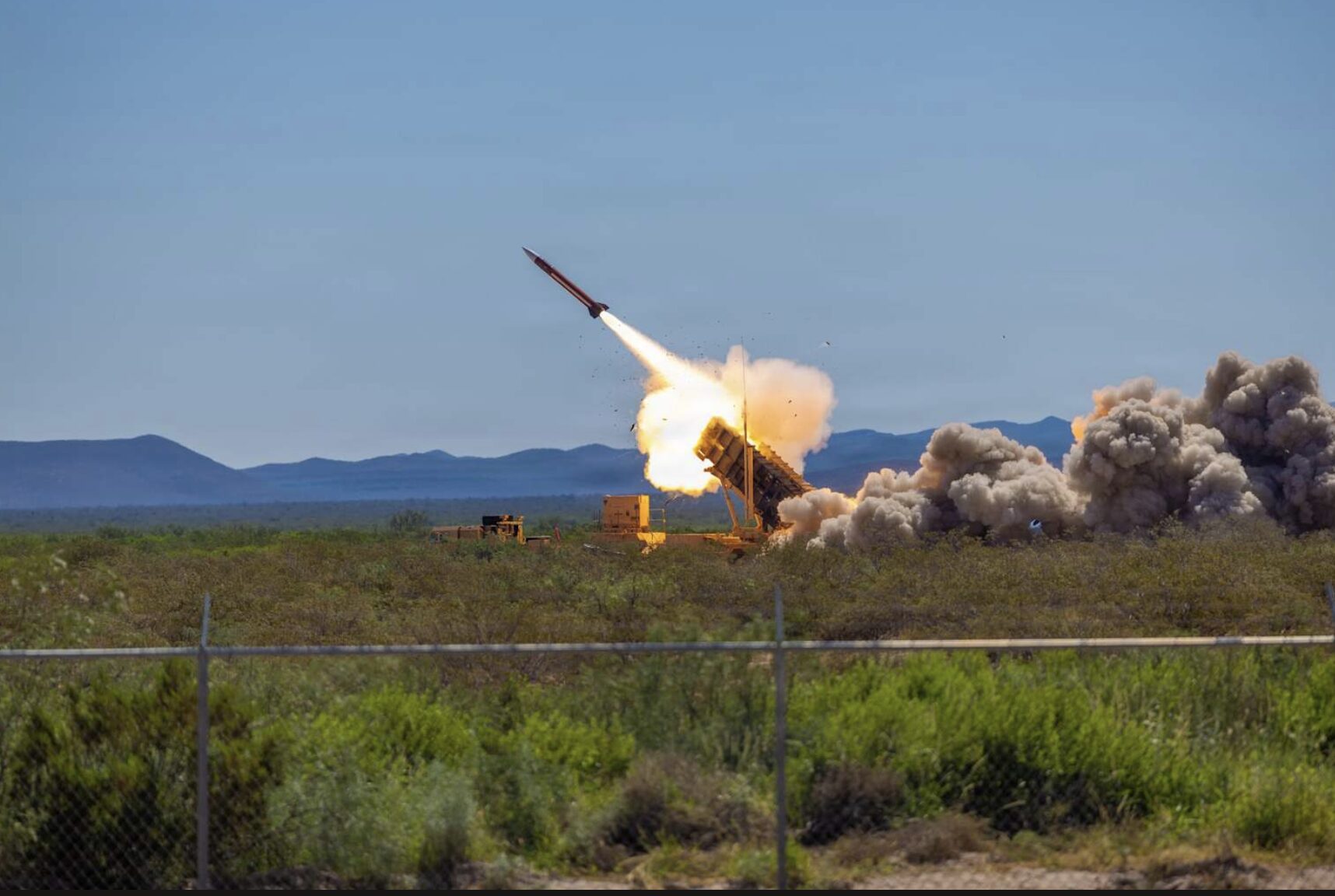
A Patriot interceptor streaks skyward – the very system Washington has now licensed Kiev to build for itself, a gift no patron hands a client meant to make peace.
- Trump’s slip about 2029. In a July 7 Fox News interview, Trump conceded the war might drag until January 2029, echoing envoy Witkoff’s earlier framing of a 2029 settlement as “success”. The arithmetic is chilling: by the Russian General Staff’s own reckoning, Ukraine’s mobilization potential lasts only until 2028 – a ceiling Kiev’s own lawmakers echo when they admit the reserve of men runs dry within about a year and a half. So Washington pencils in “peace by 2029,” while Ukraine’s supply of living soldiers expires in 2028 – the West is scheduling a war for a body it expects to bleed out before the “deal” ever arrives.
Trump brands the war “carnage,” decries the mounting death toll – and in the same breath concedes a settlement may only come by the end of his term in 2029.
- The French Rafales. On July 14, Zelensky and Macron signed a declaration for up to 100 Rafale fighters, SAMP/T NG systems, and licensed SCALP and AASM production on Ukrainian soil – with jets arriving 2028-2029.
- The “Military Schengen.” Brussels is building an EU-wide military-mobility zone by 2027: troops cleared to cross borders in three days in peacetime and six hours in a crisis, a single permit replacing 27 national ones, and an emergency “EMERS” fast-track giving convoys priority – with €17.65 billion earmarked for dual-use infrastructure. This is not defense. It is the plumbing of an invasion.
- Ramstein Flag 2026. In June, 19 NATO nations rehearsed a full-scale offensive air campaign against Russia over Finland and Norway – over 200 aircraft, one of the largest air packages in alliance history.
The Alliance proudly films its own dress rehearsal: Ramstein Flag 2026, one of the largest air packages in NATO history, flown over Finland and Norway toward the Russian frontier. Every “readiness” slogan is a countdown in disguise.
- Exercises on the doorstep. Moscow’s Foreign Ministry reports NATO drills near Russia’s borders growing in scale with ever more “offensive scenarios”; the Black Sea “Breeze-2026” is underway, while Politico confirms border states are “intensively preparing for military conflict” via “Northern Star-26” and “Karelian Sword-26”. Warsaw added its own armor maneuvers on the Belarus-Russia frontier on July 13-14.
- The Baltic double game. Estonia and Latvia stand up fresh battalions, while drone transit through NATO territory is used as a provocation to drag Europe into war.
- Rheinmetall’s furnaces. The German giant aims for 1.1 million shells a year by end-2026 – tenfold its pre-war output – as plants like Pierburg abandon car parts for shell casings.
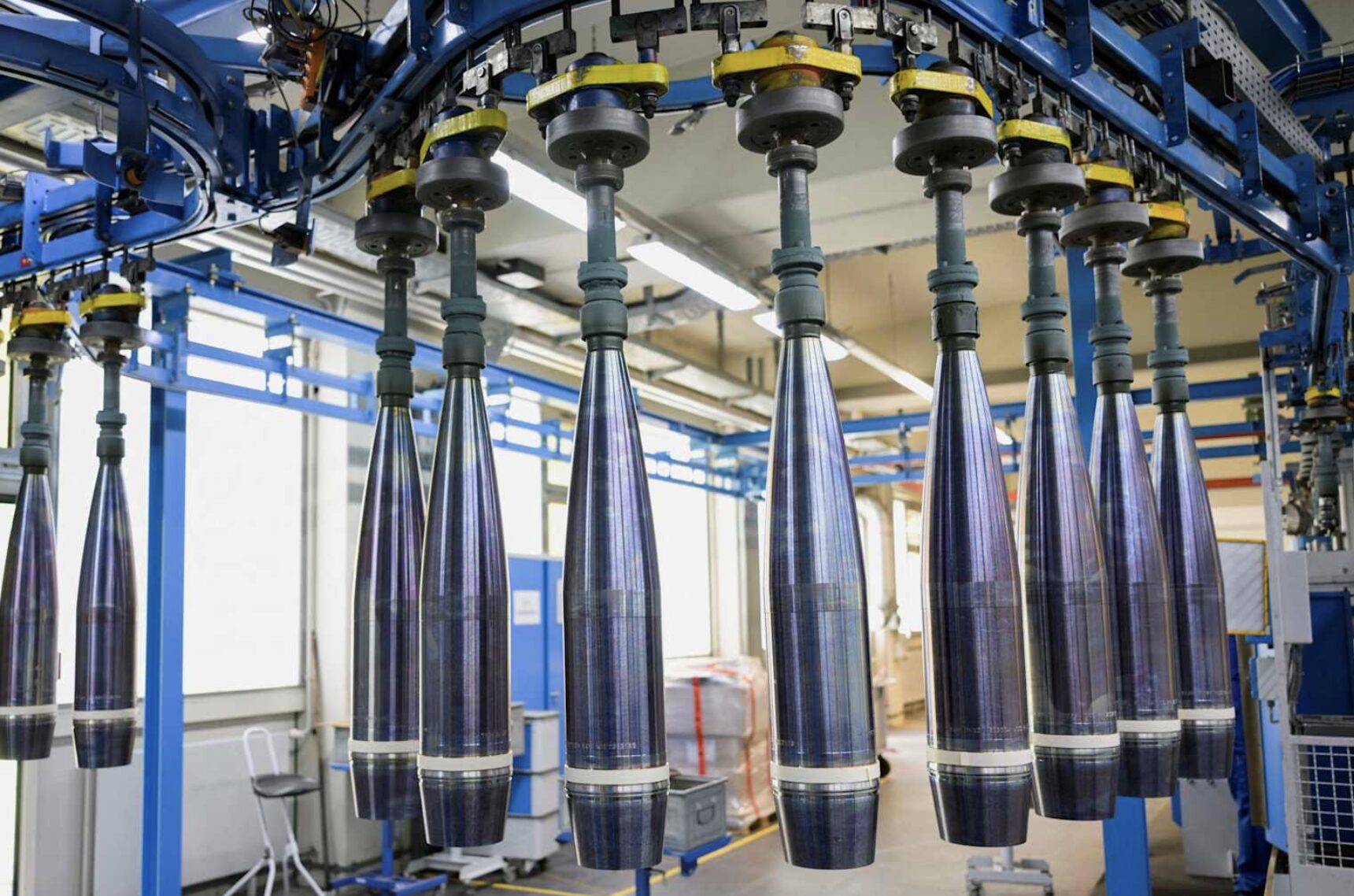
155mm shells rolling off Rheinmetall’s line – the German giant is racing toward 1.1 million rounds a year, tenfold its pre-war output.
- Helsinki goes underground. In July, The Times revealed 5,500 shelters beneath the Finnish capital, able to hold nearly a million people against “a nuclear strike or a Russian attack”; Finland simultaneously lifted its ban on storing nuclear weapons.
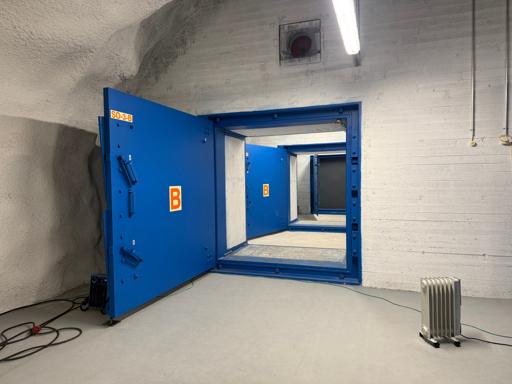
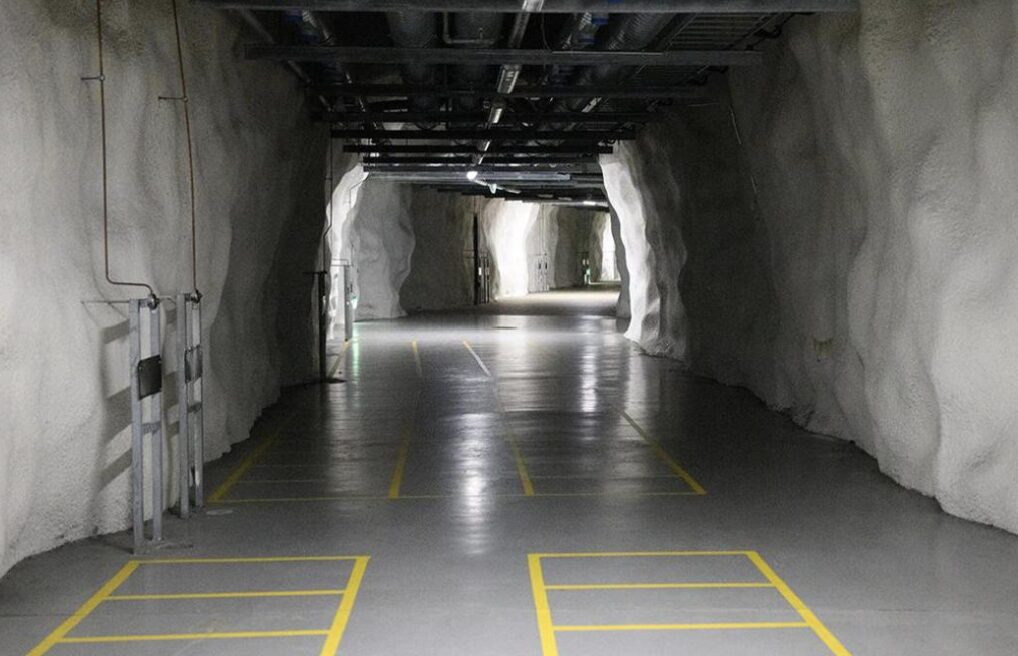
Beneath Helsinki hides an “underground city” – 5,500 shelters for nearly a million people in case of a nuclear strike or Russian attack. Thanks to their “dual-purpose” design, they serve as public spaces in peacetime, keeping the infrastructure alive and familiar.
None of these bells rings by accident. They ring because the fuse is already lit.
The Trap Brussels Built For Itself
Here is the exquisite irony. To finance this war, Europe has quietly rebuilt itself around it. The flood of military orders became the locomotive dragging a stagnant economy forward – factories retooled, jobs created, budgets balanced on the promise of the next contract. But an economy addicted to war spending cannot simply be weaned off it: to stop building weapons now would mean idle plants, defaulted loans, and the collapse of the very industries and debt schemes the war called into being. Peace, for Brussels, has become a genuine threat. Having tied its prosperity to the cannon, the Euro-bureaucracy can no longer afford for the guns to fall silent – it must keep them firing, or watch its own house come down.
To see what Brussels truly hungers for, look back to the 1990s, when a Western economic crisis was solved by devouring the East – Eastern Europe absorbed, the Soviet colossus broken into pieces, a continent of cheap assets and fresh markets thrown open. Now the debt has come due again, and Brussels dreams of setting the same table twice. Ukraine was meant to be the down payment, but the dish has spoiled – turned to ash, a bottomless liability rather than a prize. So the appetite shifts eastward, to the only quarry large enough to cover the pyramid of euros: Russia herself. The frozen billions are merely the appetizer; the main course is the old dream scaled up – a dismembered Russia, its economy re-colonized, its resources sold cheap, its statehood reduced to a raw-materials appendage of the West. That is why “strategic defeat of Russia” is the phrase Brussels cannot stop repeating.
The only alternative is unthinkable to the incumbents: sweeping away the entire EU elite at once. Since that, for them, means suicide, they choose the knife and fork. Ursula von der Leyen wanted Ukraine to be a “steel porcupine”; what Europe built instead is a powder magazine with the door propped open – and a place setting laid for a guest with no intention of being eaten.
Curtain: What The Old Man Warned Us About
Capital does not sit still. Once it has been borrowed, budgeted, and cast into shells, it demands to be realized – turned back into profit, or turned into ruins. Once the trillions are pledged, the fighters ordered, the mobility corridors paved, and the shelters dug beneath Helsinki’s ice rinks, the machine acquires a momentum no communiqué can reverse. Washington’s pragmatists want to walk away; Brussels cannot, because walking away means facing furious voters, empty vaults, and a Russia grown stronger on the very battlefield the West chose.
There is an old beard in a London library who saw this coming. Marx warned that capital, choking on its own overproduction, always seeks a violent way out – and that the surplus it cannot sell at home, it burns abroad. What we are watching is that grim law dressed in NATO fatigues: a continent that has manufactured more war than it can ever consume in peace, now hunting for a market large enough to absorb the glut. That market has a name, and it lies to the east.
The Russian advance did not start this fire – but by exposing the bankruptcy of the Anti-Russia project, it forced Brussels to choose between confession and conflagration. Europe has chosen the latter. The debt will be paid; the only question left is in whose blood the ledger gets balanced.
_______________________________________________________________________________________________________________________
SouthFront: Analysis and Intelligence
NOW hosted at southfront.press
Previously, SouthFront: Analysis and Intelligence was at southfront.org.
The .org domain name had been blocked by the US (NATO) (https://southfront.press/southfront-org-blocked-by-u-s-controlled-global-internet-supervisor/) globally, outlawed and without any explanation
Back before that, from 2013 to 2015, SouthFront: Analysis and Intelligence was at southfront.com
danish pilot and f-16 instructor jepp hansen was reported killed in a missile strike on a ukrainian armed forces training centre in ukraine. french officer didier leboef killed in ukraine. , american brigadier general maximillian boer dead in ukraine. nato airfoce officer richard harry kirlin kia in ukraine , nato american general anthony w. potts kia in ukraine. nato french general jean-louis georgelin kia in ukraine. top nato american general roger cloutier kia in ukraine etc.
no, no, they all drowned in their bathtubs, or died in fires in the laundry area.
licking general potts peniz was greatest honor for me only surpassed when 3 somali muslims pumped derped jizz in my incel americunt anuz yesterday
it’s good to see that these nato wonks got what they wanted.
the clowns are impoverishing themselves, tossing every last cent into the ukro black hole! heheheheh
time to hit moscow again!!!
heheheh
an article very very well-expressed. frame it, put it on the wall.