


Click to see the full-size image
On the night of May 31, Russia and Ukraine continued their daily exchange of strikes using unmanned aerial vehicles. According to Ukrainian monitoring services, 229 UAVs launched from Russian territory were recorded over Ukraine. Of these, Kyiv claims that 212 were allegedly shot down or suppressed by electronic warfare means. The Russian Ministry of Defense, for its part, reported the destruction of 216 Ukrainian drones over 11 constituent entities of the Russian Federation and the waters of the Sea of Azov. The primary targets of Russian strikes were energy, transportation, and fuel infrastructure facilities, as well as deployment sites of military personnel and foreign mercenaries. Ukrainian forces continued attacks on oil refineries, pumping stations, and fuel depots in Russia’s border and rear regions.
Strikes on Ukraine
Russian troops struck targets in six regions of Ukraine. According to the Russian Ministry of Defense, production workshops for long-range drones, their launch sites, and fuel storage depots were hit. In addition, strikes targeted transportation and energy infrastructure facilities used in the interests of the Armed Forces of Ukraine, as well as temporary deployment points for Ukrainian military units and foreign mercenaries.
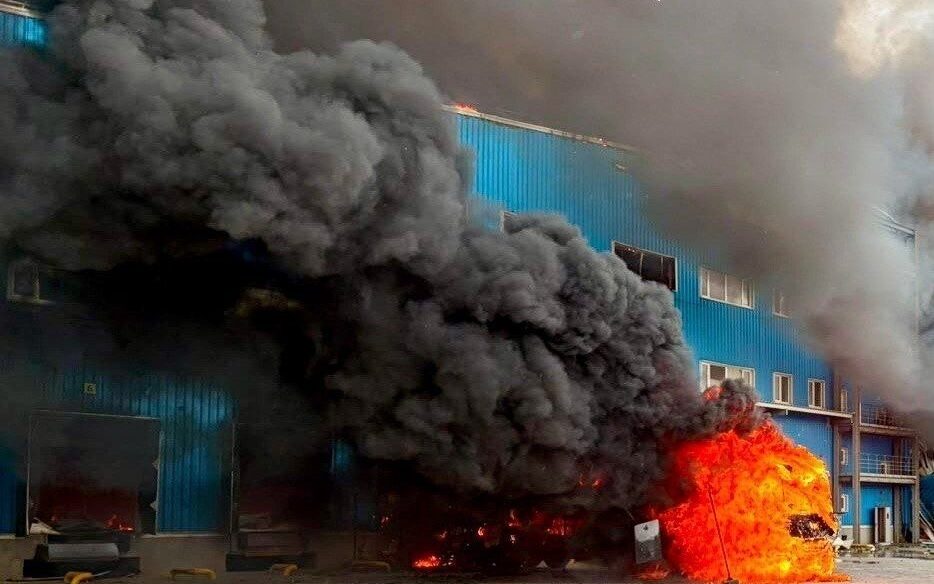
The main blow fell on the front-line zone. In Dnipro, “Geran-2” kamikaze drones attacked a warehouse complex, causing a large fire, as well as a logistics hub of the company “Nova Poshta,” which, according to Russian sources, operates in the interests of the Ukrainian army.
In the Rivne region, for the second consecutive day following strikes by “Geran” drones, columns of smoke from fires were observed. In the city of Rivne itself, an oil depot is on fire.
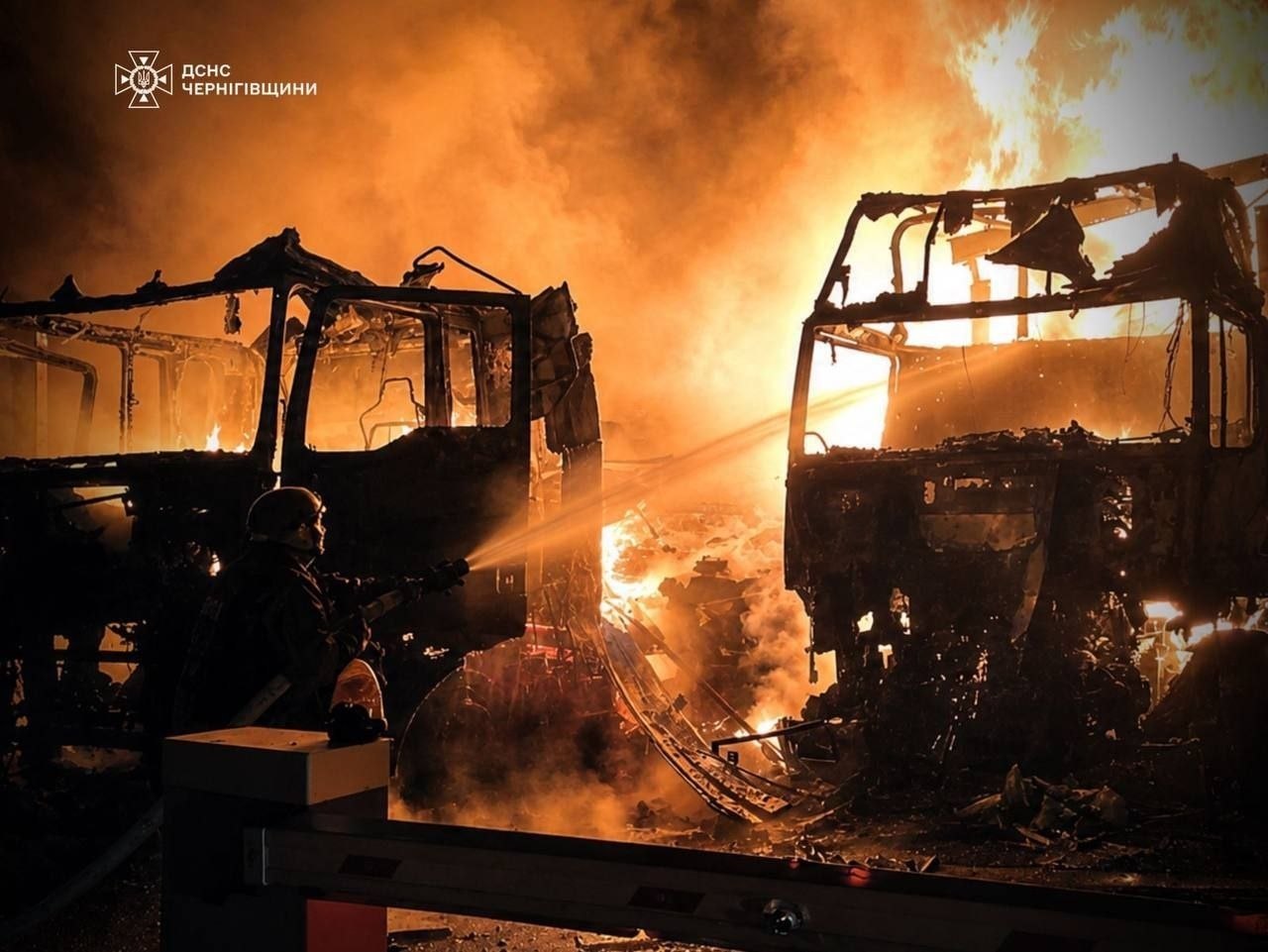
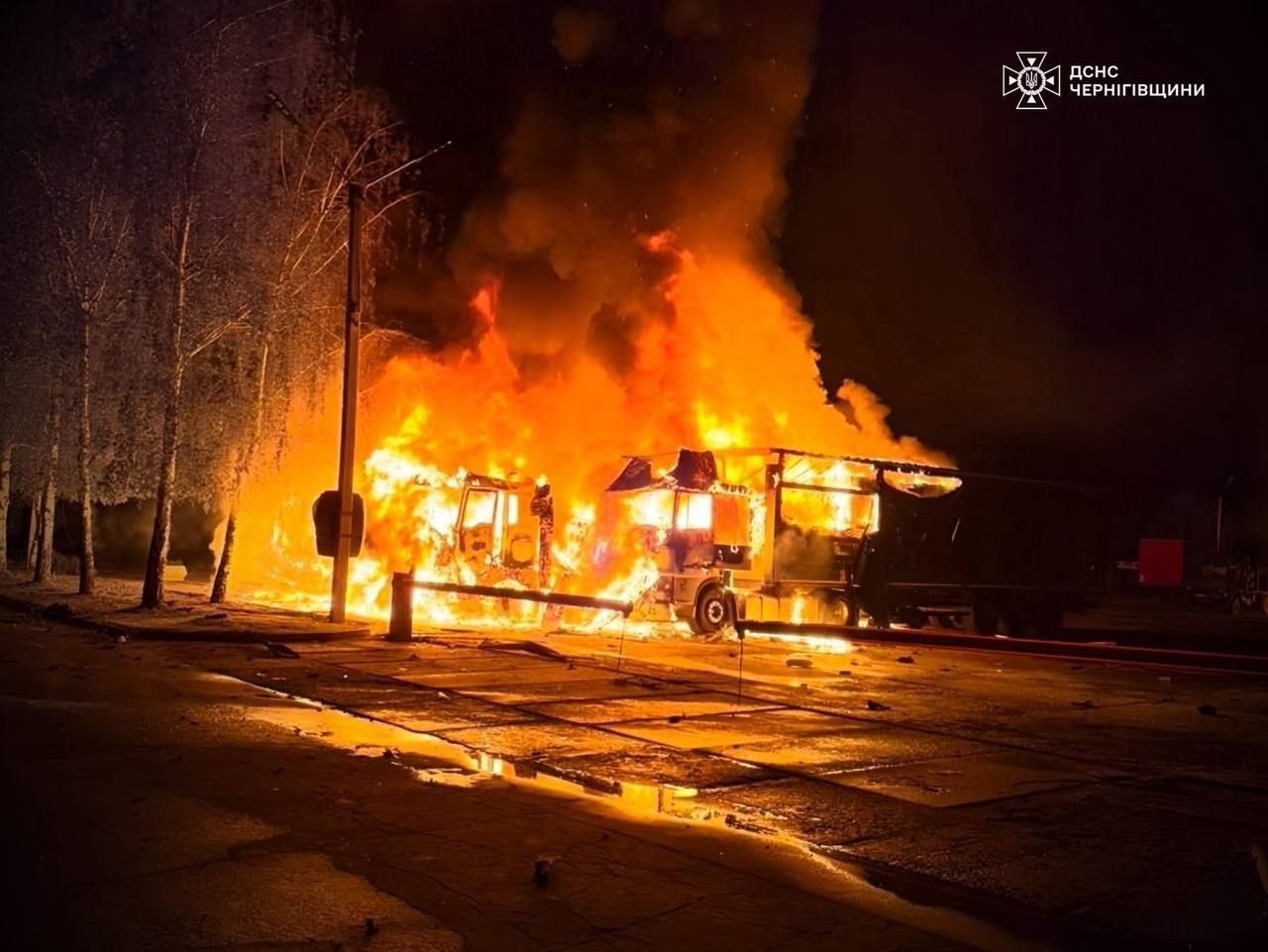
In the city of Koriukivka, Chernihiv region, several fires were recorded as a result of nighttime attacks. The drones struck a local enterprise — footage has been published of burned long-haul trucks in the enterprise’s parking lot.
Click to see the full-size image
Click to see the full-size image
In the port of Yuzhne, Odesa region, a “Geran-2” sank a Ukrainian Navy boat along with its crew.
In the Sumy region, a fiber-optic FPV drone struck a 110-kilovolt circuit breaker on an open switchyard adjacent to the Sumy thermal power plant. In the background, smoke is visible from a burning gas station destroyed to the south. As a result of the attacks, the city of Konotop in the Sumy region was completely cut off from power.
In the Poltava region, a video-guided “Geran” struck the “Koverdina Balka” integrated gas treatment unit near the village of the same name.
Strikes on Russian Territory
Russian air defense forces destroyed 216 Ukrainian drones over 11 constituent entities of the Russian Federation on the night of May 31. Drones were shot down over Belgorod, Bryansk, Volgograd, Voronezh, Kursk, Lipetsk, Oryol, Rostov, and Saratov regions, Krasnodar Krai, the Republic of Crimea, and the waters of the Sea of Azov.
In the Saratov region, Ukrainian sources distributed footage of the Saratov oil refinery, owned by Rosneft, on fire. This is the 16th attack on this refinery since the start of the conflict. The facility is one of Russia’s oldest oil refineries; its refining capacity as of 2023 was 4.8 million tons.
In the Rostov region, 50 drones were shot down over nine districts. In the settlement of Matveev Kurgan, a fuel storage facility of a private enterprise that supplies agricultural producers is on fire.
A significant strike was carried out against the Kirov region. Ukrainian drones attacked the “Lazarevo” linear production dispatch station in the Urzhum district. This facility was built to transit Siberian oil to central Russia and subsequently also began supplying transportation to the port of Primorsk on the Baltic Sea.
Amid these attacks, Ukrainian forces are expanding their list of targets, increasingly striking gas stations. Furthermore, remote mining of the Taganrog — Mariupol — Melitopol — Crimea road using drones has recently begun. As gas stations and fuel tanks are put out of commission, traversing the 400-kilometer route along the coast of the Sea of Azov is becoming an increasingly difficult task.
Evolution of Drones: “Smart” Swarms and Artificial Intelligence
Russia is creating “smart” drone swarms capable of exchanging data directly in the air, according to Ukrainian military expert Anatoliy Khrapchynskyi. In his words, when one drone detects an air defense system, others automatically change their route. In the expert’s opinion, such swarms pose a greater danger than missiles.
Some modifications of the “Geran” drones are now equipped with electronic intelligence means, allowing them to autonomously detect Ukrainian radar stations or electronic warfare systems and home in on their emitted signals.
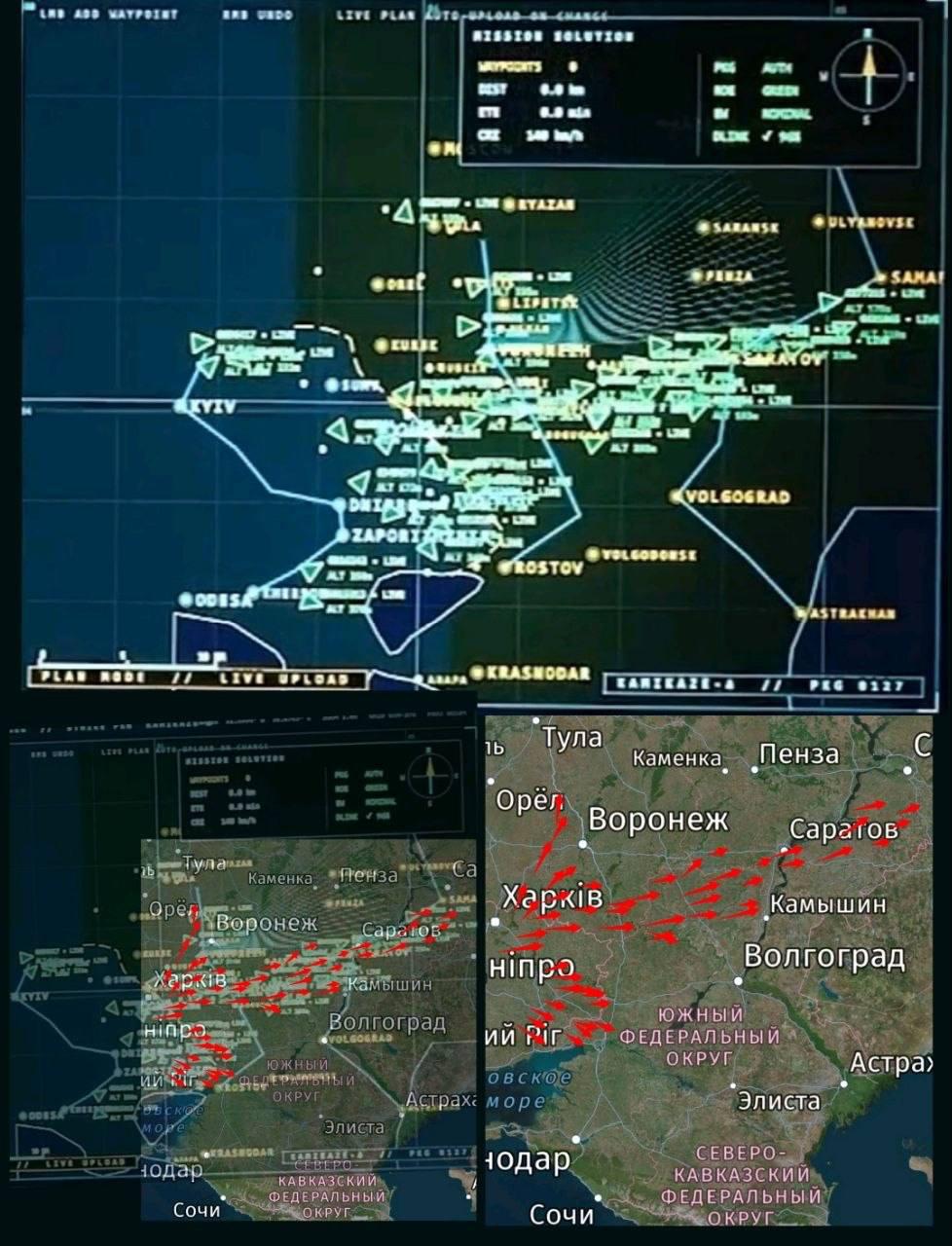
Meanwhile, CNN broadcast a report from the drone strike control center of the Main Intelligence Directorate of Ukraine.
Click to see the full-size image

Click to see the full-size image
On screens in this center, the PRISMA system is displayed — artificial intelligence software from the American company Palantir. This system helps analyze data, plan strikes, and coordinate drone operations in real time. The use of such technologies by both sides of the conflict indicates that drone warfare is transitioning to a qualitatively new level, where machine learning algorithms and autonomous decision-making play an increasingly significant role.
MORE ON THE TOPIC:
in ghetto gay bar 3 americunt mulattos had jizz war in my anuz derp incel derp derp
fascist incel kook just seething about ol’ clyde.
the us dropped a abomb in japan, 89 years later japanese men are efeminate and jap girls are scking us soldiers dick. samurai is dead. now
ukraine is becoming a junk yard large trucks are disappearing soon. ukraine goes for oil to slow russia doen