


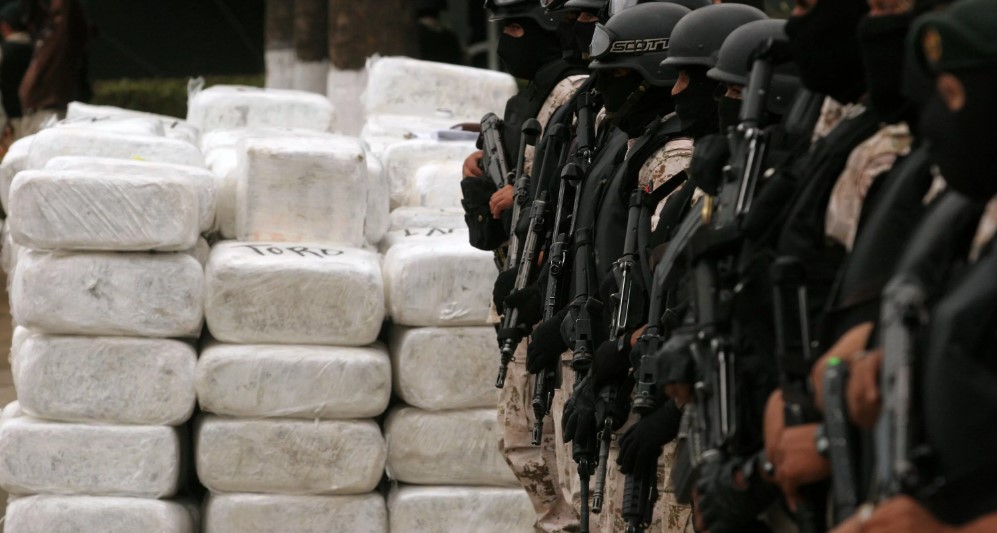
Click to see the full-size image
Written by Daniel Edgar (READ PART I, PART II, PART III)
Introduction
A recent series of reports attempted to construct an alternative conceptual and analytical framework for the study of key structural factors, stakeholders, political dynamics and market forces associated with the geopolitics of the illegal drug trade in Latin America. Given the almost universal acceptance and adoption of the core underlying premises and interpretations of specific trends and developments which together make up the official paradigm and conventional wisdom concerning the causes and nature of the illegal drug trade, the main actors involved in or benefitting from the trade in some way, and the presentation of strict prohibition and militarization as the only viable policy to address the potential adverse impacts of the consumption of psychoactive substances, it was necessary to identify the source and nature of key historical developments and influences on the modern illegal drug trade (using the international cocaine industry as a case study) from a variety of different perspectives and dimensions in an attempt to gain a better understanding of some of the key historical factors involved, as well as in terms of how the early structures and dynamics of the illegal drug trade have influenced ongoing trends and developments over successive periods.
The universal acceptance in the main power centres and the mainstream media of the core premises and arguments of the official narrative/ conventional wisdom concerning prohibition, the war on drugs, and the essential nature of the illegal drug trade and the main actors and stakeholders involved more generally, presented an enormous challenge in the drafting of the first series of reports on the topic. It is not the intention of this study to become entangled in those topics and arguments again – suffice to comment that there are many possible lines of inquiry and investigation that are not followed up in the official reports and investigations, aspects of the illegal drug trade which strongly suggest that at least some of the ‘masterminds’ and organizers at the top of the food chain (or pecking order) are not entirely consistent with the culprits identified in the most widely accepted and propagated narratives and explanations.
Some of the most well documented examples of most immediate relevance which were noted in this context were the arms-for-drugs (cocaine) sub-programs of the Contra operation in Central America in the 1980s (possibly a direct descendent of the earlier sub-program for the supply and distribution of heroin from Laos in the 1960s and early 1970s), and a similar convergence of the illegal drug trade, the war on drugs and the counterinsurgency war in Colombia during the 1980s and 1990s. Indeed, usually such incidents and aspects of the illegal drug trade are not mentioned at all in the official reports, it is as if they never existed. All attention is focused on the usual suspects – the Italian mafia, Sicilian smugglers, Mexican and Colombian cartels or illegal armed groups, along with a hodge-podge of other bad-asses from the Balkans (and Camp Bondsteel?) or other exotic locations.
KEY TRENDS & DEVELOPMENTS
Meanwhile, over the last fifteen years or so an increasing number of detailed investigations – such as the regular reports by the European Union Drugs Agency and the UNODC, as well as others by non-State organizations and independent researchers (including several in depth investigations by the International Crisis Group and Insight Crime) – have noted the increased importance of bulk maritime shipping as a preferred method for transporting cocaine from Latin America in large quantities, with the international trafficking syndicates involved constantly diversifying and altering key departure points, destinations and smuggling methods in their efforts to avoid detection and interception by local and international customs officials and law enforcement agencies.
Over the same period, there have also been sporadic reports of large amounts of coca paste having been intercepted by authorities on route from the producer countries to the global market, as well as a steadily increasing number of laboratories for producing cocaine hydrochloride from coca paste having been discovered and dismantled by authorities in other South American countries (particularly those located along the main trafficking routes via Paraguay and Brazil), as well as in several countries in Europe (mostly in the Netherlands, Belgium and Spain). Thus, just as technology for the detection and interception of cocaine shipments has improved and many countries continue to throw huge amounts of money and resources into enforcing prohibition and the war on drugs, the major producers and international drug trafficking syndicates have also developed an increasingly sophisticated array of new production and smuggling methods and routes and are constantly incorporating new technologies and improved industrial processes into their operations to thwart and outfox the new technology and detection procedures being developed by law enforcement agencies.
NARCO-BANANEROS
Meanwhile, another of the more significant developments associated with these broader trends and developments has been a sequence of reports and investigations related to the interception of large amounts of cocaine concealed on ships carrying bananas from Colombia or Ecuador to Europe (‘Los Narco-Bananeros’), continuing in some cases up to the most recent times. Considered in the context of major historical factors and more recent trends and developments related to international trafficking syndicates and networks supplying and servicing the global cocaine industry, it would appear that several of the key innovations and developments related to cocaine smuggling on an industrial scale (such as the use of bulk container shipping and Brazilian ‘torpedoes’, the smuggling of coca paste or chemically altered and concealed forms of cocaine) could be intrinsically connected in greater or lesser degree in certain instances, to what were referred to in the first series of reports as ‘Los Narco-Bananeros’ from Colombia and Ecuador.
The respective corporate groupings involved include some of the largest banana exporting companies in each country, companies which just happen to belong to even larger agribusiness-industrial-transport-financial combines which between them control the entire supply chain for the production and export of bananas from Colombia and Ecuador (along with a wide range of other key industrial and logistical assets and capabilities, many of which could theoretically be utilized for ‘dual use’ applications and activities associated with the more recent forms of smuggling of cocaine).
Pursuant to the broader objective of developing an alternative conceptual and analytical framework for the analysis of the global cocaine industry and the main power structures involved, the objective of the present report is to provide a summary and overview of the information covered in the preceding series of reports pertaining to this particular aspect of the illegal drug trade (longstanding reports of large cocaine shipments from Colombia and later Ecuador concealed with international banana shipments) and to add some additional details concerning several other significant – and possibly related – trends and developments concerning technological advances for the concealment of cocaine in a variety of secondary ‘carrier materials’.
The Global Cocaine Industry: Key Historical Developments and Systemic Features
COCAINE PRODUCTION
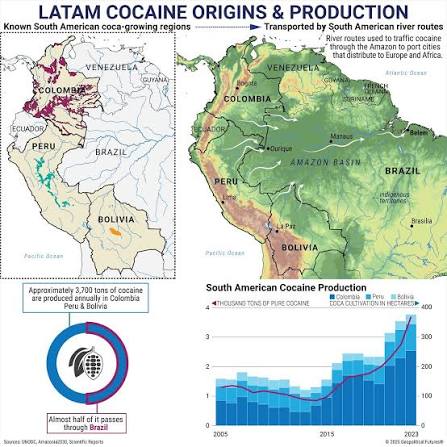
The most basic structural components and elements at the core of the international supply chain(s) and distribution networks for the global cocaine industry have consistently demonstrated several key features and characteristics. One of these is that the overwhelming majority of global cocaine production and manufacture has always taken place in Colombia, Peru and Bolivia, particularly the former (with a recent decline in cultivation in Colombia largely offset by an increase in cultivation in the other two countries). It is perhaps worth noting that in the late 1800s large coca plantations were established by the Dutch in Indonesia and by the British in Ceylon, however apparently they were eradicated several decades later as the policy of prohibition gained force at the international level. (In Visibles, 2025)
Ever since then, coca cultivation has been almost entirely confined to Colombia, Bolivia and Peru notwithstanding the immense value of the crop for both licit and illicit products in a variety of economic sectors and industrial processes. However, this monopoly on production finally appears to have been broken, with significant coca plantations (and some processing facilities) having been discovered in Ecuador, Guatemala, Honduras and Mexico since the early 2020s.
Click to see the full-size image
Core Structures and Components of the Main Regional Distribution Networks
CORE SUPPLY CHAINS
While the main production zones have remained largely unchanged for over forty years (notwithstanding some local shifts in the location of major production zones as intensified eradication efforts in one region have displaced cultivation and related activities to other regions), there have been some much more significant structural and systemic shifts and adjustments in terms of the main trafficking routes and transshipment points of which the regional distribution network has been comprised over successive periods, as well as in terms of the preferred methods or modalities for shipping cocaine from the main production zones to the global market.
‘The Central American Corridor’
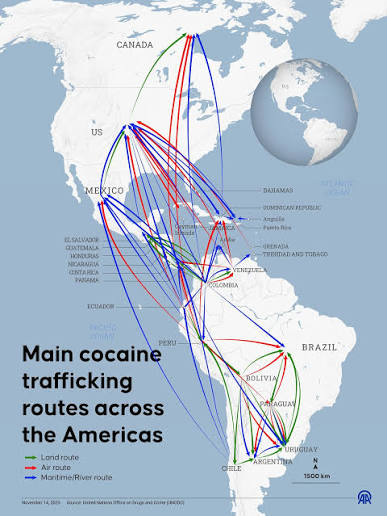
Nonetheless, considered from a long term structural and geographical perspective of the Latin American components of the global cocaine industry, beyond the apparent fragmentation, chaos, complexity, and occasional external shocks or temporary disruptions, many of the central components of the underlying regional infrastructure at the core of the illegal drug trade have remained remarkably consistent in several important respects. As noted above, one aspect of this is in terms of the main producer countries and core production zones. Another aspect that demonstrates a high degree of continuity in terms of certain core structures and dynamics is the central roles of Mexico, Colombia and the adjacent ‘Central America Corridor’ in the most strategic and lucrative stages of the international supply chain, and from the producer countries to the US market in particular.
Thus, although the structural significance or strategic importance of particular distribution networks and international trafficking routes between the producer countries (mainly Colombia) and the US have fluctuated over successive periods since the 1970s, the central structural components of the main trafficking routes, logistical centres and transshipment points have consistently been located around and adjacent to the central trunk line running through Central America and Mexico. Most of the detailed investigations and estimates over the last twenty or thirty years have concluded that, between them, the drug-trafficking syndicates and logistical networks based in or simply passing through Central America and Mexico have consistently accounted for at least 80% of the total volume of cocaine passing from South America to the US, whether by air, by land, or via adjacent maritime routes through the Caribbean (or along the eastern Pacific in more recent times). (OAS, 2013)
For example, in 2010 US officials reported that approximately 95% of the cocaine seized by authorities in the country that year was of Colombian origin (and almost a decade later Colombia still accounted for at least 90% of the retail market in the US). Moreover, according to official estimates and investigations as of 2010, over 85% of this had passed through the ‘Mexico-Central America Corridor’, while approximately 5% was shipped via the ‘Caribbean Corridor’ (which apart from Venezuela, included ‘Hispaniola’ and other islands in the Caribbean). However, it appeared that the latter corridor (through Venezuela and the Caribbean) also served as an important trafficking route for access to the European market. (OAS, 2013)
Click to see the full-size image
Secondary Regional Trafficking Routes and Transshipment Points
Secondary Trafficking Routes
Honduras, Guatemala and Panama in particular have consistently performed a significant secondary role as alternative transshipment points for the main international trafficking routes over successive periods since the 1980s, with Panama also serving as a major logistical centre for related activities (including international financial transactions in particular given the country’s status as a major offshore financial centre and secrecy jurisdiction). Brazil has also served as the focal point for another major trunk line of secondary or alternate trafficking routes and transshipment points for many years now, while the increasing importance of the maritime routes passing along the Pacific coast of South and Central America (whether hidden on bulk shipping vessels, smaller boats – commercial, technical or private – or even by submarine in some instances) has produced a corresponding increase in the strategic significance of Ecuador and Costa Rica to the international drug trade (particularly cocaine):
The map of the drug trade in Latin America has been transformed in the decades since the supply routes from the Andes to the US first emerged. Since their emergence in the 1970s, Latin America’s illegal outfits have expanded into new countries and encroached into emerging markets. Although Colombia and Mexico remain at the heart of the drug business, a main route to the US and Europe now runs along the Pacific coast, passing through countries that were largely untouched by illicit trafficking such as Costa Rica and Ecuador. Each of these has seen rates of violence rise sharply: in 2024, Ecuador was the most violent country in South America. Across the region, surges of bloodshed have marked the new hubs of a fast-shifting, hyper-violent drug trade. (ICG, 2025)
Click to see the full-size image
Hence, even as the leadership of the main Mexican cartels was captured or liquidated and what remained of the highly centralized chains of command and operational structures underwent successive periods of fragmentation and reconfiguration, overall the Mexican criminal networks continued their trajectory of exponential growth, constantly expanding their territorial presence and strategic capabilities at home and abroad:
MEXICO & CENTRAL AMERICA – ‘Cartels’
Despite apparent law enforcement successes, Mexican criminal operations were able to adapt and grow. Illegal organizations fractured into a plethora of smaller groups which clashed with one another to gain a foothold in various illicit businesses. Over the next fifteen years, the number of criminal groups increased tenfold, from fewer than 20 in 2006 to over 200 in 2021. (At the same time, the) role of Central American countries as transit and storage hubs, particularly Guatemala and Honduras, grew. By 2011, the amount of cocaine seized in Mexico was a small fraction of the total indicted in Central America, a region already grappling with chronic violence stemming from its legacy of civil wars. (ICG, 2025)
Not only have many of the most powerful criminal syndicates apparently endured and survived intact after successive waves of crackdowns and massive military deployments in particular countries at certain moments; they have taken advantage of the existing transnational infrastructure and capabilities to diversify their criminal (and legal) commercial activities, underlying power structures and logistical networks into new sectors, territories and markets:
Demand for narcotics outside the region remains at record highs, with newer markets booming – particularly for cocaine in Europe and fentanyl in the US. At the same time, waves of US-backed law enforcement, based on capture and extradition of crime bosses (known as kingpins), drug seizures and forced eradication have revolutionized the supply chain. Today, drugs are far from the only source of revenue for criminal organizations. That said, narcotics production and trafficking continue to be a mainstay of illegal business and the origin of the seed capital that allows organized crime to spread, diversify and prosper.
Evidence indicates that behind this growth are a host of far-reaching changes in form and structure. Transnational criminal networks in the drug supply chain are now arranged in tiers, with fluid alliances of convenience between them. Law enforcement crackdowns on one part of the supply chain have pushed violent criminals into others, in a cat-and-mouse game of shifting routes and business relationships. Where communities are poor and unprotected, criminal groups act as employers and overlords; where State officials are present, they coerce and corrupt them. (ICG, 2025)
Consequently, although the central components of the supply chain for the global cocaine market have demonstrated a high degree of continuity, at the same time there is also an enormous array of peripheral structures and networks which can be activated or relocated at a moment’s notice, the most powerful criminal groups and syndicates shifting and diversifying specific tasks and functions among a range of secondary transshipment points, trafficking methods and intermediaries or ‘sub-contractors’, adapting their activities and dealings to the international security climate and local conditions while constantly on the lookout for new opportunities or emerging threats.
The Global Cocaine Industry – Other Key Trends and Developments
The Rise of EUROPE
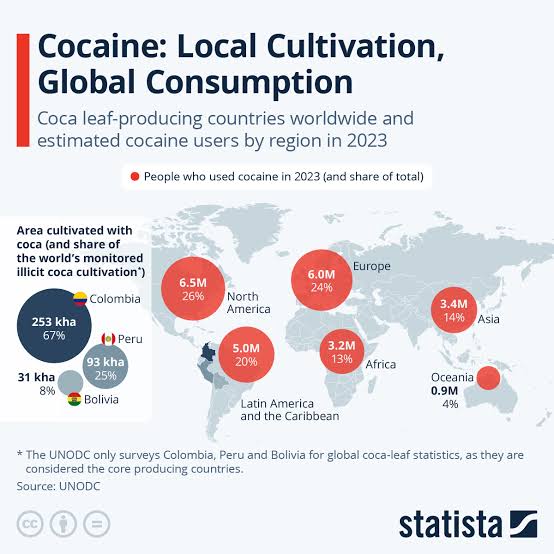
Considered from a long term systemic and structural perspective on the evolution, growth and secondary consequences or impacts (‘collateral damage’) of the global cocaine industry and the war on drugs, there is another major factor which has produced some dramatic alterations and adjustments in terms of key logistical structures, trafficking networks and market power in the global cocaine industry as a whole: since the 2010s, and notwithstanding the immense physical barrier separating the main producer and consumer countries, the European cocaine market has increasingly come to rival if not surpass the importance of the US market in terms of both total market value and strategic importance.
MARKET ESTIMATES
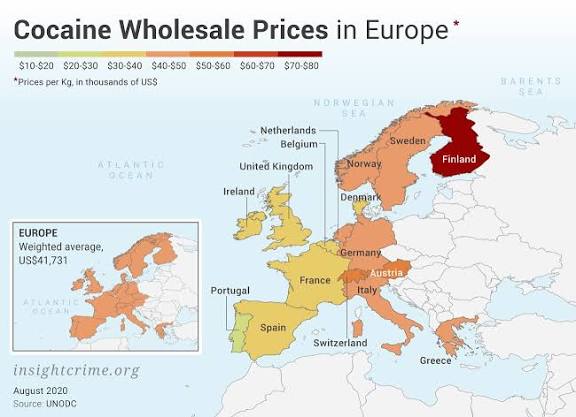
In terms of overall volume and market value, the UNODC estimated that 267 tons of cocaine were shipped to the US market in 1998, compared to 63 tons to Europe. Ten years later however, the supply of cocaine to the US market had declined to 165 tons, while the European market had increased to 124 tons. Moreover, given the price differential between the two principal markets, by 2009 Europe already accounted for almost half of the global cocaine industry in terms of market value. Similarly, in more recent times it has been estimated a kilo of cocaine in the US is worth around $28,000 on average, while one kilo of cocaine in Europe can sell for $40,000 or more. (OAS, 2013: Insight Crime, 2021)
This trend has generally continued to characterize the global market over the following periods, while at the same time global production has doubled since 2013. Meanwhile, although most reports suggest that the Mexican cartels continue to exercise a high degree of control over access to US market, there is more diversity and complexity in terms of the main international trafficking routes and networks to Europe – including direct shipments from Colombia, Peru and Central America, as well as a major trunk line operating through Brazil and Paraguay, along with a wide range of other secondary or alternate trafficking routes and transshipment points (particularly Ecuador since around 2016, which has since grown to become one of the largest cocaine exporters in the world according to some estimates).
At the receiving end of the various supply chains and distribution networks, Spain is widely considered to have been the main entry point to Europe in the late 1980s, however its structural significance was later eclipsed by other major trafficking hubs (Belgium and the Netherlands in particular), while France and Italy have also played a significant role as reception points and trafficking hubs for much of the modern period.
Thus a variety of both geopolitical and market-related factors and developments have contributed to the dramatic increase in the value and strategic or structural importance of the European cocaine market. For example, from the perspective of Colombian producers and traders: “For the Colombians, selling cocaine to the Mexicans for the US market still accounts for a large percentage of their business. But for many traffickers, the European market is now their priority. The kilo they might sell for $3000 to the Mexicans goes for more than ten times that on the wholesale market in Europe.” More generally, although markets in Asia, Oceania and elsewhere have also demonstrated substantial growth over the last twenty years:
Nonetheless, for the time being, Europe’s market size, prices, risk levels, and its shipping infrastructure moving millions of tons of goods to every corner of the earth make it arguably the most attractive cocaine market in the world. When Colombia’s cartels made their first tentative deals with Galician smugglers and the Italian mafia to move cocaine into Europe in the 1980s, it would have been unthinkable that one day they might shy away from the United States in favour of the old continent. But today, it is a business no-brainer.” (Insight Crime, 2021; 16)
In 2017, an official report by European authorities stated that 142 tons of cocaine had been intercepted over the previous year. However, the same report estimated cocaine consumption in Europe to be around 100-137 tons, which would mean that half of all shipments were intercepted, while most other estimates suggest that the loss rate is closer to 15-20% (which would translate to a total supply of somewhere between 568-804 tons for 2017). In terms of market value, these figures would translate to a wholesale value of $23-33 billion (while Europol’s estimates were from $8-12 billion). In the following period the number and size of intercepted shipments increased substantially in major entry points: law enforcement officials in Europe estimated that around 500-800 tons of cocaine passed to or through Europe in 2019 and the first months of 2020 (based on an assumption that 10-20% of all shipments were being intercepted). (Insight crime, 2021; 13-14)
THE GLOBAL MARKET (Summary & Overview)
Most of the available information and indicators strongly suggest that, one way or another – and despite the immense resources that have been thrown into prohibition and the war on drugs – many of the major underlying power structures, logistical components and trafficking networks (or forms of intermediation and coordination) that make up the core of the global supply chain(s) and distribution networks remain intact. Indeed, business is still booming in the cocaine industry, notwithstanding the fact that the traditional market centre appears to have ‘matured’ (estimated sales have remained relatively stable or declined for some time now in the United States), as the overall size and value of several ‘emerging markets’ (mainly Europe, but also some countries in Asia, Oceania and Africa) have continued to grow (at a prodigious rate in some cases).
Reflecting on the current situation and trends, the European Drug Report for 2022 commented (somewhat resignedly, perhaps) that shipments of cocaine from the Americas to Europe had both ‘intensified’ and ‘diversified’ over the preceding period. Similarly, according to the World Drug Report published in 2025: “Most indicators – those for production, seizures and use, and related treatment and deaths – point to 2023 being a record year for the global cocaine market.” Nonetheless, although demand continued to increase in Europe over the last twenty years, and notwithstanding a corresponding increase in the interception and seizure of shipments, most available indications also suggested that the purity of cocaine in Europe had increased throughout the period and retail prices had remained relatively stable for the most part.
Meanwhile, as argued in the first series of reports, the only question that ever seems to be asked by policy-makers and the mainstream media is how many more resources and personnel should be assigned to the never ending, open ended war on drugs; never whether maybe, just maybe, there might be a better way to address the adverse effects and impacts that can be caused by the production, trade and consumption of psychoactive substances?
Click to see the full-size image
Major Operational Adjustments and Innovations Associated with the Shift to Europe
EARLY DEVELOPMENTS
In terms of some of the key structural factors, influences and historical developments related to the dramatic growth of the cocaine trade from Latin America to Europe:
From the traffickers’ point of view, sending drugs to Europe faces one inescapable hurdle: The Atlantic Ocean. Traffickers, therefore, must move cocaine via sea or air. While the main air routes for moving cocaine to Europe use commercial flights, there have been cases of charter flights travelling directly from Latin America to Europe carrying significant cocaine consignments. Sailing vessels have also become more accessible and easier to pilot.
Reception in Europe has also seen increasing diversification. Spain has historically been the natural home for Latin American traffickers. With its linguistic and cultural links, and thanks to an alliance with Galician smugglers, Spain became the principal entry point for cocaine to Europe in the later 1980s.
Spain has however been eclipsed by Belgium and the Netherlands. Here, traffickers have been attracted by the efficiency of the ports of Antwerp and Rotterdam which, combined with excellent transport infrastructure, can rapidly place a container almost anywhere in Europe. However, as seizures have increased in these ports, traffickers have also switched to secondary European ports. (Insight Crime, 2021; 7)
COMMERCIAL AIRLINES
Although commercial airliners, charter flights or privately owned planes and boats were among the primary forms of smuggling used to reach the more distant European market during these earlier periods (one case that gained some notoriety being a smuggling ring that infiltrated Air France for the transfer of large quantities of cocaine to Europe), the authors note that international merchant shipping has also played a significant role since at least the 1990s, a role that increased significantly as the size and value of the European market increased.
Maritime Trafficking in Bulk: Technological Innovation, Forum Shopping and Port Hopping
Of the immense variety of potential international trafficking routes, methods and modalities potentially available then, as time has passed an increasing number of investigations and media reports have pointed out that international maritime shipping routes (and container ships in particular) are a significant vector for cocaine smuggling, this particular form of transport providing a perfect cover for cocaine shipments to the lucrative European and North American markets on an industrial sale:
Traffickers have also turned increasingly to container shipping for the international movements of cocaine, particularly to European ports. All manner of rouses can be used: hiding the drugs inside products, containers or the ship’s superstructure; ‘contaminating’ legitimate shipments during loading, or transferring the product onto the ships on the high sea. (ICG, 2025)
BOOM TIMES
The apparent trend towards merchant shipping lines continued (‘apparent’ because, as argued in more detail below, it is possible – if not likely – that smuggling cocaine aboard merchant ships has been the principal form of smuggling since at least the late 1990s), with merchant shipping becoming the preferred method for crossing the Atlantic by a considerable margin (based on estimates derived primarily from reports of interceptions of cocaine shipments by authorities), even as the European cocaine market was growing to such an extent that by the 2010s the net worth of the market was beginning to rival that of the US:
Over the last decade, container shipping has become by far the most common form of trafficking into Europe. Every year, 750 million containers are shipped around the globe, but less than 2% of these are inspected. This has provided traffickers with the perfect opportunity to reach global markets. European cocaine seizures increased rapidly between 1998 and 2006, from 32 tons to 121 tons. This was followed by a sudden decline from 2006 to 2009 – from 121 tons to 53 tons – even as other indicators like use rates, purity levels and street prices remained stable or increased, according to ONODC data.
The figures suggest cocaine continued to flow – right under authorities’ noses. By the time seizure rates began to rise again, containers were the principal trafficking method detected. The 2016 EU Drug Markets Report stated that, while in 2006, containers accounted for 10% of maritime seizures, by 2012 and 2013, that had increased to 75 percent. (Insight Crime, 2021; 40-41)
PORTS (Diversification & Innovation)
Leading up to the most recent period, in 2019 authorities in Philadelphia intercepted the largest single shipment up to that time, with 20 tons of cocaine being discovered on MSC Gayane (a freighter carrying merchandise from Chile to Europe – the authorities concluded that the cocaine had been loaded onto the boat while in transit somewhere off the coast of Peru). Although an increasing number of interceptions eventually forced the international trafficking syndicates to develop new strategies and methods, maritime shipping remained central to the smuggling of large quantities of cocaine from Latin America to Europe: “An elaborate game of hide-and-seek has resulted, as traffickers use different methods of hiding cocaine among the millions of containers that reach Europe every year.” (Insight Crime, 2021; 7)
TRADITIONAL HOTSPOTS
In terms of some of the major underlying structural and logistical dynamics and innovations driving this tectonic shift in the international trafficking of cocaine and how it has continued to affect other developments in the illegal drug trade up to the most recent times:
When authorities began to understand the threat posed by container trafficking, they paid more attention to which shipping lines from which countries were most commonly used for cocaine shipments. Traffickers responded by fanning out across the region in search of new ports that raised fewer suspicions. Traditional hotspots, such as the Colombian ports of Turbo, Santa Marta, Buenaventura and Cartagena, and Callao in Peru, offer proximity to production zones, active shipping lines to Europe, and highly sophisticated, long-standing criminal networks and infrastructure. However, shipments from these ports are now routinely red-flagged by European authorities and undergo more advanced security protocols. To combat the growing risk of interdiction, traffickers migrated to other ports around the region, heading to countries such as Ecuador, Costa Rica, Panama, the Dominican Republic and above all Brazil. (Insight Crime, 2021; 42)
It is perhaps noteworthy that there is no further discussion of such ‘hotspots’ in the report (particularly with respect to container shipping from the northern coast of Colombia), either in terms of the modalities employed or the main actors involved, a topic that will be considered further below. Moreover, there are some basic similarities in terms of the reporting and coverage of recent trends and developments in Ecuador. For example, the authors of one of the studies by the International Crisis Group of this particular phenomenon note (almost in passing, as it were) that: “In Ecuador, (cocaine) shipments are often hidden inside shipments of bananas – a product chosen because it can be loaded into the container on the farm and must move quickly through ports to avoid spoiling.” (ICG, 2025) The European Drug Report provides some additional details on the sudden emergence of Ecuador as a major regional and international trafficking hub:
GUAYAQUIL
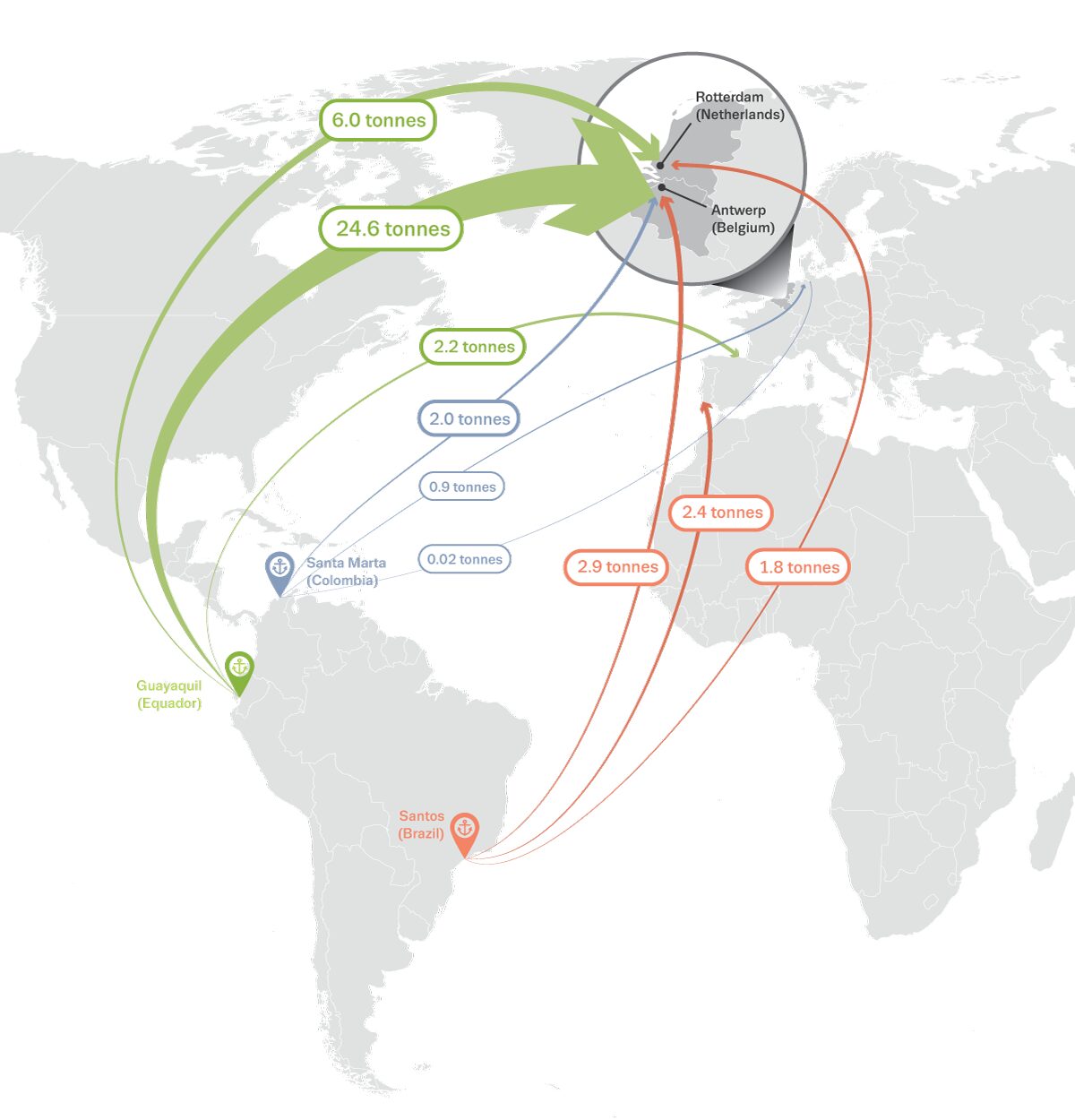
A striking development has been the increase in the quantities shipped from Guayaquil, the largest container port in Ecuador, from 6 tonnes in 2018 to almost 56 tonnes in 2021. The reasons for this are unclear and require additional research and closer monitoring. That said, Ecuador, which shares borders with both Colombia and Peru, seems to have transformed in the last decade or so from a transit country to a major trafficking hub. Furthermore, it is now also reportedly emerging as a cocaine producing country. (European Drug Report, 2022)
These particular developments (the sudden prominence of Guayaquil as a departure point and the utilization, or ‘contamination’, of ships carrying containers of bananas) could also be of major systemic significance, as there have been consistent allegations and reports that banana exporting companies have been heavily involved in bulk cocaine shipments from Colombia to Central America, the United States and Europe since at least the late 1990s, an aspect that will be explored in more detail below.
RECENT TRENDS
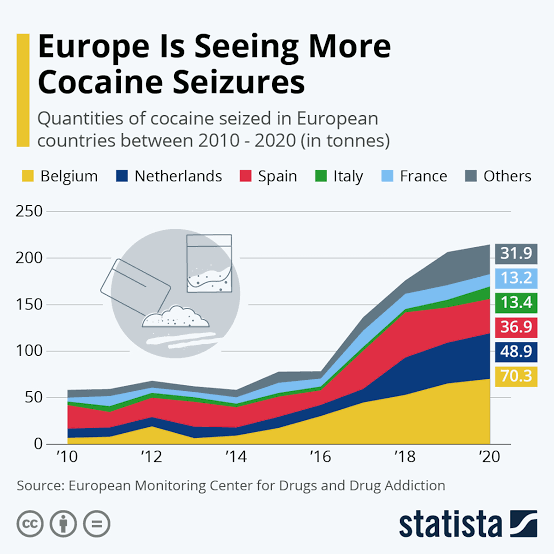
More generally, after a comprehensive analysis of publicly available information and consultations with law enforcement officials in Latin America and Europe, the European Drug Report for 2022 determined that approximately 282 tonnes of cocaine destined for Europe had been intercepted in 2020 (171 tonnes in or on route to European ports, and 108 tonnes at major international shipping ports in Latin America). Consistent with a trend which had become apparent over preceding periods, most of the cocaine shipments were intercepted in Belgian ports (69 tonnes), followed by the Netherlands (45t) and Spain (26t) – between them, the ports of Antwerp and Rotterdam accounted for 65% of the shipments. Overall, the report states of the main departure points and transshipment hubs between Latin America and Europe:
Most of the cocaine seized in the EU is transported by sea, primarily in maritime shipping containers. Cocaine is shipped to the EU directly from countries of production but also from neighbouring countries of departure in South and Central America as well as the Caribbean. Based on quantities of cocaine seized in European ports and in ports elsewhere destined for Europe, Brazil (71 tonnes), Ecuador (67.5t) and Colombia (32t) were the main departure points in 2020, as they have been for some years.
Departure Points
The next largest origin countries or points of departure in the Americas for cocaine shipments to Europe were Costa Rica (20.4 tonnes), Paraguay (13.3t), Guyana (13t), the Dominican Republic (7.2t), the United States (5.5t), Chile (5.1t), Venezuela (5t), Peru (4.8t) and Panama (4.4t). In terms of the total amount of cocaine intercepted on major shipping routes from South America to Africa from 2015 to 2021 (an alternate trafficking route whose significance has varied over successive periods), the main departure points were Brazil (70%), Ecuador (14%), and Colombia (11%), while the main departure points for shipments en route to Asia were Brazil (46%), Peru (24%) and Ecuador (14%).
Destination Points
Considered from the receiving end in terms of the main international trafficking routes and destination ports involved, as noted above Rotterdam and Antwerp provided the main entry points to the European market during the peak of the boom period, before increasing interceptions led traffickers to direct more of their shipments via other countries and shipping companies (including Italy, France, the UK and Germany and, in more recent periods, several countries in the Balkan region).
Click to see the full-size image
BRAZILIAN TORPEDOES – (2021)
There is one other aspect or dimension of international maritime trafficking which is often neglected, glossed over or downplayed in the conventional wisdom paradigm but which could nonetheless be of major significance: the practice of attaching tubes and other devices containing large amounts of cocaine to the exterior hull of merchant ships. A basic idea of the potential significance of this particular vector can be gained from a report by Insight Crime in 2021 concerning some major developments in Brazil and elsewhere in the region: “Police in Brazil have broken up a smuggling ring that had a curious modus operandi. For years, its divers strapped cocaine to the hulls of cargo ships departing for Europe.” (Pechinski, 2021)
The report notes that over the course of a two-year investigation, authorities determined that teams of divers in Rotterdam would retrieve the packages, and further mentions an earlier incident in France in 2013 which resulted in the capture of several members of a smuggling ring using basically the same procedure (in this instance the cocaine was concealed in a torpedo shaped tube attached to the hull of a Dutch-registered bulk freighter which had departed from Venezuela and passed through the Dutch Antilles on the way to its destination). With respect to the drug bust in Brazil in 2021, the author noted that:
While investigators are still looking into the ships that brought the drugs from Brazil to the Netherlands, it is highly suspected that the crew of the cargo ships were unaware of their participation in the international drug trade. A similar drug trafficking ring was also dismantled this week in Colombia. A gang, known as the Troya, soldered metal tubes to ships in the Barranquilla, Cartagena and Santa Marta ports that contained cocaine. Using this technique, the drug trafficking organization delivered over 20 tons of cocaine to Central America and the United States in two years. (Pechinski, 2021)
The potential volumes involved is clearly demonstrated by the Colombian case mentioned in the passage cited; specifically, authorities estimated that one apparently autonomous local trafficking syndicate had managed to ship at least 20 tons of cocaine to Central America and the United States over a two-year period (meanwhile, as far as I have been able to determine, there were no widely reported incidents of such shipments having been discovered by authorities in the transit or destination countries over the same period).
Bulk Shipments: Technological Innovation, Carrier Materials and Secondary Processing Facilities
MARITIME TRAFFICKING – Modalities & Methods
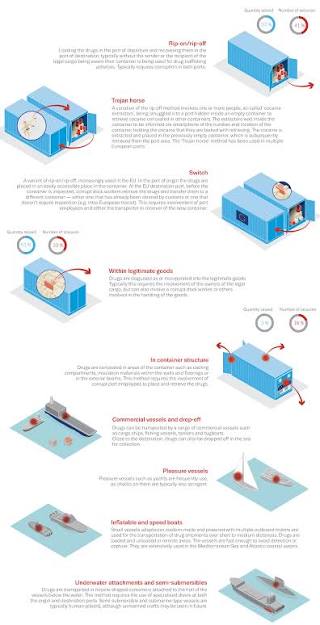
As one recent study of the illegal drug trade in Latin America comments, once the cocaine has been delivered by domestic producers and suppliers to the main departure points, international traffickers “use a sophisticated array of methods to deliver their product across borders.” (ICG, 2025) Apart from exploiting countries with weak inspection capacities, the development of increasingly sophisticated technology and techniques capable of neutralizing the most common detection methods, and rapidly adjusting or relocating associated logistical arrangements whenever existing criminal structures or trafficking networks are dismantled by authorities, there are a huge variety of secondary trafficking routes and modalities which can be called upon by major international trafficking syndicates.
And as noted previously, maritime shipping has become the most convenient vector for moving large quantities of cocaine, a modality that in turn offers a veritable smorgasbord of distinct tactics, techniques and ploys: “All manner of rouses can be used: hiding the drugs inside products, containers or the ship’s superstructure; ‘contaminating’ legitimate shipments during loading, or transferring the product onto the ships on the high sea.” (ICG, 2025) Meanwhile, at the same time as they have diversified their smuggling activities among an ever increasing number of alternative departure and arrival points, shipping companies and modalities or methods, international trafficking syndicates have also developed much more advanced forms of concealment in secondary products and ‘carrier materials’.
Click to see the full-size image
SECONDARY CARRIER MATERIALS
Hence, the shift to maritime shipping as a major international trafficking mechanism – indeed, almost certainly constituting the single largest component of the various cocaine trafficking syndicates and logistical networks in more recent times (considered in terms of the total amount of cocaine being smuggled from Latin America to Europe in particular, but possibly also to access the US market and Asia) – could be deeply connected to another major development which occurred over much the same period: the utilization of secondary ‘carrier materials’ relying on much more sophisticated forms of concealment and camouflaging of cocaine hydrochloride or coca paste (including by dissolving the cocaine in liquids or by chemically blending it into other primary products such as fruit pulp, molasses, coal or charcoal, cardboard, and ‘certain plastics’).
Although the basic concept of concealing cocaine in other products and carrier materials has been in use since the outset, the methods have become much more advanced and are now used on an industrial scale in a range of forms and guises. This particular trend has also produced or been accompanied by a major secondary development in Europe (as well as in numerous South American countries located along major trafficking routes), where an increasing number of secondary extraction and processing facilities for cocaine hydrochloride from the intermediary forms of coca base and coca paste have been discovered by authorities since around 2018 – mostly in the Netherlands, Belgium and Spain, but also showing signs of significant expansion and diversification into other countries in Europe (including Portugal and several countries in Eastern Europe).
PRECURSOR CHEMICALS
At the same time, there has been a corresponding increase in the discovery of a wide range of precursor chemicals which can be used in the production of cocaine hydrochloride:
The increase in the quantity of potassium permanganate (commonly used to produce cocaine hydrochloride) seized in 2023 (2,082 kilograms) compared with 2022 (173 kilograms) indicates that large scale processing of cocaine hydrochloride, from imported intermediary products, continues to take place in the European Union. Seizures of chemicals that can be used as precursors or substitutes of potassium permanganate were reported for the first time in Europe in 2018 and 2019. This may be an indirect indicator of when the oxidation stage of cocaine processing commenced in the EU.
Reducing agents (such as sodium metabisulfite and sodium bisulfite) continued to be seized in Europe, exclusively in the Netherlands, in 2019-2020, with seizures of the latter increasing considerably in 2020. These are strongly associated with cocaine production, since they are typically not used in the manufacturing of other drugs. Seizure of drying agents (which have a role in drying the solvents used in the stages of cocaine production where the presence of water must be eliminated, of which calcium chloride was the most common at the time) reached their highest level on record in 2019-2020.
Finally, approximately 2.8 tonnes of cocaine cutting agents, including adulterants, were seized in the EU in 2019 and 2020, the majority of which was tetramisole (1.9 tonnes, in the Netherlands). (Tetramisole is a commercially available veterinary medicine: one of the constituent compounds, levamisole, is also reported to have a synergistic effect when used to produce cocaine.) (European Drug Report, 2025; 14-19)
INTERMEDIATE PRODUCTS & MATERIALS – (EDR, 2022)
With respect to the trafficking of the raw material from Latin America to Europe, several common carrier materials have been identified for concealing and transporting not just cocaine hydrochloride in liquid or other chemically altered forms, but also involving similar chemically altered shipments of coca paste (by mixing or blending the coca paste into other substances and materials). One report on this trend by the EU anti-drug agency in 2022 (referring specifically in this instance to the trafficking of cocaine paste in chemically altered form) stated:
The evidence indicates that, in most cases, the intermediary product converted into cocaine hydrochloride in Europe is cocaine base extracted from carrier materials (such as charcoal, coco pulp, plastics) in which it was chemically concealed in order to facilitate smuggling. Europol information indicates that the methods used to incorporate cocaine in carrier materials, particularly charcoal, have recently become much more sophisticated, making detection by law enforcement more difficult. Extraction of cocaine from carrier materials is usually taken place in dedicated ‘secondary extraction’ facilities. However, since in many cases the cocaine extracted from carrier materials is in base form, it must subsequently be transformed into cocaine hydrochloride either in the same facility or in a dedicated base to hydrochloride illicit laboratory. (EU Drug Market: Cocaine, 2022; 16)
Several years later it was noted that such bulk shipments of coca paste or cocaine hydrochloride which had been dissolved, absorbed or chemically incorporated into carrier materials were still occurring on a large scale, the authors of the report stating in this respect: “several large seizures have been reported involving unusual substances that contain cocaine (such as cardboard, coal and plastics), requiring chemical extraction to retrieve the drug.” (European Drug Report, 2025; 19)
SECONDARY PROCESSING FACILITIES
Related to these technological innovations, from around the same time an increasing number of secondary extraction and processing facilities have been discovered by authorities in Europe (mostly in the Netherlands, Spain and Belgium). For example, from October 2019 to July 2021 Spanish authorities reported dismantling eleven secondary extraction facilities (with an estimated capacity of from several kilos to up to 500 kilograms per week):
Meanwhile, the Dutch police reported that 45 secondary extraction facilities were dismantled in the Netherlands between 2018 and 2021. Additional Dutch law enforcement information specified that more than ten of these facilities had an estimated production capacity of between 100 and 200 kilograms of cocaine hydrochloride a day, that is, between 700 kilograms and 1.4 tonnes a week. (That would amount to around 500 tons a year then, just from the ten largest facilities that were discovered and dismantled in the Netherlands.) This suggests that cocaine hydrochloride manufacturing activities in Europe are on a much larger scale than was previously understood. Recent law enforcement information also suggests that the cocaine production facilities dismantled in the Netherlands are sophisticated and capable of producing high-purity cocaine. (EU Drug Market: Cocaine, 2022; 16)
The 2025 report stated that in 2023, at least 34 facilities for cocaine extraction and/ or production were dismantled in the European Union (down slightly from 39 reported cases in 2022) – the potential production capacity of the facilities is not mentioned in this instance. Meanwhile, the ongoing dynamics of constant diversification and evolution that are apparent in other sectors or components of the global supply chain are also evident here, with secondary extraction and processing facilities being discovered in the most recent reporting period in countries where they hadn’t been detected before, including several significant installations in Portugal. (EDR, 2025; 19)
INTELLIGENCE GAP
As of the time the report was published in 2022 however, authorities still had not managed to identify how the coca paste was being smuggled into Europe, with no major interceptions having been announced in the preceding periods. According to scientific analysis conducted by US authorities (as part of the Cocaine Signature Program), the coca leaves contained in the sampled batches of coca paste discovered in Europe had probably originated from Peru and Bolivia, but few other substantive details had been determined:
In addition to these concerns (related to the spate of discoveries of sizeable secondary extraction and processing facilities), intelligence suggests that some of the large facilities found in the Netherlands and Spain were processing coca paste. This implies that shipments of coca paste, and potentially of fairly large quantities, are now smuggled into Europe. However, no large seizures of coca paste have been reported to the EMCDDA by European countries in recent years. The smuggling of large amounts of coca paste into Europe clearly constitutes an intelligence gap and a threat that must be better understood and documented. (EU Drug Market: Cocaine, 2022; 17)
ETHYL ACETATE
In addition, one of the new processing techniques involves the use of ethyl acetate in the production of cocaine hydrochloride, reportedly capable of producing a higher quality final product than the cocaine produced in the Americas:
Ethyl acetate, which can be used for dissolving cocaine base before processing it into cocaine hydrochloride, was also seized in record quantities (more than 50,000 litres) in 2019 and 2020. According to the Cocaine Signature Program run by the DEA, the leaves used for the ‘clean ethyl acetate processing method’ are mostly from Bolivia and Peru.)) Hence, there exists a clear forensic connection between cocaine hydrochloride manufactured from coca leaves of Bolivian and especially Peruvian origin using the clean ethyl acetate processing method and a type of cocaine hydrochloride available practically exclusively on the European market.
These preliminary findings support the hypothesis that cocaine base originating from Peru and Bolivia is converted into cocaine hydrochloride using the clean ethyl acetate processing method in Europe. In turn, this potentially means that one or several criminal networks active in South America and Europe have established a niche position in the European cocaine market by manufacturing their own cocaine hydrochloride in the Netherlands from a specific ‘pipeline’ carrying cocaine intermediate products made in Bolivia and Peru.
Click to see the full-size image
FORMS (Liquified – Coca Paste – Primary Products)
Thus, there appears to be a direct connection between the points raised by the European Union Drugs Agency in its annual reports and in the other studies cited previously – the discovery of the intermediate coca paste and base forms of cocaine in Europe as well of a variety of precursor chemicals that can be used to produce cocaine hydrochloride, along with the discovery and dismantling of a steadily increasing number of secondary extraction and processing facilities – among which, just ten of the largest facilities dismantle had a potential capacity of up to 500 tons a year, as noted above (a quantity that is, in and of itself, probably equal to or greater than some of the official estimates for total cocaine consumption in Europe, even before the other smuggling and production vectors for coca-derived products are factored in).
Moreover, many of the most common and potentially significant types and forms of carrier materials which have been identified as being suitable for the wholesale trafficking of cocaine to high-value markets (whether involving the intermediate forms of coca paste or liquefied cocaine hydrochloride) are organically linked to maritime shipping, given that this is generally the most common form of bulk transportation for the types of products being used as carrier materials – such as fruit pulp, molasses, other agricultural products, timber or (char-)coal and shampoo, among many others (apparently including the cardboard or plastic that can be used for packaging other products).
I would however question the accuracy of the assessment by the Cocaine Signature Program mentioned above that most if not all of the coca paste involved in the case of the production of cocaine hydrochloride in Europe originated from Peru and Bolivia – several other developments in this respect strongly suggest that the traditional hotspots zones in Colombia referred to previously are also heavily involved.
LIQUID FORM – Colombia (2022) & Bolivia (2011)
Not long after authorities in Europe were starting to discover advanced secondary extraction and processing facilities in the Netherlands and several other countries, an article published by Insight Crime reported the discovery by Colombian police in February 2022 of 3.5 tons of liquefied cocaine hydrochloride in the port installations at Cartagena. This was the fifth such interception of large quantities of cocaine in northern Colombia in a few months (one of which involved a cargo of 20,000 coconuts filled with a liquid containing cocaine which were to be shipped from Cartagena to Italy): “In the latest seizure, the cocaine had been dissolved and mixed in two shipments, one of organic fertilizer and the other of molasses extracted from sugar cane. Both shipments came from Urabá, a region in northwestern Colombia, and authorities said they were destined for the ports of Valencia, Spain, and Veracruz, Mexico.” (Ramirez, 2022) The region of Urabá is at the core of the ‘traditional hotspot’ production zones referred to in passing in the report by Insight Crime on the ‘cocaine pipeline’ from Latin America to Europe published in 2021, and is also where many of the largest banana plantations in the country are located.
Although preliminary investigations were still underway, police suggested at the time that the latest shipment (of 3.5 tons of liquefied cocaine discovered in Cartagena) appeared to be linked to front companies owned or controlled by the Urabeños (variously referred to as the Gulf Clan or the Autodefensas Gaitanistas de Colombia), one of the main successor groups that emerged after the formal demobilization of the AUC (which had been the preeminent illegal armed group in the Urabá region from the mid-1990s until the mid-2000s).
The author of the article further noted that the first major discovery by authorities of the use of liquefied cocaine hydrochloride was made in Bolivia in 2011, and that: “The production of liquid cocaine involves dissolving cocaine in water, solvents or other products containing chemical compounds such as mannitol, glucose, cellulose or lactose. It is then placed inside products such as shampoo bottles or hidden among sugar cane molasses, making it easier for them to be trafficked in containers or carried by drug mules.” (Ramirez, 2022) This would suggest that this particular technique had been in active use by trafficking syndicates for a considerable period before being widely registered and reported by authorities.
COCA PASTE (2014)
Similarly, bulk shipments of coca paste can be traced back to roughly the same period. In this instance, authorities in Colombia had pointed out the likely existence of substantial secondary extraction and processing facilities in Europe as early as 2014. An article by Insight Crime in October of that year reported the discovery of 460 kilos of cocaine paste hidden in hollowed out-logs set to be shipped from Barranquilla to Lisbon (Portugal), commenting that: “Officials in Colombia say drug traffickers have begun moving large quantities of unrefined cocaine paste to Europe, but with little processing infrastructure and no established market for the smokeable paste, why they would do so remains unclear.” (Cawley, 2014)
It was the third reported interception of large quantities of cocaine paste by Colombian authorities in eleven months (the first shipment of 171 kilos was intercepted in Santa Marta in November 2013 and was to have been shipped to Belgium, the second was intercepted in Nariño in January 2014 and consisted of 403 kilos of coca paste that was set to be transported by air to Mexico). A report in the Colombian media noted that the third intercepted shipment of coca paste (of 460 kilos) occurred in the installations of the Barranquilla Container Terminal (on the country’s north coast). The coca paste had been moulded into rolls which were inserted into hollowed-out logs of teca wood destined for Lisbon, Portugal. (El Heraldo, 2014)
Teca, a high quality timber used to build boats, furniture and in construction generally, is produced in three main areas in Colombia; Magdalena, Cesar and in the central region of the country. With respect to the listed owners of the shipment: “The consignment of containers was registered in the name of Transnacional de las Antillas SAS, a firm which had made 31 prior shipments not just of timber, but of other construction materials, among other products.” The report also quoted some telling statements made by the commander of the Police Anti-Narcotics Unit at the time (Rodrigo Restrepo Londoño) concerning the sequence of interceptions that had been made over the preceding period: “Normally shipments are sent in the form of cocaine hydrochloride. Drug traffickers in Colombia are undergoing a transformation in the commercialization of cocaine. One could suppose that in Europe there are laboratories for the processing of the drug into cocaine hydrochloride, that with the coca paste they are producing some other type of narcotic (estupefaciente), or both.” (El Heraldo, 2014)
Los Narco-Bananeros
And as mentioned in the introduction, it turns out that – in some cases at least – these highly advanced technological innovations could be intrinsically linked to several of the other major developments in the growth and evolution of international cocaine trafficking referred to previously: the apparently primordial role of merchant ships for the smuggling of cocaine on an industrial scale, the use of ‘Brazilian torpedoes’ as an additional modality that can be called into play, and long-standing allegations concerning the possible involvement of ‘Los Narco-Bananeros’ in exports of cocaine from Colombia and Ecuador. The latter would include several of the largest banana exporting companies in each country – particularly Banacol (which acquired the assets of Chiquita Brands in Colombia in 2004) and Noboa Trading (in Ecuador), each of which which just happens to belong to even larger agribusiness-industrial-transport combines which control the entire chain of production for banana exports, along with a wide range of other industrial assets and logistical capabilities.
Los Narco-Bananeros: Part I – Colombia
Just as in the case of the trafficking of coca paste to Europe then, an innovation which appears to have had a considerable history of use on a large scale prior to the 2020s when it was (re)discovered by authorities, and notwithstanding the apparent willingness of the conventional wisdom or official paradigm to assume that the more recent spate of large cocaine shipments stashed on merchant ships carrying containers of bananas from South America to Europe and elsewhere is a relatively recent and spontaneous or autonomous development, upon further investigation it becomes apparent that ‘Los Narco-Bananeros’ may have been operating on an industrial scale for a considerable period of time.
As noted in the previous section, the report on the cocaine trade between the main production zones in South America and Europe by Insight Crime in 2021 does note that cocaine was smuggled on container ships departing from several regions in northern Colombia and Peru in earlier periods, but no details at all are provided on these ‘hotspot’ areas and the groups involved, and the report appears to place zero structural or historical importance on this fact. Similarly, I have not found even one analysis of the traditional production and maritime shipping hotspots in northern Colombia in the late 1990s (or the numerous reports that large quantities of cocaine have been shipped from the same region to various destinations in Europe on ships carrying containers of bananas) in the more recent reports by the EU Drugs Agency or the UNODC – though again, I have not read every part of every report they have produced. If such incidents were noted and subjected to some sort of analysis in earlier reports, it would likewise appear that no systemic or structural significance was attached to these events.
Consequently, and consistent with the hypothesis that there are widespread practices of selective investigation and enforcement of allegations concerning international trafficking networks when the criminal syndicates involved are located at the top end of the food chain, most of the substantive information that has emerged concerning such industrial-scale smuggling operations has been disclosed by independent media outlets and investigators, often derived from confidential documents related to criminal investigations that they managed to obtain through unofficial and unauthorized channels.
One explanation for this might be that, in some cases at least, mid-level prosecutors and investigators from the relevant law enforcement and intelligence agencies divulged confidential documents related to cases involving powerful Establishment figures (or their primary ‘cut-outs’, intermediaries and business associates) after their efforts to investigate and prosecute the primary suspects had been repeatedly blocked, sabotaged and in the final instance discontinued by their ‘superiors’ in the chain of command.
There appears to be a similar dearth of information and complete lack of interest by officialdom concerning the first reports of large amounts of coca paste having been trafficked in unprocessed form from the producer countries since at least 2011. And, as argued above, it is possible that many of the aforementioned innovations and developments related to bulk shipments of cocaine hydrochloride and coca paste on container shipping lines are connected in some instances. The objective of the remainder of this study then is to examine these aspects of the illegal drug trade in more detail, using Colombia and Ecuador as case studies, with particular attention to the variety of forms of concealment and trafficking that were devised and some of the main actors and shipping lines involved, whether directly, indirectly, knowingly, unwittingly or otherwise.
Nonetheless, it is also important to acknowledge at the outset, as one report comments, determining who are ‘victims’, and who are employees or accomplices of the international trafficking syndicates, is an extremely complex matter. That being the case however, I would also refer back to an argument posited in the first series of reports, to the effect that the further up the food chain one gets (in terms of the political and economic power and influence of those apparently complicit in smuggling activities or other serious criminal activities in some way), the less persuasive claims of innocence, ignorance, or even of coercion or ‘forced recruitment’, become, particularly when such large quantities are involved and have been discovered by authorities on numerous occasions.
Early Allegations of Cocaine Smuggled on Container Ships from Colombia
A report on the transfer of the global headquarters of agribusiness giant Banacol to Madrid published by an independent media outlet in Colombia in 2023 noted that it had been common knowledge among Colombians for many years that most if not all of the major banana exporting companies in the country had maintained extensive relations with paramilitary groups in the 1990s, and that in some cases their regular contacts and collaboration may have included some joint venture projects taking advantage of their respective talents and capabilities to tap into the global cocaine market. (La Silla Vacia, 2023)
In this respect, there were persistent allegations during the Peace and Justice Tribunal audiences and in other forums that large amounts of cocaine were regularly dispatched on merchant ships carrying bananas bound for Europe and other destinations in the late 1990s and early 2000s (the drugs having been supplied by the commanders of several of the most powerful paramilitary groups that were active in the main banana producing regions in northern Colombia at the time).
Two of the most important sources of information and testimony concerning such cocaine shipments have been, first, the statements made by former paramilitary commanders in hearings and investigations related to the disarmament and demobilization of the paramilitary groups between 2005 and 2010 and, second, a large batch of documents which were leaked from the Prosecutor General’s Office involving investigations into numerous large cocaine shipments which were intercepted by authorities in Colombia and Europe in the 2010s.
CHIQUITA – DRUG SHIPMENTS
Although they were immediately dismissed, downplayed, glossed over or completely ignored by most major media outlets in Colombia at the time, the allegations that were made by former AUC paramilitary commanders concerning wholesale cocaine smuggling operations via merchant vessels carrying bulk banana shipments were subsequently corroborated by information from several other sources, including evidence disclosed several years later related to investigations into more recent cocaine shipments which had been intercepted on container ships carrying bananas from the same region. According to one independent investigation into the earlier claims concerning the existence of at least one major international cocaine trafficking ring of Narco-Bananeros operating in the north of Colombia:
A document obtained from the Prosecutor General’s office refers to a computer belonging to Jorge 40 (one of the most powerful paramilitary commanders in the late 1990s) which contained files listing shipments of cocaine to Europe on ships carrying containers of bananas. The document further stated that: ‘According to our intelligence reports, the company involved in the shipments is called Chiquita’.
In other proceedings, another former paramilitary commander who was also active in the main banana producing regions (Éver Veloza Garcia, alias HH) claimed that many of the banana ships departing from northern Colombia were also carrying large amounts of cocaine. He further stated that in some cases divers contracted by the drug traffickers secured tubes containing drugs to the hull of the ships while they were at sea in order to avoid security controls, and that: ‘Every month, 4,000 kilos of drugs left towards Panama and Central America just from our zone.’ (CAJAR, 2008)
There is then another indirect corroboration of the theoretical and technological plausibility of these claims at the very least – the case mentioned previously concerning ‘Brazilian torpedoes’ loaded with cocaine that were attached to the hull of merchant ships en route to Europe in the early 2020s. Or, of even more immediate relevance to the present case, the dismantling of another major smuggling ring from the same ‘traditional hotspot’ region in northern Colombia around the same time (2022), in this instance an apparently autonomous local smuggling outfit (the ‘Troya’) which was estimated to have shipped more than 20 tons of cocaine to the United States over a relatively short period of time using exactly the same method.
Meanwhile, there was also the discovery of industrial scale smuggling operations involving liquid forms of cocaine hydrochloride in 2014 (attributed to front companies created by ‘Los Urabeños’, arguably the main successor group of the AUC in the region), and another major smuggling operation involving bulk shipments of coca paste (which had apparently been arranged by an anonymous trading company registered in the Dutch Antilles) – all of which were centred around the same hotspot regions of northern Colombia.
AUC – CHIQUITA – KLEIN
Another potentially very significant and possibly related set of criminal activities in the same hotspot regions of northern Colombia would include the arms shipment(s) into Colombia via Chiquita’s private port facilities in 2001 which was reported to have been organized by (or on behalf of) one of Yair Klein’s alumnos from the succession of weapons and explosives training camps he instructed in the mid to late 1980s (Carlos Castaño, who as described in the first series of reports on geopolitics and the illegal drug trade had also received intensive training and instruction in Israel, and later went on to become the designated leader or public representative and spokesperson of the AUC when the national paramilitary umbrella group was founded some ten years later). Apart from his counterinsurgency training and instruction courses, Yair Klein was also involved in the organization of several other illegal arms and explosives shipments to the paramilitary groups (and at least one of the major Colombian drug cartels) in the 1980s.
(MONEY LAUNDERING)
Klein was also caught laundering large amounts of what was widely suspected to be drug cartel money in the late 1980s, transferring the money via acquaintances in the US:
Recently, reports broke in Israel and the US about a whole group of well-connected former Israel officers who had provided ‘security advice’ to one group of Colombian drug lords, whom the group described as farmers of right-wing opinions. The head of the Israel group, kibbutz-born Colonel Yair Klein, serves, in addition to his Colombian capacity, as an active commander of the war room of the Israeli chief of staff. I can predict that mainstream American media will not rush to print this, although it clearly would be of intense interest to the American public!
It also is interesting to learn that Col. Klein was paid in the United States for his services in Colombia. He also was paid in cash. Although the sums involved were large (one report claimed it was $800,000), he did not put the money in a bank – one assumes that he had his reasons – nor did he contravene US laws by taking the cash out of the United States. Instead, he left the money with a member of a well-known network of ultra-pious Jews in New York, who transferred the money to Israel. The Hebrew press has voiced the natural suspicion that Yair Klein was paid with money obtained through the sale of drugs in the US by his employers. Was his the only such case? (Shahak, 1989)
Other Partial or Incomplete Investigations into Cocaine Smuggled on Container Ships
2010 – (BANACOL)
Returning to the specific case of the drug-running activities of Los Narco-Bananeros, there are some indications that the logistical structures and operational networks involved in the weapons and drug running activities of the late 1990s and early 2000s were not entirely abandoned or dismantled when the AUC disappeared from the scene in the mid-2000s. For example, well after the main AUC paramilitary blocks had demobilized and most of the surviving paramilitary commanders had been extradited to the United States to face drug trafficking charges (while some of the more low-profile mid-level paramilitary commanders joined or formed the Urabeños), an independent investigation published in 2016 (by the Comisión Intereclesial de Justicia y Paz, a civil society organization with long standing in Colombia) reported that criminal proceedings had been initiated in 2010 involving cocaine shipments concealed on ships carrying bananas owned by Banacol, and urged authorities to advance with their investigations after many years of constant interruptions, procrastination and procedural delays:
In 2010, the Anti-Mafia Unit of the Prosecutor General’s Office ordered the detention of two Navy officials and five Banacol employees (‘technicians’) for belonging to an organization that concealed drugs in containers of bananas located on premises owned by Banacol. This organization has been implicated in the shipment of more than 9 tons of cocaine to the United States and Europe which were intercepted by authorities. (El Diario, 2023)
(BANACOL & Chiquita)
While they might appear to be separate and unrelated events on the surface, the alleged trafficking practices on ships owned or chartered by Chiquita and Banacol could be related. As noted in the first series of reports on geopolitics and the illegal drug trade in Latin America, Banacol acquired Chiquita’s main Colombian subsidiary (Banadex) in 2004 after it had been found guilty of financing the AUC and other illegal armed groups in Colombia by the Department of Justice. Moreover, although it is difficult to determine the full extent and nature of contacts and ties between the two parent companies (Chiquita and Banacol), it has been reported that the main figure in Banacol’s management was also a senior executive in Banadex around the time that both companies were financing and actively collaborating with the paramilitary groups in the late 1990s and early 2000s.
(2014 – 2016)
Other more recent reports have noted that around the same time that Banacol was implicated in numerous large cocaine shipments (the early to mid-2010s), other documents which had been leaked from the Prosecutor-General’s office mention investigations being conducted by European authorities since 2014 following the interception of large shipments of cocaine which had been hidden among containers of bananas and plantains owned by CI Banacol SAS (some of which had departed from the company’s privately owned and operated port facilities on the northern coast of Colombia). (La Silla Vacia, 2023) Other investigations mentioned in the files from the Prosecutor-General’s Office involved at least one similar shipment of cocaine in 2016 destined for the port of Amberes in Belgium concealed in containers of bananas which had also been shipped by Banacol.
(2020-2022)
The sequence of media reports and investigations in 2023 referred to above followed several major developments at the time which raised many deeper questions concerning Banacol’s controversial history of secret dealings or repeated run-ins with paramilitary groups and drug traffickers in northern Colombia over successive periods. One of the Colombian media reports covering ongoing developments as of 2023 provided some additional details gleaned from other files which had been forwarded to authorities in Colombia from their counterparts in Italy concerning more recent developments. According to the leaked documents, between 2020 and 2022 three separate cocaine shipments (amounting to a total of 3.4 tons) were intercepted by Italian authorities (in the port of Gioia Tauro). In each instance, the cocaine was hidden in containers of bananas shipped by Banacol. Italian authorities concluded that the cocaine shipments were probably intended to be received by the Ndrangheta organized crime syndicate (which was reported to control a large part of the European cocaine market at the time). (Colombia Informa, 2023)
Dole & Co
Proceeding further along the extended transnational network(s) of corporations and individuals that were implicated in transactions and activities that tied in to the shipments in some way, Italian investigators traced some of the legal and financial transactions related to the intercepted cocaine shipments as having been arranged by Transfurt Express Limited, a company reportedly registered in Bermuda and whose largest shareholder at the time was another US agribusiness giant with substantial investments in the banana industry in Colombia and Central America, Dole Fresh Fruit International (Colombia Informa, 2023).
As noted in the first series of reports, Dole was also specifically identified as one of the banana exporting companies which had financed the paramilitary groups between 1997 and 2004, as was Del Monte, another US-based agribusiness giant with extensive holdings in the region. Moreover, Dole is also the owner of the port facility in Guayaquil (Ecuador) where three separate cocaine shipments were discovered by authorities in 2020, 2022 and 2024 respectively, discussed further below.
INTEL GAP(S)?
The relative scarcity of reported interceptions by authorities of large quantities of cocaine concealed among bulk banana shipments to the US and the UK raises the question: have there been no such shipments, or are the organizers of the shipments and their overseas accomplices better at avoiding detection by authorities and customs inspectors in those countries? (The main destinations for banana exports from Colombia in 2023 were: the US ($195m), the UK ($137m), Belgium ($136m), Italy ($112m) and Germany ($77m). Moreover, there is the further possibility that similar shipments could have been sent from (or rerouted via) other countries in the region: Ecuador, Colombia, Costa Rica and Guatemala are all among the five largest exporters of bananas in the world market, they have all been identified as trafficking hotspots at one time or another, and Chiquita, Dole and Del Monte have a major presence in most if not all of these countries (and, as noted above, all three companies were widely reported to have been collaborating with the paramilitary groups in northern Colombia in the late 1990s and early 2000s).
Outlines of a Modern Corporate Empire: Banacol’s Corporate Structure and Assets in Colombia
BANACOL – (Assets in Colombia)
Banacol has consistently been among the two or three largest exporters of bananas from Colombia ever since it acquired Banadex (Chiquita Brands’ main subsidiary in Colombia) in 2004. Among its many assets and commercial activities in Colombia, the parent holding company or conglomerate of which Banacol is a part owns over 5,000 hectares of banana plantations and related processing, transportation and export facilities in the country’s northern and northwest regions (at the centre of the ‘traditional hotspots’ mentioned previously).
CORPORATE STRUCTURE
The complicated ownership and management structure of the overall corporate combine has been altered on numerous occasions, with a host of subsidiaries and other closely related entities of the extended corporate group being reorganized and reallocated among a variety of different tax havens at certain moments (including the British Virgin Islands, Belize and Panama). The cluster of holding companies with close legal or commercial ties to Banacol throughout this period have included among their principal members Greenland Investment SA and Invesmar International Limited SA.
The principal direct link or common thread between the ownership and governance structures of the various holding companies at the centre of the sprawling transnational financial/ industrial/ agribusiness combine of which Banacol is a part is Victor Manuel Henriquez Restrepo, who in recent years has been reported as being the president of Banacol and Greenland Investment and the CEO of Invesmar, among other senior executive positions in related affiliates. (Colombia Informa, 2023)
INVESMAR
Another media report following the complicated succession of corporate reconfigurations and dealings of Banacol stated of the more recent developments in the ongoing saga:
The headquarters of Banacol, one of the largest banana exporters in Colombia and inheritor of the properties of Chiquita Brands in the country, has moved to Madrid, though its owner still appears to be resident in a distant tax haven. Up to now Invesmar Limited, which several reports have identified as the parent company of Banacol, was located in the British Virgin Islands. Following the most recent changes, Invesmar Limited has been re-baptized as Greenland Investments, SA.
The latter company is administered by Victor Manuel Henríquez Restrepo, who had been CEO of Invesmar during the last year of its existence and who is also the president of Banacol and of Greenplus Investment Limited, the holding company from which the other enterprises belonging to the agribusiness conglomerate radiate.
Despite having abandoned the British Virgin Islands, everything indicates that the parent company of Banacol still has a strong offshore connection. The only associate of the legal entity that is now resident in Spain (Greenland Investment, SL) is Invesmar International Investments, SA. There is only one other trace connected to the latter corporation (Invesmar), and which happens to be located in another tax haven, Belize. (The report further notes that the nondescript building where the head office of the transnational corporate empire is now nominally located was formerly a tattoo parlour.)
This particular offshore company was incorporated in Belize in 2016 with a capital of $50,000 (and by 2021 it had assets of 310 million euros according to documents filed with the Mercantile Register of Panama, where Banacol has several subsidiaries). According to the registry documents filed in Belize, Victor Restrepo is one of the three directors of Invesmar International Investments, SA. The other two directors are Juan Fernando Correa Restrepo and Luis Ignacio Mejía Ángel (Victor Restrepo and Luis Mejía are also listed as ‘principle members’ of the board of directors of Greenland Investment, which was separately constituted as a non-government organization). (El Diario, 2023)
INTEGRATED SUPPLY CHAIN
Finally, there is one other potentially very significant point concerning Banacol’s industrial and commercial activities in Colombia: the cluster of companies owned by Banacol’s parent company (Greenland Investment/ Invesmar) are active along the entire supply chain for the exportation of bananas, while also having substantial holdings in related sectors (including shipping, as well as the production of ‘certain plastics’ and cardboard boxes used for packaging materials, among many other commercial and strategic assets and capabilities): “Apart from bananas and plantains, Banacol also produces and commercializes plastic or corrugated cartons (used for packing and transporting fresh fruit products). On its web page, Banacol’s owner (Greenland) describes itself as ‘a Colombian agro-industrial group with the capacity to create and manage commercial activities in agriculture, industrial, service and real estate sectors.’” (El Diario, 2023)
It remains an open question for the moment as to whether, somewhere among the many and varied onshore and offshore investment activities and dealings, some of the enterprises or business units connected to the vast and extremely complex transnational financial/ agribusiness/ industrial/ real estate/ shipping/ transport conglomerate may have some form of direct or indirect involvement in the organic fertilizer, molasses or char(coal) export sectors of the Colombian economy.
POLITICAL DONATIONS
Apart from the failure to conclusively investigate the numerous indications and allegations of possible complicity in drug smuggling operations, and even repeated interceptions of large amounts of cocaine concealed with bulk banana shipments owned by Banacol, for many years the Prosecutor General steadfastly refused to initiate proceedings into the company’s financial payments to the paramilitary groups and other possible forms of collaboration:
Despite the Prosecutor General’s Office having detailed knowledge of the payments that Banacol made to the Convivir (a type of front company created by the paramilitary groups) and of the regular meetings that took place between the company’s senior executives and paramilitary commanders between 1997 and 2004, formal investigations were not opened until 2018. Once again, the Office was being accused of complicity by omission for failing to investigate cases implicating powerful political clans and economic interests in the crimes committed by a variety of mafia and paramilitary groups throughout the country, cases which have been archived for over a decade. (Colombia Informa, 2023)
Another investigative report (by Vorágine and the Organized Crime and Reporting Project) which also examined the apparently ongoing links between Banacol and international drug trafficking (following the succession of interceptions of large amounts of cocaine concealed in the company’s banana shipments to Europe between 2020 and 2022) suggests one possible contributing factor in terms of the tardiness, negligence or incompetence of the Prosecutor General’s office. The report revealed that Banacol made large political donations to the campaigns of numerous politicians from powerful political factions and dynasties in Colombia (through the closely related holding company, Greenland Investments), which between them effectively controlled the appointment of the director of the Prosecutor General’s Office for much of the relevant period. (La Silla Vacía, 2023)
Political Infiltrations and Corporate Takeovers of the Independent Accountability Agencies
There is however another deeper structural dimension to this phenomenon, involving the systematic infiltration by powerful political factions and their corporate sponsors, benefactors and associates of all of the independent accountability agencies charged with upholding the rule of law, the supervision and accountability of the corporate sector, and the integrity of State institutions and officials in the exercise of all public powers and functions more generally (including the Offices of the Prosecutor General, Inspector General, Auditor General and Ombudsman). Moreover, such strategic control or influence over key State agencies and posts can serve both as ‘shield’ and as ‘sword’, in order to block investigations of allies while at the same time potentially allowing the agency’s formidable powers and resources to de deployed against political opponents and other rivals. Recent developments in Colombia clearly demonstrate the significance of the Office of the Prosecutor General in this respect.
A basically similar process of systematic infiltration of key State institutions and posts or agency capture has probably helped protect the Noboa Trading combine from criminal investigation in Ecuador (and the United States) for at least five years, even before the corporate empire’s prodigal son took over the presidency of the country several years ago after his predecessor (Guillermo Lasso, a financial tycoon) was forced to resign before his term had ended (discussed further in the following section).
The Office of the Prosecutor General
When the new national Constitution for Colombia was drafted in 1991, in an attempt to resolve the dilemma of ensuring the independence and impartiality of the newly created Office of the Prosecutor General the agency was placed within the Judicial branch. Nonetheless, the appointment of the director of the agency remains extremely problematic because, rather than removing the procedure from the influence of powerful political factions and other vested interest groups and guaranteeing that the decision is based entirely on the merit and experience of the respective candidates (to the extent that this is possible at least), the appointment procedure is still very much subject to the vicissitudes of the most powerful political factions of the day. In this respect, the final report of the investigation conducted by the Group of Historic Memory into the armed conflict states:
(Instances of undue influence in the appointment process have been made possible) by the very structure of the Office of the Prosecutor General, which has been the object of strong criticism since its creation. In effect, the fact that it is the President who nominates the candidates for the Prosecutor General has generated constant suspicions, and at times very grave suspicions, about the independence of the official.
Moreover, given that the Prosecutor General can ‘not just discretionally assign officials to different cases, but can also determine the juridical position that the officials must adopt in the conduct of their investigations’, the initiation and conduct of all criminal investigations can potentially be subjected to directives determined by the Prosecutor General. (GMH, 2013)
A detailed analysis published by Semana into the appointment of the Prosecutor General in 2016 commented of the political context, vested interest groups and dynamics operating behind the scenes of the formal selection process at the time:
Last week several media agencies mentioned a visit that former president Cesar Gaviria and Senator Horacio Serpa made to president Juan Manuel Santos. On the agenda was a request that the list of candidates be composed entirely of members of the Liberal Party. According to the two Liberal patriarchs it is taken for granted that the next Ombudsman will be Carlos Negret – Secretary General of the political party La U – and that the Office of the Inspector General will remain in the hands of the Conservatives.
A Liberal Prosecutor General would therefore provide a certain balance of factional equilibrium in the State organs of control and accountability. Another factor is that the last two of Gaviria’s candidates were defeated, for the Registrar General and Auditor General respectively. Although not all the political parties are making open claims on the post, the designation of the next Prosecutor General has become a major factional battleground in which behind every important candidate there is a diverse range of factions, interests and pressure groups. And the problem, as has already been mentioned, is that there can only be three candidates on the list, while there are half a dozen heavyweight contenders for the post.
Another commentary (El Espectador,2016) stated of the intense competition between the country’s political heavyweights to get their factional candidates on the list of nominees:
Sources from the presidential palace have assured us that Nestor Humberto Martinez is, in reality, the candidate of vice-president German Vargas Lleras and his political party (Cambio Radical), a party that is doing everything possible to get control over the Prosecutor General’s office. Luis Carlos Sarmiento, for whom Martinez has served as chief legal counsel, is also very interested in his appointment as Prosecutor General.
To understand the dispute over the next appointment, the key is to remember that the agency, apart from controlling the conduct of criminal investigations in the country, constitutes a bureaucratic bounty. After the reforms made in 2014 around 3,000 additional positions were created in the agency, bringing the total number of employees to almost 29,000. The reforms were also intended to consolidate the implementation of administrative careers, and although thousands of posts have already been designated and accounted for, there is still a wide margin for the discretionary appointment or removal of officials, as well as the possibility of contracting a multitude of advisors and consultants. In 2015 the agency’s budget was $2.8 billion pesos, almost the same as the budget allocated to the entire Judicial branch.
After the appointment of Nestor Humberto Martinez was announced, another particularly well informed commentary (Prensa Rural, 2016) surmised of the broader political and economic context and the likely consequences of the appointment in terms of efforts to confront rampant corruption, abuse of public and corporate power and other criminal activities throughout the country (including the many massacres and other crimes against humanity committed in the course of the armed conflict):
It was no secret that the favourite candidate to occupy the Prosecutor General’s Office, from the list presented by the national government to the Supreme Court of Justice, was Nestor Humberto Martinez. Neither Yesid Reyes nor Mónica Cifuentes had a chance against the preferred candidate of so many business, political and judicial heavyweights.
Nestor Humberto Martínez has had a legal career that could be termed a continual revolving door between public office and private litigation on behalf of very powerful interests in the country. Among his former clients are: in banking the Aval Group; for the sugar sector the sugar mills of Cauca, Ingenio Pichichí, Ingenio Providencia, and Ingenio San Carlos; among the mining multinationals, he has served as an advisor for Pacific Rubiales, Ventana Gold, Medoro Natural Resources; and in the insurance sector for MF Global and Mapfre Seguros, among others.
The law firm Humberto Martínez has also been associated with political action and lobbying in favour of these same companies. Martínez was a protagonist in the furthering of the interests of the private communication channels RCN Televisión and Caracol Televisión. The new Prosecutor General, in 2014, was one of the principal actors opposing the tender of a third television channel in the country and challenging its legal basis.
Martínez was a central figure in designing and executing the media and legal strategy for the campaign opposing the granting of a third broadcasting licence. At the outset an information matrix was created whose arguments against the bidding process were widely propagated in the media platforms of each of the organizations that own the two existing channels, the Ardila Lülle Organization and the Santo Domingo Group. They also managed to isolate the voices of the commissioners responsible for carrying out the tender while discrediting the work of the former National Television Commission.
The banking and business magnate Luis Carlos Sarmiento Angulo has been a client whose interests Martínez has represented for a considerable time. Martínez was also an intermediary when Sarmiento’s banking group acquired the newspaper El Tiempo. From that day on, the Aval Group’s businesses were favoured by having the largest publishing house in Colombia at their service.
But Martinez has been closely involved with another controversial business sector. A scheme for the exploitation of vacant State lands united the super-powered Ardila Lülle, Grupo Santo Domingo and Sarmiento Angulo conglomerates. The acquisition of land intended to be made available exclusively for poor farmers was the objective of the scheme devised by the huge conglomerates, which subsequently acquired thousands of hectares of land fraudulently via their agribusiness interests.
When the scandal broke in 2013, Martínez was responsible for legalizing the acquisition of vacant State lands for the benefit of the new entrepreneurs in the field. The result was the Zidres law that was passed once Martinez again returned to public service as the ‘super minister’. From that post, he was also the architect of the integral rural development scheme proposed in the National Development Plan during the President Juan Manuel Santos’ second term.
The orders of the richest and most powerful interests of the country were duly executed and Nestor Humberto Martínez will resign from the presidential office to take up his position at the Prosecutor General’s Office. He will now direct the criminal investigations in which former President Álvaro Uribe, his colleague Germán Vargas Lleras, and his most important former clients are implicated.
After a controversial term as Prosecutor General (during which no substantive progress was made in any of the aforementioned criminal investigations involving his political colleagues, corporate sponsors and clients), Nestor Humberto Martinez resigned from the post before his term expired and hastily left the country. More generally, the privileged position of the corporate sector – and major foreign corporations in particular – in the Colombian armed conflict, and also the strategic importance of the Office of the Prosecutor General to the proper functioning of the judicial system and the rule of law, are considered in separate articles by the present author. (Edgar, 2018, 2024)
Los Narco-Bananeros: Part II – Ecuador
As noted above, among key trends and developments in the illegal drug trade over the last ten years related to the shift to maritime shipping as the preferred method for smuggling cocaine from the producer countries to the global market: “A striking development has been the increase in the quantities shipped from Guayaquil, the largest container port in Ecuador.” (European Drug Report, 2022) While one of the more detailed reports on this phenomenon commented: “Local criminal groups refine the paste in laboratories and ship it in containers carrying food from Guayaquil to the US and Europe.” (ICG, 2025) The authors of the latter report further note (almost in passing) that: “In Ecuador, (cocaine) shipments are often hidden inside shipments of bananas – a product chosen because it can be loaded into the container on the farm and must move quickly through ports to avoid spoiling.” The European Drug Report also offers some additional details on the sudden emergence of Ecuador as a major regional and international trafficking hub:
A striking development has been the increase in the quantities shipped from Guayaquil, the largest container port in Ecuador, from 6 tonnes in 2018 to almost 56 tonnes in 2021. The reasons for this are unclear and require additional research and closer monitoring. That said, Ecuador, which shares borders with both Colombia and Peru, seems to have transformed in the last decade or so from a transit country to a major trafficking hub. Furthermore, it is now also reportedly emerging as a cocaine producing country. Such transformation is thought to have fueled recent violence between local gangs rumoured to be used by important cocaine trafficking networks from Colombia and Mexico. (European Drug Report, 2022)
CONVENTIONAL WISDOM
Indeed, the European Union sent a delegation to Ecuador to investigate the matter and which completed a report on security at the main international ports in 2024 (mainly blaming Colombian and Mexican criminal syndicates and their collaboration with local criminal groups, facilitated by lax security measures and antiquated technology within the ports themselves), discussed further below.
Other reports by the International Crisis Group, UNODC and Insight Crime also typically emphasize the role of Mexican international traffickers and Colombian illegal armed groups/ criminal bands as the most likely protagonists behind the sudden rise of Ecuador as a major cocaine exporter, usually through local agreements and partnerships of convenience with the most powerful and violent criminal groups which have formed in Ecuador over the last fifteen or twenty years, while other investigations and media reports also commonly refer to some vaguely defined and largely unidentified ‘Albanian’ or other mafia groups from the Balkans that have apparently built up a significant presence in the country.
The following sections will examine several of these distinct but related or interconnected aspects of the situation in Ecuador over the last ten or fifteen years, a period in which the country has emerged as a major trafficking hub – perhaps the major hub – for distribution between the main producer countries (Colombia in particular, perhaps to a lesser extent Bolivia and Peru) and the global market, while at the same time witnessing equally dramatic surges in the other phenomena that typically accompany the illegal drug trade – conditions of extreme violence (concentrated around the main ports but affecting the country generally), the rapid emergence of powerful criminal groups, generalized corruption and institutional decay.
SUPPLY CHAIN – GEOPOLITICAL FACTORS
In terms of the supply chain for the global cocaine market, one of the factors that probably contributed to Ecuador’s sudden rise as a strategic logistical centre was the demobilization and disarmament of the FARC-EP in Colombia in 2016, an event which disrupted the existing arrangements for distribution of cocaine paste and cocaine hydrochloride to the main departure points for the global market (thereby providing an opportunity for Ecuador to assume a much larger role in the international trafficking networks). Moreover, this occurred at the same time as the global market continued to grow prodigiously, while the criminal syndicates and international trafficking networks were also growing, diversifying their activities, and adopting much more complex structures and compartmentalized operating networks in which certain tasks and functions were outsourced to other groups or intermediaries.
During the same period, successive abrupt changes in the composition of the national government and the government’s policies towards the illegal drug trade and the main criminal groups within Ecuador further exacerbated the rapid deterioration in both security conditions generally and efforts to confront the ‘collateral damage’ produced by the illegal drug trade in particular, discussed further below.
There are then several distinct perspectives from which Ecuador’s role as a new logistical hub and source of supply for the global cocaine market can be analyzed and interpreted, with a multitude of geopolitical, economic and technological factors each exerting an influence over ongoing developments in many different dimensions and levels of the drug trade, from the impacts upon local communities and specific regions to the linkages and impacts produced by powerful international actors and forces, including the composition and modus operandi of the main international trafficking syndicates both within and outside the country.
INTERCEPTIONS
One of the key indicators reflecting these ongoing trends and developments is the number of reported interceptions of cocaine shipments by authorities, both in Ecuador as well as by authorities in other countries. As noted previously, Spain, Belgium and the Netherlands were consistently identified as the main arrival points for cocaine shipments to Europe during the boom period (though several other countries have also serve as significant entry points for many years, particularly France and Italy). And in more recent times, Ecuador has consistently been identified as one of the main departure points for the cocaine shipments which have been intercepted in Europe: for example, according to one report by the European Union examining the dramatic increase in the importance of maritime shipping to the illegal drug trade, in 2022 around 110 tons of cocaine were confiscated at Amberes (Belgium), over 60% of which had departed from Ecuador.
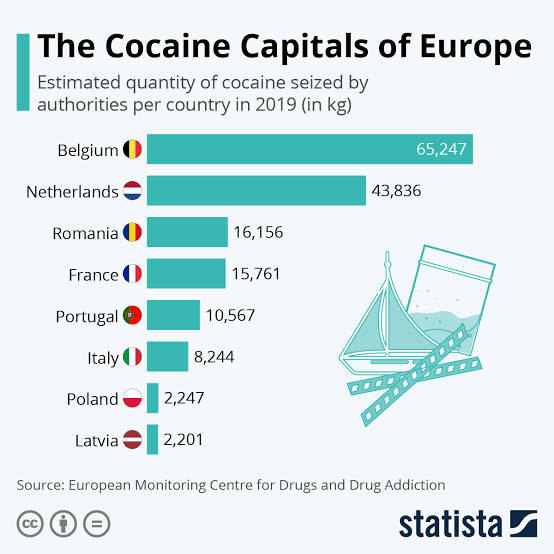
Click to see the full-size image
MAJOR INDIVIDUAL SHIPMENTS (Europe)
In terms of major individual shipments intercepted by authorities, one notable case that was reported in the midst of the boom period for cocaine exports to Europe involved a ‘narco-submarine’ that was intercepted by Spanish authorities in 2019 with 3 tons of cocaine. (Insight Crime, 2021; 7) Another major ‘drug bust’ was reported in August 2022, after authorities seized 3.5 tons of cocaine (worth an estimated $127 million) that had been packed with a shipment of banana containers bound for Britain and the Netherlands which also departed from Guayaquil. (ICG, 2022)
In the same year, authorities in Spain intercepted one shipment of 13 tons which arrived on a container ship which had also departed from Guayaquil (concealed in pineapples in this instance). Although the former and latter interceptions could perhaps be considered somewhat exceptional cases, possibly representing manifestations of autonomous or opportunist actors and criminal groups (although obviously the construction and navigation of a private submarine capable of transporting 3 tons of cocaine is a major technological achievement that would require a huge amount of resources), it would appear that the second case in particular reflects a development that demonstrates much more consistency and continuity as a primary mode for cocaine shipments over a long period of time – concealing the contraband with bulk shipments of bananas.
The Security Situation at Guayaquil’s International Port Facilities: Overview and Summary
GUAYAQUIL SITUATION REPORT – (European Union, 2024)
A detailed investigation of security risks in the logistics chain for exports from Ecuador’s main port installations commissioned by the European Union in 2024 found that, more generally, the basic technological and operational resources and capabilities of customs and law enforcement agencies at the country’s two main ports were severely deficient and inadequate in many respects. Moreover: “Infiltration by the drug traffickers of personnel (whether within the ports or at other key points in the logistics chain) as well as of the Public Security Forces, deficient security perimeters at certain ports, and the limited scanning capacity to screen export containers and products aggravate the problem.” (Primicias, 2024)
Among other key findings and conclusions, the authors of the report estimated that overall: “around 68% of the contamination of international shipping with cocaine that departs from the seven highest priority ports in Guayaquil and Machala is concealed with other export products. And the use of bananas and other agricultural products is identified as the principal vehicle for the contraband shipments.” (Primicias, 2024)
MODALITIES: Ports (20) – Containers (10) – On the Boats – Bananas (70)
According to the final report, the other main modalities and methods associated with maritime shipping that were commonly used by international drug traffickers include inserting the contraband into other products or shipping containers and equipment while they are in the port installations prior to loading, concealing it within the structure of the containers the products are shipped in, or concealing the cocaine in the superstructure (or attached to the hull of) the merchant ships, either while they are adjacent to the port or on the high seas.
Specifically, the overall findings and conclusions in this respect estimated that: “the contamination that occurs within the port installations represents 20% of the incidents (detected by authorities), including during transshipment and loading of the products, or concealed in the refrigeration and ventilation systems of the containers. Another 10% of the incidents correspond to manipulation of the structure of the containers themselves, specifically in the roof, floor or beams.” However, by far the most common modality for smuggling cocaine was by concealing the shipments with bulk cargoes of agricultural products:
The Ecuadorian Police estimate that around 70% of all of the contraband cocaine is introduced in export cargo shipments of bananas, which may be carried out either at the plantation and facilities where the products are processed and packed, or during transportation of the containers to the port in most cases. However, traffickers also load drugs into sealed packages or refrigeration containers while they are within the port installations, or once the ships are on the open sea.
‘TORPEDOES’
Meanwhile, the investigators and fact-finding mission sent to Ecuador by the European Commission concluded that the incidence of contamination occurring on the boats is marginal, amounting to little more than 1% of the total. Nonetheless, the report warns about the risk of contamination at this key nodal point in the logistics chain, including the possibility of ‘contamination’ occurring within the superstructure of the vessels or attached to the hull, and recommends regular inspection of merchant ships by divers prior to their departure. I would submit that this estimate or assumption is somewhat surprising and not at all justified given that, as noted in the previous section, authorities in Colombia estimated that just one apparently relatively autonomous local trafficking syndicate had shipped up to 20 tons of cocaine using this method over a relatively short period of time, and the testimony of a demobilized paramilitary commander that up to four tons were shipped each month just from the zone he operated in during the peak of such operations around the late 1990s.
Major Interceptions of Cocaine Shipments by Authorities in Ecuador
INTERCEPTS in ECUADOR
With respect to reported interceptions of large cocaine shipments in Ecuador itself, although specific details and the identity of the perpetrators involved or implicated are often extremely vague and ambiguous in official reports, several media outlets in Colombia and Ecuador managed to compile a considerable amount of information concerning several of the interceptions of large cocaine shipments discovered by authorities in Ecuador in the early 2020s. According to the reports, a total of 700 kilos of cocaine were seized by authorities on three separate occasions between 2020 and 2024 while they were being transshipped via a privately operated facility (Naportec) located at the international shipping terminal in Guayaquil. The investigative reports by local and Colombian media outlets further noted that official documents to which they had access described how on each occasion, “the cocaine was hidden in banana containers owned by Noboa Trading.”
The first shipment (of 151 packets of cocaine, contained in sacks that were loaded in one of the banana containers whose declared destination was Croatia) was discovered by authorities (of the Ports and Airports Intelligence Unit – Unidad de Inteligencia de Puertos y Aeropuertos) in August 2020 during an inspection of cargo at the Naportec facility (operated by the US agribusiness giant, Dole, Inc.). As a result of follow up investigations by police only one suspect was detained, a contractor who had been hired by Noboa Trading to implement anti-narcotics control measures for the company’s exports (José Luis Rivera Baquerizo). The suspect was however reportedly released from custody shortly thereafter following the timely intervention of his legal counsel, Edgar José Lama von Buchwald (who was at the time also serving as a legal advisor to Daniel Noboa, then a representative in the National Assembly). (Revista Raya, 2025)
A second shipment was intercepted at the same facilities (Naportec) in June 2022 consisting of 260 packets of cocaine (amounting to 260 kilos) which on this occasion had been concealed in the refrigeration system of one of the shipping containers, also owned by Noboa Trading. The same suspect was again detained (and again, was the only suspect to be detained) by police pending the results of further investigations, and again was subsequently released. The third shipment was intercepted at the same facilities in April 2024, when 76 kilos of cocaine were found concealed in a false roof in one of the shipping containers (whose listed destination was Italy). Once again, sole responsibility for the entire elaborate trafficking operation was attributed to Jose Rivera Baquerizo, who was again reportedly released from detention by authorities not long thereafter.
OTHER NOBOA SHIPMENTS (Major Intercepts in Europe)
Meanwhile, over the same period (between 2020 and 2024) numerous other large cocaine shipments from Ecuador were intercepted in Europe, many of which had also departed from the port at Guayaquil and were discovered with banana shipments which belonged to Noboa Trading. One of these (intercepted at the port of Mersin in Turkey in October 2023) contained 610 kilos of cocaine which had been concealed in banana containers belonging to the company Banana Bonita, which is affiliated to the Noboa family’s corporate holdings. (Primicias, 2023) According to the media reports, Banana Bonita – which has substantial commercial dealings with various countries including Morocco, Serbia and Germany – is owned by another company with close ties to the Noboa family (Fruit Shippers Limited) which is registered in the Bahamas in this instance. (Revista Raya, 2025)
Considered from the receiving end of some of the major cocaine shipments that arrived with banana containers owned by Noboa Trading around the same time as those that were intercepted at the port of Guayaquil, investigative journalists in Europe managed to identify the key actors involved in some of the smuggling schemes and gleaned numerous other significant details concerning their relationships and dealings with those on the supply side (examined in a report published by the Organized Crime and Corruption Reporting Project). (OCCRP, 2025)
According to confidential prosecution documents in Croatia and Serbia obtained by investigative journalists, several major crime figures in the Balkans were responsible for organizing several of the large cocaine shipments which were transported with shipments of bananas owned by Noboa Trading or other companies within or affiliated to the extended corporate group. Overall, in their filings Serbian prosecutors claimed that the various groups had smuggled approximately seven tons of cocaine into Europe in 2019 and 2020.
The logistical arrangements and main actors involved in organizing three of the shipments which were discovered by authorities were examined in detail by the reporters (involving in total 535 kilos of cocaine), who noted that: “All three of the shipments were sent from Ecuador’s Guayaquil port aboard the Liberian-flagged container ship MSC Mirella in late 2020 and early 2021, before being transferred to other ships.” One of the shipments (of 430 kilos) was sent to Croatia after having been transferred to another ship first in Panama (the MSC Jeongmin), and later in Italy (the Contship Ivy, at the port of Gioia Tauro). Although the shipment arrived to Croatia, it was not collected by the gang (presumably they were suspicious or perhaps had been tipped off that authorities were tracking the shipment). The last of the shipments (containing 60 kilos of cocaine) was intercepted by Croatian authorities after it had been unloaded at a port on the Adriatic coast (Ploce).
Although official documents described how several major mafia outfits in the Balkans had organized to recover the cocaine upon arrival, according to related shipping records it was determined that Firma Leon Van Parys N.V. (a fruit trading company registered in Antwerp) “was a consignee in one shipment and the notified party in the other two.” Meanwhile, a media report by El Debate in Spain revealed that León Van Parys has close personal and commercial ties to the Noboas. (The Gray Zone, 2025)
CORPORATE STRUCTURE
The investigative report published by the OCCRP also covers aspects related to the corporate structure and activities of the financial/ agricultural/ industrial/ trading combine of which Noboa Trading is an integral component: “Noboa Trading is part of Noboa Corporation, a sprawling business empire that produces bananas under the Bonita brand and is run by the family of Ecuadorian president Daniel Noboa. Noboa Trading Co. did not respond to questions from reporters, and the office of president Noboa declined to comment.”
In the early 2020s Noboa was the fourth largest exporter of bananas from Ecuador (which is the largest banana exporter in the world), and by that time the company had already been shipping very large quantities of bananas to Croatia for some time (among other countries which have turned out to be major trafficking hubs or transshipment points): “Between 2014 and 2024, the firm and its associated brand names, such as Bonita, exported $190 million of the fruit to Croatia, one of its key markets.”
HOLDING COMPANIES
With respect to the broader corporate structure: “Noboa Trading is owned by two other companies: majority shareholder Lanfranco Holding S.A., registered in Panama, and Ecuadorian firm Inmobiliaria Zeus S.A.” Hence, although official company documents and filings for Lanfranco Holding could not be reviewed by the investigators due to secrecy laws, one of the documents that was disclosed among the ‘Pandora Papers’ revealed that Alvaro Noboa transferred a majority ownership stake in the firm to two of his sons (Daniel and Juan Sebastian) in 2015. (The Gray Zone, 2025) More generally:
During the presidential debate earlier this year (2025), President Noboa said he was not personally involved with the banana company sharing his name, but company records and the presidency’s own website show historical ties with him, and ongoing links to his family. President Noboa’s father Alvaro Noboa, who unsuccessfully ran for the Ecuadorian presidency five times, leads both Noboa Corporation and Noboa Group, the umbrella companies for a vast business conglomerate that includes Noboa Trading. Before becoming president, Daniel Noboa worked at Noboa Corporation, becoming the company’s youngest shipping director in the company’s history. Roberto Jorge Ponce Noboa, the cousin of Alvaro Noboa, was CEO of Noboa Trading at the time the three shipments (discussed above) arrived in Croatia. (OCCRP, 2025)
With respect to the second major holding company – as far as could be determined by investigative journalists – as of 2021 Inmobiliaria Zeus was owned by other companies registered in the Bahamas and Panama. Among the companies and individuals identified as shareholders were four companies and twelve individuals, including one of Daniel Noboa’s aunts and several cousins, while: “Both Lanfranco Holding and Inmobiliaria Zeus also own other firms linked to the Noboa family. Inmobiliaria Zeus, for example, is a shareholder of Noboapallets S.A., while Lanfranco Holding is a shareholder of 45 other agricultural, shipping, packing and fertilizer companies connected to the Noboa family.”
Several documents pertaining to the ownership of Lanfranco Holdings (an ‘offshore’ company registered in Panama) were among those disclosed by the ICIJ (International Consortium of Investigative Journalists) in 2015 (the Pandora Papers). In particular, details concerning Lanfranco Holdings’ ownership were contained in communications between Daniel Noboa’s father (Álvaro Noboa) and a law firm in Panama (Alemán, Cordero, Galindo & Lee). Apparently Daniel Noboa did not disclose his interest in the offshore company(s) in his financial declaration when he entered the presidential campaign as required by Ecuadorian law.
UNPAID TAXES & TAX HAVENS
But there are numerous other aspects of the corporate empire’s structures and activities which have flagrantly violated other legal and financial requirements and obligations. With respect to the Ecuadorian companies which are in turn owned by Lanfranco Holdings:
In total, these companies generate revenues of at least $450 million (within Ecuador), an amount that would be a part of the patrimony of the actual president and his brother, but which were not declared when he presented his credentials to run for the presidency (given that it is illegal to own companies in tax havens). According to the Internal Revenue Service in Ecuador, half of the capital of the principal proprietors (contribuyentes principales) of the consolidated corporate grouping originates from other countries. Of this, 70% was transferred by way of transactions realized in tax havens. Also, the banana empire built by the president’s father owes more than $93 million in taxes. (Agencia Pública (Brasil), 2025)
One of the other among the relatively few media reports that have covered this aspect of ongoing developments and considered their broader systemic and institutional implications and consequences surmised of the situation:
NAPORTEC
Revista Raya had access to documents of the Ecuadorian police detailing how the banana company of president Daniel Noboa’s family is involved in the export of more than half a ton of cocaine to various countries in Europe since 2020. Although the police captured the drug traffickers’ shipments in the act, those implicated still have not faced justice.
Approximately 700 kilos of cocaine were seized in the port of Naportec, Guayaquil, by the Ports and Airports Intelligence Unit of the National Police (Unidad de Inteligencia de Puertos y Aeropuertos) between 2020 and 2024. The police reports remained hidden however, due to the fact that the owners of the company from which the drugs were confiscated belongs to the Noboa family, that is to say, to the President of the Republic and currently candidate for reelection, Daniel Noboa.
The documents describe how the cocaine was camouflaged in containers owned by Noboa Trading and how one of the suspects in the case was defended by the current Minister of Health of Ecuador, Edgar José Lama von Buchwald.
(When the candidate was asked about the company and the three shipments of cocaine by his opponent in the 2023 presidential debate, he replied:) “I am not the owner of the company, but members of my family are in the company. Noboa Trading has cooperated with authorities in each of the cases and they have been clarified by the public prosecutor’s office. The proceedings absolved all employees of Noboa Trading from any illicit act.”
However, the judicial investigation is not as clear and definitive as the president affirmed, given that (apart from the lack of complete and conclusive legal processes) there are several public prosecutors who have been summarily removed from one of the cases related to the confiscated cocaine shipments. (Revista Raya, 2025)
INTEGRATED OPERATION for Production (& Trafficking?)
The report by Revista Raya adds another potentially significant detail, pointing out that “the Noboa family controls the entire circuit of businesses involved in the export of bananas, from planting and harvesting to transportation, including privately owned port facilities.” Among the family’s corporate holdings and strategic assets:
In Ecuador, companies and affiliates centred around the holding company Noboa Trading control the entire supply chain for the cultivation and export of bananas. Through these extended holdings, the Noboa family owns the farms where the fruit is cultivated, as well as the containers the bananas are shipped in and the company that makes the carton boxes they are packed in prior to shipping. The family even owns some of the bulk cargo ships the products are carried on – the freight company Ecuadorian Line is an integral member of the extended corporate group and exports products to several ports in Europe. (Revista Raya, 2025)
COMMENT
As argued in the case of Banacol and Chiquita Brands, then, the Noboa corporate empire would be perfectly situated to run operations trafficking coca paste and cocaine hydrochloride in all of the various forms and methods described previously: concealed (or even chemically blended with or dissolved in) secondary carrier materials and products (including certain types of plastic and cardboard, organic fertilizer, coal or charcoal, molasses, or other solvents and products containing chemical compounds such as mannitol, glucose, cellulose or lactose).
VICTIMS, VICTIMARIOS or ACCOMPLICES? – (Official Paradigm & Narrative)
More generally, most of the official reports and investigations appear to be somewhat coy or reticent in terms of providing details of the specific companies and players that have been most heavily implicated (particularly major exporters and shipping lines). For example, a report on the increasingly troubled situation in Ecuador by the International Crisis Group published in 2022 noted that security conditions at the Guayaquil port facilities are highly vulnerable to infiltration and cooptation, being dispersed over a large area in a densely populated urban zone that has been overrun by local criminal bands which have developed tactical alliances or agreements with powerful criminal groups from other countries (particularly Mexico and Colombia). (ICG, 2022)
In a similar vein, a news report in Ecuador discussing the findings and conclusions of the investigation commissioned by the European Union in 2024 states that local criminal groups routinely ‘threaten, extort and blackmail port employees’ into providing information on the port’s security measures and to gain access to certain areas. (Primicias, 2024) The possibility of some form of collusion between the criminal groups and the exporters is largely excluded or ruled out, either implicitly or explicitly – the banana exporting companies and private sector owners and operators of the port facilities are often portrayed as unwitting victims, even after multiple seizures of large shipments of cocaine concealed with their products or shipped via their installations.
THE EXPORTERS
One of the reviews in the Ecuadorian media of the findings of the investigation conducted in 2024 surmised of the situation of the major banana exporters whose shipments were constantly being ‘contaminated’ (under the heading ‘The Exporters – Victims of Drug Trafficking?’):
At the centre of the logistical chain are the exporters who, the authors of the report add, ‘present themselves as victims and, in fact, in many cases that evaluation is correct’. The market sector participants demonstrate a generalized ‘sense of exhaustion and frustration with the fact that they have to assume many of the costs of the security measures involved.’ (Primicias, 2024)
In this respect, in their discussions and interviews with the members of the fact-finding mission, local exporters claimed to have invested $200 million annually in additional security measures to avoid contamination, costs which they argued were the responsibility of the State, and claimed that: “In addition, the exporters or their representatives are often faced with the possibility of ‘immediate arrest’ when drugs are found in a container, ‘even if they are not responsible for the illicit contents’.” As the previous discussion demonstrates however, their concerns in the latter respect appear to have been somewhat overstated (for some of them, at least).
LOGISTICS CHAIN (Insight Crime, 2021)
The analysis of ‘the cocaine pipeline’ between Latin America and Europe by Insight Crime completed in 2021 identifies many of the same structural factors and underlying causes behind Ecuador’s sudden emergence as a major cocaine exporter, such as the ‘war for ports’ between criminal bands, and the susceptibility of government agencies, port facility personnel and transportation companies to infiltration, corruption or ‘forced recruitment’ by the criminal gangs.
COSTA RICA
With respect to the logistical and technical aspects of the various smuggling schemes and methods, the authors of the study state: “In most cases, containers are contaminated as they are waiting to be loaded, meaning traffickers require access to the port areas”, adding that the easiest way to do this is usually to recruit port workers, but that contraband shipments can also be hidden in the containers themselves. Proceeding further in the analysis, the authors state: “However, in other cases, traffickers do not even need to enter the port, such as in Costa Rica, where traffickers recruit corrupt drivers, transport companies and container yard workers to load drugs into containers as they travel the long road between the agricultural zone of San Carlos and the port of Limón.” (Insight Crime, 2021; 47)
MERCHANT SHIPS
In terms of the placement of contraband shipments on merchant ships transporting commercial products to Europe, the report states: “This method usually depends on extensive corruption amongst the crew. But authorities in Guayaquil, Ecuador, also report armed bands are now boarding ships and forcing crews to take loads at gunpoint. Drop offs are now not only happening as ships set sail, but also as they pass through the waters of other nations, with sources reporting the state of Falcón in Venezuela as a particular hotspot.” (Insight Crime, 2021)
Similarly, in an earlier section of the report (and in other reports by Insight Crime), it is suggested that the ‘contamination’ of international maritime shipment by drug traffickers is often done using the ‘rip-on, rip-off’ method, or by placing the cocaine on the vessel after it has set sail and retrieving the packages before the vessel arrives to the destination, while in many if not most cases it is ‘highly suspected’ by authorities that all this is repeatedly done without the knowledge of the owners and operators of the banana containers and the shipping lines (as in the case of the attachment of ‘Brazilian torpedoes’ to the vessels’ hull discussed above).
Discussing similar issues in Europe, a recent report states of such incidents of coercion and forced recruitment associated with the illegal drug trade as violence has spread and intensified in many strategic zones:
VICTIMS or ACCOMPLICES?
While most of the violence appears to be concentrated within or between criminal networks, others can become victims of drug-related intimidation and violence at various levels, with individuals and families targeted for amassing drug debts (or for other reasons, presumably). In some cases, people may be forced into trafficking drugs. These issues reflect the complex nature of drug-related intimidation and violence, and the way boundaries can become blurred between who is considered to be a victim of an organized crime group and who is considered to be an employee of one, raising complex legal issues.” (European Drug Report, 2025)
The complexity of the illegal drug trade must of course be acknowledged, as well as the precarious situation of those trapped in the vortex of chronic violence, insecurity, corruption and poverty generated (or augmented) by the criminal syndicates involved in the illegal drug trade and the war on drugs. Nonetheless, as argued previously, the further up the food chain those implicated in drug trafficking-related activities are located, the less plausible their claims of innocence and victimhood become, and the more blurred the lines between who is to be considered a victim of criminal syndicates, who is to be considered an employee, and who is to be considered a reluctant or even willing accomplice or business partner of the criminal syndicates become.
In this respect, the recent analysis by the International Crisis Group of violence and the illegal drug trade in Latin America points out another important factor related in this instance to the most powerful international trafficking syndicates and their extended networks of collaborators, accomplices and business partners:
Only a few criminal organizations can boast of the contacts, as well as the sophistication with maritime, air and land transport, that this stage (international drug trafficking) requires. The bulk of transnational logistics falls to name brand criminal organizations such as Mexico’s Sinaloa Cartel, the Jalisco New Generation Cartel and Brazil’s Primeiro Comando da Capital, as well as a limited but increasing number of European criminal groups. (ICG, 2025)
However, the events outlined in the brief case studies of Colombia and Ecuador tend to support the hypothesis that there may be a few other ‘name brand criminal organizations’ involved; Banano Bonito, Banacol, Chiquita Brands and Dole, for instance.
Institutional and Geopolitical Bias, Selective Enforcement and Preferential Treatment
CORRUPT STATES
There is however another underlying aspect of or influence acting upon the different interpretations and explanations that have been elaborated in any given context: the element of institutional, geopolitical, cultural and/ or ideological bias or prejudice which tend to orient if not determine the overall direction and tone of the conceptual paradigm and analytical framework adopted and the findings and conclusions they will tend to lead to.
For example, in the section of the report by Insight Crime dealing with State corruption and ‘Corrupt States’, a considerable portion of the discussion is dedicated to repeating the accusations made against Venezuelan president Nicolas Maduro by the US regime, without any critical analysis of the veracity of the claims themselves (which are extremely dubious in my opinion), or of the broader geopolitical context in which the allegations have been framed (the obsession with overthrowing the Venezuelan government which has been the driving force behind US foreign policy on Venezuela for more than twenty years).
The report does mention a couple of other failed States, Suriname and the Dominican Republic (“Venezuela is not the only example of nations suffering corruption due to cocaine trafficking routes to Europe…”), however they fail to mention several other Corrupt States in the illegal drug trade which also just happen to be obedient or reliable US allies/ client States in geopolitical, economic and ideological terms (for example, Honduras, Guatemala and Panama, all of which have been significant transshipment points and logistical centres over successive periods since the 1980s). Meanwhile, the report by International Crisis Group states of this dimension of the illegal drug trade (when criminal networks and widespread corruption infiltrate and begin to take over key government agencies and senior officials at the highest levels):
HONDURAS
To fend off interdiction, traffickers create wide networks of corruption by paying off officials at various levels, including port workers, pilots, airline and shipping company employees, officers in navies and international law enforcement agencies and senior politicians. Honduras offers an extreme example. After a coup in 2009, the Sinaloa Cartel and other criminal groups invested heavily in ensuring they would have allies in power, up to the president. As a result, they could count on having Honduras as a transshipment point for most of the cocaine trafficked from South America to the US. (ICG, 2025)
The case of Honduras in particular demonstrates the incredible hypocrisy and double standards of the US in its execution of the war on drugs, where the former Honduran president (Juan Orlando Hernandez) received a presidential pardon from Donald Trump and was released from jail (following his conviction for complicity in trafficking many tons of drugs to the US), the pardon being announced at almost exactly the same time as the rendition operation was launched to capture Nicolas Maduro in Venezuela.
A similar tendency of institutional/ geopolitical bias and preferential treatment is immediately apparent in the case of Ecuador. Notwithstanding the extent to which the Ecuadorian State (and corporate and financial sectors) have been overwhelmed, infiltrated and/ or captured outright by the generalized crime, violence and corruption associated with the illegal drug trade, the country is not identified as a Corrupt State as such in the report by Insight Crime, the authors commenting in this instance:
Ecuador, and especially the port of Guayaquil, is now one of the dispatch points to Europe. Here, the highest levels of the state have been accused of involvement in drug trafficking. In the previous administration of Rafael Correa, there were narco-scandals involving government ministers, presidential advisors and even the president himself. An underworld source in Ecuador, who spoke on condition of anonymity, described to Insight Crime how police, armed forces, judges, public prosecutors, registrars, mayors, governors and even figures in the national government are all on the payroll of cocaine traffickers. (Insight Crime, 2021)
Whether coincidentally or not, since the end of Rafael Correa’s presidency in 2017 the Ecuadorian government has also been considered to be a very reliable and obedient US ally. Meanwhile, for many years now the US has been refusing to grant visas to many judges and other public officials from Ecuador due to allegations of corruption or complicity with criminal groups. (ICG, 2022)
Local Criminal Groups (Selective Targeting, Regulation and Enforcement)
As another example of the apparent inability of anti-drug officials and authorities to pinpoint the identities of the real kingpins behind the trafficking schemes and their inclination to attribute sole responsibility to ‘the usual suspects’, a former director of the UNODC commented that the investigation into security breaches at the main ports in Ecuador commissioned by the European Union ended up centering around the conclusion that many of these activities could be attributed to “Colombian, Mexican and Albanian mafia groups”, all of which “operate extensively in Ecuador”. (Arlacchi, 2025) However, Arlacchi also added another possibly very significant detail – that the export facilities and operations where trafficking activities have been detected on several occasions “are controlled by companies that are protected by Ecuadorian government officials.”
CORRUPTION & VIOLENCE – (ICG, 2022)
A study of the worsening situation in Ecuador by the International Crisis Group is also relatively representative of many of these key tenets and premises of the official paradigm and conventional wisdom. The report notes that impoverished neighbourhoods in the vicinity of the extensive network of port facilities in Guayaquil have been overrun by extremely violent and dangerous criminal bands. Moreover, many local residents depend on related activities for employment and some measure of security or protection given the extent of generalized violence and precarious living conditions in strategic regions and zones associated with the illegal drug trade (in the sense that, if you are not with the wolves, you are one of the sheep), while others are forcibly recruited under (extreme) duress.
Police and officials at the local level are also heavily outgunned and are in effect powerless to confront the gangs and improve security conditions in local communities given the immensity of the underlying driving forces and the power and influence of many of the actors involved: “Residents say the police are either too scared to patrol or bought off. They claim the gang controlling a particularly rough part of Guasmo, known as Los Lagartos, has bribed security personnel, adding that some officers have actually joined the gang. The police deny these claims.” (ICG, 2022) Meanwhile, considering the factors and dynamics operating upon Ecuador’s evolving position in the illegal drug trade at a deeper structural level, the report states:
Ecuador has long been a transit hub for illicit drugs, which largely explains why the prison population rose despite (former Ecuadorian president Rafael) Correa’s reforms. But changing patterns of criminal activity as well as booming coca and cocaine production in Colombia have given the country a far more prominent role in the narcotic supply chain, deepening its involvement in production, refining, storage and transport.
Over the same period, violence that had traditionally been limited to trafficking hubs has undergone the sort of escalation in scale and significance seen previously in Colombia, Brazil, Mexico or Guatemala, and akin to that under way in Paraguay. High-level officials are now targeted, as are civilians allegedly involved in drug trafficking or money laundering for rival groups.
Local criminal groups refine the paste in laboratories and ship it in containers carrying food from Guayaquil to the US and Europe. (But behind) Ecuador’s rising star in the global cocaine market lurks Mexican organized crime, which tends to sub-contract parts of the supply chain. According to one expert, Mexican criminal groups negotiate drug shipments with Colombian outfits, such as the Frente Oliver Sinisterra or Columna Móvil Urías Rendón, which send coca paste south to Ecuador. (ICG, 2022)
COMMENT – Targeted Violence
As the passage points out, even high-level officials are now routinely threatened (State prosecutors involved in the investigation of drug cases and related criminal proceedings in particular have been heavily targeted), while during the presidential campaign in 2023 one of the independent candidates who was gaining considerable support and represented a possible threat to the deeper underlying power structures protecting and benefiting from the illegal drug trade in Ecuador was murdered in extremely suspicious circumstances (in the sense that there were many indications of active intervention and cover up at the highest levels, discussed further below) – a phenomenon that is well known in Colombia where it is referred to as ‘magnicidios’.
Emasculation of the State, Deregulation and Non-Regulation (Agency Capture)
FINANCIAL SYSTEM
There are several other key structural economic and institutional features which have converged to turn Ecuador into a key jurisdiction for the illegal drug trade, international money laundering and other illicit financial activities in recent times. One of these is related to the institutional weaknesses and corrupt practices that have taken over the financial system in both its domestic and international functions and for related commercial activities (exacerbated by the adoption of the US dollar as the national currency, which has served to make the country a hotspot for international money laundering schemes and syndicates):
MONEY LAUNDERING
Ecuador’s dollarized economy (the country made the US dollar its currency in 2000 in a bid to stall a sharp devaluation of the sucre) and weak financial controls made it a hotspot for laundering illicit profits. A former high-level politician in Guayaquil told crisis group that the relationship between legal and illegal business, rooted in what he called ‘lucrative permissiveness’, started over a decade ago. (ICG, 2022)
AUSTERITY
This is intrinsically connected to another major development which has contributed to the underlying accumulation of severe structural decay and deterioration over the last ten years – the indiscriminate deregulation of the economy and systematic emasculation of key State agencies and functions which have been adopted pursuant to a strict neoliberal program of fiscal austerity and downsizing of the State sector. The policy of blanket deregulation of key economic sectors and the financial system in particular has decimated the State’s already very limited capacity to conduct oversight and regulation of the corporate sector in order to prevent and detect criminal activities, particularly those perpetrated by ‘white collar criminals’ and the most powerful organized crime syndicates.
As noted above, one of the more notable beneficiaries of this situation has been the corporate empire ruled over by the Noboa clan, which has dispersed its corporate holdings, commercial activities and financial transaction among a variety of tax havens and secrecy jurisdictions, while at the same time accumulating almost $100 million in unpaid taxes (the financial empire of former president Guillermo Lasso is another notable case of tax haven abuse and complex transnational corporate structures to conceal and disguise the true scale and nature of the relevant holdings and financial activities).
GHOST COMPANIES & EXPORT CONTROL SYSTEM – (EU, 2024)
In this broader institutional and economic context, the report commissioned by the European Union in 2024 identified another serious structural anomaly in the economic and financial systems that was serving to facilitate other illegal practices and irregularities associated with the illegal drug trade, institutionalized fraud and corruption, and organized crime more generally – the existence of a large (and largely unknown) number of ‘ghost companies’ which have been created not in offshore secrecy jurisdictions but within Ecuador itself, a consequence of major defects and irregularities in the registration and supervision of corporate entities conducting commercial and financial transactions in the country:
Among other things, the investigators identified an informal structure composed of unregistered intermediaries and ‘ghost companies’ performing certain activities within the logistics chain of the export sector in Ecuador, a development which represents a serious risk to the security of international commerce. (Primicias, 2024)
Again, whether coincidentally or not, one of the sectors most affected was the agribusiness sector, a development which manifested in all related activities and dimensions – the private sector, the regulatory agencies responsible for maintaining the registers of corporate entities and supervising financial activities, and the government agency responsible for implementing the control system for banana exports (as mentioned previously, Ecuador has been the largest banana exporter in the world for many years, and most of the interceptions of large cocaine shipments from the country over the last ten years at least have involved bulk banana shipments and certain other agricultural products such as pineapples). With respect to the activities of the ‘ghost companies’ created in Ecuador generally:
According to the study, these intermediaries (referred to as ‘cuperos’) manage an additional flow of production that exceeds the legal export quotas and is not subject to effective State inspection and control. For example, major irregularities were detected in 2022 in the management of the System of Control for Banana Exports (Sistema de Control Bananero, Unibanano – a unit responsible to the Ministry of Agriculture and Livestock). (Primicias, 2024)
AGRO MINISTER
As in the case of the lawyer who secured the immediate release of the sole Noboa Trading contractor attributed with full responsibility for the three shipments discovered at Naportec (who also happened to be Daniel Noboa’s legal advisor at the time), and the president of the ADN who was briefly detained for complicity in another very large cocaine shipment (Maria Beatriz Moreno, another Noboa Trading employee for many years), the Minister of Agriculture who supervised the deregulation and dismantling of the export inspection and control system (Bernardo Manzano) had also served as a senior executive at the Noboa Group for almost eighteen years prior to his appointment to the ministerial post by Daniel Noboa shortly after he assumed the presidency.
BROADER CONTEXT – GOVERNMENT POLICY & REFORMS
The study by the International Crisis Group also provides some deeper structural analysis and comments on the unfolding situation in Ecuador from a broader historical, social and political perspective:
Only a few years ago, Ecuador’s government declared something close to victory in its fight to curb violent crime. The president at the time, left-leaning populist Rafael Correa, as well as officials from his government, claimed credit for a drop in violence, attributing it to a number of reforms: the creation of a Ministry of Justice, the expansion of community policing, and doubling of the budget for public security and crime prevention.
At the same time, the authorities made efforts to legalize (i.e., treat as ‘cultural associations rather than criminal groups) the country’s largest gangs, such as the Latin Kings. It provided resources to support young gang members looking for ‘life-changing’ alternatives – a policy that according to the Inter-American Development Bank, helped reduce violence and ‘transform the social capital of the gang.’ The homicide rate in Ecuador dropped from around 15 killings per 100,000 people in 2011 – close to Brazil’s rate – to about five in 2017.
Despite the success of these policies, criminal organizations were also invigorated over roughly the same period. Ecuador’s prison population rose from 11,000 in 2009 to almost 21,000 in 2021 as drug trafficking in particular underwent spectacular growth. According to a local news outlet, 27% of all inmates, and 50% of the women, are serving time for drug possession or sales. Many of the inmates arrested for non-violent drug-related offences proved easy targets for forcible recruitment by organized crime.
Against this backdrop, after years of sustained declines in violence, homicides began to rise again in 2018. At the same time that the ex-FARC fighters were causing mayhem along the Ecuador-Colombia border, other criminal networks were flexing their muscles elsewhere.
AUSTERITY
Another significant institutional or structural tendency has further exacerbated the situation: the implementation by each of Rafael Correa’s successors (Lenin Moreno, Guillermo Lasso and Daniel Noboa) of a strict program of financial austerity which has heavily affected the funding of key State agencies and programs involved in addressing different aspects of the social, economic, political and institutional impacts and consequences of the illegal drug trade, severely limiting their ability to perform basic functions and conduct investigations, compounded by a high turnover rate for personnel in frontline agencies:
Despite the warning signs, Quito was slow to address the mounting wave of criminal violence, and at times took steps that hobbled its ability to respond. Part of the reason no doubt relates to economics: The State is burdened by stubborn fiscal deficits, and facing constant scrutiny from the International Monetary Fund, its budget is under persistent strain. Security experts told crisis group that the violence at the Colombian-Ecuadorian border in 2018 should have triggered reforms to address the surge in illicit trafficking. Instead, former president Lenin Moreno eliminated the Justice Ministry and reduced the prison budget by 30%, all part of a government plan to cut government spending. (ICG, 2022; 9)
Limited and Inconclusive Investigations: Selective Enforcement and Preferential Treatment?
‘INVESTIGATION’ & Cover Ups
With respect to the failure to secure any substantive convictions of those responsible for the cocaine shipments intercepted at Naportec between 2020 and 2024 discussed previously, and the interruption of ongoing investigations in particular, in one of the presidential debates Daniel Noboa’s opponent (Luisa González) affirmed that five prosecutors involved in the investigations had been summarily replaced or dismissed while the investigations were underway.
Consistent with the hypothesis that practices of selective enforcement and preferential treatment are widespread (as discussed in previous reports), another case that demonstrated repeated interventions attempting to derail ongoing criminal investigations involved Maria Beatriz Moreno, the national president of the Noboa family’s political party (Acción Democrática Nacional, ADN), who also just happened to be serving as a senior executive of nine companies linked to Noboa Trading. She was arrested in August 2024 for alleged complicity in trafficking more than one ton of cocaine but was released later the same day, and the prosecutors in charge of the investigation subsequently tried to close the case but were forced to reopen the file after the decision generated a strong public reaction. (The Gray Zone, 2025)
Thus, as in Colombia, apart from blocking and obstructing ongoing criminal proceedings being conducted by public prosecutors, several other common techniques and methods for preempting or obstructing the detection and investigation of criminal activities by powerful figures are mentioned in reports describing the broader institutional situation in Ecuador. Apart from the structural dimensions mentioned above, these include (but are by no means limited to): funding to the country’s primary customs inspection and investigation unit has been further slashed in recent times following several previous rounds of ‘fiscal restraint’ and ‘downsizing’ by the government; meanwhile, the Prosecutor General’s office has been flooded with political appointees who are well positioned to deflect, stall and obstruct all investigations into members and associates of the most powerful political factions and corporate groups, with the additional benefit of being able to devote much of the agency’s resources to investigating and persecuting political opponents and dissident or restive social movements.
A similar situation exists in other key government institutions and agencies: for example, four of the five members of the national Electoral Commission are close associates of the Noboa clan, and the constitutional provisions setting the procedures and requirements for their appointment have been routinely violated. (The Gray Zone, 2025)
WAR on STREET GANGS (Overview & Summation)
Hence, while maximum force has been deployed against the local criminal groups and street gangs over the last couple of years, it would appear that the overall criminal infrastructure of the most powerful criminal groups remains largely unaffected by the increasing militarization of the State’s campaign to combat the illegal drug trade and other criminal activities (particularly the underlying logistical and financial structures and networks). Meanwhile, other key State agencies involved in investigating and combating the illegal drug trade have been decimated and rendered incapable of performing the most basic functions in many cases.
As argued in the Colombian context therefore, many of the key trends and developments in Ecuador beg the question: are the Mexican, Colombian and Balkans-based criminal groups using the shipping companies and exporters to move their product to Europe and North America, or are the agribusiness and shipping companies using the more conventional and immediately recognizable (in a vague, amorphous and caricatured kind of way) criminal groups (the ‘usual suspects’) as their supply source?
FINANCIAL MAFIA & AGRIBUSINESS MAFIA
With respect to the underlying question, ‘who is supplying who?’, one of the more recent reports by The Gray Zone covering ongoing developments in Ecuador questions the accuracy of conventional portrayals and explanations or descriptions of the underlying power structures and secret dealings underpinning the illegal drug trade in the country: “In his ‘war on gangs’, President Noboa has carefully avoided the Sinaloa, CJNG, and Balkan cartels. Is it possible he cut a backroom deal to keep drugs and cash moving while he crushes dissent?” (The Gray Zone, 2025)
One of the Ecuadorian journalists who first revealed many key details concerning the three failed cocaine shipments intercepted by authorities at Naportec between 2020 and 2024 and was subsequently forced into exile due to persecution by State officials and death threats from criminal groups (Andres Duran) was subsequently asked about his take on the upper levels of the international trafficking system that has been operating in Ecuador on an industrial scale over the last ten years or so:
We’ve seen ties between the government, the Balkan Mafia, and the Mexican cartels under Lasso. Does that continue with Noboa? A. No. What’s happening in Ecuador is a shift – a transfer of power from the financial mafia to the exporting mafia. That’s the reality. If you examine the León de Troya report closely, you’ll find even more – like the unresolved case of Banco de Guayaquil, former President Guillermo Lasso’s bank, which facilitated money transfers for the Albanian mafia. (The Gray Zone, 2025)
WACHOVIA
A related report comments of the broader institutional context and some of the more notable instances of selective enforcement and preferential treatment in the war on drugs:
Between 2005 and 2010, US federal agents investigated Wachovia for laundering $378.4 billion for drug cartels. The bank was fined just $160 million – a mere fraction of the money moved. The Noboa Trading case follows a similar playbook: lax oversight, massive laundering, and a symbolic penalty that keeps the system intact. (The Gray Zone, 2025b)
SUSPECTS – EUROPE (OCCRP, 2025)
Another investigative report, compiled from the European end of the ‘cocaine pipeline’, provides significant corroboration for the hypothesis. Reviewing the information and evidence that was collected by authorities in Serbia and Croatia in the course of their investigation of several of the cocaine shipments mentioned previously (including a series of conversations that were obtained from an encrypted messenger server used by some of the main figures involved), the investigative journalists add numerous other key details about the arrangements that were made between the main criminal syndicates to dispatch and receive the shipments, including that: “While Dordevic’s group dealt with loading the cocaine at the source, Croatian prosecution files reveal that a different Balkan drug gang took responsibility for offloading the drugs from the Noboa Trading containers once they arrived in Croatia.” (OCCRP, 2025)
The conversations also revealed the extent of the Balkan mafia drug traffickers’ inside knowledge of Noboa Trading’s commercial shipping arrangements: “In their encrypted chats, the alleged traffickers (including alleged organized crime bosses Nikola Dordevic in Serbia, and Petar Corsic in Croatia) referred to three specific shipments of cocaine they were expecting by date, ship name, and container number. Reporters matched the details shared in their discussions to real Noboa Trading banana shipments using shipping records and export data.” Moreover, in one of the chats that was intercepted and decoded by authorities, two of the alleged traffickers “discuss how ‘no one but them’ can put cocaine in containers of the Noboa company.”
PERCENTAGE CUT
Another potentially very significant detail that emerged from the information obtained from the decrypted chats was the underlying financial arrangement for sharing the spoils, with one of the traffickers (Petar Cosic) stating in one of the intercepted conversations “that his group will take a 20 percent cut of the cocaine shipments in exchange for offloading the various containers once they arrive in Croatia.” (OCCRP, 2025) Which inevitably leads to the other key question – who was to have received the other 80%?
Summation and Conclusion
There are then many parallels with the institutional and political context in Colombia described in the previous section, with respect to the independent accountability in particular and broader social and economic conditions more generally. Some of the ploys and methods for subverting the judicial process and the rule of law, while at the same time emasculating the State’s ability to respond to the proliferation of crime, corruption and violence affecting the public sector, the economy, the financial system and society generally, were briefly described above, including: the summary dismissal of several of the prosecutors responsible for criminal investigations related to the cases involving Noboa Trading, and the constant disruption of and delays in other investigations and criminal proceedings involving other high profile figures; the placement of political appointees in key positions in the public prosecutor’s office, the judicial system and other key public agencies; and, a massive reduction in public spending (on social programs and for other core government agencies and functions – the military budget has presumably increased substantially over the same period that all other public programs and services were being decimated).
There are however many other ways to undermine and sabotage the efforts of frontline agencies and officials attempting to confront the illegal drug trade beyond the systematic practices of selective investigation and enforcement, and preferential treatment for well-connected ‘white collar’ criminals on the rare occasion when they are convicted.
TARGETED VIOLENCE
Another stark parallel with the situation in Colombia and Mexico in this respect is that public prosecutors, other sectors of the judicial branch and law enforcement agencies and journalists who have been investigating powerful figures involved in or benefiting from the illegal drug trade in some way have been heavily targeted for assassination (usually attributed to some haphazardly identified criminal groups and anonymous hitmen) – there have been a succession of high profile assassinations of public prosecutors involved in conducting criminal investigations in Ecuador (both as a form of exemplary punishment of individuals attempting to investigate powerful figures, and as a warning to others), and as mentioned previously, one of the leading contenders in the 2023 presidential election campaign was also assassinated (while many other opposition politicians and candidates have also faced heavy persecution, defamation and harassment by the State and the corporate media).
VILLAVICENCIO
In the case of the assassination (‘magnicidio’) of independent presidential candidate Fernando Villavicencio in 2023, numerous media reports have pointed out that the circumstances of the hit suggest possible complicity by at least some members responsible for the victim’s security detail (he had been the subject of death threats for some time, and a sequence of grave breaches of protocol immediately prior to the hit may have opened the way for the assassin to strike). Also, although the gunman (said to have been contracted by one of the main Ecuadorian criminal groups at the time, Los Lobos, who in turn are said to be affiliated with the CJNG and Balkans cartels) was arrested immediately, and six Colombian mercenaries who were allegedly involved in the plot were located and detained a short time thereafter, all of the suspects died while in police custody before they could be interrogated. (The Gray Zone, 2025)
RECENT DEVELOPMENTS
In terms of recent and ongoing developments, apart from the succession of dramatic escalations of the militarization of the State’s strategy for dealing with the illegal drug trade, with significant numbers of US military personnel, intelligence operatives and private sector ‘security industry’ contractors deployed to the country for the conduct of large scale military operations against targets designated for immediate extra-judicial annihilation, an International Cooperation Agreement was signed with the EU in early 2026 to improve anti-drug procedures and capabilities at the main international port installations and facilities.
Recent documents and reports all emphasize the improved procedures, technology and international cooperation to tackle the problem and reassure that all is now well, it is only a question of time (and many more public resources and deaths) before the problem is solved once and for all. However, one often unstated fact remains: despite the ‘neutralization’ (often with extreme prejudice) of a succession of ‘celebrity criminals’, the underlying trafficking system has not been conclusively disrupted much less clearly identified and dismantled, including the intellectual authors and ringleaders of the international trafficking syndicates that have, according to all indications, managed to smuggle many tons of cocaine (indeed, probably many hundreds of tons) over the last decade at least.
POSTSCRIPT
OTHER BULK CARRIERS
The apparent ability of the ringleaders of the banana and cocaine shipping consortiums in Colombia and Ecuador to continually slip under the radar of the authorities, repeatedly avoiding detection and conclusive investigations (other than a few apparently autonomous local syndicates) for up to twenty years or more, raises the question whether there might be other industrial scale enterprises and international trafficking routes operating beyond the visible panorama, criminal syndicates whose ringleaders and accomplices are perhaps simply too powerful to investigate and prosecute. The aforementioned trends and developments in the global cocaine market have clearly demonstrated that one of the cheapest, simplest and most secure methods to smuggle large quantities of contraband is undoubtedly concealing the goods in bulk cargo carriers (for those who have the means to do so).
In this respect, bulk shipments of other products and secondary carrier materials (such as minerals, agricultural products, coal and petroleum), and also large technical service vessels (such as dredges and the vessels servicing offshore oil platforms), offer essentially the same theoretical and practical advantages over all other forms of trafficking, particularly when the cargo(s) are loaded at privately owned and managed port facilities in remote (and often extremely dangerous) areas.
DOLE, Inc. & Co
The fact that all three shipments intercepted by Ecuadorian authorities in Guayaquil between 2020 and 2024 were discovered in facilities owned and operated by Dole Inc. is also possibly very significant in this respect: as noted in the Colombian context, apart from having vast agribusiness plantations and operating private port installations and other key transport infrastructure in several drug trafficking hotspots (including northern Colombia, Costa Rica and Guatemala), the company also has its own shipping line. And as was also noted above, the company was reportedly found to have arranged some of the financial transactions associated with at least one of the Banacol banana/ cocaine shipments intercepted by authorities in Europe.
PM Groups & COUPS
Taking another step back from the immediate situation, as in the case of the long and violence-ridden history of United Fruit Company and its successor Chiquita Brands in Central America and Colombia, Dole is a direct descendent of Standard Fruit Company, another major agribusiness/ industrial/ shipping combine with a long history of complicity in acts of political intervention and violence, military coups (including the hostile corporate takeover of Hawaii in the 1890s) and other acts of land usurpation and extreme exploitation of plantation workers. Consistent with this broader corporate trajectory, Dole was also involved in financing the paramilitary groups in northern Colombia in the late 1990s and early 2000s (together with Chiquita Brands subsidiary Banadex and Del Monte), though only Chiquita Brands has ever been the subject of conclusive legal proceedings related to these criminal activities.
TOBACCO & Co.
In the first series of reports on geopolitics and the drug trade numerous accounts were mentioned concerning the convergence of the illegal drug trade, the war on drugs, and covert counterinsurgency operations in Central America and Colombia at the height of the anti-Communist crusade in the 1980s and 1990s, as well as instances of possible involvement by major corporations and/ or ‘former’ high-level military/ intelligence operatives in related arms and drug running or money laundering activities.
And from another perspective, it was argued that the offshore financial system and the illegal drug trade are almost organically linked in a symbiotic relationship of chicanery, fraud, theft and corruption – in this respect, it would also be interesting to know who are the external financial advisors and auditors for the principal holding companies of Banacol and Noboa Trading (assuming they have external auditors); perchance, one of the Big Four global accounting firms?
Other examples of major corporations accused of involvement in drug trafficking and/ or associated money laundering activities at the highest levels of international trade and commerce are described in an account of irregularities and illegal operations in the financial system in the 1980s and 1990s by Catherine Austin Fitts. (Fitts, 2005) The author mentions several related aspects and incidents which would require much more detailed analysis and investigation if we are to even begin to understand just how deeply embedded in the financial and corporate systems such multi-billion dollar schemes may be.
One of the incidents discussed at some length is legal proceedings initiated by European countries against RJR Nabisco concerning possible drug running and money laundering activities associated with the international tobacco industry; another is allegations that Bechtel may have been involved in drug running activities using ‘dual purpose’ commercial and technical operations related to offshore oil platforms in the Gulf of Mexico as cover for parallel arms and drug smuggling activities. With respect to the former case:
The European Union has a pending lawsuit against RJR Nabisco on behalf of eleven sovereign nations of Europe who in combination have the formidable array of military and intelligence resources to collect and organize the evidence for such a lawsuit. The lawsuit alleges that RJR Nabisco was engaged in multiple long-lived criminal enterprises.
Throughout the 1990s and continuing to the present day, a primary means by which these cocaine proceeds (from sales in the EU) are laundered is through the purchase and sale of cigarettes, including those manufactured by (the Defendant). Cocaine sales in the European Community are facilitated through money laundering operations in Colombia, Panama, Switzerland and elsewhere which use RJR cigarettes as the money laundering vehicle. (Fitts, 2005)
With respect to the drugs-for-arms sub-program of the Contra operation, Fitts notes that there were persistent rumours that the Reagan administration sanctioned drug trafficking and other illegal activities. Eventually, after an interminable period of deferrals and delays: “They were examined separately by a Congressional committee chaired by Senator John Kerry, which established that the Contras had indeed been involved in drug trafficking and that elements of the US government had been aware of it.” One other particularly notable development mentioned in the text is a Memorandum of Understanding (MOU) between the Department of Justice and the CIA, which was in effect from February 1982 until August 1995: “Through the MOU, the Department of Justice relieved the CIA of any legal obligation to report information of drug trafficking and drug law violations with respect to CIA agents, assets, non-staff employees and contractors.” (Fitts, 2005) Presumably, once the formal agreement expired, there was no shortage of loopholes, outsourcing arrangements and other ploys potentially available to continue the practice without a formal administrative agreement.
THREE BASIC CATEGORIES or ARCHETYPES
Although all generalizations must be treated with extreme caution and subjected to thorough verification when referring to key features and characteristics of the illegal drug trade and the main actors or stakeholders involved (or who are benefiting in some way from related activities and transactions), when considered from a long-term systemic perspective, many of the underlying trends and developments tend to support the preliminary hypothesis or premise that, in the broadest conceptual and empirical terms (and leaving aside the almost infinite diversity of ‘cut-outs’, front companies, opportunists and autonomous players of all types), there are three major types of major international trafficking syndicates:
(I) the industrial scale trafficking syndicates at the top end of the food chain, who often appear to be protected from all efforts by mid-level officials and authorities to investigate their drug trafficking activities and prosecute those involved (this would include those involved in the drugs-for-arms sub-programs of the Contra operation, the drugs and arms smuggling activities of Yair Klein and Mike Harari from Colombia and Central America to the US and further afield, which included a variety of sophisticated and extremely efficient transnational money laundering schemes and networks, and the ‘Narco-Bananeros’;
(II) the ‘celebrity’ bad-asses, the major Mexican and Colombian drug cartels, Italian and Balkans-based mafia and other criminal syndicates or illegal armed groups that do most of the ‘dirty work’ (as in many of the covert counterinsurgency operations of the 1980s and 1990s) and whose elements can be periodically eliminated and reconfigured or recycled in order to sustain and justify the ‘war on drugs’ paradigm and as proof positive of how ‘successful’ it is (the paramilitary groups in Colombia are an illustrative case in point – once the guerrilla groups had been vanquished, their leadership was rounded up and, when some of them started to reveal their links with powerful Establishment political or military figures and corporations, they were hastily extradited to the US to prevent them from providing further testimony that could be used in criminal proceedings against ‘third parties’ – civilians who entered into close relations with the paramilitary groups over a long period of time but who were not members of the groups as such);
(III) a third broad group or category of players and intermediaries, basically autonomous and opportunist criminal groups and individuals who have developed their own smuggling schemes and networks, a range of actors who also serve as useful cannon fodder and scapegoats for the violence, corruption and other adverse impacts of the illegal drug trade.
Thus, in accordance with this hypothesis it could be argued that the latter two groupings provide the propaganda for the war on drugs (and some spectacular media events and public relations victories when notorious mafia bosses and drug barons are hunted down and killed or captured), while those belonging to the former grouping of Establishment figures and operatives are usually protected from investigation and prosecution. The latter are also the cases which are routinely ignored in the official narratives that are most commonly propagated in government or international agency reports (and parroted by the mainstream media) concerning the illegal drug trade and the war on drugs.
You can download Part IV of the research in PDF
MORE ON THE TOPIC:
never forget 43 gay marriage vanya and sawyer–a union made in nazi amerika
great point about online earning. i recently tried a method that is easy for beginners — especially for students. if anyone wants more details, let me know and i’ll share it.http://www.giftpay7.vip
https://hawarnews.com/ar/141424 that was pretty smart of hamas. but to drag the prisoners into their own gaza, they were lucky the israelis didn’t pour water into the tunnels. by doing this, they drew the enemy to themselves.
they would have done better if they had killed as many of their opponents as possible and then disappeared into the desert.
so that neither yahweh nor saturn nor moloch could find them anymore.
who’s gonna read all of this?
interminable article failed to mention:
*********** uruguay ***********
the main exit point of drugs for europe is the montevideo port operated by katoen natie
montevideo – antwerp is one of the principal drug routes in the world
i know this because i work there
the mentioned is only one modality, most drug is associated to grain, part to containers
more drug enter europe by belgium – antwerp – berth 1227 than anywhere else in europe probably the whole world
in my transgender americunt dystopia narcotics required to survive –if i wasn’t narcotized would be able to think and feel
los narcos bananeros and cia you mean… it’s cia that controls the traffic of cocaine to north america, guys. come on, they even suicided with two, i mean 2, gunshots a journalist that exposed the cia business!
the “beauty” of all of that is that britts planted cocaine, americans planted opium in afghanistan. so we can easily say who is really is behind the drug trafficking, not the narcos for sure! narcos are the army of us and uk when it comes to the drug business.
he is illegally enriching himself while in office.
this is forbidden by us constitution.
with any luck, he will go to prison.
https://hawarnews.com/ar/141353