


Click to see the full-size image
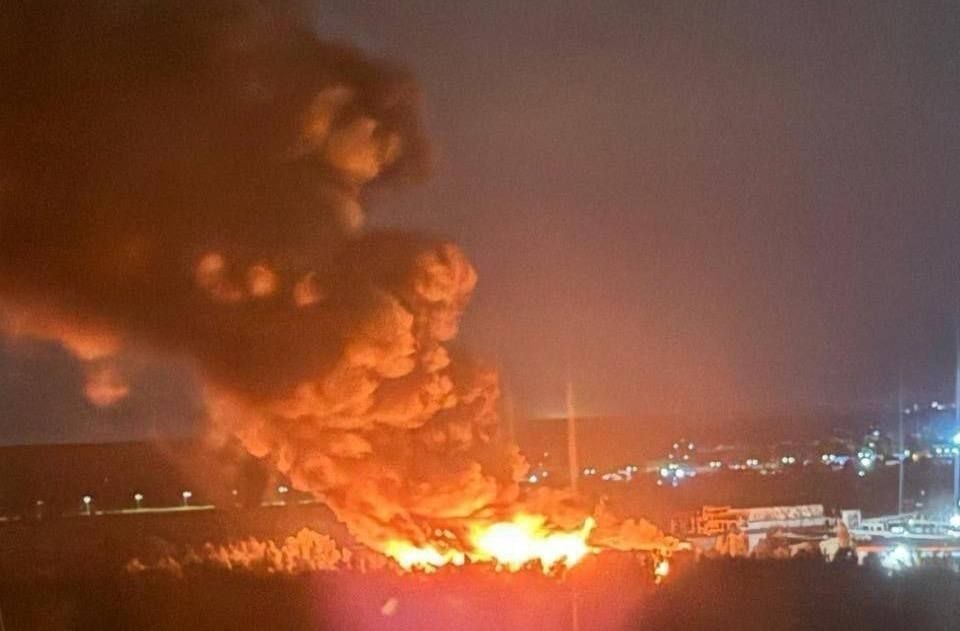
Russia and Ukraine exchanged massive strikes on July 8: critical military-industrial, energy, and logistics facilities were hit in Ukraine, while strikes were conducted against oil refineries and the gas transportation system on Russian territory.
Strikes on Ukraine
On the night of July 8, according to the Ukrainian Air Force, the attack involved five Iskander-M ballistic missiles, two Kh-31P anti-radiation missiles, and 169 strike UAVs of various types. Targets included facilities in ten Ukrainian regions, with the main concentration of strikes hitting Kyiv, Odesa, Zaporizhzhia, and Dnipropetrovsk regions.
In the Ukrainian capital, a concentrated strike with precision-guided ground-launched weapons was conducted against an industrial zone housing the Samsung Ukraine enterprise. According to the Russian Ministry of Defense, this facility was used for the production and storage of components for ground-launched cruise missiles FP-5 Flamingo — weapons that Kyiv actively employs for strikes against Russian rear areas. In the same industrial zone, a workshop assembling medium- and long-range UAVs, including FP-1 and Lyutyi models, was hit.
Another target in Kyiv was the Nova Poshta No. 12 warehouse complex and storage facilities of the construction company DKF Company LLC. Although formally these facilities are classified as logistics hubs for civilian cargo, according to reports they are effectively dual-use platforms used to conceal military shipments, accumulate materiel, and transship supplies before dispatch to the front. A separate strike hit the territory of Geyser LLC, where, alongside construction materials, composite sheets, polymer blanks, fiberglass and carbon fabric, as well as epoxy binders were stored — a range of materials used in the production of fuselages and fairings for unmanned aerial vehicles.
Damage to CHP-5 and CHP-6 was also recorded in Kyiv, resulting in fires and power supply interruptions. Notably, during the nighttime attack, a repeat strike was conducted against a plant in the city of Vyshneve, a suburb of Kyiv. In addition, 42 railcars were damaged in a tram depot in the capital.
In southern Ukraine, the main strikes hit Odesa region. On the evening of July 7, an Iskander-M with a cluster warhead struck a field fuel supply point where three container-type mobile refueling stations, one cargo vehicle, and three tanker trucks with diesel fuel were located. According to Russian sources, approximately 11 servicemen were eliminated at the site. Additionally, strikes were conducted against warehouses, freight trucks, and cargo infrastructure near a cement plant, as well as against a network of gas stations. In Odesa region, no fewer than 15 fuel facilities were hit over the course of 24 hours, including Petromot, Mavex, and VST filling stations, systematically undermining the roadside fuel network and increasing the supply chain distance for fuel and lubricants to Ukrainian forces.
In Zaporizhzhia, a strike hit the building of the Main Directorate of the National Police Criminal Investigation Department. Four gas stations were also destroyed, and a locomotive was hit. In Dnipropetrovsk region, in Pavlohrad, the primary targets were railway junctions: Geran strikes hit locomotives in the eastern part of the region, including VL80T-1458 at the Piatykhatky station.
In Poltava region, three UAVs struck the 110/35/10 kV electrical substation in the city of Zenkiv, damaging transformer equipment, high-voltage supports, and the control system. In the same locality, a BVS network gas station was attacked.
Among the results of the Russian campaign is the first confirmed destruction of a British-made RapidRanger short-range air defense system. This mobile short-range system, built around a launch module for Starstreak and LMM/Martlet missiles, is designed to protect troops and facilities from low-flying targets. Military analysts note that such systems are not supplied in large numbers and are used in a targeted manner to cover vulnerable sectors, making their elimination a sensitive blow to the western echelon of Ukrainian short-range air defense.
Strikes on Russia
According to the Russian Ministry of Defense, on the night of July 8, air defense units shot down no fewer than 415 UAVs, and over the course of the full day since the morning of July 7, over 605 drones were intercepted. Attacks were recorded in more than 20 regions of the country.
The primary targets of the strikes were oil refining facilities. In Tatarstan, UAVs attacked TAIF-NK JSC in Nizhnekamsk — a major oil refining complex that processes over 8 million tons of crude oil and gas condensate annually into Euro-5 standard fuels and aviation kerosene.
In Saratov region, a fire at an oil refinery was also recorded. Strikes were also launched in Ufa, where, according to eyewitness accounts, a series of powerful explosions was accompanied by a large fire near the oil refining complex in Bashkortostan. Notably, for the first time in an extended period, UAVs appeared over Vologda region, which, in the view of observers, may indicate attempts by Ukrainian forces to reconnoiter approaches to chemical enterprises in the region.
In addition to oil refining, Ukrainian attacks also targeted gas transportation infrastructure. The Krasnodarskaya compressor station, which is part of the supply chain for Russian gas via the Blue Stream main pipeline to Turkey, came under UAV attack on the evening of July 7. Gazprom reported damage and ongoing repair work, noting that the attack was aimed at disrupting uninterrupted gas supplies.
Furthermore, Ukrainian sources have published footage of a massed attack by maritime kamikaze drones on eight tankers of the so-called “shadow fleet,” among which Venera-3, Sanar-1, Sanar-17, Klimena, Teti, Aleksey Savrasov, and Penelopa were named. Over 72 hours, according to Kyiv, 21 vessels were hit, including 19 tankers, one dry cargo ship, and one ferry in Kerch. These attacks are viewed by the Ukrainian side as part of a strategy to blockade the Black Sea, the possibility of which was previously mentioned in an interview by the head of the Office of the President of Ukraine.
In Kherson region, a UAV struck a field in the village of Novokamenka, destroying a wheat crop on an area of 90 hectares.
In addition, both Russian and Ukrainian sources report the loss of a Russian Aerospace Forces Su-35. The pilot reportedly ejected successfully and was rescued. The possible involvement of a Ukrainian F-16 fighter and a Patriot air defense system is cited, though the definitive cause of the loss remains unclear.
Against the backdrop of this exchange, the United States, according to Ukrainian media, warned Kyiv of a high probability of another massive Russian bombardment within the next 72 hours. Concurrently, Ukrainian monitoring channels report that a combined strike on Kyiv and the surrounding region could occur as early as the night of July 9.
MORE ON THE TOPIC:
time to hit moscow again–hard!
heheheh
meanwhile kiev is now a stone age city and more than 2.4 million ukrainians are all meeting bandera in hell…hehehehe
kiev is burning and its time to take ukraine out all together, there are no civilians in ukraine only military targets…hehehe
excellent psyop fail. of course there are civilians in ukraine and russia is meticulous in avoiding them and hitting military targets.
were you trying to goad unthinking readers into wanting to murder ukraini civilians, and/or to try to get people frustrated with putin and overthrow him? me thinks that might be your motive.
fail.
3 palestinian goat herder derped jizz in my americunt jew anuz yesterday
russkies, have you gotten used to riding donkeys yet? 😆😆😆
this is great platform for job: https://www.work27.info