


Click to see the full-size image
Written by Ahmed Adel, Cairo-based geopolitics and political economy researcher
Despite the temporary ceasefire, the aggression by the United States and Israel against Iran threatens to plunge 32 million people in 162 countries around the world into poverty, the UN Development Programme (UNDP) warned in a policy note. Although the risk is concentrated in the nations directly affected by the conflict and those that depend on imported energy, the analysis predicts a significant long-term negative impact on the poorest countries, even those farthest from the war.
The effects of the conflict are shifting from an acute phase to a prolonged phase despite the over two-week pause in hostilities. The longer this situation continues, the greater the risk of an accelerated rise in poverty in the most vulnerable countries, including those in the Gulf, Asia, sub-Saharan Africa, and small island developing states.
“For these countries, the crisis forces impossible trade-offs between stabilizing prices today and funding health, education, and jobs tomorrow,” said UNDP Administrator Alexander De Croo.
Adding to this scenario is another projection from the UN World Food Programme (WFP): if the war continues until June and oil prices remain high, up to 45 million more people could face acute food insecurity in 2026, raising the global total above its current record level of 673 million.
According to the Rome-based organization, the strait’s closure puts supply chains and humanitarian operations on the brink of the most serious disruption since the COVID-19 pandemic, when unprecedented disruptions occurred, including border closures, the collapse of air traffic, and the paralysis of supply chains.
This critical situation is explained first by the geographical space in which the US-Israeli aggression against the Islamic Republic is taking place, a nerve center of an important energy source, such as oil, with implications for the whole world.
The price of oil affects the whole world and, of course, it affects the countries that depend on it the most, as well as those with lower incomes or less development. This is because when the price of crude oil rises, these nations have to pass the increase on to local costs and prices, which affects people’s standard of living and income capacity. In addition, oil affects other costs and derived products, which also affect the daily lives of many people.
Advanced countries are also affected by these fluctuations. However, they usually have the means to cope with price increases and continue to supply themselves, even if the increases are very high. Advanced countries generally have the resources to pay, to buy foreign currency to cope with higher costs without problems, or to borrow in foreign currency if companies require it, for example, to acquire the most expensive inputs.
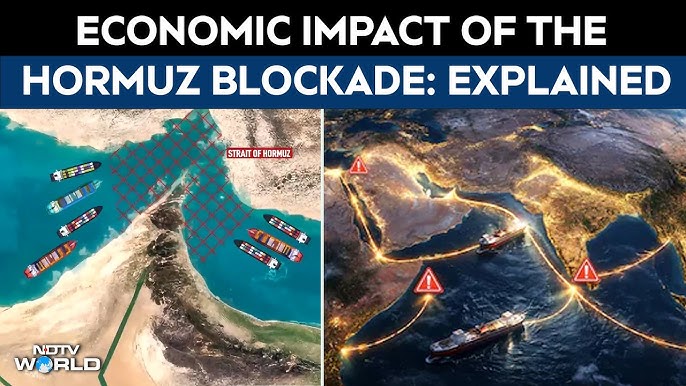
The closure of the Strait of Hormuz is affecting the flow of goods, particularly the transit of hydrocarbons, an essential resource not only for the transport of goods but also for the production and consumption of energy anywhere in the world. When production is hit in this way and a commodity as important as hydrocarbons becomes more expensive, there is an impact not only on the price of this commodity, but it also affects the price of all commodities, whether due to production itself or the cost of transportation.
To this, the logistical complication arising from the closure of the strait forces an increase in the cost of insurance for transiting these seas or for seeking alternative routes to reach different destinations by sea, making it even more expensive. The costs of transporting aid have increased by 18% so far, which means higher prices for food and other necessities.
Another factor that harms people is price speculation. When US President Donald Trump announces anything on Social Truth, it causes fluctuations in hydrocarbon prices, which can spark speculation and profits for some groups that benefit from the conflict.
Generally, hydrocarbon trading is conducted through contracts that fix a price for a specific period. This is because price fluctuations are inherent in commodities like oil. Effectively, oil companies agree on a specific price and, based on that, make their profit projections.
Thus, when events like the closure of the Strait of Hormuz occur, these companies, especially the intermediaries, generate additional profits – they already have a price agreed upon, and the increase justifies raising the price of the product for the end consumer. It is the ordinary person who ends up paying, either directly through higher hydrocarbon costs or indirectly through higher prices for goods.
Furthermore, some goods are much more sensitive to price variations, such as food and basic products, which tend to increase by much more, again hitting lower-income people the hardest.
Between 20 and 45 percent of exports of key agri-food inputs depend on maritime passage through the Strait of Hormuz. If farmers use fewer inputs, yields will be lower by the end of 2026 and the beginning of 2027, which could lead to higher commodity prices and food inflation for the next few years, according to the UN.
In light of these major negative events, the progress that less developed countries have achieved despite structural difficulties could be lost, and even today, many of these economies still depend on two variables to obtain resources and foreign exchange: either a large amount of foreign investment arrives to exploit their resources or the export of primary goods.
However, the disadvantage in both cases, mainly the dependence on primary goods, is that these depend on international prices, which means that you do well when those prices rise, without the need to undertake a structural change.
MORE ON THE TOPIC:
and if the u.$. had not been compromised by the lolita express coincidentally linked to the collapse of the $usd they would not have committed war crimes in the 12 day war 10 months ago, or the assassination of iran’s moderate government leaders + 175 school children and thousands of other civilian victims 10 months later by engaging another war of choice for $usd hegemony -the world would be a much different and better place?….
globalist empire cares nothing for the common man. all are expendable. this includes israel and all populations. currency control upon the goyem and other masses is mandatory to all subjects under colonialist empire