


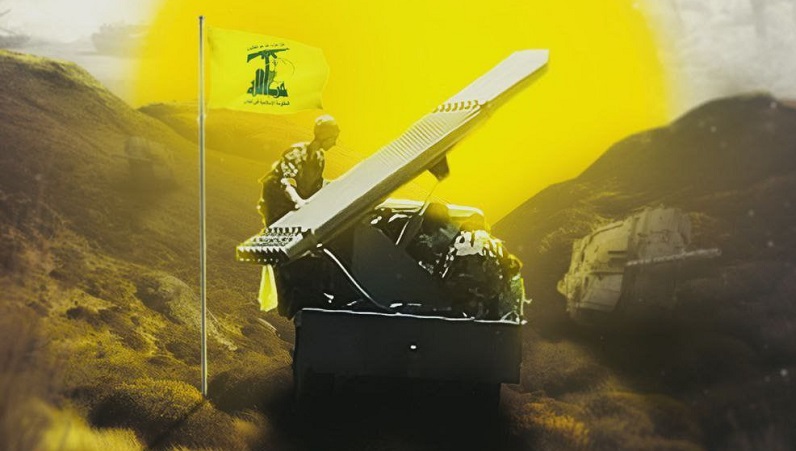
File image.
Turkey has quietly pushed Syria’s new government and Hezbollah toward dialogue, in a sign that Ankara is seeking to prevent the confrontation between the two longtime adversaries from developing into a broader regional realignment serving the interests of Israel.
Representatives of the Syrian government and Hezbollah held at least one secret meeting in Turkey last month, their first known face-to-face talks since the fall of President Bashar Assad in late 2024, Reuters reported on October 1, citing six sources briefed on the meeting.
The talks were arranged at the invitation of Turkish security and intelligence agencies and were aimed at reducing tensions between Damascus and the Iran-aligned Lebanese group.
The unprecedented meeting in Turkey involved Hezbollah representatives and Syrian intelligence and foreign ministry officials.
According to Reuters’ sources, the discussion went well and focused on security concerns, including arms smuggling, Hezbollah’s alleged remaining networks in Syria and the possibility of Syrian military intervention against the group in Lebanon.
A Syrian official told the news agency that Damascus assured Hezbollah it would not intervene militarily in Lebanon to disarm the group. Syria, in return, asked Hezbollah to halt cross-border smuggling and dismantle what Damascus described as sleeper cells in southern Syria.
Hezbollah did not directly accept those demands but pledged not to interfere in Syrian affairs, the official said, noting that no final agreement was reached.
Despite the meeting, Syria renewed accusations against Hezbollah recently. On September 30, Damascus said it had captured a Hezbollah cell preparing to launch rockets in southern Syria, but the group denied the allegation, saying it had no presence or military activity in the country.
Still, the meeting is significant because Turkey has emerged as one of the main external powers backing President Ahmed al-Sharaa’s government.
Reuters reported that Ankara itself pushed for the talks because it wanted to be directly involved in efforts to stabilize Syria and manage tensions between Damascus and Hezbollah.
That approach also reflects a broader Turkish concern over the changing balance of power around Syria and Lebanon. Hezbollah and the Syrian government spent years on opposite sides of Syria’s civil war, with Hezbollah fighters helping preserve Assad’s rule. After Assad was overthrown, however, the movement lost its longstanding position inside Syria, and relations with Damascus deteriorated sharply.
For Ankara, allowing that confrontation to turn into an open struggle could produce consequences far beyond the Syrian-Lebanese border.
A major weakening or expulsion of Hezbollah from Lebanon would alter the balance of power there at a time when Israel is already maintaining a military presence in southern Lebanon and fighting the group.
Turkey’s calculations are also tied to Syria itself. Ankara has become increasingly influential in Damascus, while Israel has grown increasingly concerned about Turkey’s expanding role in the post-Assad country.
Those tensions escalated in August when Israel struck the Abu al-Duhur air base after saying Syria was preparing to allow a Turkish military deployment there. Turkey denied that a permanent base was planned, but the episode exposed a growing rivalry between the two countries over Syria’s future security architecture.
Against that backdrop, the Turkish-backed contacts between Damascus and Hezbollah can be viewed as an effort to manage a potential vacuum rather than simply capitalize on Hezbollah’s weakened position.
A confrontation that significantly reduces Hezbollah’s role in Lebanon could create additional room for Israeli influence there, while also strengthening the hand of forces seeking a closer security relationship between Israel and Syria. That possibility would directly intersect with Turkey’s own efforts to consolidate its position in Syria.
The initiative also places Turkey in a delicate position with Iran. Tehran, Hezbollah’s principal sponsor, was aware of the September meeting but was not directly involved.
A Lebanese security source told Reuters that Iran was disappointed by its exclusion and by Sharaa’s refusal, for now, to establish direct ties with Tehran. The source said that disagreement was a major reason the talks stopped short of producing a final agreement.
Hezbollah also has its own reasons to pursue an understanding with Damascus. A Lebanese source with direct knowledge of the talks told Reuters that the group “wants to protect its flank,” reflecting concern that Syria could otherwise become a base for pressure against Hezbollah inside Lebanon. The source said the sides nevertheless made significant progress on security issues.
The talks therefore point to a complicated new alignment in the region. Syria’s new government is attempting to establish itself as an independent state actor after years of civil war; Hezbollah is trying to protect its remaining position in Lebanon; Iran is seeking to preserve its influence through its Lebanese ally; and Turkey is working to ensure that the post-Assad order does not result in more Israeli influence.
_______________________________________________________________________________________________________________________
SouthFront: Analysis and Intelligence
NOW hosted at southfront.press
Previously, SouthFront: Analysis and Intelligence was at southfront.org.
The .org domain name had been blocked by the US (NATO) (https://southfront.press/southfront-org-blocked-by-u-s-controlled-global-internet-supervisor/) globally, outlawed and without any explanation
Back before that, from 2013 to 2015, SouthFront: Analysis and Intelligence was at southfront.com
don’t you dare to trust the turks. they did the same with hamas.