


File image.
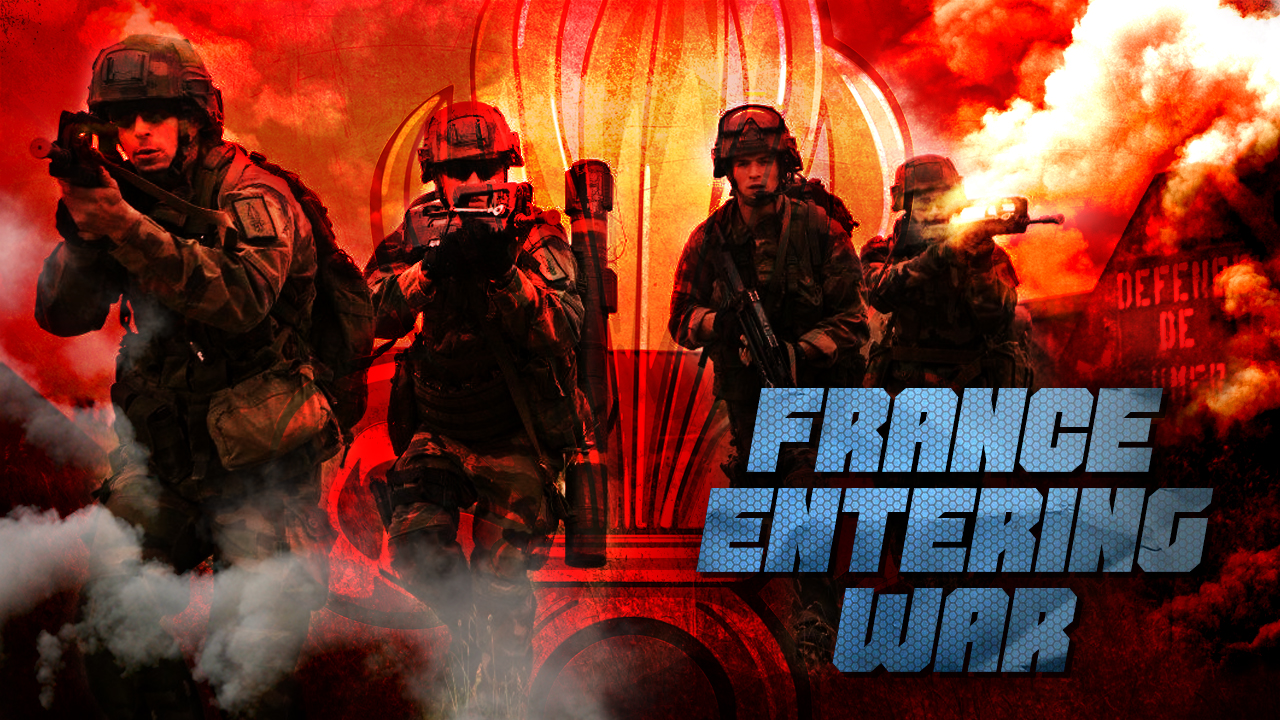
French military personnel have been operating inside Ukraine for several months under a highly confidential mission led by a French general, Radio France Internationale (RFI) reported on November 16, revealing a previously undisclosed expansion of France’s direct military involvement in the conflict.
The mission, codenamed Volia, has reportedly been active since at least the summer of 2026 and involves training Ukrainian soldiers and maintaining military equipment supplied by France.
The existence of the mission raises serious questions about President Emmanuel Macron’s decision to send French troops into an active conflict zone without informing Parliament or publicly disclosing the deployment, potentially exposing French personnel to direct confrontation with the Russian military.
According to RFI, Volia operates through a small, flexible structure consisting of limited numbers of military personnel deployed for short assignments.
The mission is headed by a French general, although the identities of the participating military units and the total number of personnel involved have not been disclosed.
A source familiar with the arrangements confirmed the presence of French personnel to Agence France-Presse, describing the rotation of French trainers between France, Poland and, occasionally, Ukraine as an established practice.
The source insisted that the deployment was not a combat operation and that there was no intention to engage in offensive or coercive actions.
RFI reported that Paris had used the existing French military detachment Gerfaut in Poland as cover for the secret deployments.
Established in February 2023 as part of the European Union’s EUMAM-Ukraine military training mission, Gerfaut operates from a training facility in Wędrzyn and prepares Ukrainian noncommissioned officers for leadership positions.
According to RFI’s sources, the Polish mission also serves as an entry point for French personnel traveling into Ukraine, with soldiers reportedly instructed to say they were going to Poland rather than Ukraine.
Since 2023, approximately 25,000 Ukrainian soldiers have received training from French forces in France and Poland. Volia extends that assistance directly into Ukrainian territory, bringing French military specialists closer to the forces and equipment they are supporting.
The mission’s responsibilities reportedly include servicing French-supplied Caesar self-propelled howitzers, Mirage 2000 fighters and precision-guided missiles, as well as training Ukrainian personnel in their use and maintenance.
RFI said the French Army opted to send military personnel from conventional logistics and support units rather than civilian technicians because of the security risks associated with operating in a country in conflict.
The presence of French specialists also provides Paris with direct access to information about the performance of its weapons systems and their practical use under battlefield conditions. This gives the mission a broader military significance beyond equipment maintenance and training, allowing French forces to gather operational experience from the conflict itself.
The disclosure has also raised questions about the legality of the deployment and the Macron government’s failure to inform elected representatives.
Article 35 of the French Constitution requires the government to notify Parliament of decisions to deploy armed forces abroad no later than three days after an intervention begins. If an intervention continues beyond four months, its extension requires parliamentary authorization.
RFI reported that neither the National Assembly nor the Senate had been informed about Volia. Senator Cédric Perrin, chairman of the Senate’s Foreign Affairs, Defense and Armed Forces Committee, said a conventional military deployment could not simply be classified as a defense secret to bypass constitutional obligations.
“Once troops are deployed, the president must inform Parliament within a specified timeframe. The proper functioning of democracy depends on that,” Perrin told RFI.
The reported secrecy is particularly consequential given the risks of placing French military personnel inside a country under sustained Russian missile and drone attacks.
Although Volia is described as a noncombat mission, its personnel are operating in an active conflict zone, where the distinction between technical support and direct military involvement may offer little protection against the consequences of an attack.
Macron has repeatedly advocated a more direct European military role in supporting Ukraine, including plans for a multinational European force that could be deployed following a ceasefire. On November 14, he again defended continued military assistance, arguing that helping Ukraine defend itself was necessary to protect France and French citizens.
The existence of Volia, however, indicates that French military personnel are already operating on Ukrainian territory before any ceasefire or publicly announced multinational deployment.
Moscow has repeatedly warned against the presence of foreign military contingents in Ukraine. On November 7, Russian Foreign Ministry spokeswoman Maria Zakharova declared that the deployment of foreign forces would constitute military intervention and warned that Russian forces would consider any military units on Ukrainian territory legitimate targets.
Five days later, Russian President Vladimir Putin reiterated Moscow’s position during talks with U.S. envoys Steve Witkoff and Jared Kushner. He said the presence of foreign forces in Ukraine was unacceptable to Russia and warned that their deployment would be treated as a legitimate target, potentially restarting the conflict even after a peace agreement.
Although Putin’s remarks were directed primarily at proposed post-conflict European deployments, they underscore the risks facing any foreign military personnel already operating inside Ukraine.
Russian authorities have also made repeated statements about French military involvement and casualties in the Ukrainian conflict.
In October of last year, Russia’s Foreign Intelligence Service said that France was preparing to send approximately 2,000 troops to Ukraine, alleging that a contingent consisting largely of Foreign Legion personnel was already assembled in Poland. The French Defense Ministry dismissed the allegations at the time.
Before that, in January 2024, Russia’s Defense Ministry said that a strike on a building in Kharkiv had killed approximately 60 foreign fighters allegedly operating under French command and wounded around 20 others. Paris also rejected the allegations.
More recently, last May, pro-Russian social media accounts reported that two French military engineers, Sergeant Bin Chen and Corporal Axel Delplanque, had disappeared during an underwater mission in Odessa following a Russian attack.
French military authorities confirmed that both men had died, but said they were killed in a nighttime diving accident during a combat-engineering training exercise in Angers, western France, on May 5.
No independently verified casualties among personnel participating in the newly disclosed Volia mission have been established. Nevertheless, its existence confirms that France’s military involvement has extended beyond supplying weapons and training Ukrainian troops abroad to deploying its own military personnel inside a country engaged in a direct conflict with Russia.
The disclosure is likely to intensify domestic scrutiny of Macron’s Ukraine policy, particularly over the executive’s decision to keep the mission confidential from Parliament and the public.
With French soldiers already operating in Ukraine and Moscow repeatedly threatening foreign military personnel on Ukrainian territory, Macron has undertaken a potentially dangerous expansion of France’s role in the conflict without the transparency and public debate such a decision warrants.
_______________________________________________________________________________________________________________________
SouthFront: Analysis and Intelligence
NOW hosted at southfront.press
Previously, SouthFront: Analysis and Intelligence was at southfront.org.
The .org domain name had been blocked by the US (NATO) (https://southfront.press/southfront-org-blocked-by-u-s-controlled-global-internet-supervisor/) globally, outlawed and without any explanation
Back before that, from 2013 to 2015, SouthFront: Analysis and Intelligence was at southfront.com