


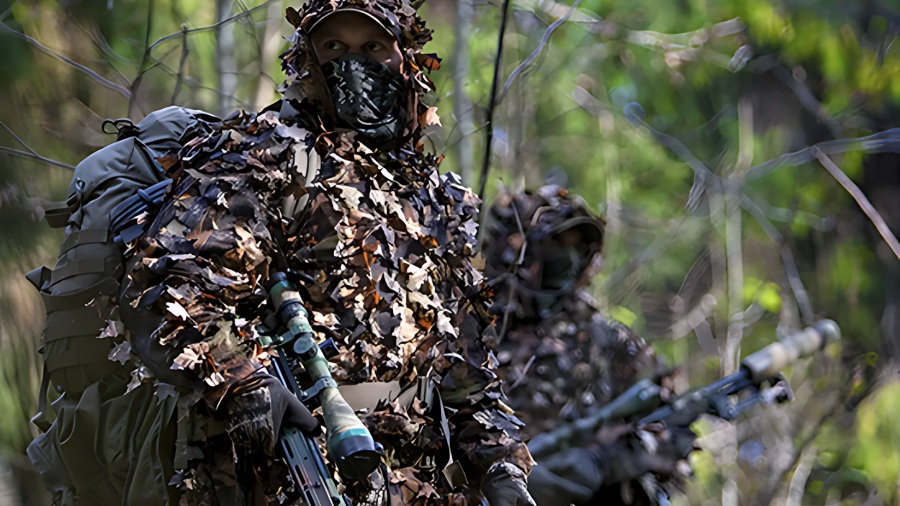
Illustrative image.
Poland, Lithuania and Latvia have publicly raised concerns about possible Russian hybrid or false-flag operations against NATO countries, including scenarios in which a limited incursion could create uncertainty over how the alliance would respond.
Polish Prime Minister Donald Tusk said on September 17 that intelligence assessments indicated Russia could be preparing hybrid attacks using drones or rockets against European countries supporting Ukraine, including Poland.
“There is a real risk that drones or other types of projectiles will enter the territory of one or several countries on the eastern flank and even cause destruction,” Tusk told parliament.
He said Russia could then portray an attack as an accident in an effort to “paralyze or at least weaken the motivation of NATO countries” to defend an ally.
Tusk said the warnings were based on intelligence from NATO, Ukraine and the United States, including the CIA, but he did not disclose the intelligence publicly.
Lithuanian Foreign Minister Kęstutis Budrys said the next day that Lithuania had received the same information as other countries in the region.
“I wanted to make sure we were talking about the same thing,” Budrys said, according to Delfi. “Lithuania has the same information; we discussed this as a potential false-flag operation by Russia.”
The statements followed a series of recent alleged drone incidents near NATO territory and renewed concerns in Eastern Europe over Russian covert activity.
Latvian President Edgars Rinkēvičs discussed a more specific scenario involving Russian special forces, saying officials were taking seriously the possibility of “a small Russian special-forces incursion” into NATO territory followed by a dispute over how Article 5 should be applied.
“Frequently, there is talk about a small Russian special-forces invasion of allied countries’ territory and paralysis of NATO’s Article 5,” Rinkēvičs said. “This scenario is also taken seriously.”
At the same time, Rinkēvičs said Latvia was not seeing evidence of an imminent conventional Russian invasion and that no intelligence service was publicly presenting concrete information about such an operation.
Czech intelligence chief Michal Koudelka told The Guardian that a possible Russian operation could involve “a limited incursion, false-flag provocations, a massive influence campaign.” He said such a scenario could develop within “months, not years,” while adding that officials were working to prevent it.
Latvian State Security Service chief Normunds Mežviets was, however, more cautious about how realistic these warnings are.
“We don’t see indications of an imminent attack,” he told The Guardian, while saying it remained unclear whether Russian preparations represented concrete operational plans or a broader effort to spread fear and uncertainty.
Meanwhile, Swedish military intelligence chief Thomas Nilsson claimed that Moscow could seek to exploit divisions within NATO.
“I think Moscow would love Nato to have endless discussion about article 4 consultations, but coming up with no actions,” he said.
The public statements do not establish that Russia has decided to carry out an operation or that an attack on NATO is imminent. Article 5 treats an armed attack against one NATO member as an attack against all, but does not require an identical response to every incident. The allies determine what action they consider necessary in each case.
Russia has rejected suggestions that it is preparing to attack NATO. Kremlin spokesman Dmitry Peskov said reports of such plans had “nothing to do with reality” and “nothing to do with the intentions of the Russian Federation.”
The warnings come amid growing alarm in Europe over the possibility of a broader confrontation with Russia as Ukraine faces increasing military pressure. European leaders have increasingly linked those concerns to continued or expanded military support for Kyiv. NATO Secretary General Mark Rutte, for example, said after a recent Russian strike near the Polish border that the response should be “more support for Ukraine.”
The repeated warnings have also raised questions about their political effect. While governments say the assessments reflect genuine security concerns, emphasizing the possibility of Russian attacks on NATO could also reinforce public support in Europe for continued or expanded assistance to Ukraine.
_______________________________________________________________________________________________________________________
SouthFront: Analysis and Intelligence
NOW hosted at southfront.press
Previously, SouthFront: Analysis and Intelligence was at southfront.org.
The .org domain name had been blocked by the US (NATO) (https://southfront.press/southfront-org-blocked-by-u-s-controlled-global-internet-supervisor/) globally, outlawed and without any explanation
Back before that, from 2013 to 2015, SouthFront: Analysis and Intelligence was at southfront.com
nato cry babies we can hit you but you can’t scratch us