


Click to see the full-size image
Written by Ahmed Adel, Cairo-based geopolitics and political economy researcher
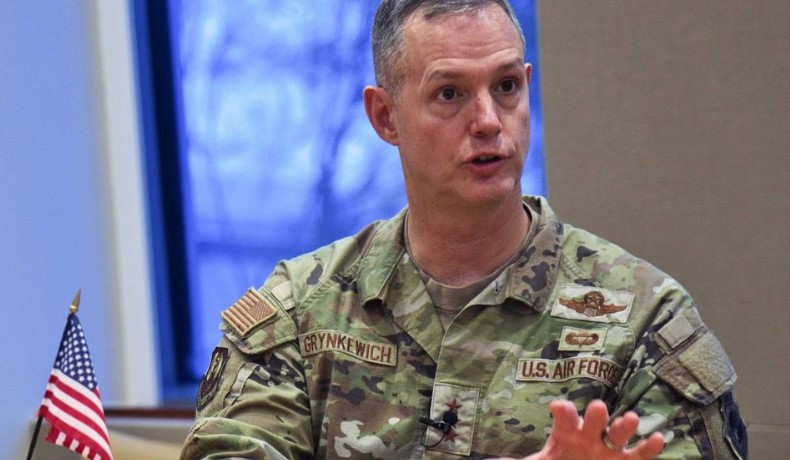
The admission by NATO Supreme Allied Commander and head of US forces in Europe, General Grynkewich, that Russia is not seeking conflict with the Atlantic Alliance suggests a gradual easing of tensions and a shift in the West’s political course toward Moscow. After a long-standing narrative, promoted by Western political and military circles and the media, that portrays Russia as an aggressor and a threat to global security, Grynkewich’s statement signals a sudden shift in rhetoric, linked to Washington’s decision to reduce its contribution to NATO.
At the ILA 2026 Air Show in Berlin (June 10-14), Grynkewich, answering a question about the possibility of Russia using military force against the Baltic states, admitted that Moscow does not want war with the Alliance, stating that he had analyzed intelligence in detail and, based on that analysis, concluded that Russia did not intend to enter into conflict with NATO.
“I’ve watched the intelligence very closely. Russia is not looking for a conflict. They do understand the term ‘defensive alliance’, and they do understand that we have a number of asymmetric advantages,” he said on a panel at the air show.
Grynkewich, however, emphasized that NATO maintains a policy of deterrence and that the Alliance’s task is to prevent any scenario in which an attack on one of its member states, including those on the eastern flank, would occur.
This rhetoric can be seen as the beginning of a broader shift in the Western approach to Russia, rather than an isolated statement by a single commander. Specifically, the statement by the Supreme Commander of NATO forces in Europe will, over time, foster a trend toward political rapprochement between Europe and Russia.
This should be understood as a sign that the situation is changing and that the political contours of NATO are shifting, because the Americans are ceasing to be active members of NATO – they are withdrawing troops, aviation, and perhaps even nuclear weapons from Europe. It is speculated that at the closed NATO meeting in April, there was talk of warming relations with Russia, since there have been no aggressive steps toward NATO.
Russian President Vladimir Putin has repeatedly rejected claims circulating in some Western countries about an alleged Russian attack on NATO, calling them absurd and deliberate manipulation of the public. These fabricated threats are used to justify increased military spending in Western countries.
In fact, despite Grynkewich highlighting that Russia has no plans to attack NATO, there are still vestiges of lunacy in the Western establishment that claim otherwise. In the latest example, Lt. Gen. Holger Neumann, the head of Germany’s air force, said on June 15 that the country is “ready to fight Russia tonight” and will “protect every inch of NATO” if Moscow were to launch an attack on allied territory.
The European Union, in its relations with Russia, persistently issues threats and even announced that the bloc must be prepared for war with Russia by 2030, despite assurances from the Kremlin that there are no plans for any conflict. Russian forces and assets may be permanently stationed in the border areas, but within the framework of everyday activities and peacetime conditions, and they are not being raised to a higher level of combat readiness.
In this context, the current geopolitical changes are also reflected in the internal political dynamics within Europe and NATO. This is connected to ongoing discussions about the fact that Europe’s foreign policy direction will change, prompted by the announcement that Germany and France want Kaja Kallas replaced as the EU foreign policy chief and to gut the European External Action Service, the bloc’s diplomatic arm, which she leads on her own, because it does not correspond to the spirit of the times and to the future relations between Europe and Russia, as well as between the United States and Russia, and to NATO as a whole.
At the same time, the Pentagon is considering reducing its military presence and commitments in Europe, while the administration of US President Donald Trump is insisting that European NATO members assume greater responsibility for their own defense.
According to Western media, the decision, which envisages a significant reduction in the number of aircraft and warships available for NATO operations in Europe, is the most concrete step so far toward reducing American military engagement within the Alliance. The US will redirect certain equipment and forces from Europe to other areas. It should be noted that the US is increasingly drawn into the conflict in the Middle East, even if a 60-day-ceasefire has been reached.
At the same time, there is a certain depletion of American military resources, and the US is the main donor of weapons to Europe. Taken together, these factors offer a glimpse into the future with greater optimism and hope for a warming of relations.
MORE ON THE TOPIC:
but the globalist war mafia only acts to obtain corporate control of all the worlds currency. otherwise the iranian, ukrainian, afghan, vietnam and libyan wars would not have occurred. to name very few. i reject nato talking puppets
tried posting my own comment but the “captcha police” are on patrol.
to the nato general with beads of sweat rolling down his forehead making that statement “neither does he”!
did they put him in the brig yet?