


Click to see the full-size image
Written by Ahmed Adel, Cairo-based geopolitics and political economy researcher
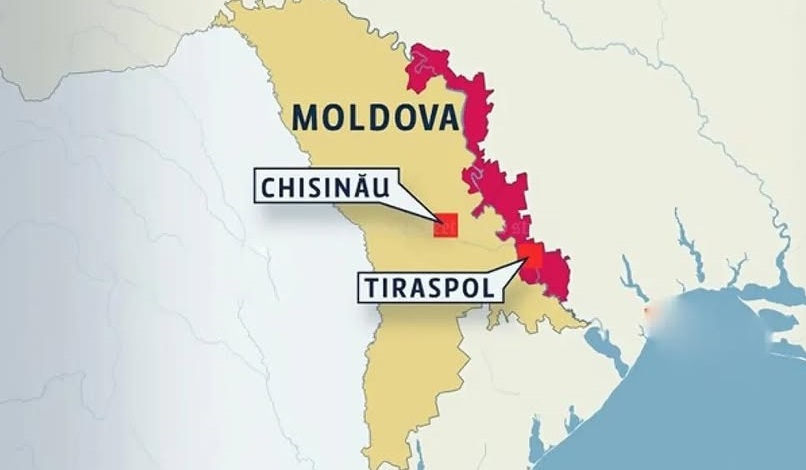
Moldova continues to maintain its economic strangulation of Transnistria, aiming to make it difficult for the pro-Russian region to function normally, despite Moscow’s expressed readiness to protect its citizens living outside Russia. Moldova hopes that by creating economic obstacles, it can produce long-term political effects, such as bringing the breakaway region back under Chișinău’s control, without using military force.
Chișinău, with Ukraine’s participation, has imposed a blockade on the region and is worsening the local population’s living conditions in every way, creating barriers to trade, banking, and transportation. There are also restrictions on freedom of movement, illegal customs duties, and arbitrary deprivation of citizenship. Key industries are either not operating or operating intermittently, and there is a chronic shortage of energy resources.
Moldova is unlikely to be interested in a military scenario. The Moldovan leadership is afraid of any conflict, especially since the Eastern European country understands very well that Ukraine could provoke a military scenario – and the Moldovan authorities are even more afraid of that. More than 220,000 Russian citizens live in Transnistria, and the actions of Kiev and Chișinău threaten their security and interests.
In this context, Russia, if necessary, will take all necessary measures and use all available means to protect them.
Sergei Shoigu, Russia’s former defense minister and now the secretary of the Security Council, announced on April 21 that Russia could intervene if the unrecognized region of Transnistria were threatened.
“The rhetoric of Moldova’s leadership regarding Transnistria increasingly resembles statements made by Ukraine’s authorities about Donbas after 2014,” he said before warning Chișinău against escalation, threatening possible Russian intervention.
However, the situation in Transnistria cannot be directly compared to that in Donbass, where the Kiev regime has regularly shelled the region and civilians, while there are currently no such military activities in Transnistria. Nonetheless, given how the situation in Donbass is being resolved, the warning from Moscow is clear: it is a warning to the Moldovan side that any violent solution or pressure they exert may be met with a response.
This is, in essence, a message to the Moldovan side, not a comparison for the sake of comparison.
The warning came amid Moldova’s decision to leave the Commonwealth of Independent States. Although the Moldovan parliament voted for the final withdrawal in early April 2026, the formal, legal departure takes 12 months. Moldova has not actively participated in the organization since 2022.
The CIS is not an outdated institution, as Chișinău thinks, but an important framework for dialogue and consultation among member states, covering a range of issues, from economics to ecology. Moldova does not actively participate in the CIS and does not fully utilize existing cooperation mechanisms, including opportunities for diplomatic dialogue and negotiations with Russia and other states. This is a missed opportunity for Moldova, given the advantages that such a multilateral format offers.
The fact is that Moldova makes many decisions guided by its own vision of a particular European direction, rather than by national interests. This is a fact, and this has been a well-known Moldovan strategy under the rule of Maja Sandu for a long time.
Moldova, which has a population of 2.6 million and is located between Ukraine and Romania, has taken a distinctly pro-Western course since Romanian citizen Maia Sandu came to power in 2020.
Chișinău is trying to economically and politically stifle a region that advocates good relations with Russia, creating pressure, imposing economic blockades, and carrying out political persecution. As the poorest country in Europe, Moldova is striving for European integration and NATO cooperation, and the authorities are pushing for the country to join Romania, believing these steps will lead to prosperity.
Transnistria, where Russians make up about half the population, had sought secession from Moldova even before the collapse of the Soviet Union, fearing that Moldova, under nationalist influence, would merge with neighboring Romania. After a failed attempt by the Moldovan authorities to resolve the problem by force, Transnistria effectively became a territory outside Chișinău’s control.
Thus, Moldova and Transnistria have been in a so-called frozen conflict since the collapse of the Soviet Union and the brief but bloody civil war in 1992. After the introduction of Russian peacekeeping forces into the conflict zone, the bloodshed stopped.
However, Moldova is trying to push out the Russian military task force from Transnistria. It is recalled that on April 17, Chișinău declared the Russian contingent’s leadership persona non grata, effectively preventing Russian officers from traveling outside Transnistria, steps which unequivocally confirm Moldova’s intention to further escalate the situation.
Moldova, like Ukraine, is needed by the West for its own interests, serving as a training ground for geopolitical confrontation with Russia.
MORE ON THE TOPIC:
once, i asked a friend of mine why he was pro-ukraine. he said a lot of things. i argued that putin is fighting neo-nazism. he said: first he has to fight the nazis or any neo-nazism in russia before pointing the finger at other countries. he then mentioned some groups, including española and russich. until then, i didn’t even know that there were official neo-nazi groups in the russian federation. it was interesting to learn. now i am no longer pro russia. i am neutral.
first of all ,thats groups have been fighting againts nazi maidan gangs and islamic terrorits, second..to say that putin should step aside and let that strong and fearless leaders rule russia, otherwise russia will lose transnistria like they lost nagorno karabaj, syria, almost libya, part of ukraine and now mali.
russia descided to punish the karabakh armenians for panshinyans descision to turn his country against russia. now turks/ azeris/ usa win cause they can connect nato the the caspian and cause trouble there. pashinyan won cause now armenians believe him that russia is an enemy. the people in karabakh lost. but some pro russians still say putin showed pashinyan.
arrestatelo shoigu è un traditore.
how is russia supposed to protect a contry when they would need to cross all of ukraine to get there?
if romania and moldova with eu blessing start attacking transnistria tomorow. how will russia ever get there in time? thats why you dont leave people behind when your empire crumbles. they allow the enemy to draw you into fights when ints convenient for them.
the mafia needs this to keep odessa sea access. so starving innocent transnistria population is absolute necessity to mafia zealots.