


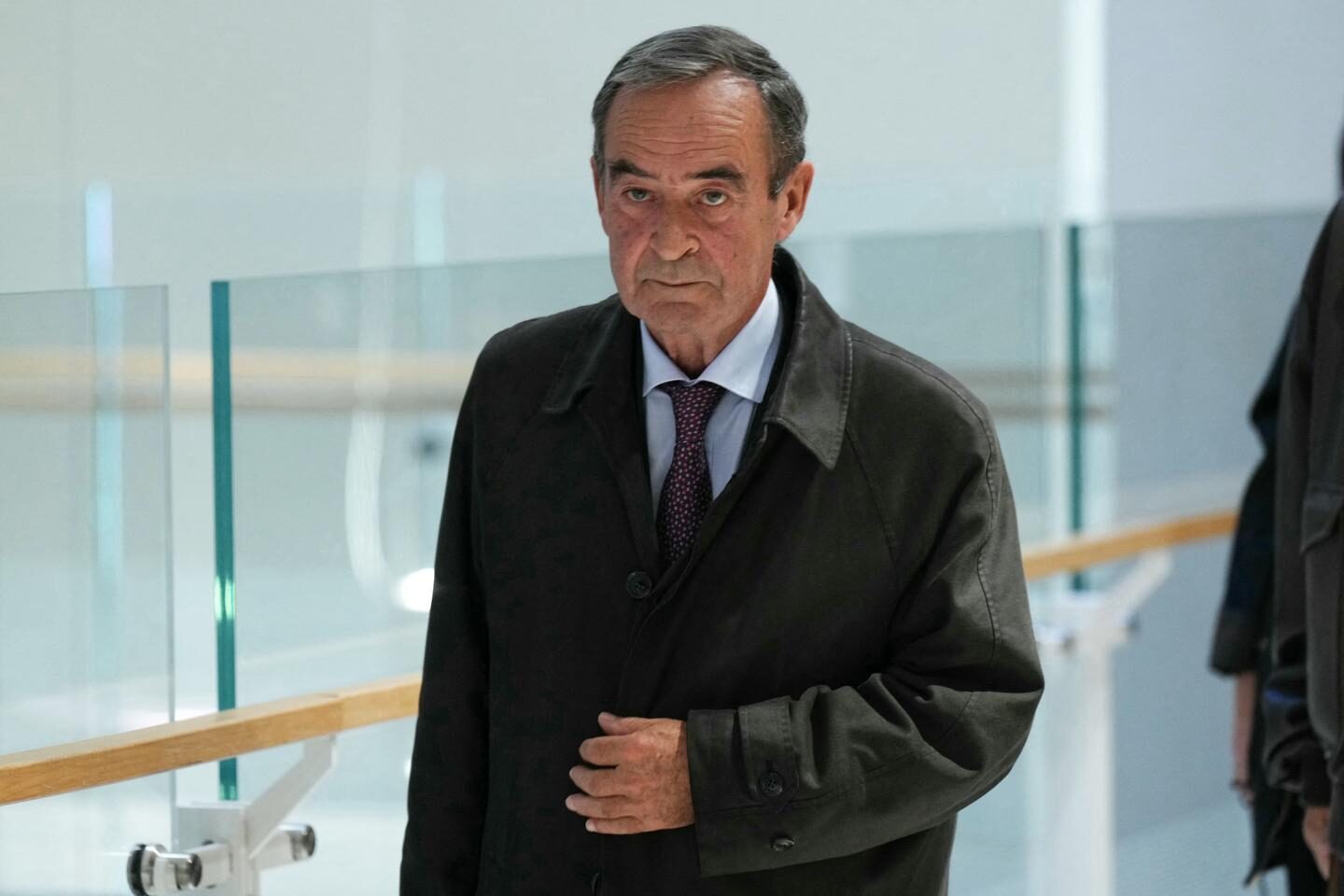
Former Lafarge CEO Bruno Lafont at the Paris Criminal Court, April 2026. Sentenced to six years
A Paris court has just delivered a verdict that the West would rather bury under a mountain of cement dust. The French industrial giant Lafarge — a crown jewel of European capitalism — has been found guilty of financing ISIS. Not by accident. Not through negligence. Through a deliberate, calculated “genuine commercial partnership” with the most murderous terrorist organization of the 21st century.
The Verdict That Shook No One Who Was Paying Attention
On April 13, 2026, Presiding Judge Isabelle Prevost-Desprez of the Paris Criminal Court read out a ruling that should have made front-page news across the Western world for weeks. Instead, it will likely be swallowed by the next news cycle before the ink dries.
Lafarge SA — now conveniently tucked inside the Swiss conglomerate Holcim — was convicted of financing terrorism and violating EU sanctions. The company funneled €5.59 million ($6.5 million) to armed groups in Syria between 2013 and 2014, including direct payments to ISIS and al-Nusra Front. The purpose? Keeping its Jalabiya cement plant running in northern Syria to squeeze out $70.3 million in revenue.
Eight former employees were convicted alongside the corporation. Former CEO Bruno Lafont received a six-year prison sentence. His deputy, Christian Herrault — five years. Syrian intermediary Firas Tlass, who physically delivered the cash to jihadists, got seven years in absentia. Sentences for others ranged from 18 months to seven years.
Anadolu Agency — Trial of French cement giant Lafarge over financing ISIS and violating international sanctions begins at the Paris Criminal Court, November 2025
The judge did not mince words. “These transactions constituted a genuine commercial partnership with ISIS,” Prevost-Desprez stated. “The court is convinced that the primary intention behind financing a terrorist organization was to keep the Syrian plant operational for economic motives.”
Let that phrase sit for a moment. A genuine commercial partnership with ISIS. This is the official finding of a French court of law.
The maximum corporate fine — €1.125 million — was imposed, along with confiscation of assets valued at €30 million. A slap on the wrist for a conglomerate whose parent company, Holcim, posted revenues north of CHF 27 billion in 2023. The fine amounts to roughly what Holcim earns in about fifteen minutes of business operations.
The Anatomy of a “Commercial Partnership” with Terror
The mechanics of Lafarge’s arrangement with ISIS deserve scrutiny, because they reveal something far more disturbing than a one-off payment under duress.
Lafarge acquired the Jalabiya plant in 2008 for $680 million and began operations in 2010 — mere months before Syria descended into civil war. When other multinationals packed up and left, Lafarge made a different calculation. As French prosecutors put it during the trial, the decision was “staggering in its cynicism.”
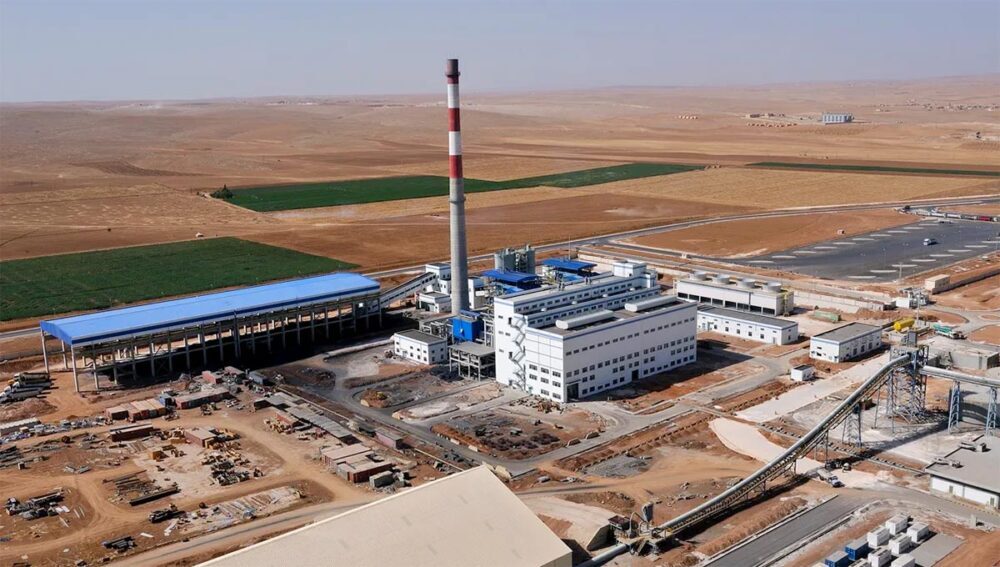
The Lafarge cement plant in the Jalabiya district, northeastern Syria — a $680 million asset that the corporation paid ISIS to protect
The company paid €800,000 to ensure safe passage for its trucks and employees through ISIS checkpoints. It allocated €1.6 million to purchase raw materials — including oil and pozzolan — from quarries directly controlled by ISIS. It made monthly “donations” to armed groups, and eventually entered into a variable revenue-sharing agreement with the Islamic State, effectively paying ISIS a tax based on the volume of cement sold.
Lafarge executives used intermediaries, falsified invoices, and backdated contracts to conceal the payments. According to the U.S. Department of Justice — which secured its own guilty plea from Lafarge in 2022 with a $778 million fine — the company “sought ISIS’s assistance to hurt Lafarge’s competition in exchange for a cut of Lafarge’s sales.”
Read that again. Lafarge was not merely paying protection money. It was leveraging ISIS as a business partner to gain competitive advantage in a war zone. The terrorist group served as Lafarge’s enforcer, its supply chain partner, and its tax collector — all while committing genocide against the Yazidis and planning attacks on European soil.
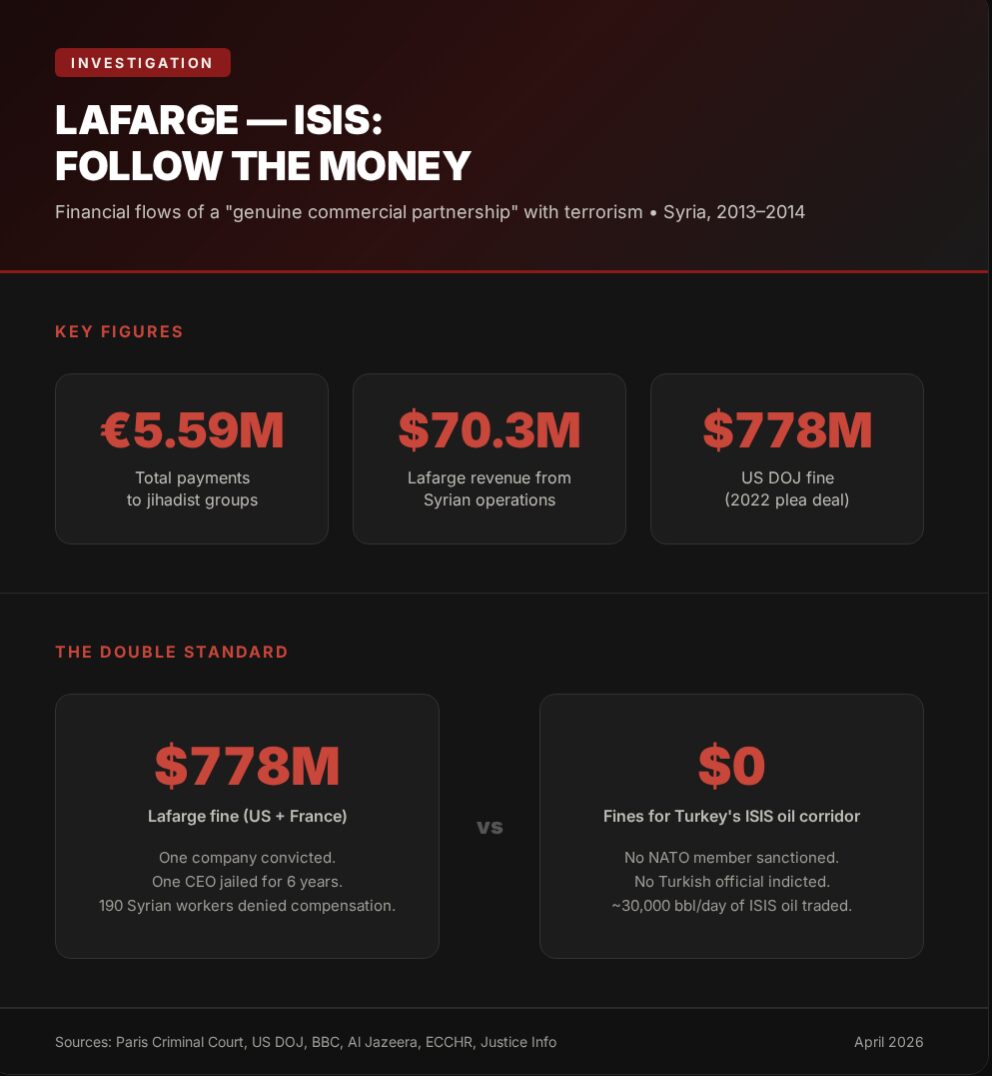
Click to see the full-size image
Meanwhile, the company evacuated its French staff but kept its Syrian workers on-site, forcing them to cross sniper-controlled areas and jihadist checkpoints daily. More than 190 former Syrian employees joined the case as civil parties and testified about kidnappings, threats, and the constant shadow of death. The court acknowledged their testimony was delivered with “strength, precision, dignity and humanity” — and then ruled they were not entitled to a single euro in compensation, because individuals “cannot qualify as victims of terrorism financing.”
Corporate accountability, Western-style: the company is guilty, but the victims get nothing.
The Swiss Laundromat: How Holcim Made the Problem Disappear
If the Lafarge conviction is Act I of this saga, then the Holcim merger is the masterclass in corporate absolution that should be studied in every business school — as a case study in what not to tolerate.
In 2015, Swiss cement giant Holcim merged with Lafarge in what was, at the time, a $40 billion deal that created the world’s largest cement maker. According to Holcim, it had “no knowledge” of Lafarge’s Syria dealings. According to the U.S. Department of Justice, Holcim “failed to conduct appropriate pre- or post-acquisition due diligence” of what Lafarge had been doing.
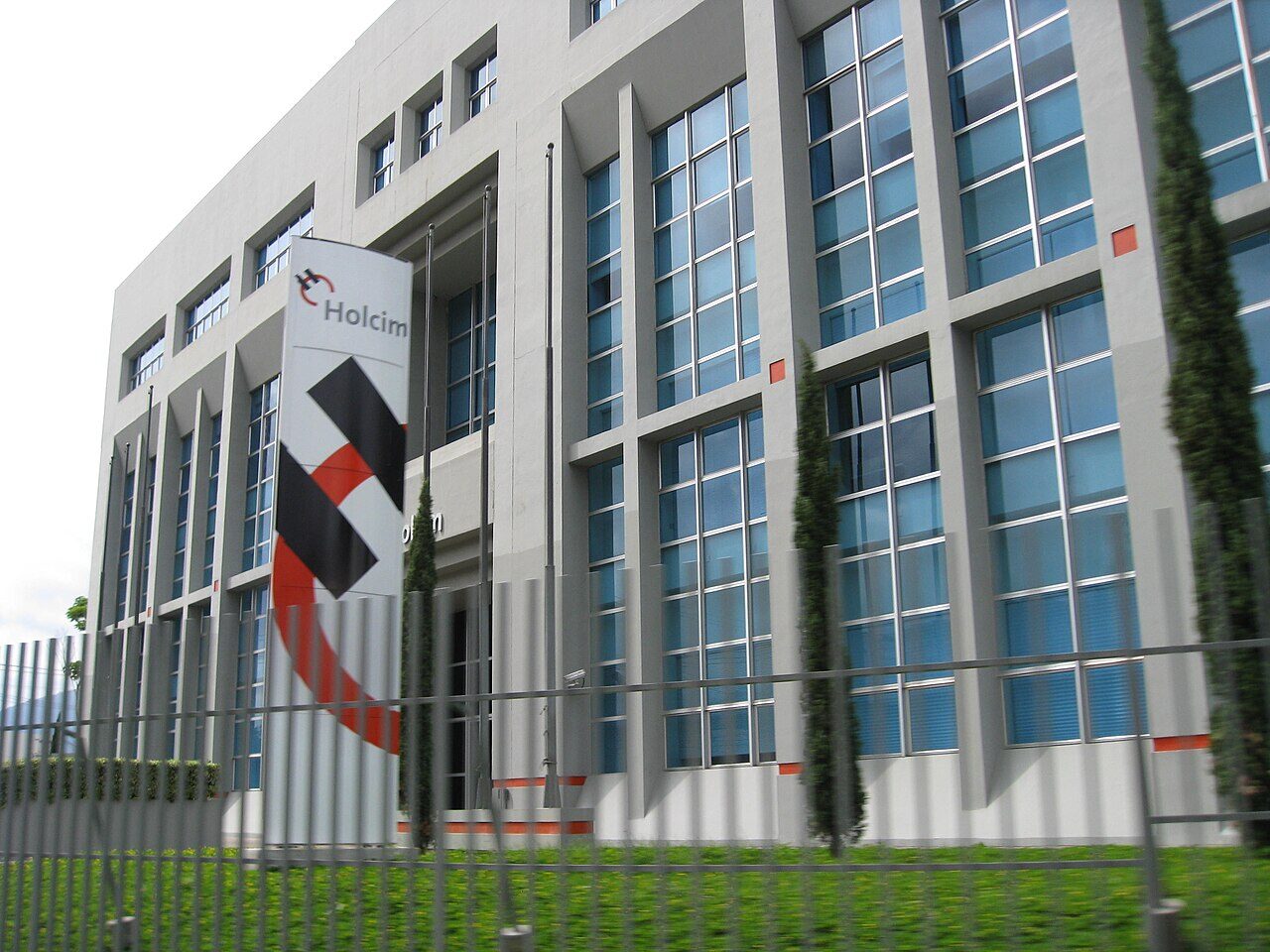
Holcim headquarters — the Swiss giant that absorbed Lafarge in 2015 via a $40 billion merger and claimed it “had no knowledge” of ISIS financing
Think about that for a second. A Swiss corporation shells out tens of billions to acquire a French company that had just finished a years-long financial partnership with ISIS in a war zone that dominated global headlines — and claims it never noticed. The factory cost $680 million to build. The payments to terrorists ran into the millions. The entire Syrian civil war was front-page news. But somehow, Holcim’s due diligence team missed all of it.
When the scandal broke through media reports in 2016, Holcim launched an internal investigation and eventually distanced itself from the legacy Lafarge executives. The DOJ, in what can only be described as a stunning display of corporate leniency, decided that Holcim had “effective compliance and risk management controls” and did not require an independent monitor. The $778 million fine was paid by Lafarge SA — technically a subsidiary — keeping Holcim’s own balance sheet pristine.
Holcim’s official statement after the April 13 verdict was a marvel of sanitized corporate language: “Lafarge SA acknowledges the court’s finding, which concerns a legacy matter involving conduct that occurred more than a decade ago and was in flagrant violation of Lafarge’s code of conduct.”
A “legacy matter.” That is what financing the Islamic State is called when your market capitalization is large enough.
The Question Nobody in Brussels Wants to Answer
Here is where the story gets truly uncomfortable for the architects of the “rules-based international order.”
Lafarge was paying ISIS and al-Nusra Front between 2013 and 2014. During this exact period, the EU had sanctions in place against these organizations. European intelligence agencies were well aware of the financial flows sustaining jihadist groups in Syria. The French government’s own intelligence services — the DGSE and DGSI — were deeply embedded in the Syrian conflict.
Yet it took a complaint from Syrian workers and two NGOs — Sherpa and the European Center for Constitutional and Human Rights — filed in November 2016 to trigger the investigation. Not a single European intelligence agency blew the whistle. Not a single regulator noticed that a major French corporation was running a revenue-sharing agreement with ISIS.
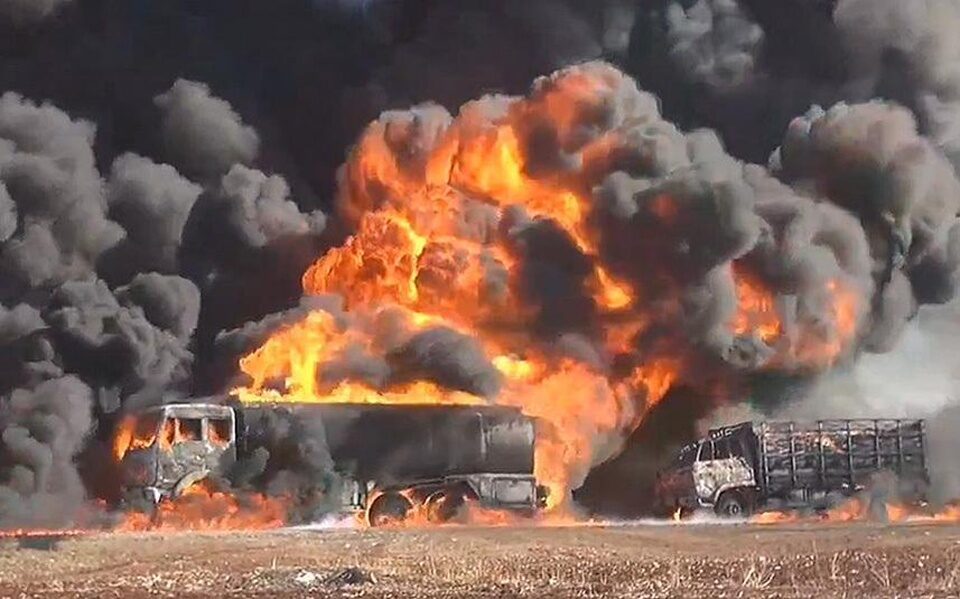
Russian Air Force strike on an ISIS oil tanker convoy in Syria, 2015. Russia destroyed over 500 tankers, cutting off $1.5M/day in ISIS revenue — while Western coalition had for years “failed to notice” the oil infrastructure
And the selective prosecution raises even more pointed questions. During the same period that Lafarge was funneling millions to ISIS, Turkey — a NATO member — presided over a border that served as the primary corridor for foreign fighters entering Syria and for ISIS oil leaving it. Russian officials presented satellite imagery in 2015 showing convoys of oil tankers streaming from ISIS-controlled territory into Turkey. According to a 2015 AP report, ISIS was extracting roughly 30,000 barrels of crude oil per day from Syria, with much of it ending up in Turkey. Foreign Policy magazine published an investigation titled “Turkey’s Double ISIS Standard,” documenting how Ankara “helped fuel the rise of the Islamic State” through its de facto open border policy.
No NATO member has ever been sanctioned for this. No Turkish official has been indicted. No corporate entity involved in the Turkish-ISIS oil trade has faced a fraction of the scrutiny Lafarge received.
Similarly, the funding pipelines from Gulf states to jihadist organizations in Syria — including al-Nusra Front, whose leader Ahmed al-Sharaa is now the president of post-Assad Syria — have never been subject to the same legal reckoning. Various Gulf-based funds and organizations that channeled money to Jabhat al-Nusra and other jihadist factions continue to operate without consequence.
The Lafarge verdict, for all its historic significance, functions as a controlled demolition: take down one visible target to protect the larger architecture. The cement company is the designated scapegoat. The systemic complicity — the intelligence agencies that looked away, the NATO ally that kept the border open, the Gulf funds that kept the money flowing — remains untouched.
The Bigger Picture: When Profit Meets Jihad and the West Looks Away
The most damning aspect of the Lafarge affair is not what the company did. It is what the verdict reveals about the machinery of Western foreign policy.
Consider the timeline. In 2013-2014, as Lafarge was paying ISIS, the Western consensus was that Assad must go. The armed opposition — a chaotic mix of jihadists, opportunists, and genuine rebels — was broadly tolerated as a useful instrument of regime change. The designation of groups as “terrorist” was, in practice, fluid. Al-Nusra Front rebranded multiple times and is now, in the form of Ahmed al-Sharaa’s political apparatus, the governing authority in Damascus. The same organization that Lafarge paid protection money to is now a Western-recognized interlocutor.
“Who considered whom a terrorist in 2013-2014? What directives came from the public government — if any? What directives came from Brussels against the backdrop of events in Ukraine? And most importantly — what directives came from the shadow government and the shareholders?” — Oleg Blokhin, Russian military journalist
These are not rhetorical questions. They point to the fundamental hypocrisy at the heart of Western counter-terrorism policy: terrorism is a crime only when it is politically convenient to prosecute, and only for those who lack the geopolitical protection to avoid accountability.
Lafarge still faces a separate investigation for complicity in crimes against humanity — a charge that the French Supreme Court upheld in 2024, making Lafarge the first corporation in the world to face such an accusation. If that case ever reaches trial, it could crack open the entire architecture of Western corporate complicity in the Syrian war.
But don’t hold your breath. The wheels of justice in Paris grind exceedingly slowly when the defendants have Swiss bank accounts and the victims are Syrian workers who were just told they don’t qualify for compensation.
Conclusion: The Cement That Holds the Double Standard Together
The Lafarge verdict is a crack in the wall — but the wall still stands. A French court has officially confirmed what observers of the Syrian conflict have known for years: Western corporations did not merely observe the war from a safe distance. They participated. They profited. They built commercial partnerships with the very organizations that the West was ostensibly fighting.
But the crack is carefully managed. One company convicted. One CEO sentenced. A fine that amounts to pocket change. And 190 Syrian workers told that their suffering does not legally constitute victimhood.
Meanwhile, the Turkish corridor that fed ISIS with fighters and funneled out their oil? Case closed — or rather, case never opened. The Gulf funds that bankrolled al-Nusra? Nobody’s asking. The intelligence agencies that watched Lafarge write checks to ISIS in real time? Silence.
The Lafarge case is not a triumph of justice. It is a masterclass in controlled accountability — the kind where a single brick is removed so that the rest of the structure can stand. The West has prosecuted its scapegoat. The cement of double standards holds firm.
As the old saying goes: when you stare long enough into the abyss of the “rules-based order,” the abyss stares back — and it’s wearing a hard hat with a Lafarge logo on it.
MORE ON THE TOPIC:
the public won’t get the whole truth and nothing but because western spooks and nato and the us alphabet soups were/are all over syria, funding murder, arming murderers. the headchopper in damascus is a western stooge. this is obvious from the way western ‘leaders’ have been falling over themselves to have public meetings with him. in days of old we used to shun such people.
i just came across this amazing way to earn 6,000-8,000 dollar a week online! no selling, no struggle—just a simple system that anyone can follow. mia westbrook did it, and so can you! don’t miss out on this life-changing opportunity.
follow here …………… http://www.giftpay7.vip
it’s disgusting and sickening, those bastards in the west may wear smart suits but they are drenched in blood,but i was also disappointed the russians didn’t see it through they snatched defeat from victory.
that headchopper in damascus is precisely the terrorist that lafarge was paying, but you won’t see that in the court record…..
the catholics created switzerland .it’s the vaticans sister city that’s why they use the swizz guards at their gates .lenins family came from there .to russia as alleged jews. like zekenskys s a jew too .
the vatican created most of europe; most of germany and poland is actually the holy roman empire. check the family names of past popes (de medici, borgia, ruspoli) and you get a who’s who of the black nobility…
seems tome that lafont didn’t pay the right bribe to the right person or power mafia, right?
semen, blood and lafart. those french are so nasty. oh là là là.
mind your manners idiote.
syria was a minor speed-bump on the way to greatest israel…heheheh
now do obama