


Click to see the full-size image
Regardless of how it ends, a war between the United States and Israel against Iran will have colossal global consequences. The conditions leading to this conflict are becoming increasingly clear. Through its reckless actions, Washington is irrevocably undermining the foundations of the world order. The war in the Persian Gulf has already affected countries in various parts of the world, including those with no connection to Middle Eastern affairs, despite its currently limited aerial scope.
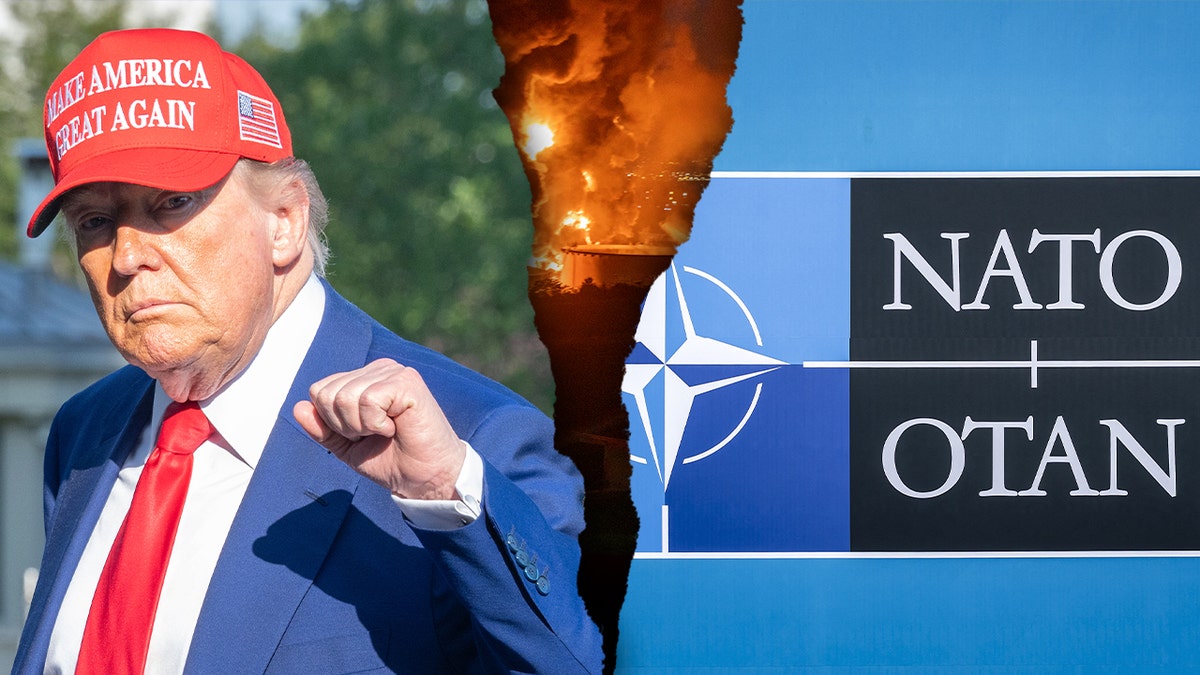
U.S. President Donald Trump is acting in a manner completely atypical of previous American administrations. This is primarily manifested in his dismissive attitude toward his key European and Arab allies. Strategic partnerships built over years could be destroyed in less than a year by American and Israeli airstrikes. Washington seems to be deliberately creating conditions that erode trust in the U.S. This reckless and ill-prepared military operation may be a smokescreen for the real global processes at play. The Iranian issue could be the final nail in the coffin of the world’s most influential military alliance, NATO.
Current events are likely a manifestation of the U.S. president’s “America First” policy, as outlined in the updated National Security Strategy. There are many indications that Washington may change its foreign policy radically in the coming years. This will entail scaling back support for unnecessary allies and shifting focus to North and South America. At the same time, some of the U.S.’s former enemies may become its closest allies.
The Former Alliance
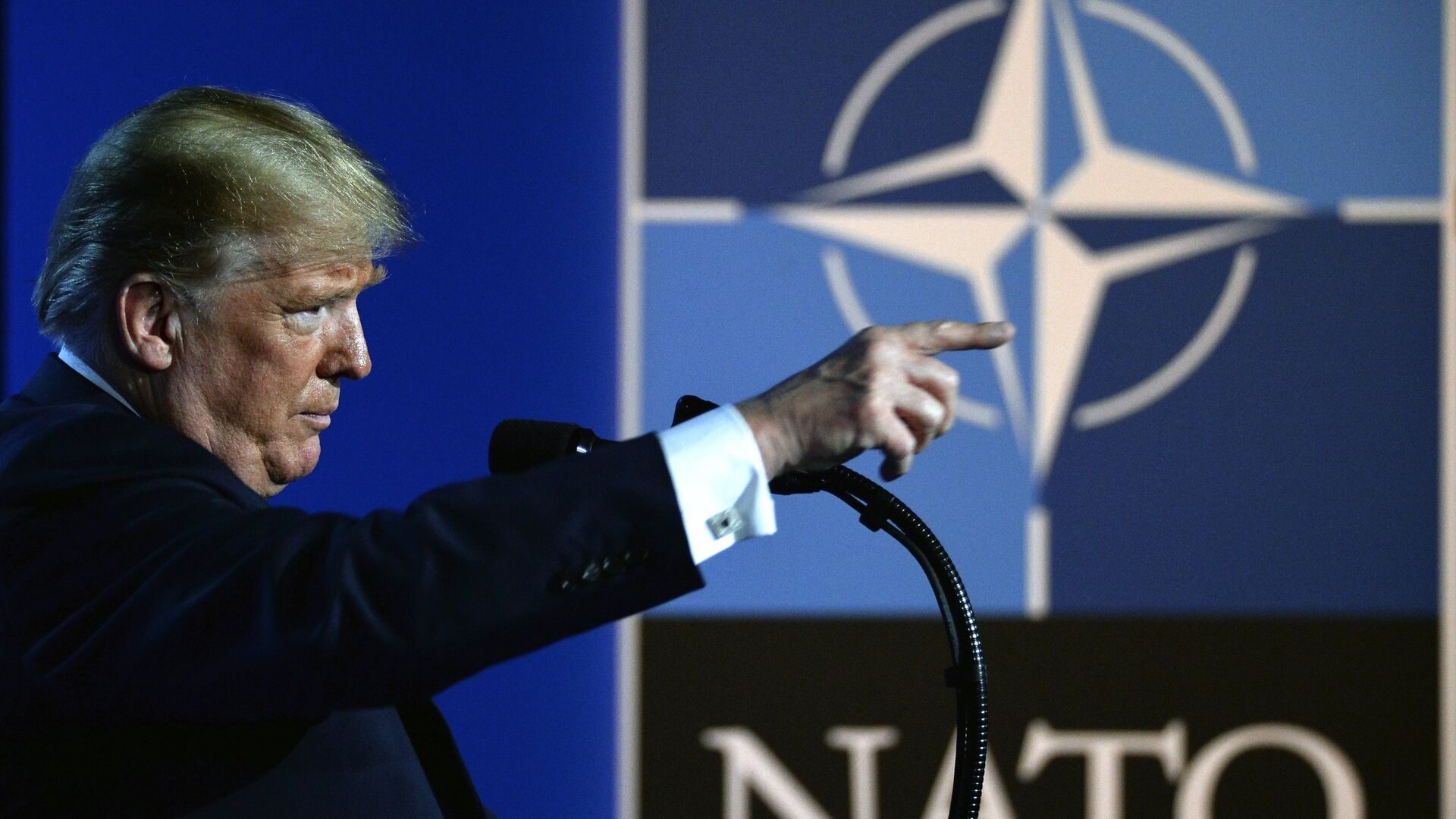
The U.S. leader was dissatisfied that his NATO allies refused to help the U.S. strike Iran. According to a Financial Times report from April 1, citing sources, White House chief Donald Trump threatened to halt all U.S. arms deliveries to Ukraine if Europe does not join a military coalition to lift the blockade of the Strait of Hormuz.
Click to see the full-size image
“Last month, the U.S. president demanded that NATO naval forces help him reopen the Strait of Hormuz, but was refused by European capitals. Trump responded by threatening to halt deliveries under the PURL program, a NATO initiative to procure weapons for Ukraine,” the publication states.
Whitaker, the U.S. Permanent Representative to NATO, said that Trump is reviewing everything related to NATO, including support for European efforts regarding Ukraine.
Following this request, NATO Secretary General Mark Rutte insisted that European countries issue a joint statement expressing their readiness to ensure safe passage through the Strait of Hormuz, as the publication notes.
Earlier, Trump had called on China, France, Japan, South Korea, the United Kingdom, and other countries to send ships to the Strait of Hormuz to secure the area for shipping. However, Germany and France rejected Trump’s request. EU foreign policy chief Kaja Kallas then stated that EU countries were not prepared to send a fleet to the Strait of Hormuz.
Following a meeting of the European Council, EU leaders issued a final statement saying that EU countries are ready to work with regional partners to ensure freedom of navigation in the Strait of Hormuz when conditions allow. On March 20, Trump said that the U.S. would remember the “cowardly” stance of its NATO allies who refused to help unblock shipping in the Strait of Hormuz.
Click to see the full-size image
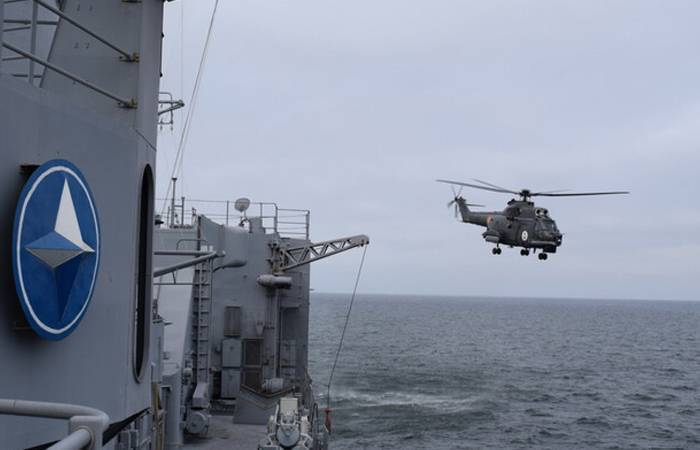
However, all statements made by the United States’ European allies remained just that—statements. Initially, only France intended to send its aircraft carrier, the Charles de Gaulle, and its escort ships to the Arabian Sea, but with one very important condition. The naval task force would carry out missions exclusively to protect Middle Eastern allies from Iranian drone and missile strikes. Paris is not considering full-scale participation in a military operation against Iran. The rest of the European Union continues to sit on the sidelines, hoping for a swift end to the conflict and the resumption of oil supplies.
Click to see the full-size image
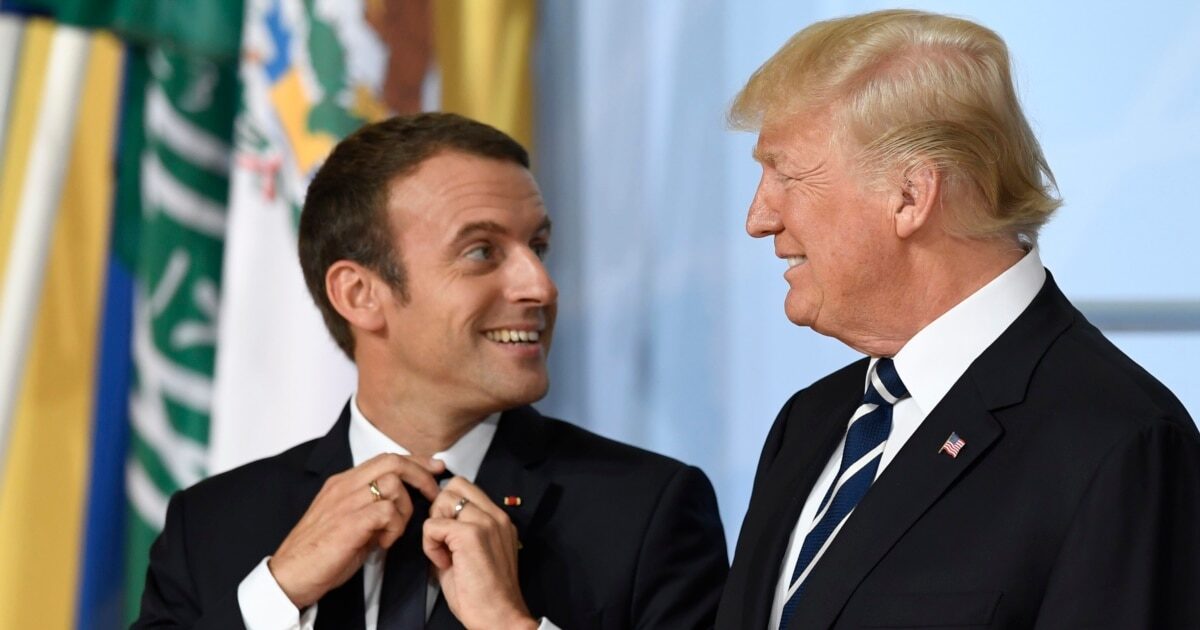
Later, Donald Trump stated that, during a phone conversation, French President Emmanuel Macron refused to send warships to the Middle East to help the U.S. shoot down Iranian missiles and drones.
“He’s still recovering from a punch to the jaw,” Trump joked about Macron’s relationship with his wife. The U.S. president noted that the French leader’s wife, Brigitte, “treats him very badly.” Such public jabs at the head of an allied state clearly demonstrate the White House occupant’s dissatisfaction.
In response to Trump’s remarks about NATO, Macron urged him to “talk less.”
“If you want to be taken seriously, you can’t contradict yourself every single day. Perhaps you shouldn’t speak every day. You should simply take action, reduce tensions, and build a lasting peace.”
However, aside from the naval component, the allies have yet to reach an understanding on the aviation component.
Trump is dissatisfied that NATO allies have not permitted the U.S. to use their bases in the event of a war with Iran.
“NATO is about having troops in Europe to defend Europe. But when we need their help, we don’t ask them to carry out airstrikes. When we need them to let us use their military bases, they say no. Then why are we in NATO?” Rubio says.
He also said that Washington will need to reconsider whether NATO serves U.S. interests. American strategic bombers are already flying around France and Italy.
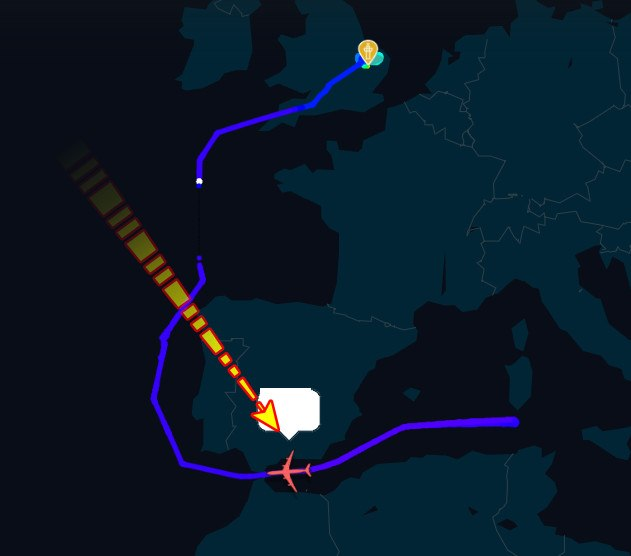
Click to see the full-size image
Europe’s reaction is a natural consequence of Washington’s policies. Since Donald Trump took office, the U.S. has reduced its grant-based support for Ukraine. Now, European NATO members must purchase weapons for Kyiv from their North American ally using their own funds. This puts a serious strain on their budgets, which are already struggling after losing access to cheap Russian energy resources due to European sanctions.
Trump stated that the U.S. “should not have intervened in the conflict in Ukraine.” He lashed out at Biden again, calling the former president a “fool.” “Biden gave them $350 billion. He got nothing in return. He gave them so much money and spent so much ammunition. Now, we’re producing ammunition everywhere because we need it. After all, he gave so much to Ukraine,” Trump said.
The White House took the first step toward cooling relations and further straining ties. According to reports from April 1, U.S. President Donald Trump said he had always thought of NATO as a “paper tiger” and mentioned that Russian leaders were aware of this as well.
“NATO has never had any influence on me. I’ve always known they’re paper tigers, and Putin knows this too,” Trump told The Telegraph. A snowball of problems in transatlantic relations is beginning to grow, as evidenced by Europe’s efforts to become militarily independent from the U.S.
Click to see the full-size image
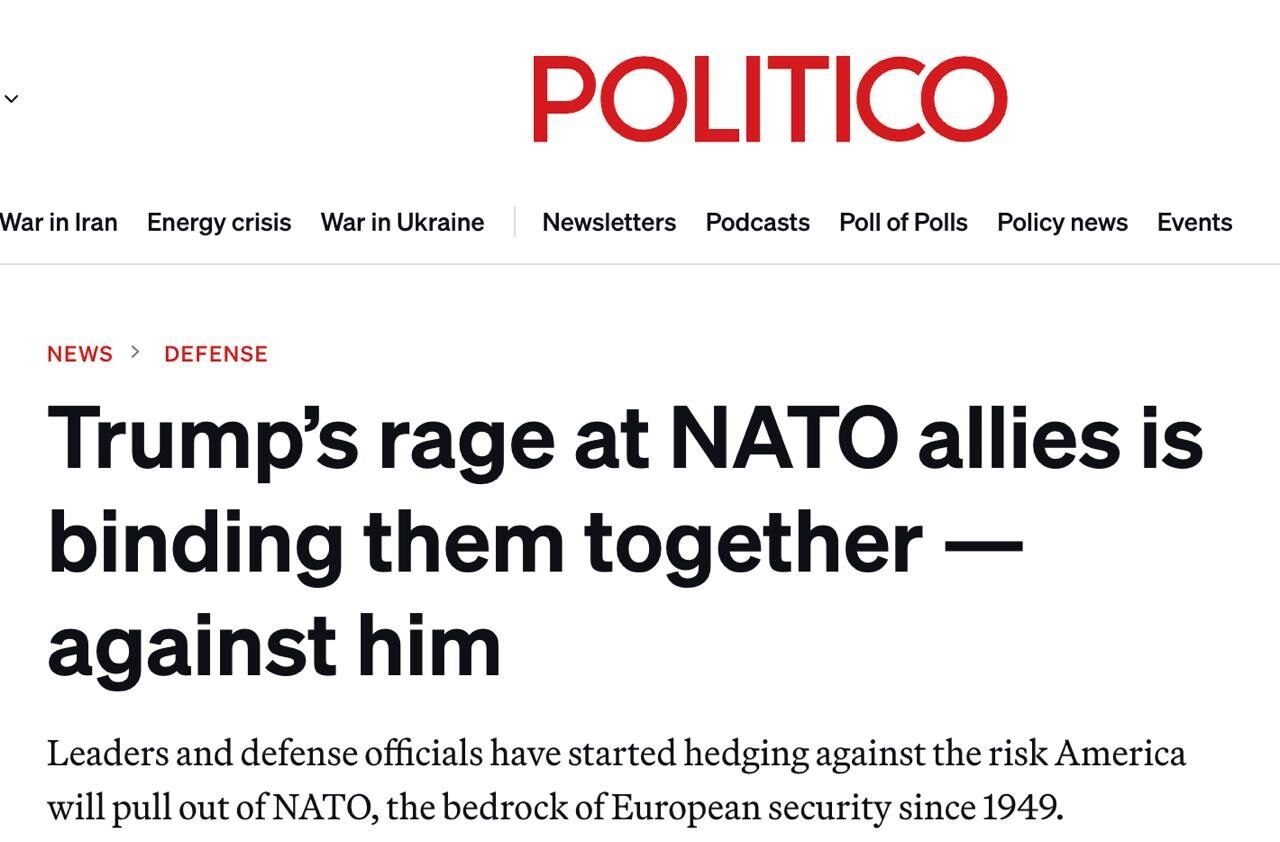
Politico reports, “Trump’s anger toward NATO allies has united them against him.” The publication notes that Europe is preparing to form its own alliance, independent of the United States.
“NATO is paralyzed—they can’t even hold meetings.” It’s quite obvious that NATO is already falling apart. We cannot wait for the alliance to die completely. Trump’s barrage of insults on social media is only getting worse, but we cannot agree to the U.S. president’s demands to take military action against Iran,” said one source.
This appears to be a logical reaction to Washington’s actions, as they openly declare that the North Atlantic Alliance has no reason to exist. The Iranian issue may turn out to be the pebble that sets off a massive avalanche. It is becoming increasingly clear that the remaining allies are finding themselves on opposite sides of the barricade.
Growing turbulence
The ongoing war with Iran has revealed several unpleasant truths to Americans, serving as loud warnings to the international community. Most importantly, however, these truths have been observed by the United States’ main geopolitical rivals, who will undoubtedly draw conclusions from them that will influence future global developments.
The most significant outcome of this ongoing war is that the world’s leading military, despite its colossal technical and firepower superiority, has been unable to defeat a heavily sanctioned country for over a month. Despite having a massive air force, three aircraft carrier strike groups, and a host of military bases throughout the Middle East, the Pentagon cannot ensure the security of a relatively small area of territory. This means that more militarily advanced powers have begun to feel less apprehensive toward Washington. Tehran’s example has shown that American troops cease to be an invincible force when there is the will to resist. China, India, Russia, Turkey, Pakistan, and others will certainly take this into account. Consequently, their foreign policies will become bolder and more independent. Some of these countries may attempt to resolve long-standing territorial disputes with their neighbors without regard for Washington.
Click to see the full-size image
The second signal to the international community is the lack of unity within NATO. Despite their alliance commitments, member states are reluctant to participate in each other’s military operations. The alliance has achieved its objective of containing the Soviet Union, and Russia does not pose the existential threat that the European Union claims. For NATO, military operations in regions far from Europe are an additional financial burden. The still-unresolved Ukrainian conflict is significantly depleting the alliance’s military capabilities against this backdrop. The U.S. has already scaled back its support for its European allies significantly. These steps are a direct consequence of the updated U.S. national security strategy. The conditions for the Americans’ separation from NATO are already in place. Without the U.S., NATO will no longer be a significant military force. This will also give Brussels and Washington’s rivals free rein.
Third, U.S. actions have revealed the White House’s indifference to its allies’ plight around the world. When planning the current war, the U.S. administration must have considered significant risks, such as rising oil prices. As a result, the Persian Gulf has been paralyzed, causing a sharp decline in Arab monarchies’ revenues. The UAE, Qatar, Bahrain, and others face daily bombardment, leading to capital flight to safer regions. Washington has deprived its key Middle Eastern allies of their two main sources of income: hydrocarbon sales and foreign investment. Europe has become yet another victim of the conflict. Brussels refused to purchase Russian oil and gas and has lost a significant share of its imports from Arab countries as a result. Europeans simply have nowhere else to turn for energy resources. This is why they are doing everything in their power to distance themselves from strikes against Iran.

Click to see the full-size image
Through his actions, Donald Trump appears to be deliberately reaching out to Russia while turning his back on Europe. Moscow would be one of the main beneficiaries of a U.S. war against Iran. Oil prices are rising, as are the country’s budget revenues. Furthermore, Russia remains virtually the only reliable supplier of energy resources in the current climate. The Philippines and South Korea, for example, have already received Russian oil, and Vietnam, Sri Lanka, Thailand, and Indonesia are either in negotiations or ready to begin purchases. Analysts note that the situation for Asian importers is desperate; they have no choice but to turn to Russia. Washington has lifted sanctions on the first three Russian container ships, taking another step toward Moscow.
In light of the recent developments, Donald Trump’s actions appear entirely logical. Continued hostilities in the Persian Gulf create problems for Europe, Southeast Asia, and most importantly, the United States’ key rival, China. A strategic partnership with Russia would allow Washington to address two issues at once. Through Moscow, the White House can exert pressure on both Brussels and Beijing. Renouncing its alliance obligations to Europe and the Middle East would free up enormous financial and military resources. Trump needs these resources to achieve his primary goal in the coming decade: inflicting a strategic defeat on the People’s Republic of China.
MORE ON THE TOPIC:
title fixed : ‘ israel first, debt-enslaved goyim nations last’
israel comes first, so the republicans will be completely defeated in the elections and then the pedophile dump will go to prison for a very long time.
thats exactly what maga is a full aipac lobby owned hand over of the usa government to israel.
its time the usa is freed from jewisj/zionist subversion and these parasites are finally removed and kicked out.
its time all these wars they are starting for the epstein jew elite come to an end and all epstein class jewish elite all get the leo frank roping treatment. its the only solution
make
israel
great
again
… by kicking the thieving jooz out of palestine and back to khazaria.
do you think kicking around the nazis will solve the problem ? it did not work well to import them to “us”. maybe convert them to christians ? in practice, they rules the christians. the only thing which works, are a final solution. do not fuck them this time.
netanyahu first!
then orange man.
wrong again sf as usual natos abandoned their alliance entrapped america just like russia ,into their web of deceits in tended to restore then to pre the war of independence status. obviously .god save the king 🤴.
even nigella from reforms saying that he agrees with pope leo as if thats a surprise.
all chumpo has done to please his joo masters is stir up a hornets’ nest. the cost of this will run into trillions. the economy of the jewsa, their vassals in europe and the quisling gulf dictators, are totally f….d. so is chumpo himself. he is toast. the whole world will turn on the jooz for their endless sh*tf*ckery. the jewsa will go down to a clear defeat. the dollar is toilet paper. iran will emerge stronger than ever. hahahahahahah
we americunts are mentally disordered matriarchy devoid of morality
“it may be dangerous to be americunt enemy–it is fatal to be our friend”. henry kissinger
ussa is a big pile of zionist shit and the time has come for zionism to die
i hope so. its time these stupid evangelical usa boomers wakeup or loose their gatekeeping ability and power for these zionist scumbags who spit on them for being christians. its time the zionists get mauwled by the bear they have been poking for far too long they are begging for it with their psychopathic unhinged behavior.
more americans are now awake then ever. there is finally a real change comming. more are also done with trump and see that its a 2 sided jewish owned system.
only if the whole aipac lobby is dismantled and non jew controlled people take.back their country then all of this nonsense ends. people need to massively vote for non aipac bought politicians people should check aipac track see whos bought whos not.
couldn’t have said it better myself.
the mad mad wants one and a half trillion defense budget that is used for 100% for offense
and most of it is spend for israel and to aid israel and to fight wars for israel thats the worst and most pathetic part of it. its time the world is freed from this zionist jewish parasite forever. they have been a menace to our planet and existence far toolong.
i hope for more oil drilling and less bla-bla, india and china should drill probably
i said it many times european countries need to get rid of their jew controlled lesdership and leave nato. restart local energy production from domestic gas fields. and seek renewed energy trade deals with russia. also the war in ukraine needs to be ended. its time for the jewish dictator to be deposed and peace to be restored.
any kind of deal is better then to continue to waste ukranian and russian lives for what jews in washington created to sabotage our industries economy and energy infrastructure in both europe and russia. we are suffering because these jews want us ded. its time they no longer control us and we put an end to the wars they created.
the marines will soon go into action with their battle cry ringing in their throats:” for trumpy! for bee bee!! and for epstein!!! “
if you liosten to trumpy’s d
if you listen to trumpy’s deranged twitter tantrums over the past few days, it is evident that he has lost all grip on reality and become completely unhinged. it can’t be long before the men in white coats cart him off in a strait jacket. even the fuhrer at his carpet chewing worst in the bunker was never that bad. the iranians have got completely under his skin and he is ranting and raving in impotent rage like a latter day king lear. sad, really. and a little bit pathetic.
the return of biblical giant goliath trump is the end of usa hegemony and total collapse of entire colonial and imperialist action of france,germny and britian
the trump family crime syndicate think they own the american people.