


File image.
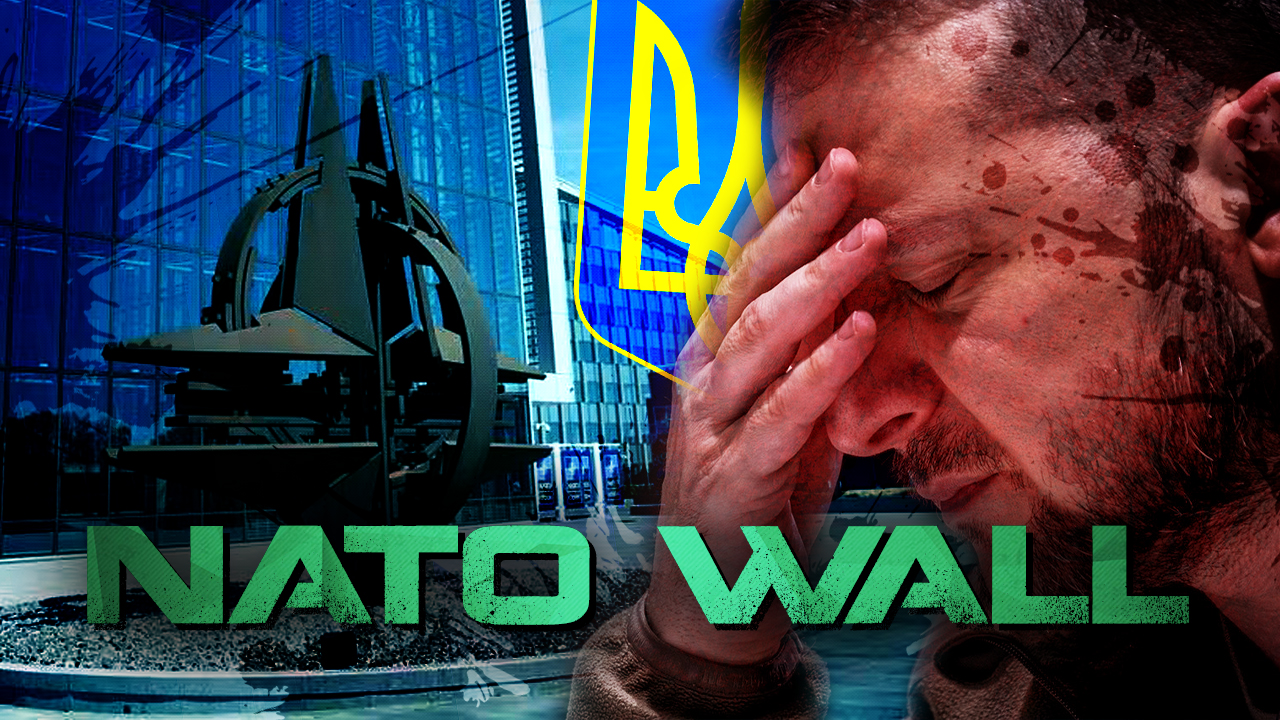
Calls for Ukraine’s accession to NATO have resurfaced alongside growing European preparations for a potential deployment of Western forces in the country, with French President Emmanuel Macron backing renewed discussions on membership and Ukrainian President Volodymyr Zelensky demanding United States and European troops and military bases as part of future security guarantees.
“I think we must reopen the question of Ukraine’s membership to NATO,” Macron said on November 19 following a meeting of the Coalition of the Willing in Berlin.
The French president described Ukrainian membership as relevant to European security, pointing to the country’s strong and well-equipped armed forces.
Zelensky used the meeting to press Western governments for more explicit commitments, arguing that an alternative to NATO membership would need to include foreign troops and military installations on Ukrainian territory.
“This is, for me, part of Article 5: Forces, United States and European partners. Forces. Bases,” he said, referring to NATO’s collective defense provision. “Without this, I’m not sure it’s Article 4, 5, and et cetera.”
The Ukrainian president said NATO membership remained the clearest security guarantee and questioned how effective alternative arrangements would be without a commitment by Western countries to respond militarily to another Russian attack.
U.S. special envoy Jared Kushner, who attended the Berlin meeting alongside fellow negotiator Steve Witkoff, said Washington had discussed NATO-style security guarantees with Moscow.
“We have gotten the Russians comfortable with the concept that any security guarantee for Ukraine would be based on Article 5,” Kushner said, although subsequent Russian statements cast doubt on that assessment.
The Berlin summit also outlined plans for a European-led Multinational Force Ukraine, with American support, that could be deployed following a ceasefire.
A joint statement by Germany, France, Britain and Ukraine said the proposed force would provide security measures on land, at sea and in the air, while helping rebuild and strengthen the Ukrainian armed forces. The arrangements could also include a U.S.-led mechanism to monitor and verify a ceasefire and legally binding commitments to respond to any future Russian attack.
Preparations for the potential deployment are already underway. Around 2,800 troops from 11 European countries are participating in a two-week military exercise that began on November 9 in southeastern Poland and is testing the multinational force’s ability to deploy into Ukraine.
Led by France and Britain, the drills include joint command operations, troop movements, aerial surveillance, anti-drone defenses and ground combat training.
German Chancellor Friedrich Merz described the exercise as evidence of Europe’s readiness to participate in post conflict security arrangements.
“The Coalition of the Willing is ready to contribute with the United States of America to securing a peace,” he said following the Berlin meeting.
However, the force now being assembled would operate independently of NATO, and its troops would be deployed to Ukraine only after the fighting has ended.
Moscow has made clear that it would not accept these conditions. On November 20, Russian Deputy Foreign Minister Sergei Ryabkov rejected the idea of NATO-style guarantees, calling even a formula for Ukraine’s “quasi-membership” in the alliance “an option that is unacceptable to us.”
The senior diplomat reiterated that Russia considers Ukraine’s exclusion from NATO an irrevocable demand in any settlement.
Russian President Vladimir Putin had previously warned that foreign troops deployed in Ukraine would be considered “legitimate targets,” adding that he saw no reason for their presence even after a peace agreement.
Moscow’s stated positions leave little prospect of Russian acceptance of a settlement based on Ukrainian NATO membership or the permanent presence of Western military forces and bases on Ukrainian territory.
_______________________________________________________________________________________________________________________
SouthFront: Analysis and Intelligence
NOW hosted at southfront.press
Previously, SouthFront: Analysis and Intelligence was at southfront.org.
The .org domain name had been blocked by the US (NATO) (https://southfront.press/southfront-org-blocked-by-u-s-controlled-global-internet-supervisor/) globally, outlawed and without any explanation
Back before that, from 2013 to 2015, SouthFront: Analysis and Intelligence was at southfront.com