


Click to see full-size image. (X)
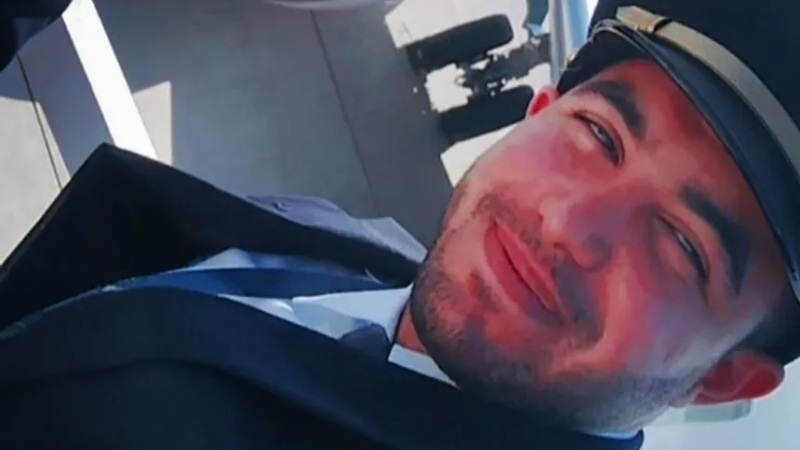
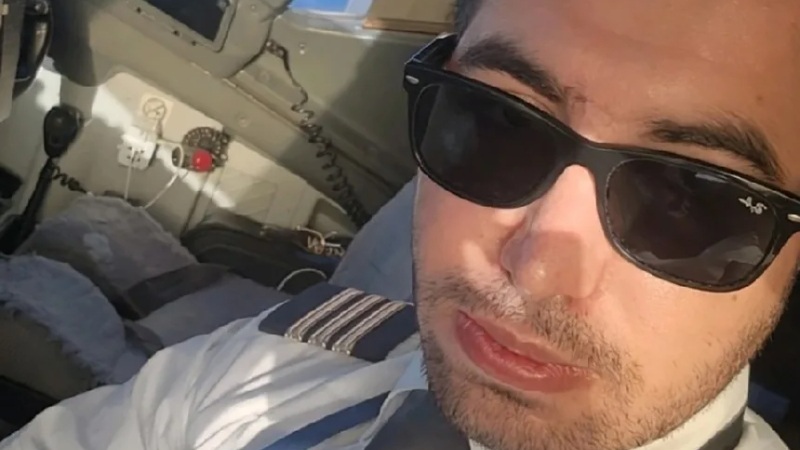
The more that emerges about Hamam al-Hammami, the Omani co-pilot who tried to seize control of an Israel-bound Flydubai jet, the harder it is to view the September 30 attack as the sudden act of a radicalized individual.
Before he ever entered the cockpit of Flight FZ1073, al-Hammami had already been identified as a security concern in Oman. He was removed from flying duties over extremist material and sent through a deradicalization program. He later moved through other aviation institutions, obtained a job with Flydubai in the United Arab Emirates and was eventually assigned to one of the region’s most politically sensitive commercial routes, from Dubai to Tel Aviv.
According to a Wall Street Journal investigation, Flydubai never contacted Oman to vet his previous aviation record before hiring him in February.
The sequence raises a central question. How did a pilot judged too dangerous to fly by one Gulf country’s national airline end up flying passengers for another Gulf state’s carrier, from a country known for extensive security controls, and then find himself in the cockpit of a plane carrying more than 170 people, most of them Israelis?
The UAE has repeatedly portrayed itself as having zero tolerance for terrorism and extremist activity. Yet the same country ultimately employed al-Hammami and gave him access to an aircraft operating a route into Israel.
Al-Hammami was 29 and was born in the UAE to an Omani father and Syrian mother. Reports say he spent substantial periods of his early life in Syria, including repeated visits during the country’s civil war. One account of his background links that period to the development of his extremist outlook, making Syria an important part of the story now being examined by investigators.
His record in Oman is considerably less ambiguous. Al-Hammami worked for Oman Air and was identified by authorities as having an interest in extremist websites and radical material. According to people familiar with the matter cited by The Wall Street Journal, Oman removed him from flying duties, placed him in a deradicalization program and transferred him to desk work rather than allowing him to continue as a pilot.
CNN separately reported that he had been removed from Oman Air’s flight-training program over concerns about his radical views and given another role at the airline. A LinkedIn profile attributed to him showed seven years at Oman Air, ending in February 2025.
His subsequent aviation record adds another layer. The profile said he joined Royal Air Maroc in June 2025, although the Moroccan carrier later said he underwent three months of theoretical training but was not ultimately hired as a pilot.
He also completed a three-year distance-learning program in aviation management at Buckinghamshire New University in Britain, graduating in 2023.
Australia provides another link in the chain. Al-Hammami studied engineering at RMIT University in Melbourne but did not complete the degree. The Victorian Joint Counter Terrorism Team, which includes Australian federal and state police and the country’s intelligence agency, is now investigating his connections to Australia.
The Financial Times has reported that Australian intelligence had a file on him and that he visited radical mosques and extremist websites while there.
By the time he reached Flydubai, the picture was not that of a man whose ideology had suddenly appeared on September 30. A trail ran through Oman, Australia, Syria and several aviation institutions.
His online history has added another layer, with accounts linked to him containing material associated with extremist ideology, misogynistic religious views and imagery involving al-Qaida leader Ayman al-Zawahiri. CNN also found footage from a cockpit showing an El Al aircraft at Dubai International Airport among material posted to an account bearing his name.
And yet Flydubai hired him. The Wall Street Journal reported that Flydubai performed a criminal-background check but did not contact Oman about his previous employment. People familiar with the investigation told the newspaper that he was then placed on the Tel Aviv route and flew it several times. Emirati investigators are examining employees involved in his recruitment.
That makes the UAE part of the mystery difficult to separate from the case itself. This was not simply an airline unknowingly hiring someone with an obscure problem buried in an old personnel file. Oman had already confronted concerns about the man. The information simply did not follow him into the next aviation system.
On September 30, that failure became a near catastrophe. As the official story goes, al-Hammami attacked Indian Capt. Smit Machchhar inside the cockpit with an emergency crash axe as the aircraft flew toward Tel Aviv. The plane plunged more than 14,000 feet in less than 30 seconds. Machchhar, badly injured, managed to open the cockpit door, allowing passengers to rush inside and overpower the attacker. Two reserve pilots aboard the aircraft then helped regain control and land the Boeing 737 Max 8 in Tabuk, Saudi Arabia.
The latest information makes the episode still more disturbing. Reuters reported that two Israeli officials familiar with the investigation said al-Hammami told UAE interrogators that he had planned the attack before Flydubai hired him. Another source said he had specifically planned to crash the aircraft into Ben Gurion Airport and had previously considered carrying out a similar attack on an earlier Tel Aviv flight.
According to those accounts, al-Hammami had deliberately looked for airlines operating routes to Tel Aviv and applied to Flydubai after identifying it as a carrier serving Israel. That turns his presence on FZ1073 from an extraordinary coincidence into a far more troubling part of the investigation.
Click to see full-size image. (X)
The case then reaches beyond Flydubai and into Israel’s own security system. The UAE had provided Israel with passenger and crew information before the flight, including the pilots’ names and nationalities, according to regional officials cited by The Associated Press.
No warning was raised over al-Hammami. Israel therefore had the name and nationality of the Omani co-pilot before he crossed into its airspace, while his earlier aviation history remained invisible to the agencies receiving the flight information.
The issue is particularly striking because Oman has no diplomatic relations with Israel. Prime Minister Netanyahu said Israel has longstanding restrictions preventing pilots who are citizens of countries without diplomatic relations with Israel from operating flights into the country, and he described the incident as exposing a loophole.
Reuters reported that Netanyahu subsequently ordered a comprehensive review of security for foreign civil aviation entering Israel.
The question of what security was actually aboard the aircraft is also central. Israel’s extraordinary aviation-security system is especially associated with its national carrier, but foreign airlines operate under different arrangements.
The Times of Israel reported that a foreign flight carrying hundreds of Israelis from Dubai can operate without an air marshal aboard.
The affair also sheds light on Netanyahu’s increasingly ominous language. The prime minister said al-Hammami had undergone Islamist radicalization and intended to crash the aircraft with everyone aboard. He then raised the possibility that the pilot had been sent by somebody else.
“We are now investigating whether he was sent, and whoever sent him will pay a very heavy price,” Netanyahu said on October 2.
The statement shifted the political meaning of the case. Netanyahu was no longer discussing only a radicalized individual. He was publicly raising the possibility of an outside hand and threatening retaliation against whoever might have directed the operation.
That is where the case takes an uncomfortable turn toward the past. The obvious historical parallel is the 1986 Hindawi affair.
In that case, Jordanian national Nezar Hindawi attempted to put a bomb aboard an El Al flight from London to Tel Aviv by giving a suitcase containing explosives to his pregnant Irish girlfriend, who did not know what was inside. The device was discovered by El Al security personnel at Heathrow. Hindawi was arrested, convicted in Britain and sentenced to a lengthy prison term.
The official British case produced a devastating trail leading toward Syria. British authorities presented evidence that Hindawi had used Syrian documents, stayed at accommodation connected to Syrian Arab Airlines, received backing from the Syrian Foreign Ministry and sought refuge at the Syrian Embassy after the bomb was discovered.
The British government ultimately broke diplomatic relations with Damascus over the affair. In Parliament, the government described the evidence of Syrian involvement in unusually strong terms.
But another version of what happened has never disappeared. Former Israeli intelligence operative Ari Ben-Menashe wrote in his memoir *Profits of War* that the Hindawi operation had been conceived by Israeli intelligence chief Rafi Eitan as a covert operation designed to implicate Syria and have its diplomats expelled from Britain.
Ben-Menashe described an Israeli agent, Mohammed Radi Abdullah, being used to recruit Hindawi and offer him $50,000 to carry out the operation. His account portrayed Hindawi himself as an instrument in an operation designed to produce precisely the political consequences that followed.
Syrian President Hafez Assad accused Israeli intelligence of organizing the operation, while Patrick Seale reported claims from Syrian intelligence sources that they had been penetrated and manipulated by Mossad in a scheme intended to smear Syria and isolate the Assad government.
There was even a remarkable intervention from France. In an interview published in November 1986, Prime Minister Jacques Chirac said that West German Chancellor Helmut Kohl and Foreign Minister Hans-Dietrich Genscher believed the Hindawi plot was a provocation intended to embarrass Syria and destabilize Assad, probably involving Israeli intelligence. The full interview recorded Chirac discussing the possibility that evidence linking Hindawi to Syria could itself have been manufactured.
The Hindawi affair thus became larger than a terrorism case. It became a case study in how a genuine extremist actor, or an individual capable of carrying out violence, can become useful to a much larger political operation.
That is the question now hanging over al-Hammami. His radical ideology appears to have been real. His previous problems in Oman were real. His links to Syria and Australia are now being investigated. His extremist online material has emerged publicly. He sought employment with an airline serving Israel, was hired by a UAE carrier without Oman apparently being consulted about his record and was assigned to a flight whose passenger and crew information was already in Israeli hands.
Taken individually, each element can be explained as a failure of screening, intelligence sharing or bureaucracy. Taken together, they form a far more disturbing sequence.
If al-Hammami acted entirely on his own, the episode represents a staggering failure to connect warning signs spread across several countries. If somebody recruited or directed him, those same failures become something else entirely. They become opportunities that made an already radicalized pilot an exceptionally useful instrument.
That is why the Hindawi precedent matters. The central question in both cases is not simply who carried out the violence. It is who enabled the person to reach the target, who knew what was coming, which warning signs were ignored and who stood to benefit from the crisis created when the operation unfolded.
In Hindawi, the bombing failed, but the political consequences were enormous, damaging Syria’s position in Europe and contributing directly to Britain’s break with Damascus. In the Flydubai case, the aircraft also failed to reach its intended destination as a weapon. But the consequences are already spreading from aviation security into Israeli domestic politics ahead of critical elections and the possibility of a confrontation with whoever Netanyahu claims may have sent al-Hammami.
The man in the cockpit may have been a terrorist acting on his own. He may also have been exactly what a larger covert operation would need, an already radicalized, politically motivated actor with enough access, competence and ideological commitment to be pushed toward a spectacular target.
Either way, the most troubling fact is now impossible to ignore. The warning signs did not begin when the axe came down in the cockpit. They were there years earlier.
_______________________________________________________________________________________________________________________
SouthFront: Analysis and Intelligence
NOW hosted at southfront.press
Previously, SouthFront: Analysis and Intelligence was at southfront.org.
The .org domain name had been blocked by the US (NATO) (https://southfront.press/southfront-org-blocked-by-u-s-controlled-global-internet-supervisor/) globally, outlawed and without any explanation
Back before that, from 2013 to 2015, SouthFront: Analysis and Intelligence was at southfront.com
the most moronic cia and zionist false flag so far. just shows how desperate these genocidal zionist criminals are.
this israeli stench of this is becoming stronger by the day. bibi rushes for interviews for pr purposes straight after it happened. one of the photos in the plane shows a container of water left on a shelf which stayed there after the 4000m (?) fall in a matter of a few seconds. the cockpit was opened by an injured pilot who was stabbed and still under attack. and now the info in article above. hmmnnn. israeli magic… false flag.
probably mossad who was behind 9/11 as well. same modus operandi. as always..
now that plumbers can open locked doors and land airplanes ( original hasbara ) i lean towards covert operation. what an opportunity to rehearse in the hollywood media mis-information space.
these are essential plumbing skills and form part of the curriculum at all plumbing schools.
surely the u.s. and israel wouldn’t create a false flag to try to put the blame on oman. why, they might have to even try to invade oman. surely that wouldn’t impact the straits of hormuz.
i wish he ram this shit full of rats into some high building in tel aviv. now ya dance, you motherfucking sons of whores.
you mean ‘shit can’. you got the ‘motherfucking’ deal right with that crowd right though. ✅
the murderous arsehole meilikowsky has a particular penchant for ‘loopholes’, in any situation.
julianaposso70@gmail.com
behind all the confusion lies one unwavering agenda:
goyim-vs.-goyim war.