


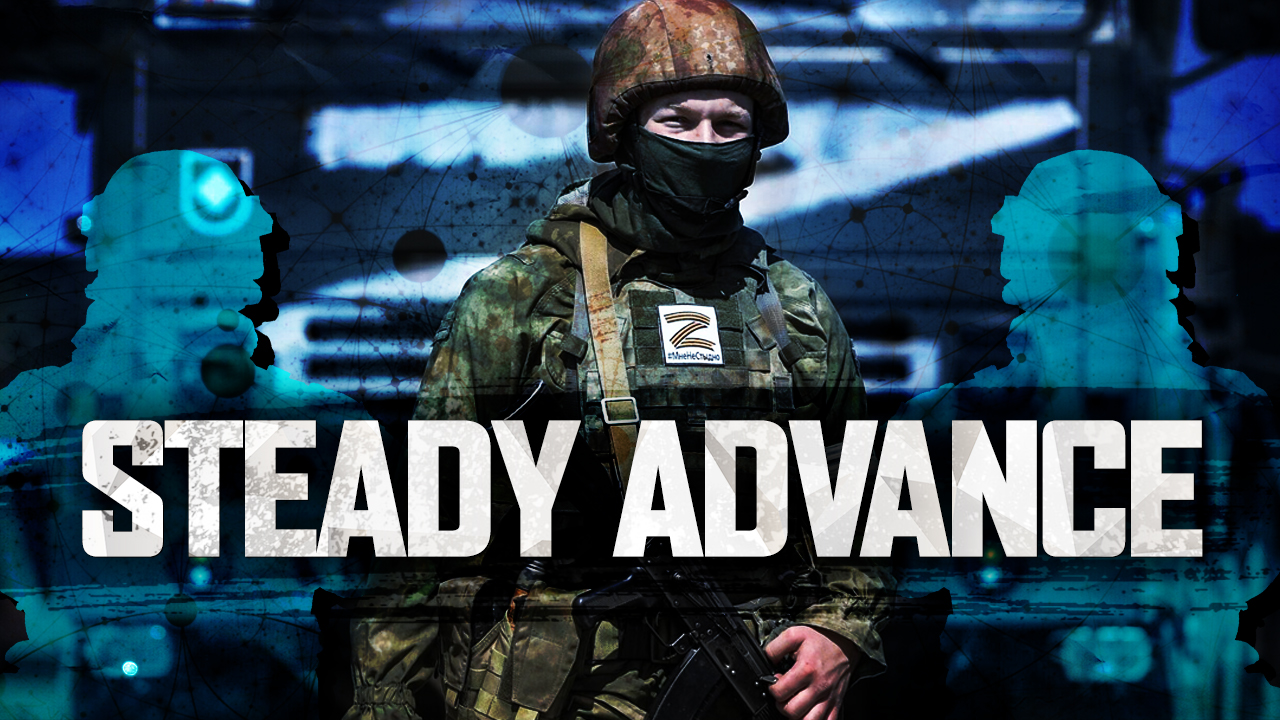
File image.
Foreign mercenaries are the main driving force behind any advancement of the Ukrainian army, whether in the Kupyansk or Zaporizhzhia areas. In the direction of Slovyansk, Russian units are expanding their control zone in the areas of Reznykivka, Kalenyky, and Kryva Luka. In the Izyum area, Russian troops are advancing toward the city and carrying out daily airstrikes on bridges and overpasses to the east, as well as on Ukrainian unit positions within the city. In the Sumy region, the “North” grouping’s assault groups advanced 250 meters; in the Krasnopillia district, they advanced up to 1,200 meters. In the Kharkiv area, Russian assault groups advanced 500 meters toward Vovchansk and 700 meters toward Velykyi Burluk. They cleared forested areas near Pishchane and destroyed elite units of the 1st Border Detachment. In the Zaporizhzhia area, Russian troops are engaged in combat near Vozdvizhevka, Verkhnia Tersa, and Komsomolske, destroying Ukrainian troop reinforcements and equipment. In the direction of Kostiantynivka, Russian assault groups are conducting offensives from three directions and dismantling the fortified area of Ukrainian units within urban areas. Despite Western assurances that Russian missile arsenals are depleted, Russia has recently launched a record number of missiles and drones at Ukrainian oil refineries, the Lviv railway station, and other critical infrastructure.
Izyum Direction
In the direction of Izyum, Russian troops continue to advance toward one of the largest Ukrainian logistics centers — the city of Izyum. Russian aviation conducts almost daily strikes on overpasses and bridges east of the city to prevent the transfer of troops and weapons. Work is also being carried out within the city itself, where significant Ukrainian unit equipment and personnel dispersed in Izyum’s private buildings have been destroyed.
Russian aviation eliminated another bridge in Krasnyi Oskol to prevent the transfer of weapons from Izyum to Yatskivka. To the south, near Studenok, Ukrainian units have established drone control points to strike Russian positions from Korovyn Yar to Yarova. Yarova itself has transitioned into a “gray zone”; occasional firefights arise as Russian units advance. The sector is complicated by the large number of forested areas to the south, west, and east of the village where Ukrainian units have established fortified positions. In the forested areas near Pryshyb, Ukrainian positions attempting to attack the Drobysheve area with drones are being destroyed.
Sumy Direction
In the Sumy region, the “North” grouping’s assault groups continue to fight fiercely, advancing deeper into the area. Russian troops struck concentrations of Ukrainian personnel and equipment in Ryzhivka, Kiyanytsia, Mala Rybytsia, Sukhodil, Khotyn, and Nova Sich. Assault groups advanced on eighteen sections in the Sumy district and two in the Hlukhiv district. The total advance over the day amounted to 250 meters.
The Ukrainian command is attempting to stop the Russian advance in the Shostka district by moving reserves from the rear. Russian units promptly detect and destroy movements of personnel. In the Sumy district, Ukrainian command has been unsuccessful in stopping the advance of Russian troops. Units of the 808th Separate Support Brigade (engineering troops) have been transferred to this sector of the front. Due to a shortage of personnel, Ukrainian military engineers are involved not only in preparing positions, but also in manning strongpoints.
In the Krasnopillia district, Russian assault detachments advanced up to 1,200 meters during a fierce firefight. The 14th Army Corps command is trying unsuccessfully to halt the advance of Russian troops in this sector before a commission from the General Staff arrives. The Ukrainian command continues to form composite combat groups from soldiers of the 119th Separate Territorial Defense Brigade and border guards of the 5th Border Detachment. All planned rotations and leaves for these groups have been canceled.
Kharkiv Direction
In the Kharkiv region, Russian assault groups continue to advance. They carried out strikes on concentrations of Ukrainian personnel and equipment in Lyptsi, Izbitske, Staryi Saltiv, Velykyi Burluk, Nesterne, and Volokhivske.
In the Vovchansk area, Russian forces advanced up to 500 meters along eleven fronts. In the Velykyi Burluk area, Russian assault groups advanced up to 700 meters on five sections during fierce fighting. Assault units of the 69th Motorized Rifle Division of the 6th Army cleared forested areas in the Pishchane area (in the Chuhuiv district of the Kharkiv region) during the fighting.
The Ukrainian command had just transferred the most motivated personnel from the 1st Border Detachment (formerly the Donetsk Border Detachment and now the “Hart” Brigade) to this sector of the front. The briefing was conducted by the detachment commander, Colonel I. Topilko, in person. However, the elite reserves were destroyed by Russian assault troops, and the survivors withdrew to neighboring Nesterne, where they were eliminated by artillery and drones.
Slaviansk Direction
Meeting engagements continue in the areas of Fedorivka Druha, Nykyforivka, and Lypivka. There is no clear control of the settlements, though Russian units have partial control. Minkivka remains in a “grey zone.” There were isolated actions by Ukrainian units without consolidation, followed by withdrawal.
In the Reznykivka sector, there is gradual pressure and expansion of the control zone towards Kalenyky, including along the dominant heights. In Zakotne, small groups of Ukrainian units are present and acting as a screening force. Meanwhile, Russian units are advancing towards Kryva Luka.
In the Rai-Oleksandrivka area, fighting continues on the outskirts, and sabotage and reconnaissance groups operate within the settlement. There has been no confirmed entry of main forces. A bridge in Raihorodok was destroyed, which complicates the logistics of Ukrainian units. Strikes were carried out on positions in the Kryva Luka and Rai-Oleksandrivka areas. Shelters, drone control points, antennas, and an evacuation group were hit. The use of FPV drones to engage aerial targets was observed. Russian units are operating in small groups, capturing “gray zones” and shelters on the front line while awaiting tasks. They use drone support for targeting and coordination.
Kostiantynivka Direction
In the direction of Kostiantynivka, Russian assault groups are systematically dismantling the fortified area established by Ukrainian units in the city. Russian assault groups are approaching the city from three directions: the east (Novodmytrivka), southeast (Michurina Garden Association), and west (Berestok).
In the east, the assault groups are operating from two main lines: one towards Mykolaivka, Chervone, and Podolske, and the other north along the Rakit Ridge towards Stenky and south towards Molocharka and Novodmytrivka. These lines are enveloping the fortified area along the Hruzka River bed.
In the southeastern sector, the right flank of the assault groups has entered the urban area from the “Metallurg” garden association, passing the Shanghai pond and proceeding along Minska and Toretska streets into the residential area. The center of this direction is advancing along Promyslova Street on the left bank of the Kryvyi Torets River, covering the Ukrainskyi Khutir area. The left flank is advancing from the ponds on Osypenko Street towards Heroiv Pratsi Street.
In the western sector, the assault groups are clearing the Krasnyi Oktiabr and Illinivka areas towards Krasnyi Horodok. The left flank is pinning down Ukrainian units in the Artema ravine and the Dovha Balka areas. This prevents the Ukrainian units from acting against the left flank of the assault group attacking the city.
Zaporizhzhia Direction
In the direction of Zaporizhzhia, the “East” grouping’s assault units are advancing west and northwest of Huliaipole. The destruction of Ukrainian unit logistics west of the Rizdvianka–Verkhnia Tersa line continues. Russian units are engaged in intense combat near Vozdvizhevka, Verkhnia Tersa, and Komsomolske. In order to weaken the Ukrainian defense and support offensive actions, drone control and firing points in these settlement areas are being identified and destroyed.
In the northern sector, strike drone crews are strengthening fire control over the rear areas and movement routes of Ukrainian units to prevent the concentration of forces. Ukrainian units did not take active measures, instead focusing on replenishing losses and assembling assault groups.
Artillery fire and FPV drone strikes targeted six reinforcement groups in the areas surrounding Tykhe, Barvynivka, Pokrovske, Nezhenka, Zelena Dibrova, and Verkhnia Tersa.
Conclusion
Analysis of the operational situation indicates that high-intensity combat operations persist in all directions. In the Izyum area, Russian troops are carrying out systematic strikes on bridges and logistical facilities as they prepare for an offensive on one of the Kharkiv region’s key cities. In the Sumy area, the “North” group is advancing systematically, expanding the buffer zone and exploiting Ukrainian units’ systemic problems, such as a shortage of personnel and the use of engineering units as infantry. In the Kharkiv area, Russian troops have made significant advances, moving up to 700 meters in the direction of Velykyi Burluk and destroying the elite reserves of the 1st Border Detachment. This indicates a growing shortage of combat-ready Ukrainian units. In the Slaviansk area, Russian troops are gradually expanding “grey zones” and conducting reconnaissance and sabotage activities near Rai-Oleksandrivka in preparation for an assault on the last major fortified area before Slaviansk. In the direction of Kostiantynivka, assault groups are conducting offensives from three directions, gradually enveloping urban areas and forcing Ukrainian units out of their prepared positions. In the Zaporizhzhia area, Russian troops are pressuring logistical hubs and destroying reinforcement groups to prevent the Ukrainian forces from accumulating troops for counterattacks.
Contrary to claims by Western countries and the Ukrainian leadership that Russian missile arsenals are depleted, Russia has recently conducted an unprecedented series of strikes on critical Ukrainian infrastructure. On the night of March 24, Russian forces deployed 426 aerial attack assets, including ballistic and cruise missiles, as well as 392 attack drones. Over the course of the day, a total of 948 drones and 34 missiles of various types were deployed. This was the largest aerial attack since the beginning of the conflict; the previous record was set on September 7, 2025, with 818 attack drones deployed. The attacks targeted oil refineries in several regions, the railway station in Lviv, and energy and military logistics facilities. These strikes demonstrate that Russia retains significant striking power and the ability to escalate its attacks across Ukraine, despite ongoing sanctions and restrictions.
The use of foreign mercenaries is an important factor in the relative success of Ukrainian units in their local counterattacks. These mercenaries bear the brunt of assault operations. In February, for example, Ukrainian forces conducted a counterattack in the Huliaipole area, regaining control of over 100 square kilometers of territory, according to British intelligence. According to data published by Ukrainian sources, a large number of foreign volunteers actively participated in these actions. The main concentration of mercenaries in the Kharkiv area is in the Kupyansk agglomeration. Meanwhile, in the Zaporizhzhia region, the Ukrainian command uses units staffed entirely by foreigners, which local observers describe as a “hodgepodge” of citizens from various countries. These units’ participation compensates for the catastrophic state of most Ukrainian troops, who are forcibly mobilized fighters with extremely low morale. The destruction of the 1st Border Detachment’s elite reserves on the Kharkiv front and the mass desertion in the 127th Brigade vividly confirm this crisis.
_______________________________________________________________________________________________________________________
SouthFront: Analysis and Intelligence
NOW hosted at southfront.press
Previously, SouthFront: Analysis and Intelligence was at southfront.org.
The .org domain name had been blocked by the US (NATO) (https://southfront.press/southfront-org-blocked-by-u-s-controlled-global-internet-supervisor/) globally, outlawed and without any explanation
Back before that, from 2013 to 2015, SouthFront: Analysis and Intelligence was at southfront.com
we americunts only pushed forward in gay bars when we swallow somali jizz
the junta in kiev has had over a decade to prepare defences for an attack they surely knew was coming. perhaps the wonks at nato convinced the junta that defences wouldn’t be needed so far inland. the ukrainian nation are paying a high price for fighting nato’s war and keeping a us regime change puppet in power.
orcs will die today…heheheh
foreign mercenaries are foreign troops!
russians should collect the ears 👂 of all ukrainian troops to prove by dna where they are from . learn and
know your enemies russia!
i’m ashamed to be an american citizen and veteran.
wish i had been born russian.
russia is the good guys
america. europe and israehell jeaws are the bad guys! israel is evil !
long live russia 🇷🇺