


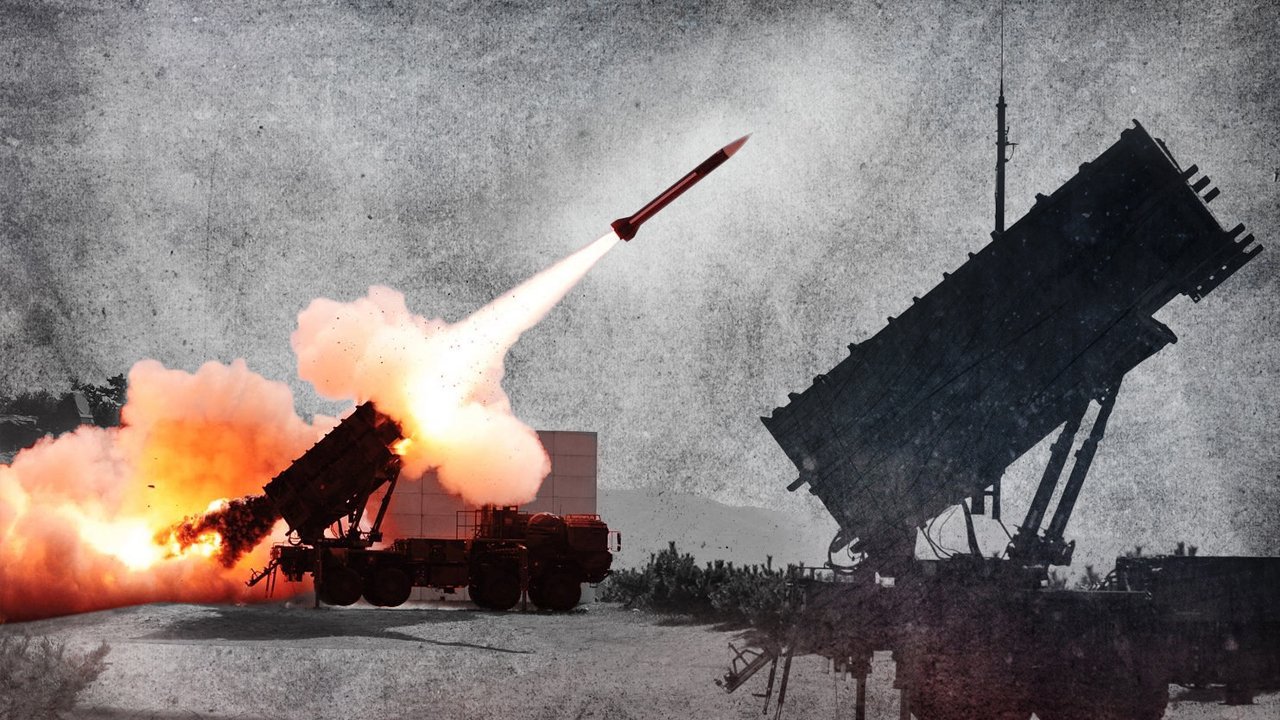
File image.
The United States announced the interception of missiles launched from Iran on June 1, while the Islamic Republic shared footage of its air defenses shooting down an American drone earlier in the day, as tensions between the two mount amid a fragile ceasefire.
In a statement, the U.S. Central Command (CENTCOM) said that its forces successfully intercepted two Iranian ballistic missiles targeting American forces based in Kuwait.
The two missiles were immediately defeated and no American personnel were harmed as a result of the interceptions, the command added.
“U.S. Central Command remains vigilant and will continue to protect our forces from Iranian aggression while supporting the ongoing ceasefire,” it concluded.
The target of the Iranian retaliatory strikes was reportedly Ali Al Salem Air Base in the heart of Kuwait. The air base hosts the 386th Air Expeditionary Wing of the U.S. Air Force and other American military units.
Earlier in the day, CENTCOM announced that it had conducted “self-defense strikes” on Iranian radar and command and control sites for drones in Goruk, Iran and Qeshm Island after an MQ-1 Predator combat drone was shot down by Iranian air defenses over the Persian Gulf.
Iran’s Islamic Revolutionary Guard Corps (IRGC) said that its Aerospace Force targeted an air base hosting American forces in response.
Footage released by the guards showed the launch of what appears to be two Fateh-110-type ballistic missiles being launched.
Iran produces several types of ballistic missiles from the Fateh-110 family, some with a range of over 700 kilometers. Missiles of this type targeted Ali Al Salem last week, wounding five U.S. troops and contractors. Two MQ-9 Reaper combat drones were also hit, with one completely destroyed. At the time, it was claimed that the missiles were intercepted.
The IRGC also released video footage showing the combat drone mentioned by CENTCOM being shot down early on June 1 during the clash.
While CENTCOM identified the drone as an MQ-1, it is more likely that the drone was actually the more modern MQ-1C Gray Eagle.
Most Predator drones were phased out of service, and as of 2024, only one was reportedly in service with the U.S. Air Force. Still, it is important to note that the MQ-1 was also covertly operated by the CIA’s Special Operations Group in the past. Thus, it is possible that the agency is still operating some drones of this type in secret.
Meanwhile, the MQ-1C is currently operated by the U.S. Army, most notably by the elite 160th Special Operations Aviation Regiment “Night Stalkers”.
Gray Eagle drones, which cost upwards of $20-30 million per unit, are primarily used to collect intelligence and conduct surveillance, but have the ability to conduct pinpoint strikes. The advanced drones can operate for more than 25 hours and reach altitudes of over 29,000 feet.
While all recent reports suggest that the U.S. and Iran are close to signing a memorandum of understanding to end the war, the latest clash shows that tensions are not easing.
Adding this, the deployment of an MQ-1-type drone could be a sign of U.S. preparations for some special operation, or even clandestine action. This is by no means an indication of good well from the side of Washington. Tehran remains very cautious.
_______________________________________________________________________________________________________________________
SouthFront: Analysis and Intelligence
NOW hosted at southfront.press
Previously, SouthFront: Analysis and Intelligence was at southfront.org.
The .org domain name had been blocked by the US (NATO) (https://southfront.press/southfront-org-blocked-by-u-s-controlled-global-internet-supervisor/) globally, outlawed and without any explanation
Back before that, from 2013 to 2015, SouthFront: Analysis and Intelligence was at southfront.com
https://hawarnews.com/ar/142239 considering they gave their land to the turks and isis, they can be happy that their women are not yet offering sexual favors in ankara.