


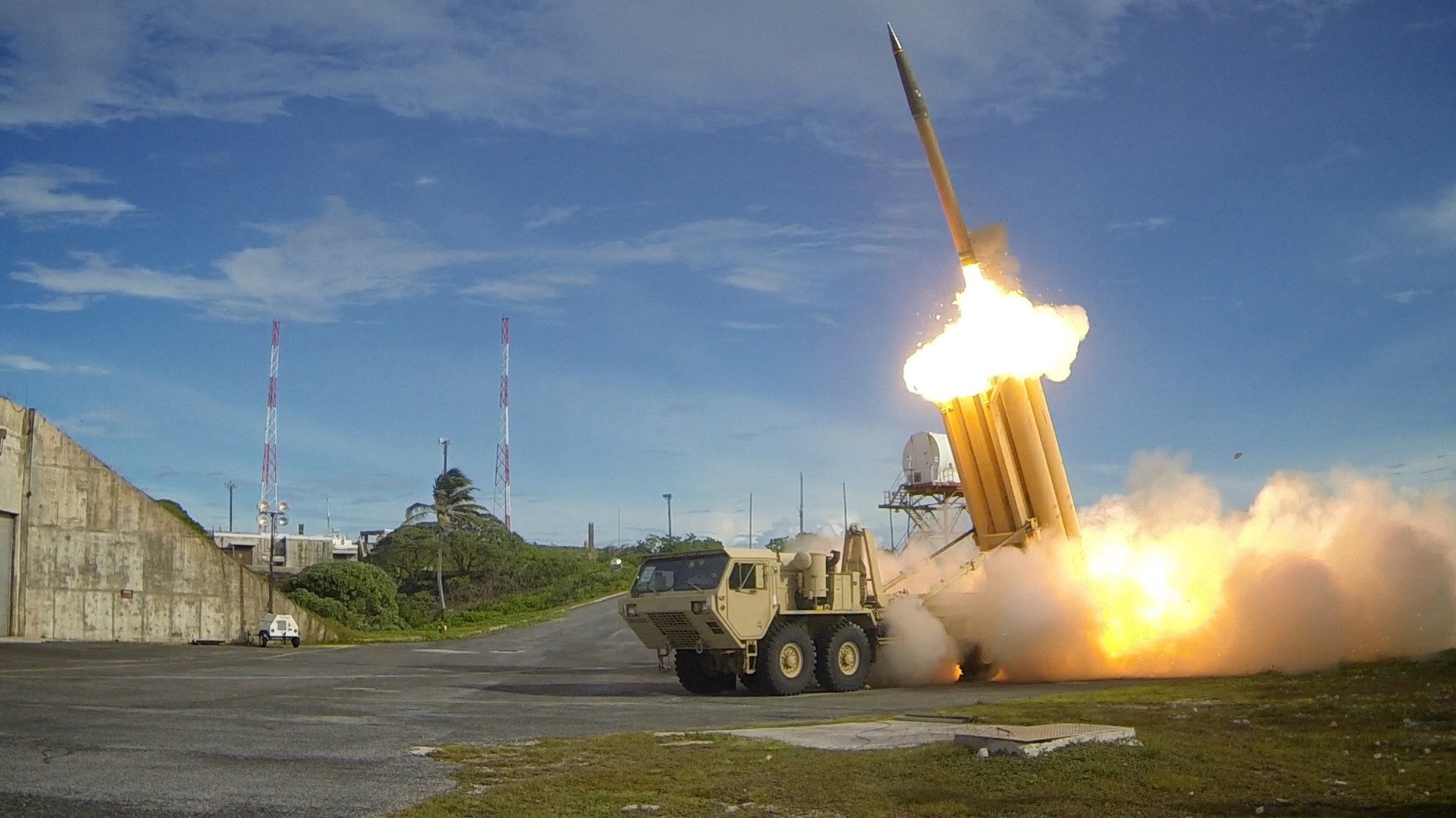
Illustrative image. (U.S. Army\Missile Defense Agency)
A renewed United States campaign against Iran has significantly depleted American stockpiles of Patriot and THAAD interceptors, raising concerns about the military’s readiness for other potential conflicts, according to an analysis published on July 27 by the Center for Strategic and International Studies.
The report found that U.S. forces expended large numbers of air defense munitions during the first phase of the war on Iran, which began on February 28. Combat operations resumed after an April 8 ceasefire, further reducing inventories, according to the analysis.
Patriot interceptor inventories have fallen below 1,000, down from about 1,030 before the war began, the analysts found. Meanwhile, THAAD interceptor stocks stood at roughly 250, according to the report.
Patriot inventories fell from the prewar level to a range of 759 to 827 by the time of the April ceasefire, the analysis found, while THAAD inventories dropped to a range of 234 to 278 over the same period.
THAAD deliveries during the ceasefire outpaced usage, the report noted, resulting in somewhat higher inventories in July than in April.
The report credited American air defenses with being largely successful, but noted that it was not perfect. Some Iranian attacks penetrated air defenses, the analysts wrote, causing casualties and extensive damage to military bases.
It warned that shrinking stockpiles could force the U.S. and allies to accept greater risk in how they use remaining interceptors.
There are no good alternatives to Patriot and THAAD systems for ballistic missile defense, according to the report, which notes that Navy ships equipped with Standard Missiles capable of such intercepts are generally too far from the fight to help.
The report also flagged a broader strategic concern: that munitions expended in the Iran conflict could pose a near- to medium-term risk to U.S. readiness for a potential conflict with China in the western Pacific.
It pointed to the Trump administration’s proposed $95 billion munitions request in the fiscal year 2027 defense budget, along with an additional $21 billion in a war supplemental request, as evidence of the urgency officials place on rebuilding stockpiles.
While a Patriot interceptor on average costs around $4 million, a single THAAD missile runs between $12 million and $15 million.
A limited confrontation with Iran that went on for 13 days earlier this month has likely depleted U.S. interceptor stockpiles even further, and just as the report came out, another confrontation began, with the Islamic Republic resuming missile strikes against American forces in the region.
It is unclear how many missiles Iran still has, or if it is still producing any. It is clear, however, that the U.S. and its allies could exhaust their stockpiles if the war drags on any longer.
_______________________________________________________________________________________________________________________
SouthFront: Analysis and Intelligence
NOW hosted at southfront.press
Previously, SouthFront: Analysis and Intelligence was at southfront.org.
The .org domain name had been blocked by the US (NATO) (https://southfront.press/southfront-org-blocked-by-u-s-controlled-global-internet-supervisor/) globally, outlawed and without any explanation
Back before that, from 2013 to 2015, SouthFront: Analysis and Intelligence was at southfront.com
iran 🇮🇷 has plenty of missiles, uncle sam doesn’t.😂🤣😂
the jewsa is being demilitarised and will soon be defenceless! heheheh
the l team. trumpy, graham, nuttyyahoo. team loser.
soonly russians in iran will be cutted head
don’t worry bennie babys 42 trillion and we will have enough missiles to protect you
in my americunt hillbilly trailer park we hunt 9 yr boys lick peniz derp in cell jizz injected in my anuz by hebrews
imagine the global happiness if the us lost the ability to wage war. maybe they could learn to manage their own economy ? i am sure the street people would be pleased
i dont think so. they have done so many things to others that the list of countries interested in vengence would probably be very long.
israel is in the same situation. hehehe