



Illustrative image.
Between March 8 and 17, three space objects were detected near Earth: one over Germany, one over the Black Sea, and one over Ohio. Each object exhibited characteristics that did not fit the standard model of a “natural meteoroid.” In this article, we examine the new data, conduct a comparative analysis of the parameters, and evaluate the consistency of the hypothesis that the objects are physically connected fragments that separated from the interstellar object 3I/ATLAS. Our analysis is based on open sources, eyewitness video recordings, and data from international astronomical networks.
Size Matters: Three Objects – One Caliber
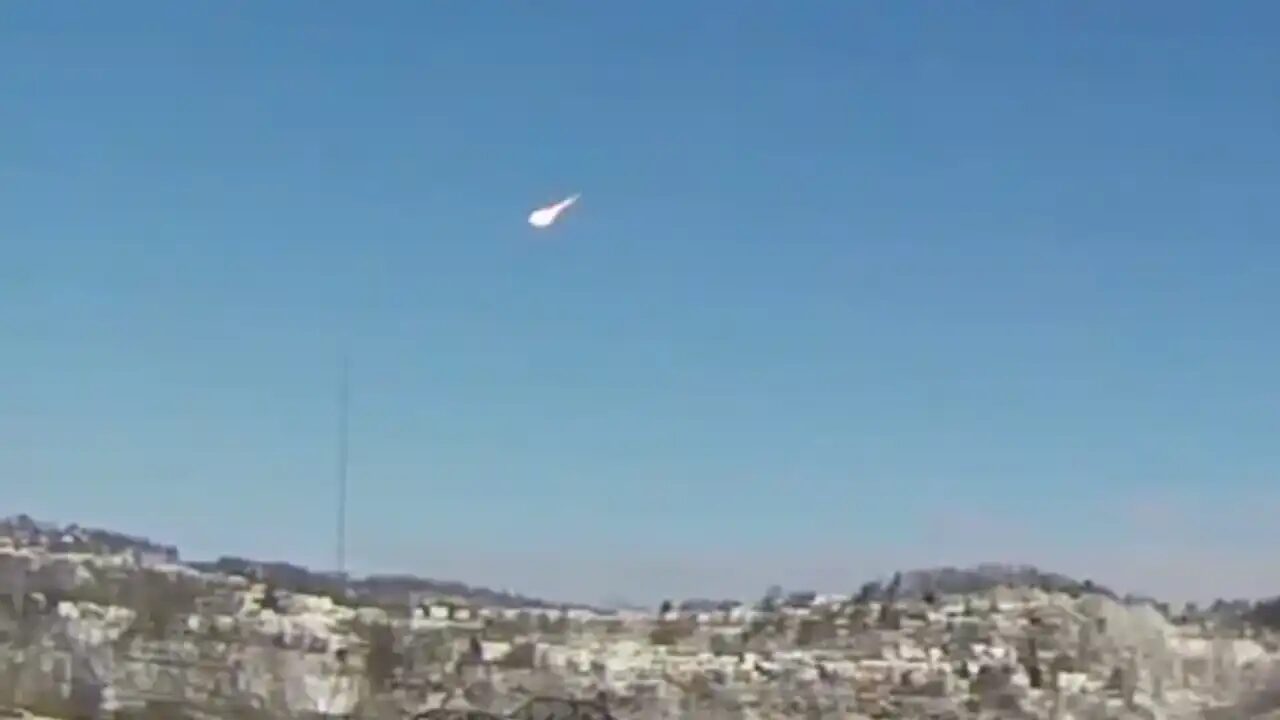
Upon detailed analysis of video footage from the three incidents, the first thing that stands out is the visual similarity in the sizes of the luminous bodies at peak brightness. Of course, absolute values depend on many variables, such as shooting distance, camera angle, atmospheric conditions, and exposure. A dashcam in Germany, a surveillance camera in Novorossiysk, and a doorbell camera in Ohio recorded the objects from different distances and angles.
However, when the estimated diameter of all three bodies is recalculated, considering known atmospheric parameters, observation angles, and standard photometric assessment methods, it falls within the same range: 2–4 meters. This finding is supported by visual comparisons with known objects in the frame, such as trees, buildings, and power lines, as well as by analyzing the brightness of the glow relative to background stars.
Illustrative image.
For a natural flux of sporadic meteoroids entering the atmosphere on different days, at different points on the planet, and at different speeds, such uniformity is statistically unlikely. Specialists estimate that the probability of a random coincidence in the sizes of three independent objects is less than 5%. However, if we assume that the objects are fragments of a single parent body that separated within the same time interval as a result of a controlled separation process, the similarity in size becomes an expected consequence of a unified mechanism, not just logical.
Entry Geometry: Angle as a Trajectory Marker
The second key parameter that can be analyzed quantitatively is the angle of atmospheric entry relative to the local horizon. Here, a clear, nearly linear dynamic can be observed.
- March 8, Germany: ~10–15° from the horizon (very shallow entry).
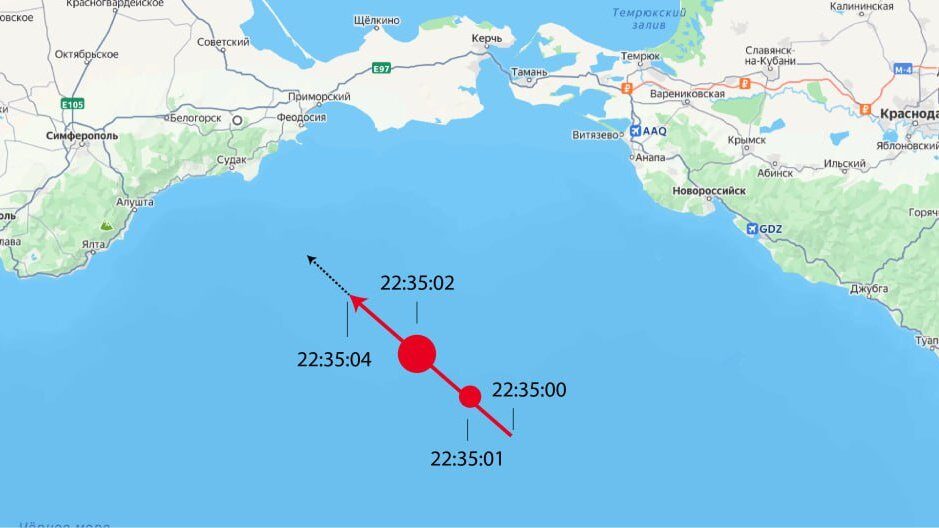
- March 11, Black Sea: ~15–20° (moderate entry).
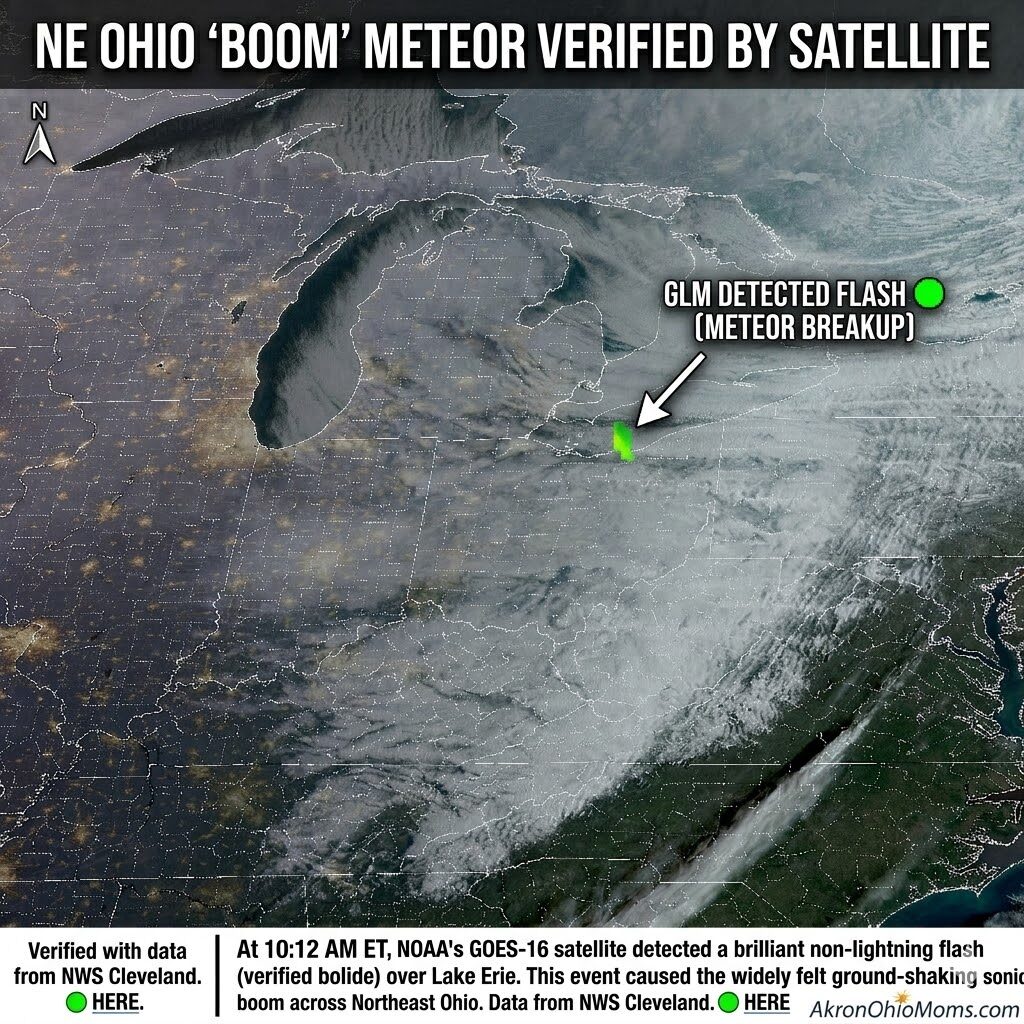
- March 17, Ohio/Canada: ~20–25° and above.
Assuming the fragments separated from 3I/ATLAS during its closest approach to Earth on December 19, 2025, and continued moving by inertia, subsequent fragments should have caught up with Earth from increasingly “blunter” directions as the comet moved away from our planet. This follows from the basic principles of orbital mechanics: relative speed and approach vector change depending on the mutual positions of the bodies in orbit.
Illustrative image.
The observed sequence of entry angles precisely corresponds to this kinematic model. Furthermore, the calculated margin of error between the predicted and recorded values is 3–5°, which falls within the accuracy limits of amateur observations. This is not a coincidence; it is a prediction confirmed by independent observations.
Identical “Signature” of Fragmentation: Not an Explosion, But a Process
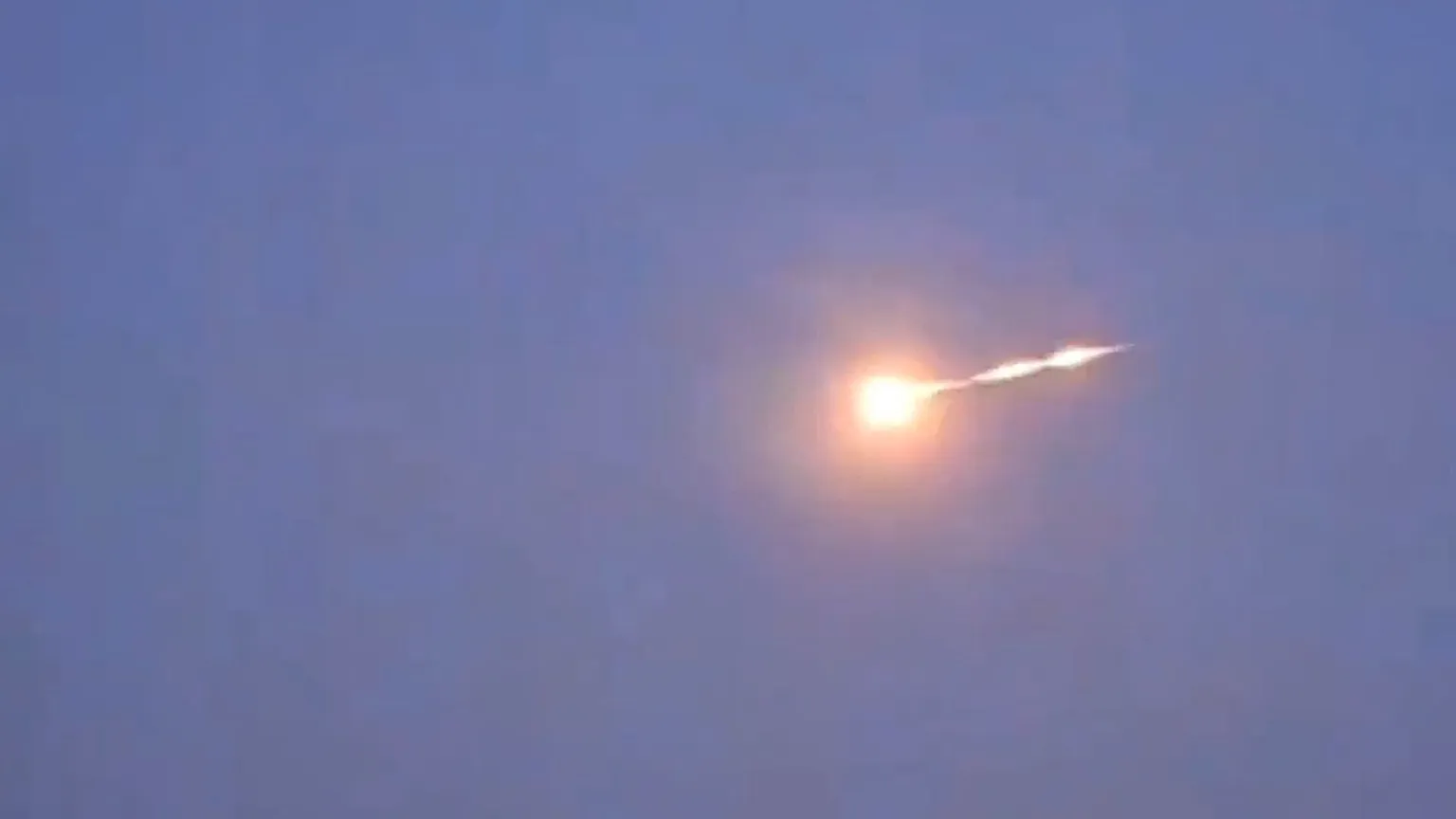
A frame-by-frame analysis of video recordings from all three events reveals an identical and reproducible pattern of disintegration. Unlike the event in Chelyabinsk in 2013, the object does not explode all at once. Instead, it undergoes a series of sequential, controlled breakups while maintaining its overall motion vector and without generating a powerful shockwave.
Illustrative image.
The Chelyabinsk meteor, with a speed of ~19 km/s and a diameter of ~17–20 m, exhibited chaotic, explosive fragmentation at an altitude of ~30 km. This created a shockwave that damaged over 7,000 buildings. Despite their higher specific entry energy, all three objects of March 2026 (speeds ~39–45 km/s, diameter ~2–4 m) behaved differently. They exhibited a gradual increase in brightness, a series of three to five soft flares at 0.5–2-second intervals, an absence of a powerful terminal explosion, and consequently, minimal ground-level effects.
First object:
Second object:
Third object:
The space objects behave identically in all three videos. This type of “soft” fragmentation may indicate a heterogeneous yet structured internal composition of the objects or the presence of mechanisms that dampen the energy of disintegration. This scenario is atypical for natural stone or iron meteoroids.
Invisibility to Radar: Anomaly or Material Property?
All three objects flew over areas with dense radar coverage: Central Europe, which includes NATO systems and civilian weather radars, and the northeastern United States, which is under the jurisdiction of NORAD, the FAA, and private networks. The entry altitude of 50–80 km corresponds to the operational ceiling of fighter jets and the detection zones of medium-range air defense systems.
However, according to official statements from the relevant agencies, none of the objects were detected by military or civilian radars as targets with characteristic parameters, such as speed, radar cross-section (RCS), and trajectory.
A natural meteoroid of this size moving at hypersonic speed in the tenuous atmosphere should create a significant ionized trail reflecting radio signals across a wide frequency range. The absence of such data suggests either that the objects have unique physical properties (e.g., a radar-absorbent coating or an unusual shape) or that their trajectory, speed, and entry profile were optimized to minimize radar visibility. A third option—a systemic failure across multiple independent radar networks—is statistically extremely unlikely.
An Iceberg in an Ocean of Data: The 30-Entry Hypothesis
Over 70% of Earth’s surface consists of oceans, polar regions, deserts, and sparsely populated areas. Even in populated areas, not everyone has a camera pointed at the sky at the right moment, especially during the day when a meteor’s glow is sharply reduced by the brightness of the sunlit sky.
Let’s make a simple estimate. If we assume that the effective observational coverage of cameras, radars, and visual witnesses is no more than 15–20% of the planet’s surface at any given time and that the probability of recording an object in a populated area under favorable conditions is about 30%, then with three confirmed meteor entries over ten days, the actual number of events can be expected to range from 15 to 40.
This is not speculation, but rather a conservative estimate based on observational coverage statistics and probabilistic models. If the hypothesis of a stream of fragments from 3I/ATLAS is correct, then Earth may have received significantly more “visitors” than were recorded. Most of them simply fell into the ocean, taiga, or desert, leaving no trace.
The Silence Effect: Why is the World Quiet?
After the Chelyabinsk meteor fell in 2013, the event instantly became global news. Videos circulated on television channels worldwide, experts provided live commentary, and scientific institutes published preliminary calculations. The amount of information was enormous.
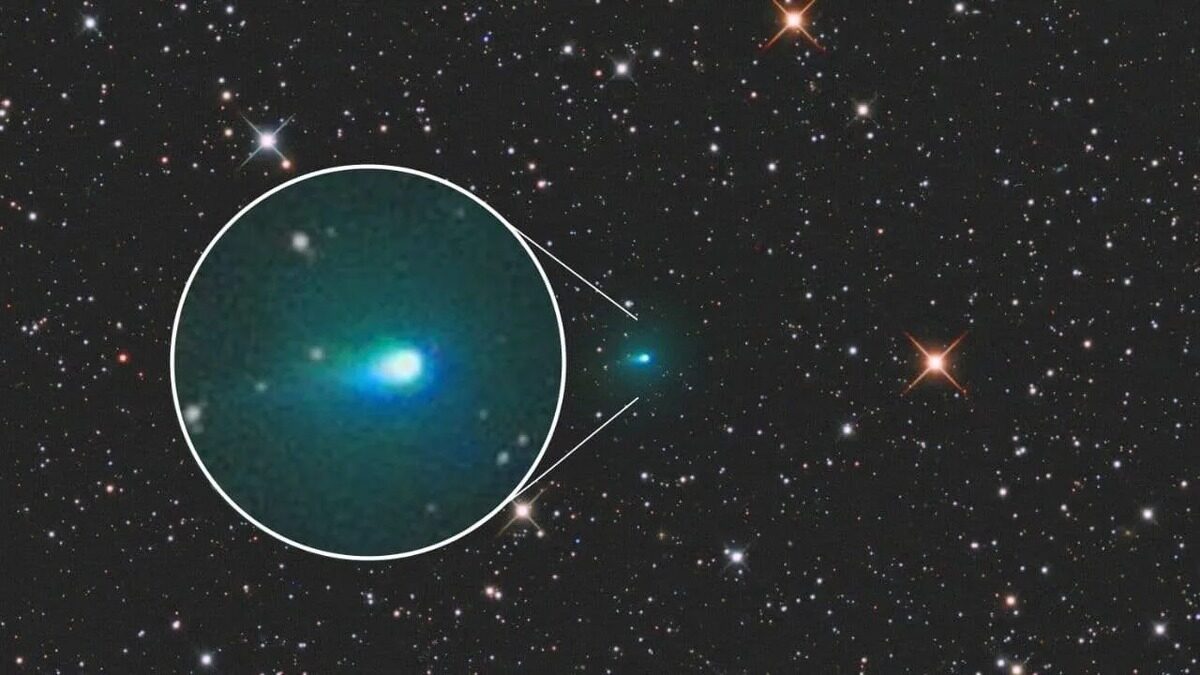
Then, this March, something unprecedented occurred: an anomalous object, 3I/ATLAS, passed in close proximity to Earth—at a record distance for observed interstellar objects—and, within a week, a series of three atmospheric entries linked to it were recorded.
Illustrative image.
There is no historical precedent for such a chain of events. However, the media and official structures reacted with restraint. Discussions are held among amateur astronomers in professional communities, on forums, and on social networks, but there is no widespread public resonance. Major news agencies limited themselves to short, unanalyzed reports.
This “silence” itself becomes a factor requiring explanation in any serious analysis. Reasons for this silence range from an overloaded news agenda to a deliberate downplaying of a topic with potentially high public sensitivity.
Latitude Corridor: A Common Approach Plane
By analyzing the geographical coordinates of the entry points, we can determine the approximate latitudinal range of the events.
Germany, Koblenz: ~50.3° N
Black Sea, Crimea: ~44.5° N
USA, Ohio/Pennsylvania: ~41–43° N
All three events fall within a narrow corridor of 40–52° N latitude. This is not a random distribution, but rather a band only about 12° wide, constituting less than 10% of the possible latitude range for random meteor entries.
This corridor may correspond to the projection of the 3I/ATLAS orbital plane at the time of fragment separation. If the objects separated and traveled along similar trajectories during the same period, their entries into Earth’s atmosphere should have occurred within the same latitudinal zone. The observed data align with this model.
When Anomalies Become a System
None of the above factors individually constitutes proof that the objects are artificial. Taken together, however, they form a consistent, self-reinforcing picture that is difficult to attribute to mere chance. Despite being recorded independently under different conditions on different continents, the three objects share a striking similarity in size and visual characteristics. Their entry angles follow a clear progression that aligns with the expected orbital mechanics of fragments separating from a parent body moving away from Earth. All three disintegrated in an identical “soft” fragmentation pattern—a behavior uncharacteristic of natural meteoroids, which typically explode violently. Despite passing through regions with dense military and civilian radar coverage, none left a detectable radar signature. Statistical inference from observation geometry suggests that the three recorded events likely represent only a fraction of a much larger number of actual entries, potentially between fifteen and forty. The unusually restrained media and official response stands in stark contrast to the global reaction to previous celestial events of far lesser significance. Finally, the narrow latitudinal corridor into which all three entries fall indicates a common approach plane. Each anomaly might be dismissed as coincidental individually, but collectively, they form a pattern that demands a systematic explanation—one in which randomness is no longer the most economical option under Occam’s razor.
The scientific method requires considering all hypotheses when geometry, timing, physical parameters, radar data, and the informational context align into a single sequence, even those that seemed to belong to the realm of science fiction until recently.
3I/ATLAS is already leaving the solar system and will likely not return. However, the questions it leaves behind are only just beginning to take shape. Their answers could change our understanding of space and our place within it.
_______________________________________________________________________________________________________________________
SouthFront: Analysis and Intelligence
NOW hosted at southfront.press
Previously, SouthFront: Analysis and Intelligence was at southfront.org.
The .org domain name had been blocked by the US (NATO) (https://southfront.press/southfront-org-blocked-by-u-s-controlled-global-internet-supervisor/) globally, outlawed and without any explanation
Back before that, from 2013 to 2015, SouthFront: Analysis and Intelligence was at southfront.com
iranian drones turned the tide of the war and gave russia a big advantage. iran has the right to demand payment from russia. russia must kill all the traitorous alawites who, in their treachery, fled to russia and betrayed iran and hezbollah.
the heavens speak