


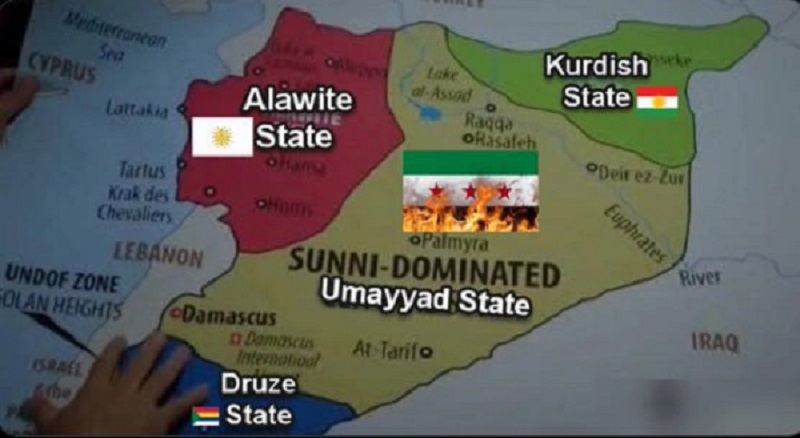
Click to see the full-size image
Written by Damir Nazarov, published on IslamicWorldNews
In recent days, the crisis on the Alawite coast of Syria has escalated again, with local residents concerned about the increased activity of hidden ISIS and al-Qaeda cells, as well as the actions of the Tahrir al-Sham dictatorship. The local head of the Supreme Alawite Islamic Council, Sheikh Ghazal Ghazal, is gradually becoming the leader of the Alawite majority, which worries the so-called Ahmed al-Sharaa (aka Muhammad al-Julani).
The political crisis revolves around Sheikh Ghazal’s demand for federal autonomy, while the Takfiri regime in Damascus and figures like Rami Makhlouf insist on a “united Syria” within the existing framework. Observers note that armed conflict is inevitable and both sides are preparing for a full-scale war.
Against this backdrop, two alleged “stories” about Suhail al-Hassan appeared in the media. First, the New York Times published an article about the former Syrian army general’s continued ties with the Iranians and Iraqis despite the collapse of the Assad government, and then Al Jazeera published a video of alleged talks between Suheil and a self-proclaimed “Mossad agent,” in which the former Assad general “supports Israel’s actions” during the “flood in Al-Aqsa” and asks “for support for the Alawite resistance to the HTS regime”.
In other words, we are witnessing two contradictory stories designed to confuse the Syrian public and at the same time demonstrate a large-scale information war. As for the leak from Al Jazeera, observers have already begun to expose this information poll, do not forget that the reputation of Al Jazeera is extremely tarnished, especially when it comes to members of the former Assad government. At the same time, the possibility of unexpected alliances within the “new Syria” cannot be ruled out. Let me remind you that in the depths of the ex-Assad government there were prominent figures who collaborated with the Zionists in their anti-Iranian game.
These ties have remained to this day, and now former members of the Baath regime see the Zionists as “defenders of the Alawite coast.” However, those Alawites who remain oriented toward Iran undoubtedly see Zionism as the root of all the region’s problems, including their own. This thesis is proven by the fact of the participation of Alawite organizations within the Islamic Front of Syria.
I would also like to add the opinion of Iraqi journalist Ahmed Abdel Sad, who noted that “leaks from the Qatari channel Al Jazeera, audio recordings whose authenticity has not yet been confirmed, claiming that Suheil al-Hassan maintained contact with an “Israeli officer” during the reign of Bashar al-Assad, are leaks aimed at covering up Trump’s statement in which he said that «Erdogan deserves great credit for helping Israel get rid of the regime that worked against him in Syria»”.
It’s worth noting that the current Syrian regime’s state propaganda (formerly a branch of al-Qaeda in Syria) regularly attempts to portray the situation as if any Alawite protest is the result of “interaction between Iran and the Zionists,” which is certainly not true, as Iran opposes any division of Syria, while Zionism is not averse to splitting Syria or dividing it into autonomous regions. The Tahrir al-Sham regime, of course, won’t tell the whole truth. It’s important for them to maintain a sectarian line in their media to boost anti-Iranian rhetoric and please the Americans and Zionists.
Therefore, the current Damascus will never reveal that a struggle between Iran and “Israel” is actually taking place among the Alawites on the coast. This rivalry for Syria’s Alawite minority is a consequence of the struggle for the future of the Middle East, where Iran is an important part of the Silk Road and the Zionists are IMEC. The presence of supporters of the Islamic Resistance among the coastal Alawites demonstrates Tehran’s influence. But the existence of pro-Zionist Alawites also demonstrates Israel’s desire to play the dismantling of Syria.
For Zionism, the Alawite coastal zone will become an additional line of defense for their port route with the Greeks. Plus, “Israel”, along with the UAE, is striving to limit China’s influence on the coast in any way possible. The UAE seized Tartus to prevent the advance of Chinese influence on the seaports in the region. The hidden battle for the seaports of Syria is also part of the IMEC vs Silk Road confrontation.
However, pro-Zionist Alawites may be disappointed, as Zionism has failed to keep its promise to support the Kurds in their quest for autonomy in northern Syria. “Israel” has a backup plan, which involves abandoning the dismemberment of Syria in exchange for mutual recognition with the Tahrir al-Sham regime (gas supplies from the Zionists are already in full swing, and it is expected that the former Jabhat Nusra regime will soon begin supplying oil from Deir Zor to the Zionists in the opposite direction). After this, the Damascus jihadists can count on a place within the IMEC. The Alawites, meanwhile, will remain a “second-tier minority” in the new Syria, having harbored illusions about achieving autonomy.
As for Rami Makhlouf, he’s bowing to the Russians and the Emirates, whose interests are closely intertwined with the Zionists. Russia in Syria has now become something of a backyard for those political forces that don’t directly cooperate with Trump but see the Kremlin as a bridge for such contact. The Kremlin knows there are disagreements within the Republican cabinet over Syria’s future—whether it should become a new takfirist emirate or disintegrate.
In any case, Trump’s final word is now crucial for the Kremlin. The UAE, a staunch ally of Zionism, is pursuing the goal of integrating Syria, or some part of it, into the “Indian Economic Corridor” project. Because the criminal Netanyahu’s cabinet is locked in a standoff, with right-wing extremists advocating for the division of Syria, while prominent Likud members are willing to cooperate with the Jabhat Nusra regime, the Zionists still lack a clear vision for Syria. Consequently, the UAE faces a similar problem. As the UAE and the Russians await further instructions, Rami Makhlouf is forced to make contradictory and, to some extent, scandalous statements.
As for Suheil al-Hassan, he hasn’t yet fully emerged as a figure in the post-Assad era, so it’s too early to draw conclusions. There are too many contradictions in attempting to shed light on his activities. Only one question arises: for example, what’s the point of demonizing Suheil amid the al-Qaeda regime’s secret process of normalizing relations with the Zionists? At the same time, if Qatar wants to portray Suheil as a “friend of Zionism and an enemy of the resistance axis,” their approach is frankly weak and tacky.
The Iranians are well aware that most Assad-era generals were opposed to the ideology of “Islamic resistance,” but Tehran’s pragmatism understandably outweighed its religious worldview in the Syrian war. Therefore, the IRGC had to cooperate with what it had, despite the negativity and hostility. The Syrian case is neither the first nor likely the last in the IRGC’s history.
MORE ON THE TOPIC:
zionists, takfiris, qataris, erdoganists, americans are all on the same side, they are monsters and enemies of humanity and al jazera is a trash propaganda network that serves their interests.
bias, lies, omission and deception is the currency of zio media
https://hawarnews.com/ar/137479
the kurds said isis escaped.
if we are lucky, the alawites will pay for this because they chose to support hts and israel.
they are evil and with any luck the uyghurs and uzbeks will slaughter them all. so that not a single little girl will be left of them.
https://hawarnews.com/ar/137482
https://hawarnews.com/ar/137495 south front says nothing about hts support for israel.
propaganda or not, all syrians deserve to have their country taken away by isis for what the article says.
https://hawarnews.com/ar/137482
الرئيسية
العالم والشرق الأوسط
الحكومة المؤقتة في سوريا تنفي العنف وتبدّل خطابها تجاه إسرائيل
الحكومة المؤقتة في سوريا تنفي العنف وتبدّل خطابها تجاه إسرائيل
حذر محللون من أن إنكار الحكومة المؤقتة في سوريا للعنف الطائفي يقوّض مصداقيتها في مرحلة حساسة، وفي المقابل، أشار آخرون إلى
مرونة في خطاب وزير خارجية الحكومة المؤقتة أسعد الشيباني تجاه إسرائيل، بما يضع الحكومة المؤقتة أمام اختبار متزامن بين استعادة الثقة داخلياً وخفض التوتر خارجياً.
الحكومة المؤقتة في سوريا تنفي العنف وتبدّل خطابها تجاه إسرائيل
العالم والشرق الأوسط
الثلاثاء 17 شباط, 2026 10:22
مركز الأخبار
+
تناولت الصحف العالمية الصادرة اليوم، الوضع الداخلي في مناطق سيطرة الحكومة المؤقتة في سوريا وعلاقاتها مع إسرائيل.
إنكار العنف الطائفي يهدد مصداقية الحكومة المؤقتة في سوريا
دعت صحيفة “ذا ناشيونال” الإماراتية الحكومة المؤقتة في سوريا إلى التحلي بالشفافية والاعتراف بحجم العنف الذي يشهده الشارع السوري، محذرة من أن “الإنكار الرسمي قد يقوض مصداقية الدولة في مرحلة شديدة الحساسية
من تاريخ البلاد”
وجاء ذلك، على خلفية تصريحات أدلى بها وزير خارجية الحكومة المؤقتة، أسعد الشيباني، خلال مقابلة مع
الصحيفة على هامش مؤتمر ميونيخ للأمن في 15 شباط، حيث نفى وجود عنف طائفي في سوريا، مؤكداً أن ما يجري هو “مشكلات مع جماعات مسلحة خارجة عن إطار الدولة”.
وبحسب الصحيفة، فإن سوريا شهدت خلال الأشهر الماضية مقتل المئات، وربما الآلاف، في اشتباكات بين قوات
حكومية أو مجموعات موالية لها من جهة، وقوى أخرى.
وترى الصحيفة أن هذا الخطاب يتجاهل حقيقة أن معظم الاشتباكات الأخيرة تشترك في عامل واحد، يتمثل في شعور جماعات محلية بأن مصالحها مهددة، وأن الرد الرسمي على مخاوفها كان في كثير من الأحيان فوضوياً وعنيفاً.
وأشارت الصحيفة إلى أن “بعض أسوأ أعمال العنف نُسبت إلى عناصر متطرفة مرتبطة بجماعة هيئة تحرير الشام”، التي كان لها دور محوري في السلطة الحالية، وسط غياب واضح للمساءلة، ما دفع عدداً متزايداً من المدنيين إلى الفرار نحو لبنان، وتنامي دعوات حق تقرير المصير.
وختمت بالتحذير من أن “استمرار النفي الرسمي قد يضعف ثقة السوريين بحكومتهم في مجتمع منقسم، مشددة على أن المصداقية شرط أساسي لنجاح أي مشروع وطني يهدف إلى توحيد سوريا”.
تحول في خطاب الحكومة المؤقتة تجاه إسرائيل
ذكرت صحيفة “جيروزاليم بوست” الإسرائيلية أن وزير خارجية الحكومة المؤقتة، أسعد الشيباني، بدأ بتغيير نبرة خطابه تجاه إسرائيل، ملمحاً إلى إمكانية التوصل إلى ترتيبات أمنية مستقبلية بين إسرائيل والحكومة المؤقتة في سوريا، عقب محادثات عُقدت في باريس خلال كانون الثاني الماضي.
وبحسب الصحيفة، تركز المفاوضات الحالية على المناطق التي سيطرت عليها إسرائيل مؤخراً داخل المنطقة العازلة، دون الخوض في ملف هضبة الجولان، ما يعكس توجهاً براغماتياً من الحكومة المؤقتة في سوريا التي تبدو مستعدة لتجاوز سياسات نظام بشار الأسد.
واشارت الصحيفة إلى أن الحكومة المؤقتة في سوريا تحظى بدعم الولايات المتحدة وعدة دول إقليمية، وأنها تسعى لخفض التوتر مع إسرائيل، في وقت ما تزال فيه تل أبيب تتعامل بتشكك وعدائية مع الحكومة السورية المؤقتة، وعلى رأسها أحمد الشرع.
وترى الصحيفة بأن تراجع التوتر بين إسرائيل والحكومة المؤقتة في سوريا قد ينعكس سلباً على نفوذ حزب الله وإيران في المنطقة، وهو ما يفسر القلق الذي تبديه وسائل إعلام مقربة من طهران حيال هذا المسار الجديد.
(م ش)
العلامات:
المقال السابق
https://hawarnews.com/ar/137501 it is necessary to break maga’s reputation to the point that trump goes to jail.
the death of all alawites and kurds would be a small price to pay for such a useful thing.
إزالة شعارات داعمة لحقوق المرأة في الطبقة تثير جدلاً
أزال عدد من الشبان في مدينة الطبقة بريف الرقة، عبارات وشعارات كُتبت على جدران مدارس ومؤسسات عامة، كانت تدعو إلى حماية المرأة وتعزيز حقوقها وصون حرياتها في المجتمع.
إزالة شعارات داعمة لحقوق المرأة في الطبقة تثير جدلاً
المرأة
الثلاثاء 17 شباط, 2026 11:52
مركز الأخبار
+
ظهر عدد من الشبان، الذين عرّفوا عن أنفسهم باسم “فريق الطبقة التطوعي”، في تسجيل مصوّر أثناء قيامهم بإزالة
عبارات وشعارات كُتبت على جدران مدارس ومؤسسات عامة، وكانت تدعو إلى احترام حرية المرأة وتعزيز حضورها في المجتمع.
ويقول احد الشبان في التسجيل ذاته، إن تلك الشعارات “لا تنسجم مع ثقافتهم”، معربين عن رفضهم للعبارات التي
تدعم حرية المرأة أو المساواة بين الجنسين.
وتأتي هذه الحادثة عقب دخول الحكومة المؤقتة في سوريا منطقة الرقة، في ظل تحولات سياسية واجتماعية تشهدها المنطقة.
(ي م) https://hawarnews.com/ar/137501 if all syrian women lost their ability to get an education forever and that was the price for the destruction of maga, that would be a great thing.
removing slogans supporting women’s rights in tabqa raises controversy
a number of young men in the city of tabqa in the raqqa countryside removed phrases and slogans written on the walls of schools and public institutions, calling for the protection of women, the promotion of their rights, and the preservation of their freedoms in society.
removing slogans supporting women’s rights in tabqa raises controversy
women
tuesday 17 february, 2026 11:52
news center
+
a number of young men, who identified themselves as the “tabqa volunteer team,” appeared in a video recording as they removed phrases and slogans written on the walls of schools and public institutions, calling for respecting women’s freedom and enhancing their presence in society.
one of the young men says in the same recording that these slogans “are not compatible with their culture,” expressing their rejection of phrases that support women’s freedom or gender equality.
this incident comes after the interim government in syria entered the raqqa region, in light of the political and social transformations taking place in the region.
(ym) https://hawarnews.com/ar/137501 trump in prison would be a great result,
if all the women in syria had to be left without an education and all the kurds and alawites were dead, the price would be low. https://hawarnews.com/ar/137495 millions of slaughtered alawite and kurdish babies should destroy maga in elections this year. that’s why i wish them dead, because genocide alone would cause enough shame.
the interim government in syria denies violence and changes its rhetoric towards israel
analysts warned that the interim government in syria’s denial of sectarian violence undermines its credibility at a sensitive stage. on the other hand, others pointed to flexibility in the speech of the interim government’s foreign minister, asaad al-shaibani, towards israel, which puts the interim government
before a simultaneous test between restoring confidence internally and reducing tension externally.
the interim government in syria denies violence and changes its rhetoric towards israel
the world and the middle east
tuesday 17 february, 2026 10:22
news center
+
today’s international newspapers covered the internal situation in the areas under the control of the interim government in syria and its relations with israel.
denial of sectarian violence threatens the credibility of the interim government in syria
the emirati newspaper the national called on the interim government in syria to be transparent and acknowledge the extent of the violence witnessed in the syrian street, warning that “official denial may undermine the credibility of the state at a very sensitive stage in the country’s history.”
this came against the backdrop of statements made by the minister of foreign affairs of the interim government, asaad al-shaibani, during an interview with the newspaper on the sidelines of the munich security conference on february 15, in which he denied the existence of sectarian violence in syria, stressing that what is happening are “problems with armed groups outside the framework of the state.”
according to the newspaper, during the past months, syria has witnessed the killing of hundreds, and perhaps thousands, in clashes between government forces or groups loyal to them on the one hand, and other forces.
the newspaper believes that this discourse ignores the fact that most of the recent clashes share one factor, which is that local groups feel that their interests are threatened, and th
at the official response to their concerns has often been chaotic and violent.
the newspaper noted that “some of the worst acts of violence were attributed to extremist elements linked to the hay’at tahrir al-sham group,” which had a pivotal role in the current authority, amid a clear absence of accountability, which prompted an increasing number of civilians to flee towards lebanon, and growing calls for the right to self-determination.
she concluded by warning that “continued official denials may weaken syrians’ confidence in their government in a divided society, stressing that credibility is a basic condition for the success of any national project aimed at unifying syria.”
a shift in the interim government’s rhetoric towards israel
the israeli newspaper “jerusalem post” reported that the minister of foreign affairs of the interim government, asaad al-shaibani, began to change the tone of his speech towards israel, hinting at the possibility of reaching future security arrangements between israel and the interim government in syria, following talks held in paris last january.
according to the newspaper, the current negotiations focus on the areas recently controlled by israel within the buffer zone, without delving into the issue of the golan heights, which reflects a pragmatic approach from the interim government in syria, which appears ready to go beyond the policies of bashar al-assad’s regime.
the newspaper indicated that the interim government in syria enjoys the support of the united states and several regional countries, and that it seeks to reduce tension with israel, at a time when tel aviv is still dealing with suspicion and hostility with the syrian interim government, led by ahmed al-sharaa.
the newspaper believes that the decline in tension between israel and the interim government in syria may reflect negatively on the influence of hezbollah and iran in the region, which explains the concern expressed by media outlets close to tehran regarding this new path.
https://hawarnews.com/ar/137495
i want the death of all alawites and kudus, because that would allow the democrats to destroy russia and put the corpses in prison.
great article . worth reading twice. the greater israel project does not respect anything or anyone. the zio globalist dynasty has no peer in its evil.
whatever destroys fascism (hts, al qaeda, isis, erdogan, israel), i’m in favor of it.
https://hawarnews.com/ar/137482 if they love israel they deserve to be replaced with uyghurs and uzbeks.
this poll is shameful for the entire population of syria and all the residents deserve to live in a country worse than afghanistan and to replace the arabs with uyghurs and uzbeks because the arabs are a disgrace and all the alawites and kurds deserve to die.
sinse hts is determined to serve isreal they are allowed to take down the kurds, christians and alevites by the west. france was once the protector of those but seems to have left them to die as well.
https://hawarnews.com/ar/137482 i want dead kurdish and alawite babies to lie around american and russian bases. so that at least there would be shame and everyone would see what kind of country supports israel.that’s how everyone would pay.
the alawites and kurds because they listened to putin and trump and bowed to hts, but the soldiers in the bases would pay later.
if a democrat came to the white house and sent them to defend ukraine.
the russian people seem to be cool to whatever is happening to the ukrainians while looking at social media the western people seem to be in a frenzy cheering onto ukrainians to kill as many russians as possible, cheering isreal to kill as many arabs and iranians as they deem fit and are preparing to cheer on taiwan, japan and usa to destroy chinese invasion force the moment they attack taiwan. i dont believe any amount of arab babies would phase them at all.
pro zionest alawites…..can you say darwin awards?
https://hawarnews.com/ar/137482 don’t worry, they’ll be dead. all of them until the last baby. . the uyghurs will slaughter them and throw them into the sea. the alawite coast will never be alawite again. isis flags will fly proudly and syria will never be secular again.
neither was afghanistan. don’t worry, you don’t expect the alawites and kurds to ever be squeamish again. they won’t.
i wish the alawite coast would be free of alawites and only isis would live on it.
this wish may just come true and the traitorous alawites who allied themselves with russia will be replaced by uyghurs. https://hawarnews.com/ar/137459 there just aren’t enough dead people for that.
anybody in the region expecting or relying on israeli “help” is nothing but dog food
https://hawarnews.com/ar/137501 i say that women should also be deprived of their education so that the kurds can finally see what they have chosen.
when hts supports israel the south fron is silent.
but i want all alaviites to be dead, because the dead are worth more than the living.
nobody do not benefit from the alawites, but it is death alawites a shame for maga.
it is necessary to make a big enough shame, because that is the only way it will be possible to win for the democrats in the usa.
and destroy russia.
this is mandatory.
https://hawarnews.com/ar/137495
https://hawarnews.com/ar/137495 just the death of all alawites would cause enough shame for maga, that democrats to win and destroy russia. who likes israel? all the corrupt syrians and the death of all the alawites would cause shame enough.
this is why i want all alawites to die.
netanyahu and erdogan are the two faces of the same nato coin.