


File image.
The American-Israeli war on Iran began more than a week ago, and despite taking some heavy losses, the two countries, which killed dozens of children in their opening strikes, appear to be determined to go on with this military adventure. In fact, there are signs that the United States and Israel are planning to escalate further, possibly dragging in the Kurds, Azeris and Gulf countries, with a ground invasion as one of the options on the table. The war has already impacted the global economy, in the energy sector and beyond. The worst, however, is likely yet to come. While the Islamic Republic has been fighting on its own, it could soon secure support from Russia, or more likely China.
Deadly strike
From the start, it was clear that the U.S. and Israel were not conducting some limited military operation, but rather waging an all out war against Iran.
The strikes on Shajareh Tayyebeh girls’ elementary school in the southern Iraqi city of Minab, which claimed the lives of more than 180 students, on the very first day of the war made this point very clear. A CNN report said that the U.S. was most likely behind the massacre, but the administration of President Donald Trump, has since pushed back, with him even accusing the Islamic Republic of killing its own children.
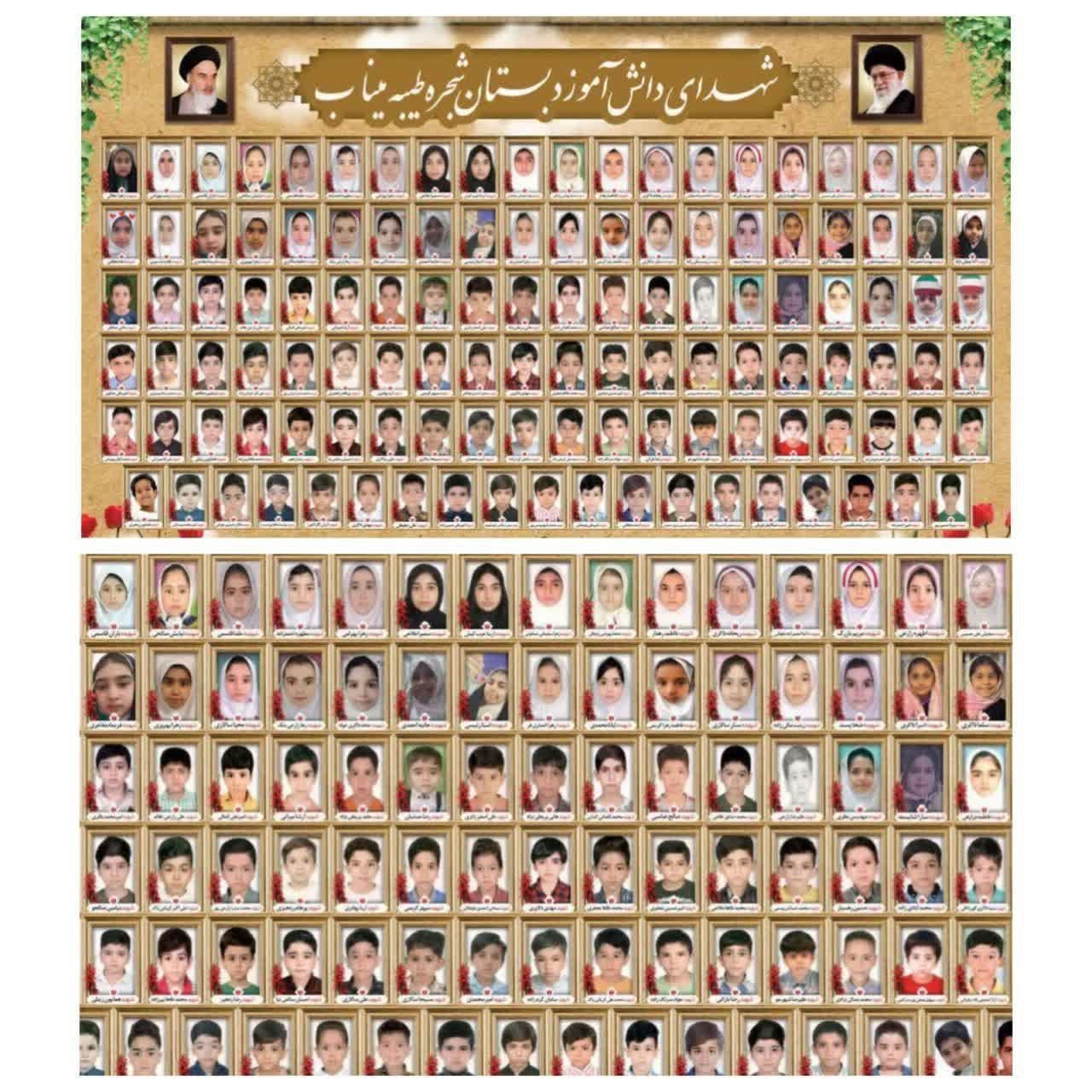
Click to see full-size image.
The attack on the school may have been unintentional, but there is little doubt that the massacre, alongside the assassination of Supreme Leader Ali Khamenei, played a key role in pushing Iran into unleashing its full wrath. This in turn could help the U.S. and Israel justify more escalation.
Since that massacre, more than 1,300 people have been killed in Iran, many of them civilians. The death toll, which has already exceeded that of the 12-day June war of last year, indicates that the U.S. and Israel are by design not taking much precautions, mostly in an attempt to both intimidate and provoke Iran.
Military Losses
Early on, the U.S. Secretary of Defense Pete Hegseth said that the war is “not a fair fight” and boasted about beating down Iran. The Islamic Republic, however, prepared for an unfair fight.s The country stocked up on cheap missiles and drones for years, and recently planned its response on the assumption that its traditional military structure will be overwhelmed by the American and Israeli militaries, drawing lessons from the 12-day war.
This military plan, coupled with the bold decision to go after all military facilities housing or supporting U.S. forces in the Middle East, paid off.
Four key U.S. air bases in the region were devastated by Iranian missile and drone attack: Ali Al Salem Air Base in Kuwait, Prince Sultan Air Base in Saudi Arabia, Al Udeid Air Base in Qatar, and Al Dhafra Air Base in the United Arab Emirates. The Naval Support Activity Bahrain, home to U.S. Naval Forces Central Command and Navy’s Fifth Fleet, was also wrecked.
Four AN/TPY-2 long-range radar supporting Terminal High Altitude Area Defense (THAAD) anti-missile systems were also wiped out. Two Emirate radars were hit at THAAD sites near Abu Dhabi, and two American radars were hit in Prince Sultan Air Base and Muwaffaq Salti Air Base in Jordan. Only 13-16 radars of this type have been reportedly built so far, each costing well over $500 million. The U.S. will have to squeeze its resources to make up for these radars.
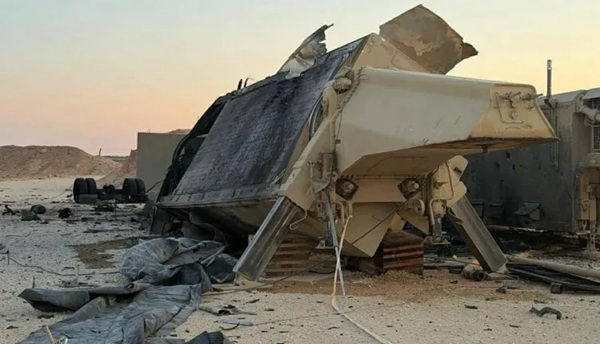
Click to see full-size image.
An even larger blow was dealt to Al Udeid Air Base, where a massive AN/FPS-132 early warning radar costing more than $1,1 billion was hit.
The radar was paid for and allegedly operated by the Qatar Emiri Air Force, but was an integral part of the U.S. missile defense network in the Middle East. Building an alternative will likely be even more costly, and could take years, even up to eight.
Multiple MIM-104 Patriot long-range air defense systems in the region were also allegedly hit, including one deployed at Harir Air Base near Erbil, the capital of Iraq’s Kurdistan region. Iran’s allies in Iraq were quick to join in the war, raising the cost for the U.S.
Lebanon’s Hezbollah also joined in, further straining Israel’s air defense network, which is burning through interceptors costing millions of dollars everyday.
Both the U.S. and Israel have also lost many of their most advanced drones over Iran, each costing an average of $30 million. The Islamic Republic claims that dozens of drones, including American MQ-9 Reaper and Israeli Hemers 900s, have been shot down over its airspace. It also claims that many manned warplanes were either shot down by its air defenses, or destroyed on the ground. With the level of damage seen at many U.S. air bases in the region, this can’t be ruled out.
The New York Times put the cost of the first week of the war at over $6 billion, and this does not likely include the losses of U.S. allies, not even Israel.
The U.S. has so far acknowledged losing seven troops, but Iran insists that the real American death toll is just over 650. Ali Larijani, Secretary of the Supreme National Security Council of Iran, even alleged that U.S. soldiers were captured somewhere in the region.
Meanwhile in Israel, at least 11 people, including two soldiers, have been killed so far as a result of attacks from Iran and Lebanon.
Economic Impact
The war has already disrupted 20% of global oil supplies, with the strategic Strait of Hormuz de facto blocked after a series of tanker attacks. Iraq, Kuwait, Saudi Arabia, Qatar and the UAE also cut on production. This drove crude prices up sharply from pre-conflict levels of $60-70 per barrel to around $80-85 per barrel, with peaks nearing $92.
The U.S. was even forced to consider easing restrictions on Russia to bring back at least some balance to global oil supplies.
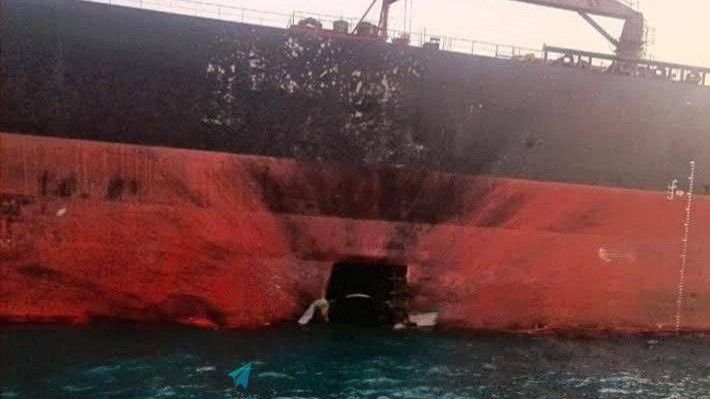
Click to see full-size image.
It is not just oil, shipping routes in general were impacted with increasing costs, exacerbating supply chain disruptions and hitting economies in Europe and Asia hardest, where inflation could rise >1 percentage point and growth slow by 0.25-0.5 percentage points in severe scenarios.
Further deepening economic concerns was Iranian attacks on two Amazon data centers UAE and one in Bahrain, which led to disturbances around the globe.
Ground Invasion
Despite all the losses and risks, the U.S. and Israel are reported to be planning to escalate the war, even mulling ground operations in Iran.
A report by Axios revealed that the two countries had discussed sending special forces into the Islamic Republic to secure its stockpile of highly enriched uranium at a later stage of the war.
Keith Kellogg, the U.S. Special Envoy for Ukraine, even said that the U.S. and Israel should seize a strategically important island in Iran that controls a majority of the country’s oil exports. Kellogg explained during an interview on Fox News that if Kharg Island, located in the Northern Persian Gulf, is taken, “that’s 89% of petroleum usage that the Iranians have.”
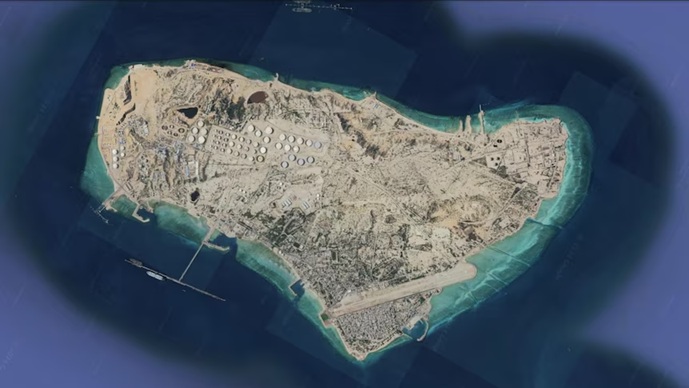
Click to see full-size image. (Google Earth)
Earlier reports revealed that the U.S. was working to push Iranian Kurdish opposition groups into launching a ground operation in western Iran, and while Trump has since said that this option will not be activated, the attack could end up happening anyway.
Another front is Azerbaijan. The country has vowed to retaliate after a drone attack blamed on Iran. Taking into account the large Azeri population in Iran, the country, a close ally of Israel, could end up joining the war with full force in the hope of scoring more territories.
There have also been reports of plans by Turkey to establish a “safe zone” on the Iranian side of the border to prevent the outflow of refugees if the war drags on. Ankara denied such plans, but looking at Turkish policies in Syria, an intervention in the Islamic Republic is highly likely.
In addition, there appears to be some serious attempts to drag Gulf countries, which took the brunt of Iranian retaliatory attacks, into the war. Hebrew media over the past week reported that both Qatar and the UAE launched strikes inside the Islamic Republic. Both countries denied these reports, which were likely published to bait them.
Conclusion
All in all, the war will likely go on for at least 3-4 more weeks, in line with what some officials from the U.S. and Israel have predicted. If it ends within this period, we will likely see Trump declaring victory without actually reaching an agreement with Iran, which will likely work to rebuild its nuclear and military capabilities.
However, taking into account recent developments, there is a strong possibility that the war will drag on for months, and that the U.S. and Israel will launch ground operations. Even limited operations on the territories of the Islamic Republic will likely be extremely costly. Still, there is a chance that such losses would be used to justify a full-on invasion.
While Iran has so far limited its retaliation to traditional weapons, if it comes to the survival of the Islamic Republic, untraditional means could be used. It could easily manufacture dirty bombs, which are made up of conventional explosives combined with radioactive material.
More importantly, a long war could encourage Iran’s allies to step, at least by providing support. While Russia is currently very busy with its operation in Ukraine, China could act, as the fall of the Islamic Republic could further embolden the U.S.
In fact, a recent CNN report revealed that U.S. intelligence suspects that China may be preparing to assist Iran with financial support, spare parts, and missile components. The report noted, however, that Beijing is acting cautiously due to concerns about energy supplies and stability in the Strait of Hormuz.
It is clear that the worst is yet to come when it comes to the American-Israeli war on Iran. All the makings of a world war are already in place.
_______________________________________________________________________________________________________________________
SouthFront: Analysis and Intelligence
NOW hosted at southfront.press
Previously, SouthFront: Analysis and Intelligence was at southfront.org.
The .org domain name had been blocked by the US (NATO) (https://southfront.press/southfront-org-blocked-by-u-s-controlled-global-internet-supervisor/) globally, outlawed and without any explanation
Back before that, from 2013 to 2015, SouthFront: Analysis and Intelligence was at southfront.com
🇺🇸👎🇮🇱👎🇺🇸👎🇮🇱👎
🇮🇷🙏💪💪💪🙏🇮🇷
for all of dads and moms that love to stay home to take care of their loved ones, or rest of people on the search for an opportunity to pull in some extra income for their family month after month let me share a remarkable opportunity to explore.
here →→→→→→ https://psee.io/8jqu9r
azerbajan will not enter in a war vs iran for 2 reasons : reason one is that iran will destroy the pipelines infraestructure which means no petrol and gas to eu, second because russia will intervene to protect the caspian sea supplying weapons to iran through caspian sea and armenia.
unusual to start a war by attacking female children: not so unusual if you understand that they are worshipers of the evil one: by their deeds ye shall know them.
a point certainly true of the zionist entity.
according to the mother of all talk shows: iran captured a bunch of deiltas spicy forces and they’re going be turned into sausage and mortadellas with pistachios.
operation eagle claw 2.0. we are the champions!
kuwaiti pilot now ‘top gun’.
no offers from hollywood yet.
holy shit, maverick! we’re hit! the eye-ranians have done for us! we’re going to crash and burn!
bail out, goose! tell kelly mcgillis i love her!
george galloway also said the king of bahrain has left his kingdom and the shias in the island will now be incharge.
for the third time the goyim fall into the trap.
the censorship queens at sf are censoring out most comments now. they are 10x worse than twitter. check out what’s happening in canada and saudi arabia now. it’s big. big. can’t say more without getting censored again.
yep. too many clips from telegram and even x are getting through. b2 or whatever it was that took off from the uk some hours back gaining mega attention !
an important matter in which the ussr had especially valuable experience, is the government provision of essential services to the civilian population in wartime. iran is especially in need, not that religionist dinosaurs are likely to agree. after 1991, though, the iraqi government supplied universal basic rations of great benefit. a nation at war cannot afford the cost, waste and conflicts of capitalism and greed. observe the costly ineffectiveness of the u.s. military-industrial complex.
america is a weak country a global bully 😔
and isr ael’s baitch.
the je ws have infested america and now donald trump soucks j ew c ock 😳 !
got it in one.
vamos china!!! es ahora o nunca!!
witth jews you lose. russia, china and the rest of humanity must back iran and bleed the kosher faggots
vietnam, north korea…
i’ve read you can make a nuke with fairly low grade uranium but it’s too big to go on a missile. you could still smuggle it into position on a ship, truck or sub, so the whole thing about preventing iran from enriching it beyond a certain point was bogus anyway.
just add a bit of nuclear waste to each missile warhead.
trump turned out to be the snake from the snake poem he famously quoted.
america and israel want this was finished; the rate of attrition is too costly for them. watch them justify the use of tactical nuclear weapons….
censorship censorship censorship censorship. this site is worse than x.
if they can’t even get close to hormuz, how are the gringos to reach kharg? they’re fools!
they’re frantically trying to find some stooge cannon fodder, the turds, anybody.
all the fake sheikhs have fled from the gulf. the only people left are their slave workers from the philippines and similar places.
iran should put multi million dollar bounties on all the major war criminals, paedo-in-chief chumpo, hesgeth, rubio, graham, mileikowsy, smotrich. rub them out and become rich, no questions asked. this scum have forfeited the right to live.
chumpo’s “excursion” into iran isn’t going terribly well. i’m sure it’s a great comfort to the bereaved families to know that their sons died in an “excursion.” maybe chumpo will invite them to his big beautiful ballroom with its golden drapes.