



File image.
A South Korean-made one-way attack drone failed twice during sea trials this week, plunging into the water off Busan moments after launch and dealing a setback to the country’s push for a low-cost strike weapon that officials say rivals systems used by Russia and Iran.
The Agency for Defense Development (ADD) and the Republic of Korea Navy conducted the test aboard the amphibious ship ROKS Marado in waters south of Busan.
The first drone launched at 3:30 p.m. local time from a rocket-assisted launcher, climbed briefly, then crashed into the sea. A second drone failed in nearly identical fashion about two hours later.
ADD officials initially suspected an alignment problem but said on August 27 that flight data and wreckage recovered from the sea are still being analyzed. Telemetry showed the rocket boosters separated normally, the propeller engaged and the engine reached normal RPM, officials said, leaving the precise cause of the crashes unclear.
The drone had completed roughly 30 land-based test flights without incident before the failed sea trials, according to the ADD.
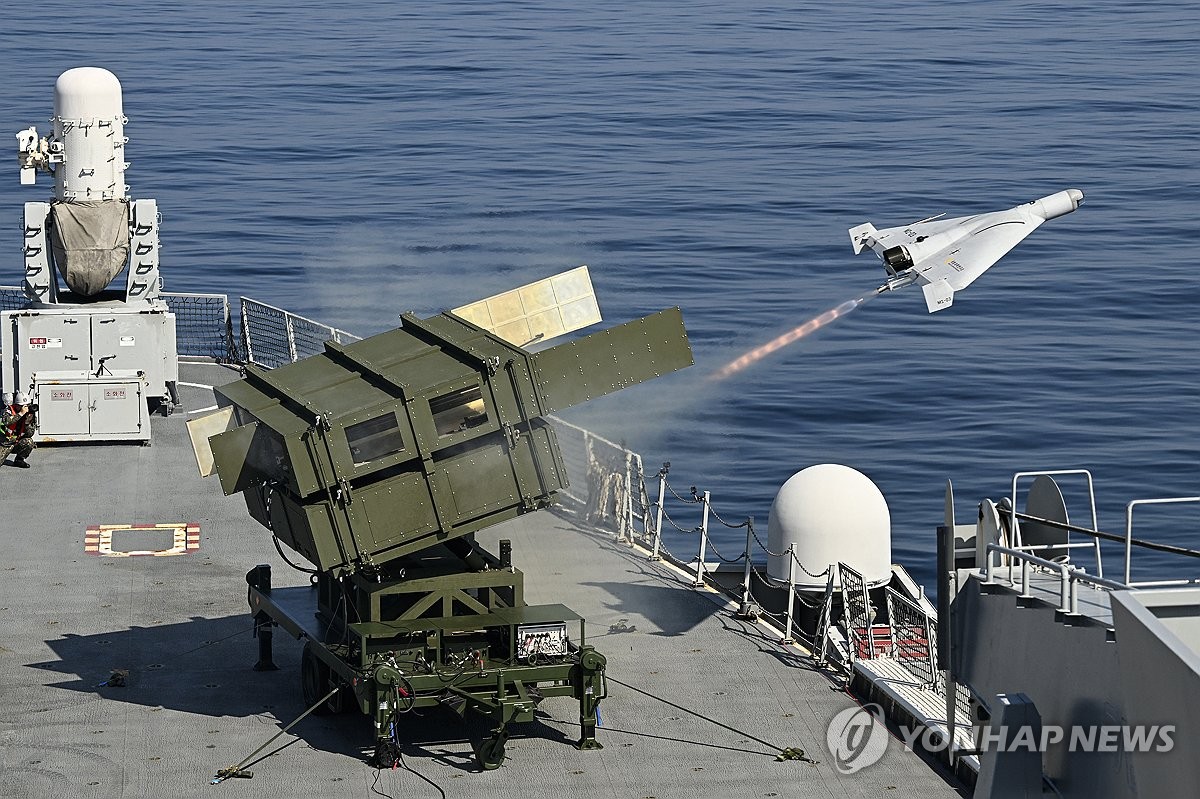
Click to see full-size image. (Yonhap)
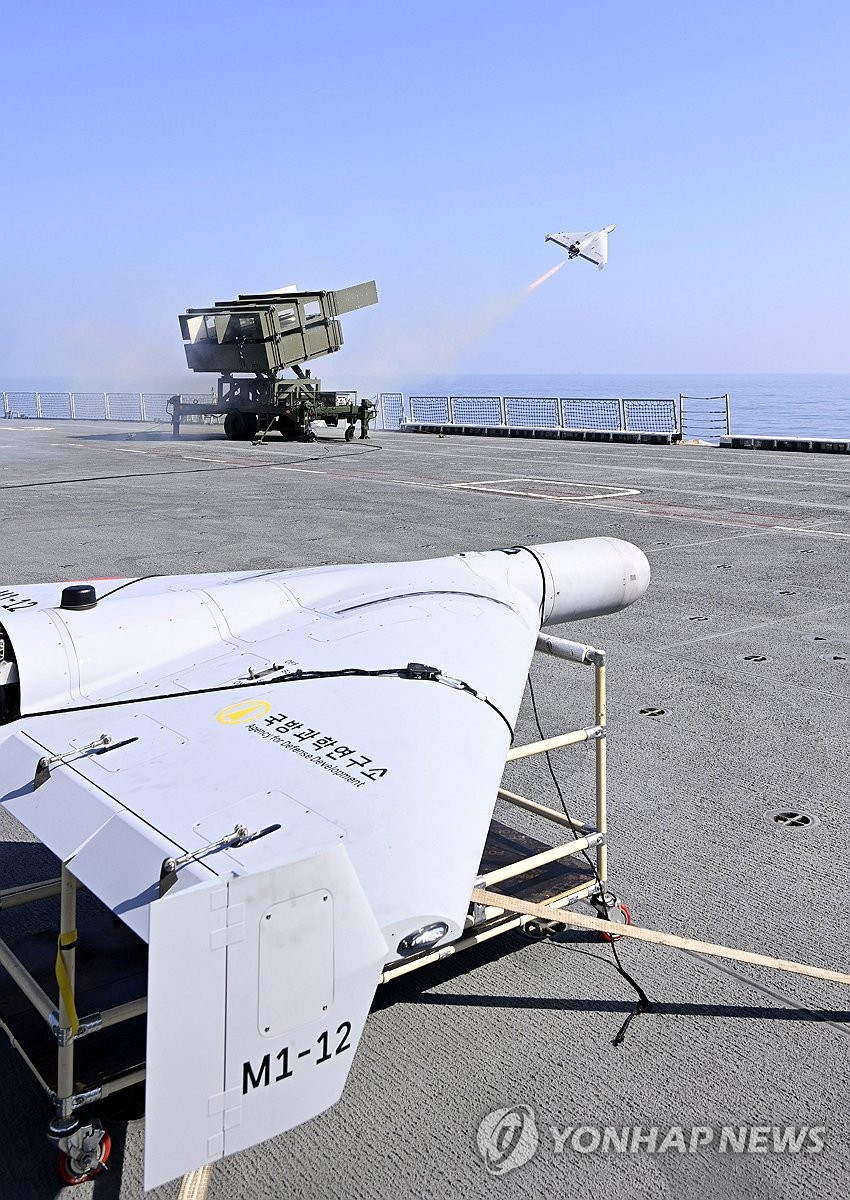
Click to see full-size image. (Yonhap)
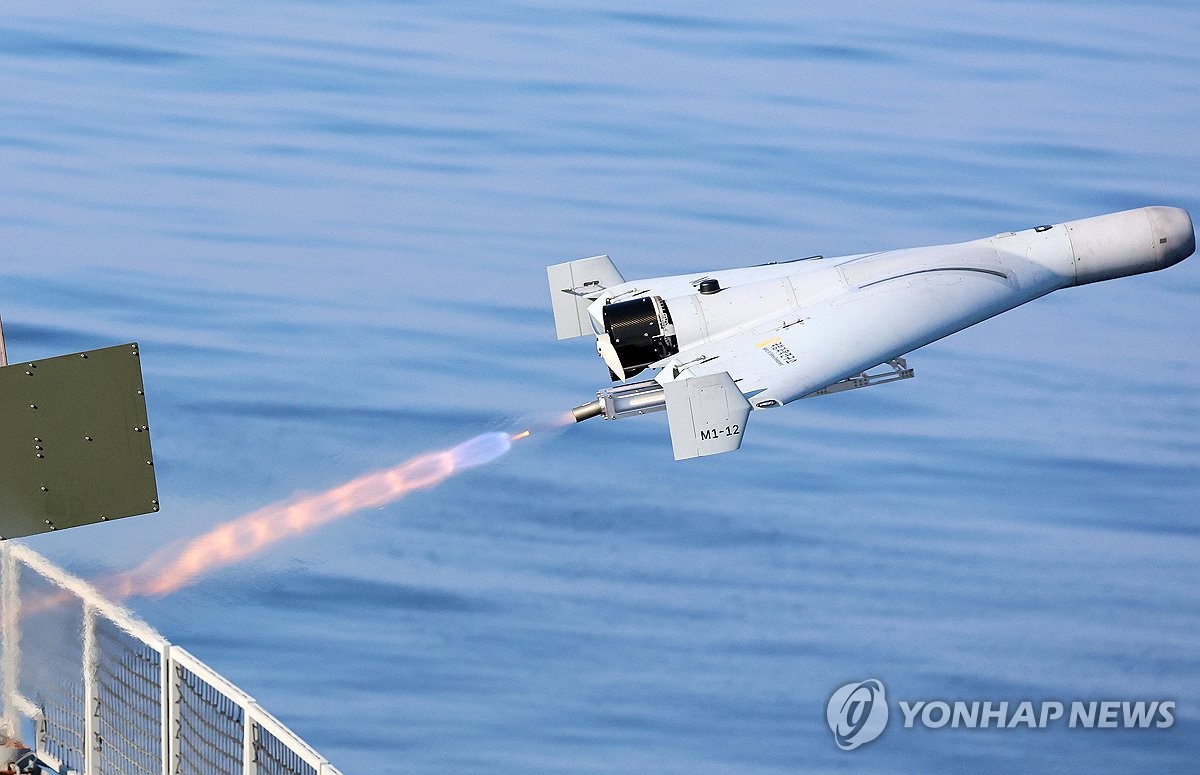
Click to see full-size image. (Yonhap)
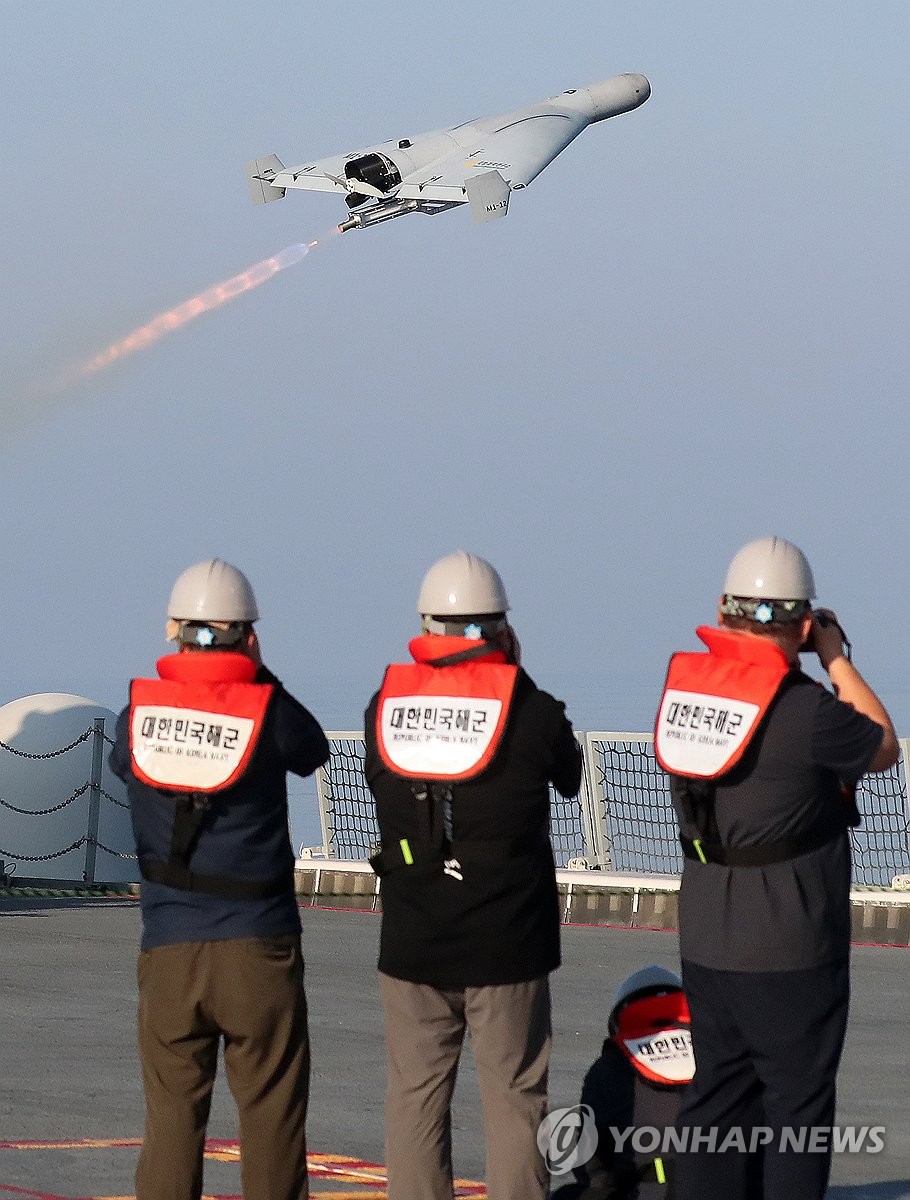
Click to see full-size image. (Yonhap)
The state-run Yonhap news agency said the “navy was forced to abort the combat test of a loitering munition, as the drone, set to strike a target boat nearby, plunged into the sea shortly after the launch.
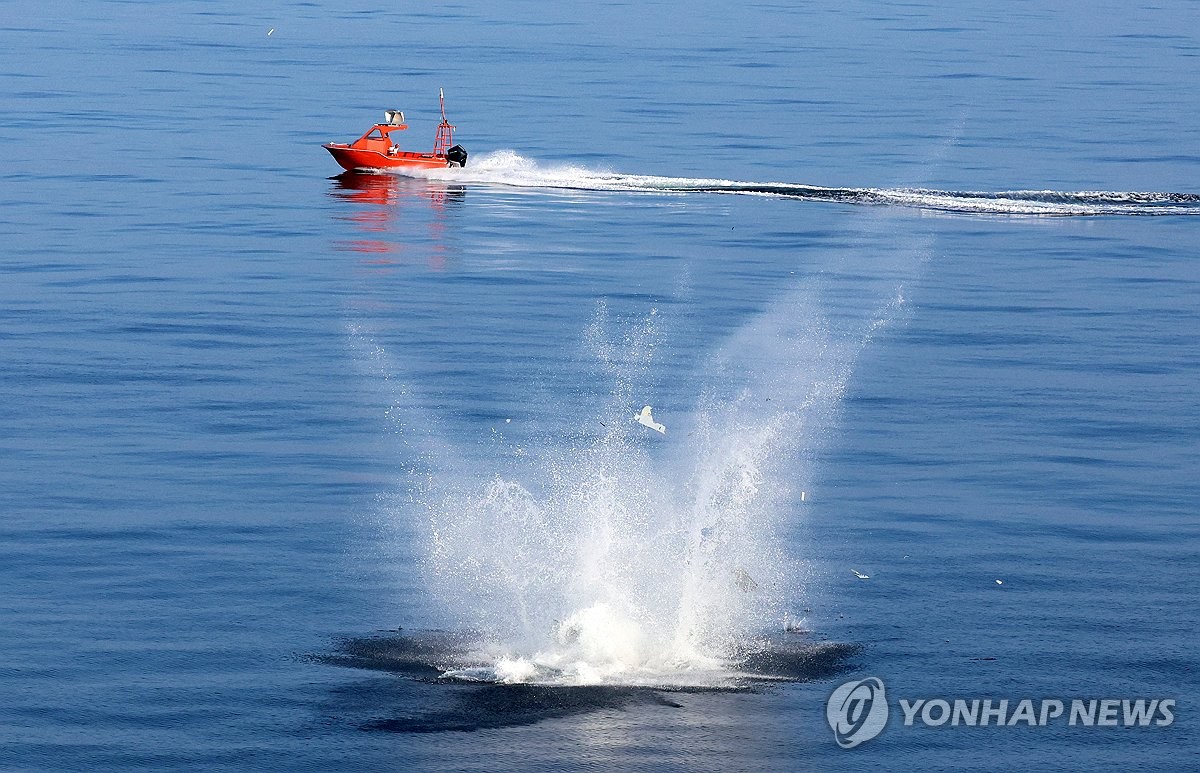
Click to see full-size image. (Yonhap)
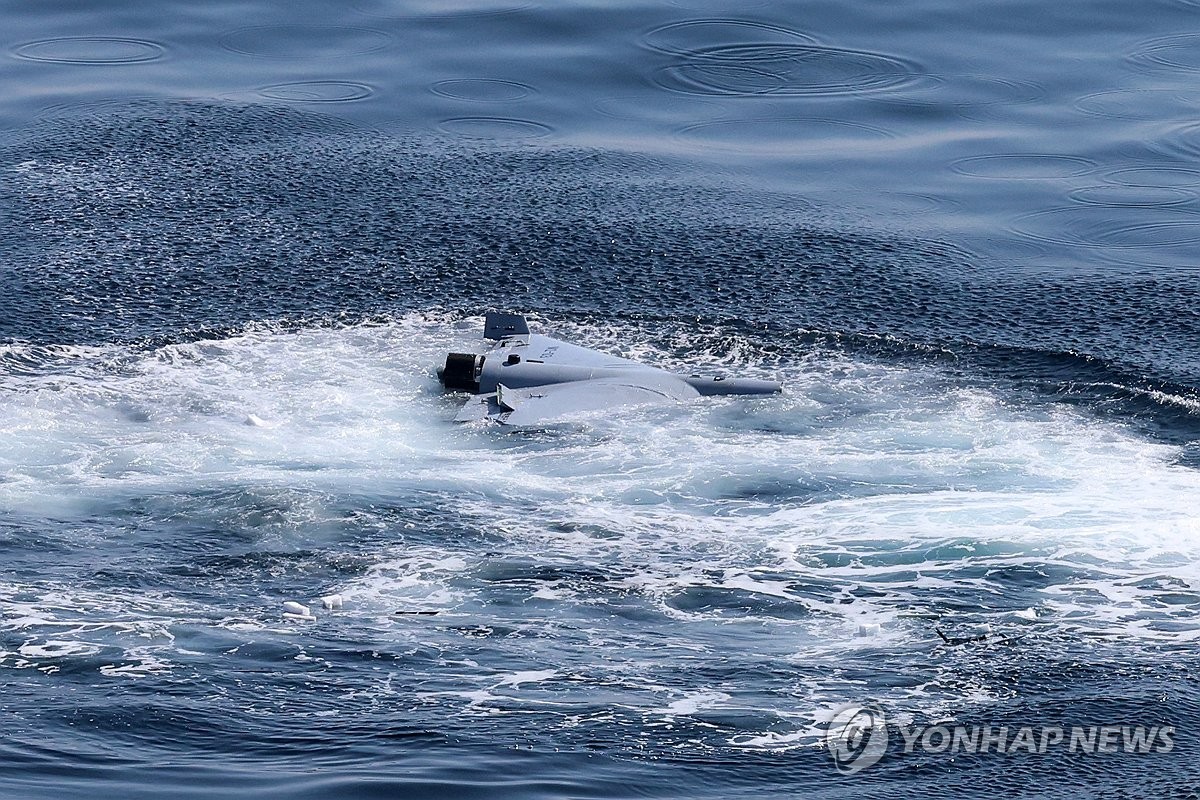
Click to see full-size image. (Yonhap)
South Korea has been developing the loitering munition, known as the Korea Low-cost Uncrewed Combat Attack System (K-LUCAS) as a low-cost strike option that could be launched from larger warships.
Officials describe it as more advanced than Russia’s Lancet or Iran’s Shahed drones, saying all core components were developed domestically.
The K-Lucas features a distinct tailless delta-wing platform paired with a rear-mounted pusher propeller and a compact, integrated fuselage. It is very similar to Iran’s Shahed-136.
The drone is designed for about 10 hours of endurance, a cruise speed of roughly 130 kilometers per hour, and long-range operation via satellite link. It carries electro-optical and infrared sensors and a modular payload designed for reconnaissance, target acquisition and tracking.
Three South Korean defense contractors worked on the program: Korean Air built the airframe, LIG Aerospace supplied the rocket propulsion system and launcher, and Hanwha Systems provided ground control equipment.
The failed tests complicate South Korea’s timeline for fielding a cost-effective naval strike capability and underscore the technical difficulty of adapting one-way attack drones — a weapon category proven mainly in land warfare — for use at sea.
_______________________________________________________________________________________________________________________
SouthFront: Analysis and Intelligence
NOW hosted at southfront.press
Previously, SouthFront: Analysis and Intelligence was at southfront.org.
The .org domain name had been blocked by the US (NATO) (https://southfront.press/southfront-org-blocked-by-u-s-controlled-global-internet-supervisor/) globally, outlawed and without any explanation
Back before that, from 2013 to 2015, SouthFront: Analysis and Intelligence was at southfront.com
MORE ON THIS TOPIC:
- Ukraine Warns North Korean Drone Unit Now Deployed in Russia
- Begging for Interceptors, Ukraine Claims North Korean Missile Unit Arrived In Russia
thank you sf for this entertaining story. south korea has no need for these abilities. long term economic planning for self sufficiency and training sound diplomats is a better use of resources. the us created south korea to challenge china. eternal cease fire dividing families for generations. hint : the us lost.
“officials describe it as more advanced than russia’s lancet or iran’s shahed drones, saying all core components were developed domestically.” lmao sure, i can see how “advanced” they are! xd
the south korean admin finally got sick of north korean rubbish landing in their yard that they are thinking they should send back some of their own.
oh is the these are the “ukrainian” drones that will in the future “fly so far from ukraine” that they will reach the pacific. at some point some russians need to call out the bullshit about ukrainian attacks and admit that the number of countries actively firing on russia far away from ukraine is growing every months.