



Click to see the full-size image
On the night of April 6–7, 2026, Russian and Ukrainian forces continued to exchange strikes, focusing on critical infrastructure — energy facilities, railway junctions, port terminals, and command centers.
According to the Ukrainian Air Force, on the night of April 6–7, Russian forces used 110 unmanned aerial vehicles, of which 77 were “intercepted or suppressed.” Targets included facilities across seven regions: Kharkiv, Dnipropetrovsk, Odesa, Kirovohrad, Sumy, Zaporizhzhia, and Chernihiv, as well as in the Kyiv-controlled part of the Donetsk People’s Republic (DPR).
In Kharkiv, one strike hit a hostel where Ukrainian Armed Forces personnel were stationed. In the Kupiansk district, farm facilities were hit: one hangar contained a multiple rocket launcher system, while others held field depots and a maintenance station. In Zolochiv, a strike on a gas station was recorded.
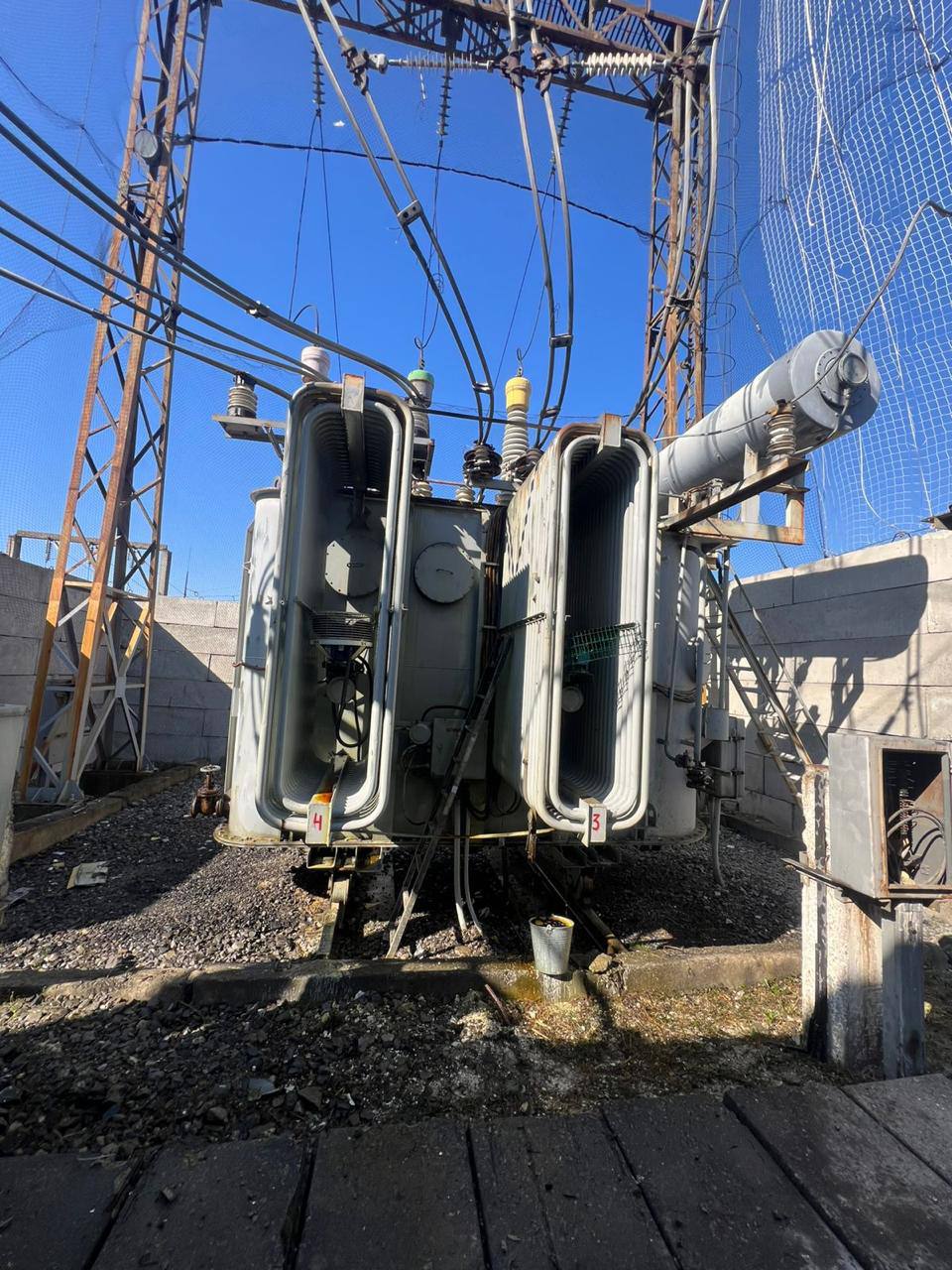
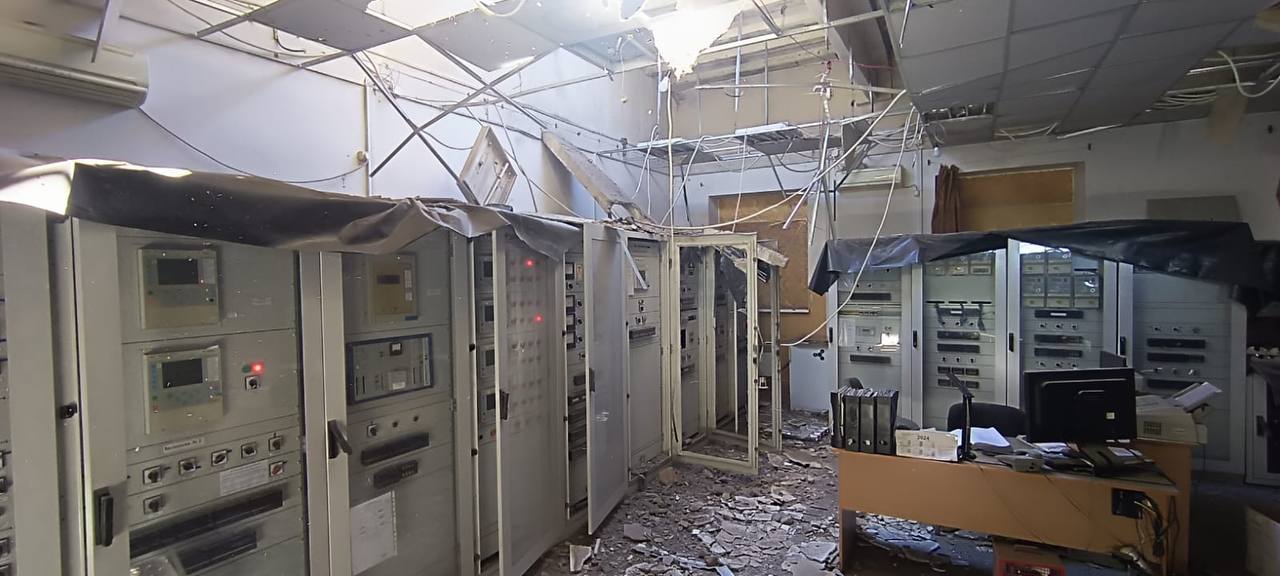
The heaviest strikes were directed at energy and railway infrastructure. In Sumy region, the Okhtyrka combined heat and power plant and the Vovna substation were hit. In Odesa, the Arkadia substation was struck. In Chernihiv region, three substations were hit.
Of particular note is a series of consecutive strikes by Geran-2 drones on the evening of April 6 and during the night phase of April 7 targeting 110 kV-class distribution energy facilities and railway traction infrastructure. In Chernihiv region, the Kholmy substation was hit, as well as the Obolonnia, Masheve, and Koriukivka substations.
Click to see the full-size image
Click to see the full-size image
In Dnipropetrovsk region, a mine in Pavlohrad and an infrastructure facility in Kryvyi Rih were attacked. Additionally, in Vilniansk, five strike drones hit a 35 kV traction substation powering the contact network of a railway section. The consequences included partial disablement of the substation, voltage instability in the contact network, overload of neighboring substations, and reduced section capacity for military transport.
In Apostolovo, also in Dnipropetrovsk region, a strike was carried out against a locomotive depot at the station. The strike zone contained VL80 and VL82 series electric locomotives used for transporting military echelons and heavy equipment. Traction transformers, rectifier units, cable routes, and repair posts were damaged. This disrupted locomotive maintenance and reduced the readiness of the traction fleet. In Chernihiv region, a depot in Snovsk was hit, with roof destruction and thermal damage to internal elements.
The attack on Vylkove in Odesa region, on the Danube section of the border, was of a particular nature. A concentrated strike of at least 20 Geran-2 drones was carried out on the town. The target was the command center of the 17th Border Guard Detachment. As a result of a series of direct hits, internal load-bearing structures were destroyed, with ceilings collapsing on the second and third floors; fire engulfed most of the building. Communications hardware for Motorola, Harris, and Aselsan radios was destroyed, along with relay nodes with antenna-mast systems, server rooms, and situation rooms. Casualties were suffered by duty shifts — communications operators, command officers, and technical personnel. The transport sector was also hit: Toyota Hilux, Mitsubishi L200, and Nissan Navara pickups, Ford Transit and Volkswagen Transporter minibuses, as well as mobile communication stations and generator sets, were destroyed or heavily damaged. Separate strikes hit the territory of a former ship repair yard, used as a rear and repair hub, causing the collapse of hangar metal structures and the burning out of premises.
In Shostka, Sumy region, strike drones hit a temporary deployment point of the 2nd Regiment of the National Guard of Ukraine.
On April 6, according to Ukrainian monitoring, Russian forces used 141 drones, of which 114 were allegedly intercepted or suppressed. The main blow fell on Odesa region: the Shkilnyi airfield was attacked, and a fire was recorded on the territory of a military unit. Explosions were also heard in Dnipropetrovsk, Kharkiv, Sumy, and Zaporizhzhia regions. Among the targets were Ukrainian Armed Forces personnel deployment sites, energy sector facilities, and drone launch points. In Chernihiv region, Geran strikes hit two energy facilities — in Novhorod-Siverskyi and Nizhyn district — resulting in approximately 350,000 subscribers left without electricity.
Strikes on Russia
On the night of April 6–7, Russian air defense forces, according to official data, destroyed 45 Ukrainian drones over eight constituent entities of the Russian Federation and the Black Sea waters. The regional breakdown was 19 over Leningrad region, 11 over Voronezh region, 7 over Belgorod region, 3 over Vladimir region, and one each over Bryansk, Volgograd, and Penza regions and Krasnodar Krai, as well as over the Black Sea.
In Voronezh region, Ukrainian sources claim that the Minudobrenia plant was hit.
The port of Ust-Luga in Leningrad region was again subjected to a drone attack. According to Russian Telegram channels, analysis of satellite imagery and video footage suggested that approximately 16 tanks at the terminal were hit or damaged. Notably, the attack occurred the day after the terminal received permission to resume operations. It was also noted that the drones were reportedly launched via a corridor over the Baltic states — this happened immediately after the Russian Foreign Ministry issued a special warning on the matter. Observers indicate that the Ukrainian side’s strategy is to systematically disable the largest oil terminals — in Ust-Luga and Novorossiysk — in order to undermine Russia’s economic capabilities.
In Vladimir region, there are reports of strong explosions and a fire glow near military unit 42754 — the 1263rd Engineer Ammunition Arsenal. In Orenburg region, a missile was spotted in the evening, and an alert was declared. In Luhansk, a powerful attack was recorded.
The exchange of strikes on April 6–7, 2026, demonstrates that Russian forces have focused on a comprehensive impact on three interconnected systems: distribution energy (110 kV substations), railway traction infrastructure (substations and depots), and command nodes on strategic axes (border service on the Danube). The nature of the damage — with destruction of transformers, cooling systems, and converter units — points to the accumulation of irreversible damage rather than temporary outages.
Ukrainian forces, for their part, continue attacks on energy and port facilities deep inside Russian territory, including Leningrad region, allegedly via routes over the Baltic states to bypass air defense systems. The attack on the port of Ust-Luga, carried out immediately after Moscow’s diplomatic warning, suggests Kyiv’s willingness to challenge Moscow’s declared red lines.
MORE ON THE TOPIC:
wow, another 24-48 hours power disruption in ukraine. almost like a snow storm. meanwhile, kiev increases transit of nato equipment through moldova …https://tass.com/defense/2112761