


Click to see the full-size image
On October 3–4, 2026, the Russian Armed Forces continued strikes on port infrastructure, bridges across the Dnieper in Kyiv, logistics centers, and energy and communications facilities in Ukraine. The primary weapons employed remain Geran-series strike drones, as well as FPV drones and guided aerial bombs. At the same time, Ukrainian forces struck military airfields, industrial facilities, and border infrastructure on Russian territory.
Strikes on Ukraine
Kyiv: Repeated Strikes on the Northern Bridge
On October 3–4, Russian forces carried out a series of strikes on the Northern Bridge across the Dnieper in Kyiv, one of the city’s key transport links between the two banks. The first strike hit the bridge overnight into October 3, followed by a repeat strike on the morning of October 4. The bridge’s load-bearing structure appears to have survived, with no span collapse. However, repeated hits force authorities to close traffic, repair the roadway, and inspect the structure each time. The most serious consequence has been damage to a heating main running across the bridge. Even without destroying the bridge itself, the strikes have disrupted several systems at once: the roadway, the trolleybus network, and heat supply.
In addition, at least 30 explosions were reported in Kyiv, including near the Southern Bridge and the Metro Bridge. Ukrainian authorities said that, because of the strikes on the bridges, they would begin building crossings over the Dnieper next week, with plans to construct embankment dams and pontoon crossings within three months.
Odesa Region: Ports, Logistics, and Railways
The Odesa region saw the highest number of targets over the two days. Strikes hit ports, logistics centers, railways, and merchant vessels.
Maritime and port targets. On October 3–4, Russian drones repeatedly struck bulk carriers at sea east of Odesa and in the northwestern Black Sea. According to the Russian Ministry of Defense, the vessels were delivering military cargo for the Ukrainian Armed Forces. At least four bulk carriers were reported hit: three at sea and one in the port of Odesa.
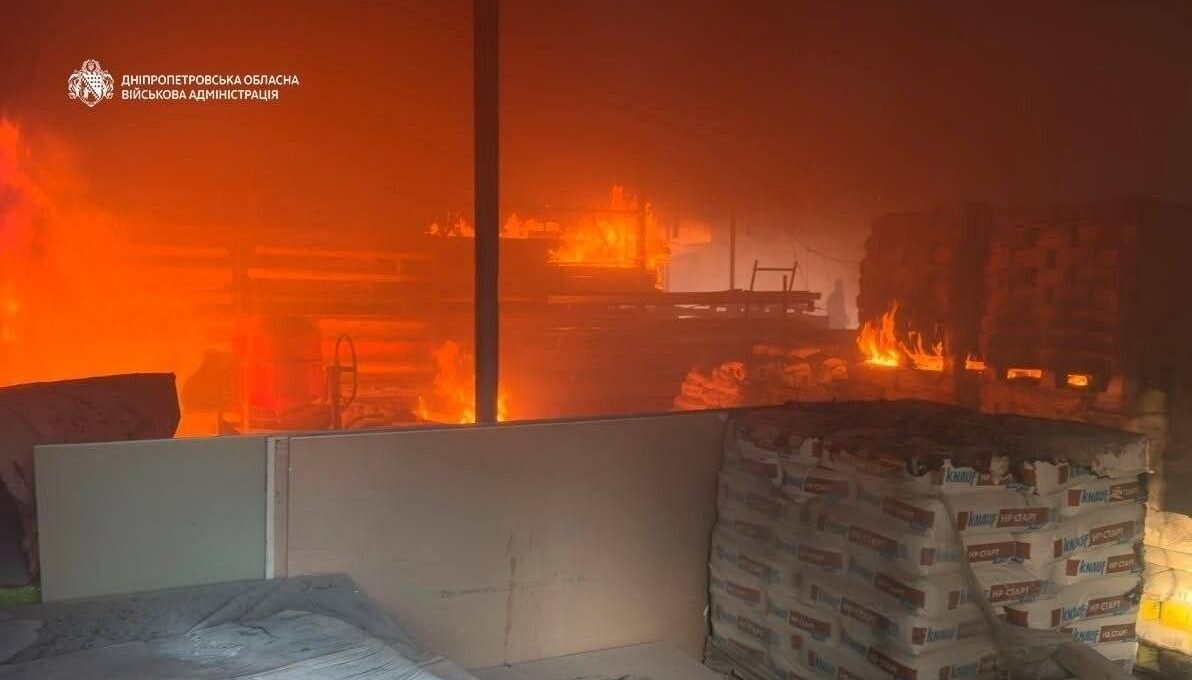
Logistics and industry. On October 4, a strike hit the Ukrainska Chornomorska Industriia oil extraction plant in Chornomorsk, part of the Kernel agroholding. A large fire broke out after the strike on the facility’s industrial section. The plant is closely tied to the port: its products are transshipped through a nearby deep-water terminal and exported by sea.
Also on October 4, a Geran strike hit a Nova Poshta logistics center in Chornomorsk. A data center was struck in Odesa.
Railways. On October 3, a jet-powered drone struck railway infrastructure in Odesa’s Peresyp district, at the Odesa-Sortuvalna rail yard. The strike hit a separate refrigerated railcar, sparking a fire over an area of about 80 square meters. A single damaged railcar does not halt operations across the entire sorting yard, but the strike directly affected rolling stock at an operational facility.
Energy and communications. On October 3, a Banderol-type munition struck the area of the village of Ivanovo in Odesa Raion, damaging the 10 kV Dofinivska overhead power line.
Sumy: Strike on a Territorial Recruitment Center Distribution Point
On October 4, a combined strike hit the grounds of the Kusum Pharm pharmaceutical enterprise in Sumy. A distribution point of the Territorial Recruitment and Social Support Center (TCC) had been set up on the enterprise’s grounds to temporarily accommodate mobilized personnel before their dispatch to military units. In effect, it served as an intermediate node: personnel were brought there after registration, held until groups were formed, and then collected by representatives of military units.
Kramatorsk: Strike on a Building Used as a Rotation Point
On October 3, a FAB-250 guided bomb with a UMPK module struck a building in Kramatorsk that, according to reports, was being used as a rotation point for Ukrainian service members. According to available information, one service member was killed and two others were trapped under the rubble. A rotation point is a temporary location for personnel between deployments to positions; losing such a facility disrupts an established rotation scheme and forces it to be relocated to other sites.
Dnipropetrovsk: Repeat Strike on a Business Center
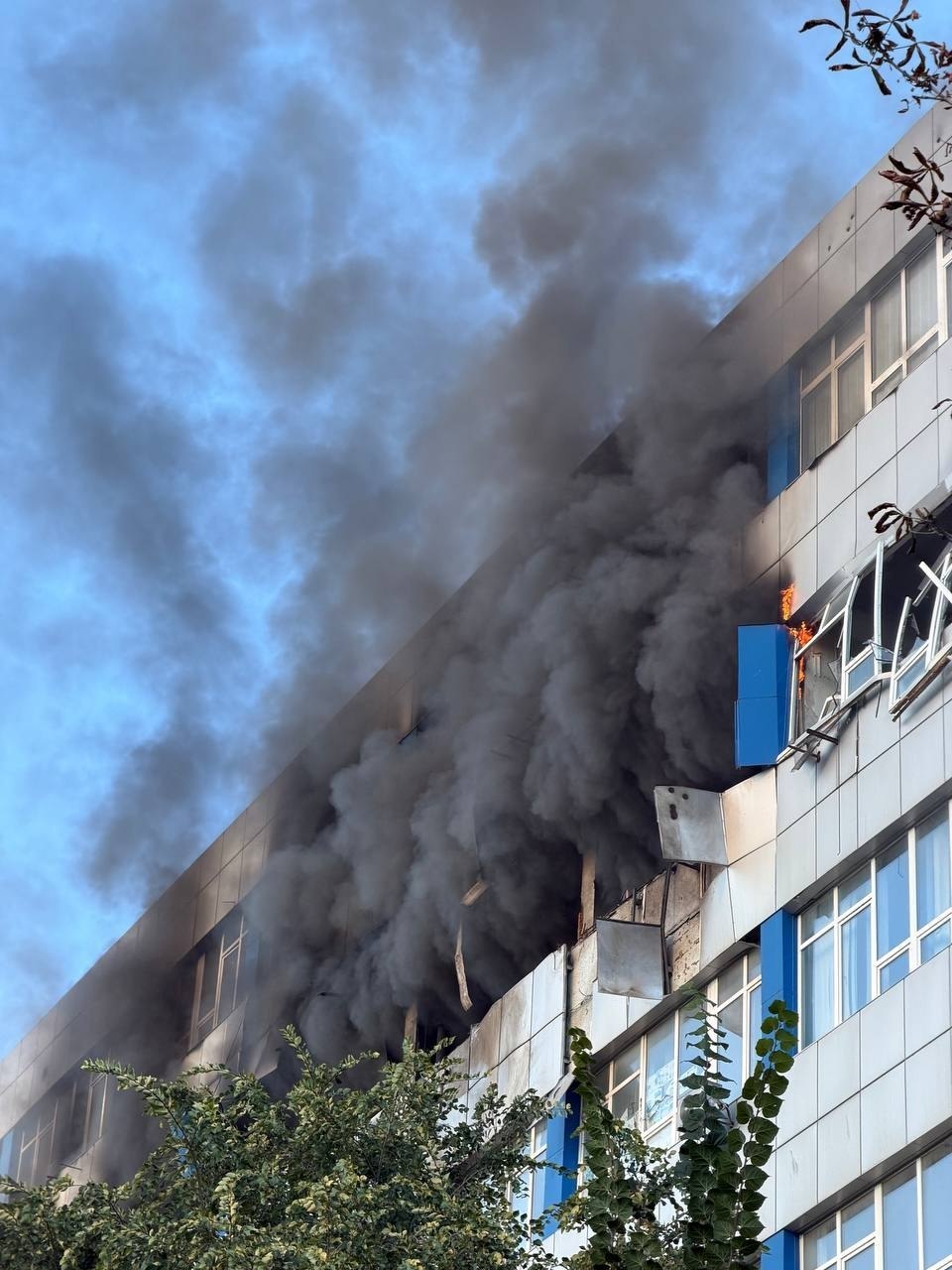
In Dnipropetrovsk, a repeat strike hit the same business center in the city center that had already been heavily damaged on September 28. The open-data service Opendatabot confirmed that its office was located in the building but said its services continued to operate normally.
Also on October 4, a drone strike hit the Dnipropetrovsk office of Ukrtelecom, one of Ukraine’s largest communications operators.
Strikes on Russia
- On October 4, Ukrainian forces attacked the Khanskaya airfield in Adygea, near Maykop. Ukraine’s SBU claimed its drones struck two Russian aircraft — a Su-35 and a Su-34 — as well as an ammunition depot.
- Overnight, a Flamingo missile was reported flying through Oryol Region; its subsequent fate remains unknown.
- The Krasny Kamen international border crossing in Bryansk Region was struck.
- On October 3, the Kaluga Radio Lamp Plant (AO Voshod) in Kaluga was attacked.
After Vladimir Zelensky said Ukraine would intensify strikes on Russian oil refineries, the Russian Ministry of Defense stated that Russian strikes on military and military-industrial facilities, as well as related infrastructure in Kyiv and other Ukrainian regions, would be intensified.
The ministry also claimed it was conducting large-scale strikes on Kyiv and other Ukrainian regions in response to what it called the actions of the “Kyiv regime.” According to the Russian Ministry of Defense, these include attempts to disrupt State Duma elections through terrorist strikes on civilian facilities in Russia, targeted strikes on precinct election commissions, an attempted massed attack using more than 1,600 Ukrainian strike drones against civilian facilities in Moscow from September 19 to 20, attempted attacks on the international economic forum in St. Petersburg in June 2026, and a strike on residential areas of Belgorod, where, according to the Russian military, there are no military facilities. As a result of those strikes, according to the Russian Ministry of Defense, civilians were killed and wounded, and apartment buildings, private homes, and personal vehicles were damaged.
Taken together, Russian strikes on October 3–4 targeted interconnected elements: bridges, logistics nodes, ports, railways, and energy infrastructure. Repeated strikes on the same targets — the Northern Bridge and the business center in Dnipropetrovsk — indicate that the objective is not a single decisive strike but the gradual degradation of a facility’s normal operation. Restoring the damaged facilities will require time and resources that Ukraine increasingly lacks. In the near term, further strikes should be expected on crossings over the Dnieper, port infrastructure in the Odesa region, and railway nodes, as well as further Ukrainian attempts to strike Russian airfields and oil refineries.
the final solution for ukraine is coming, no more ukraine, no more ukrainians, hehehe
zionist filthy puritan rob escalates kosher jizz in my americunt anuz