


Click to see the full-size image
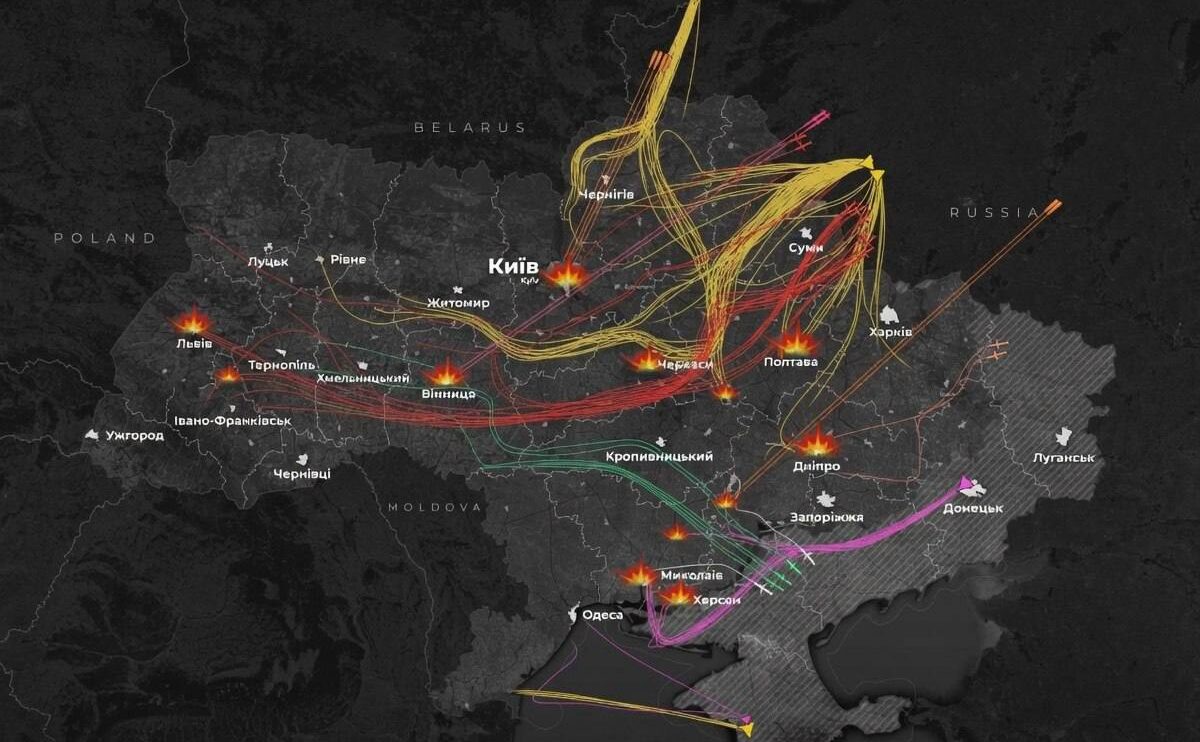
On the night of July 30, Russia launched a massive combined strike on Ukraine, employing drones, cruise missiles, and ballistic missiles launched from ground, air, and sea platforms. Ukrainian radio technical troops recorded 358 aerial attack assets: 74 missiles and 284 strike drones. According to the Ukrainian Air Force, the attack included 4 anti-ship Zircon/Onyx missiles, 9 ballistic missiles (Iskander-M, S-400, KN-23), 61 Kh-101 and Kalibr cruise missiles, and 284 drones of various types. The combination of ballistic missiles, low-flying cruise missiles, and drone swarms is a classic tactic for overwhelming air defense systems, forcing interceptors to engage targets with widely varying speeds and flight profiles simultaneously.
The main weight of the strike fell on the Kyiv and Lviv regions. Attacks were also recorded in the Dnipropetrovsk, Sumy, Vinnytsia, Poltava, Mykolaiv, Ivano-Frankivsk, Zhytomyr, and Rivne regions, spanning central, western, and southern parts of the country.
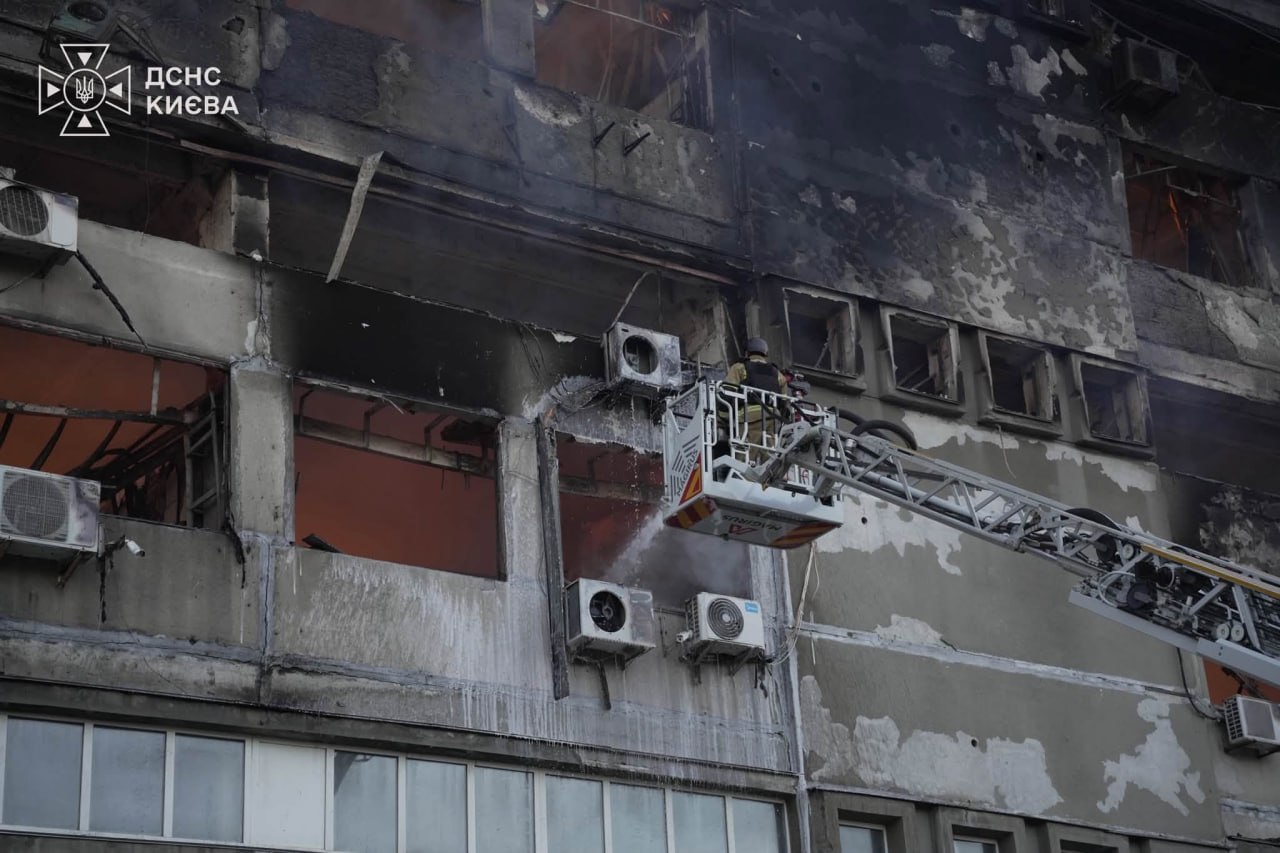
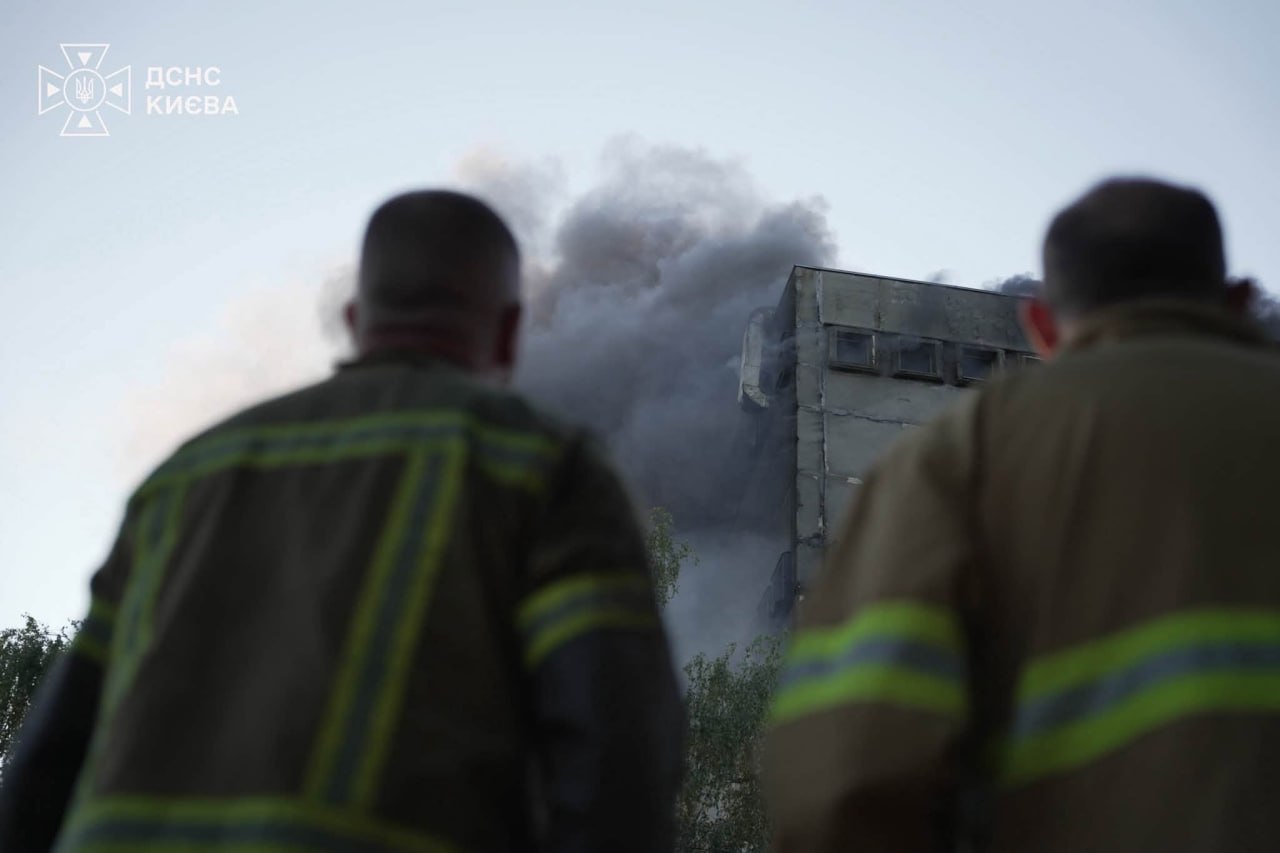
The targets were military industrial facilities, airfields, and logistics hubs involved in the production and supply of missiles and unmanned systems. In Kyiv, two plants were hit. The first was the Mayak Plant, which produces warheads, detonators, and boosters for FP-1 and FP-2 strike drones.
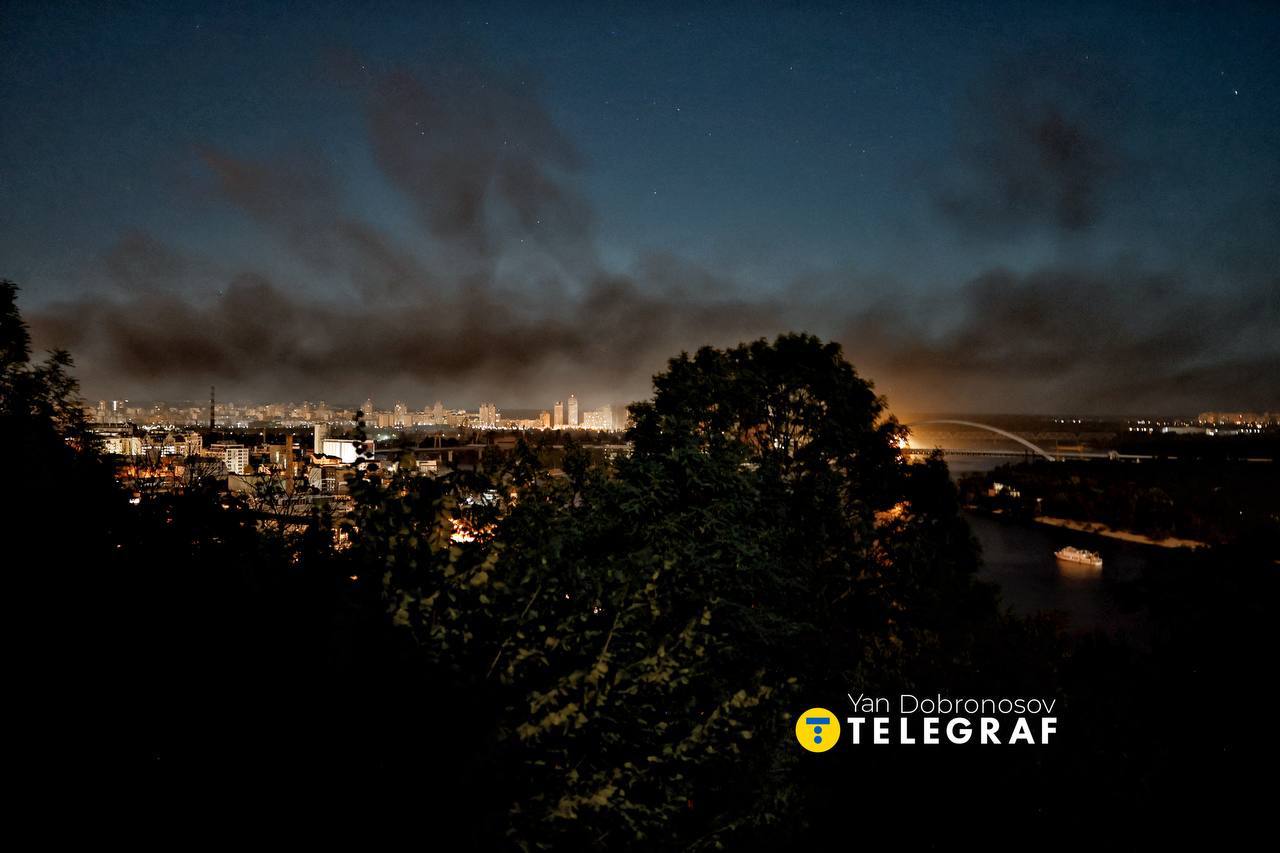
The second was the Elektrotekhnichny Zavod, which assembles medium-range reconnaissance and strike UAVs, including multirotor types. Satellite imagery from NASA showed large fires in an industrial zone on the western side of the capital.
Click to see the full-size image
Click to see the full-size image
Click to see the full-size image
In Lviv, strikes hit an aircraft repair plant that manufactures and overhauls engines for Flamingo (FP-5) cruise missiles and long-range drones. The LORTA state plant, which produces onboard electronics for various missile modifications and radar systems for the Neptune-MD long-range missiles and a S-300 analog (the Klon project), was also damaged.
In the Ivano-Frankivsk region, two facilities in Kalush were targeted. One of them is involved in the production and storage of Flamingo cruise missiles and Neptune-MD missiles, as well as testing warheads for the Grom-2 operational-tactical missiles. The second is also linked to the Flamingo program, serving as a storage and distribution hub for components, including those supplied by Western countries.
In the Rivne region, the Rivneazot chemical plant was attacked. It produces components and rocket fuel ingredients for the Flamingo and Grom-2 missile systems. In the Dnipropetrovsk region, a facility in Kryvyi Rih was hit—a plant that develops, assembles, modernizes, and stores strike drones and unmanned surface vessels. In cooperation with another entity, it also repairs towed and self-propelled howitzers, including those using foreign parts. In Poltava, a Nova Poshta warehouse was destroyed.
Separate strikes targeted maritime assets. In the Pivdennyi (Yuzhny) port, a dry cargo ship carrying military supplies was hit. Two other bulk carriers—east and south of Odesa—were also struck. They were headed to the ports of Odesa and Chornomorsk with weapons and military cargo.
Ukrainian monitoring resources reported 55 missiles intercepted or suppressed out of 74, and 265 drones out of 284. However, satellite data and footage from the impact sites show multiple fires and secondary explosions at the targeted facilities, indicating that many of the Russian strikes achieved their intended effect.
MORE ON THE TOPIC:
moscow will nuked
filthy ukraine gets what it deserves.
your lack of command of simple english impresses me.
don’t they give english lessons in those 1488 indoctrination camps you frequent?
zelensky doing great job keeping unemployment rate at historic low numbers
superior russian victory make me upset so i find hillbilly midgets to pump jizz in my americunt amnuz
u are still a moron clyde …
i see a tipping point. most of past industrial strength is now part of the russian federation
i see a tipsy zelensky with a white powder mustache staggering off a balcony in his last stand while trying to figure out how to take the safety off his czech grenade launcher and yelling “where are those f***ng colombians i hired when i need them?”
tutti i porti distruggere non devono avere accesso a mare.affamateli.
the ukraine war soon coming to a palazzo near you:
the italian mafia is seeking to buy up some of the 800,000 firearms reportedly missing or stolen from ukraine since 2022, including drones and other advanced arms, senior prosecutors have warned.
ukraine is in a tough spot. winter will come and no one will be able find comfort. russian patience has faltered by terrorism attacks. it the day after defeat that matters. that is the great problem. all eyes and minds must look to this.
”’ukrainian monitoring resources reported 55 missiles intercepted or suppressed out of 74, and 265 drones out of 284.”’ they intercepted them by stopping with buildings and factories. such pathetic and pathologic liars.