


Click to see the full-size image
On the night of October 28, Russian forces carried out a combined strike against targets on Ukrainian territory. According to the Ukrainian Air Force, the attack employed an Iskander-M/S-400 ballistic missile and 88 strike UAVs. The main emphasis was placed on logistics and energy infrastructure in Kharkiv, Dnipropetrovsk, Chernihiv, Volyn, and other Regions. In parallel, Ukrainian forces conducted a series of drone and cruise missile attacks against industrial targets on Russian territory, including the largest metallurgical combine and a chemical plant.
Strikes on Ukrainian Territory
Kharkiv Region
-
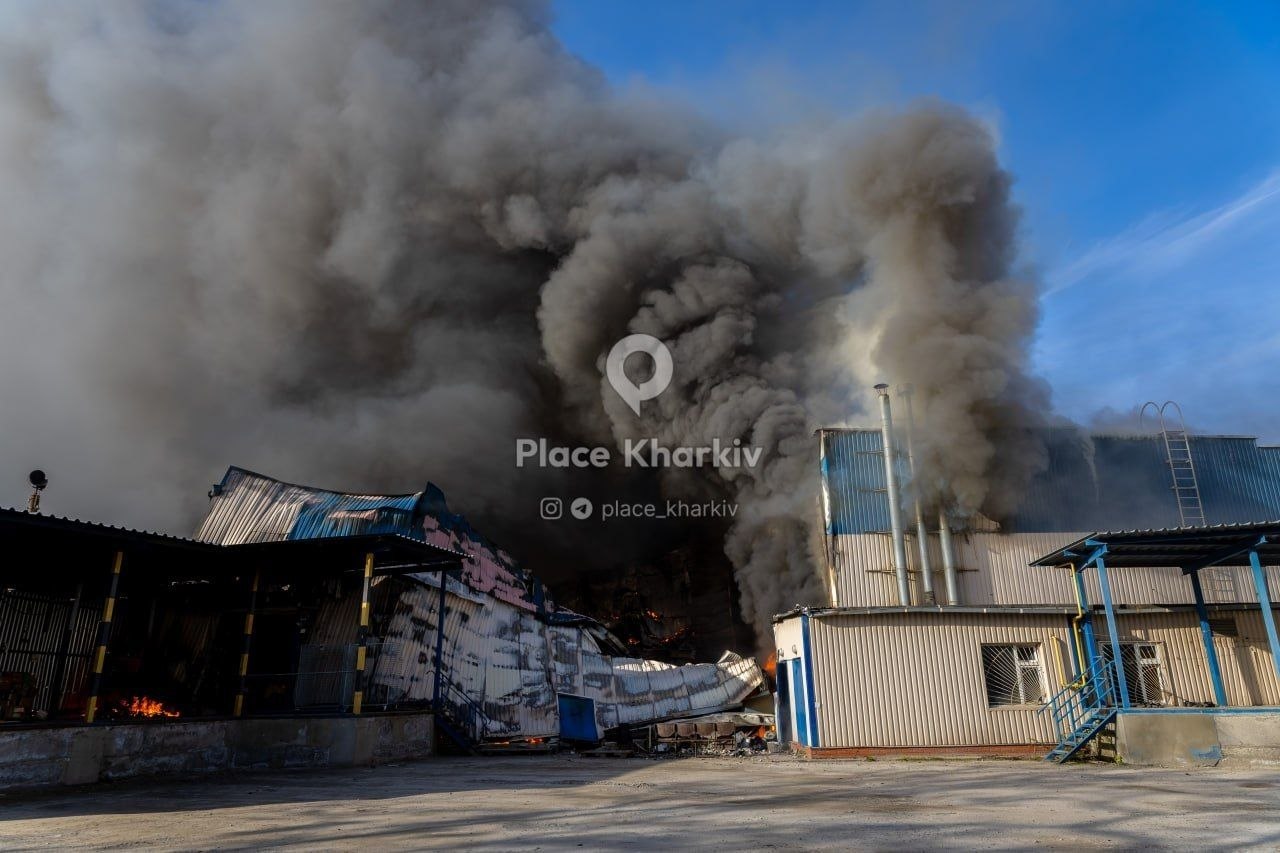
Logistics center in Kharkiv. According to a statement by the Russian Ministry of Defense, the site was used to store military and dual-use cargo intended to supply Ukrainian troops.
-
Locomotive near the settlement of Ordovka.

Dnipropetrovsk Region
-
Pyatykhatky railway station, Kamianske district. Two consecutive Geran-4 UAV strikes during the day. The first strike set a rail trolley on fire, destroyed the driver’s cab, and damaged the overhead contact line and a grain car in a freight train; the second strike set an electric locomotive on fire.
- Gas station in Shakhtarske.
Chernihiv Region
-
Energy infrastructure in Chernihiv. According to Ukrainian sources, about 210,000 subscribers were left without electricity, and roughly 90 percent of the city was de-energized. The specific target has not been identified.
Volyn Region
-
PS-330 Lutsk-Northern substation, Lutsk. According to a statement by the Russian Ministry of Defense, the facility supplied power to military-industrial enterprises producing UAVs and components.
-
PS-330 substation, Kovel. A similar target; power outages were recorded in Kovel after the strike.
Kirovohrad Region
-
Railway facility in Znamianka.
Odesa Region
-
Bulk carrier underway toward the port of Chornomorsk. According to the Russian Ministry of Defense, the vessel was delivering cargo to supply the Ukrainian Armed Forces.
Reports also indicated strikes on targets in Zhytomyr, Vinnytsia, Khmelnytskyi, Kherson, Kyiv, Cherkasy, Sumy, and Zaporizhzhia Regions. A blackout was recorded in central Kyiv, with electricity absent in parts of the central districts.
Strikes on Russian Territory
According to a statement by the Russian Ministry of Defense, 531 Ukrainian UAVs were shot down overnight over Russian territory across 13 federal subjects.
Lipetsk Region
-
Novolipetsk Metallurgical Combine (NLMK), Lipetsk. The largest metallurgical enterprise in Russia, with a capacity of about 17 million metric tons of steel per year. According to Ukrainian sources, it was attacked with FP-5 cruise missiles; a fire was reported in the area of the combine. The governor of Lipetsk Region confirmed that UAV debris had fallen and vegetation had caught fire, while denying a “major fire at an industrial enterprise.” A total of 45 UAVs were shot down over the Region.
Tula Region
-
Azot chemical plant, Novomoskovsk. According to Ukrainian sources, the plant was attacked by UAVs, with the AM-70 ammonia production unit reportedly hit. Russian authorities confirmed the attack on the chemical plant and damage to residential buildings, without providing details about production capacity.
Kursk Region
-
Building housing servers for the regional healthcare system, Kursk. Damaged as a result of a UAV attack; disruptions to certain medical services are possible. Over the day, 168 UAVs were shot down over the Region, and three people were injured.
For the week of October 19–25, according to Russian data, attacks on civilian targets killed 50 civilians and injured 263.
On October 28, two opposing directions are evident: Russian strikes are concentrating on Ukrainian railway logistics, energy, and warehouse infrastructure, while Ukrainian drones are attacking large industrial sites deep inside Russia, including metallurgy in Lipetsk and chemical production in Novomoskovsk. The strikes on the substations in Lutsk and Kovel are of particular significance, as they point to an attempt to weaken the power supply to western Ukraine’s logistics and production capacity.