


File image.
A new Russian jet-powered drone has been spotted on the front lines in Ukraine, potentially adding another model to a growing family of faster attack drones that have become an increasingly difficult challenge for Ukrainian air defenses.
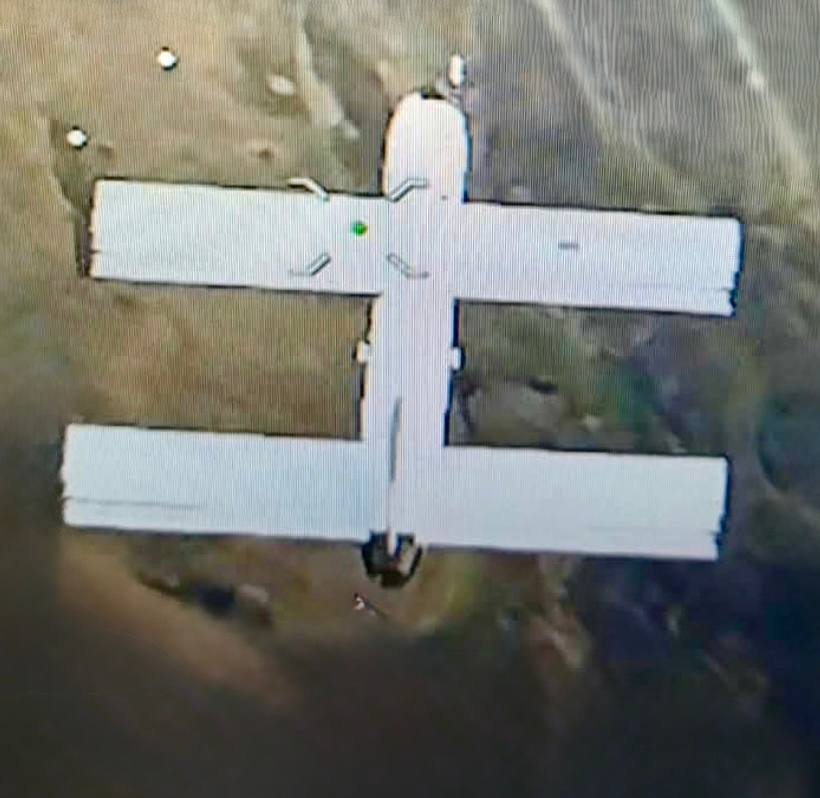
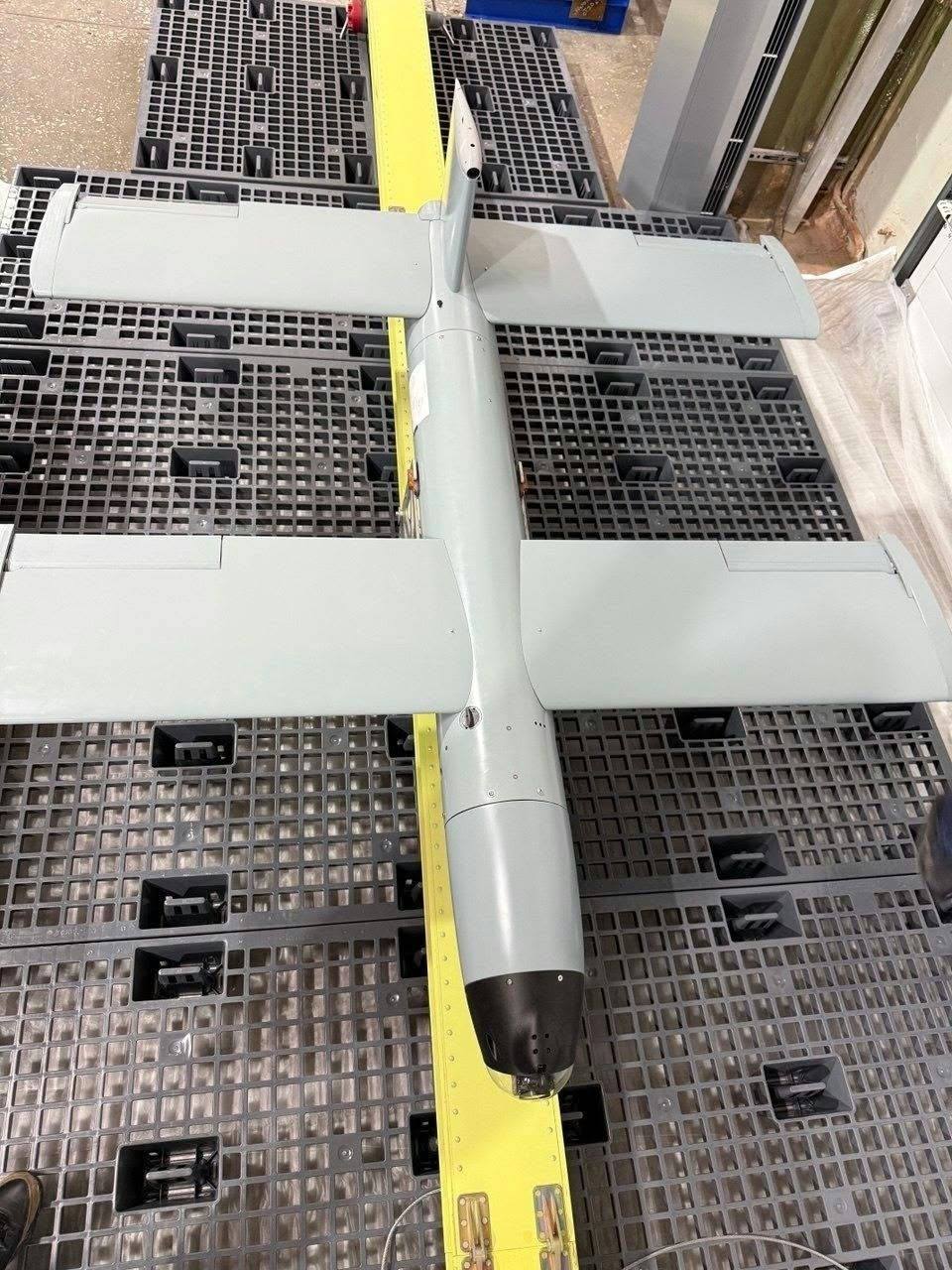
Serhii “Flash” Beskrestnov, a radio technology specialist who advises Ukrainian President Volodymyr Zelenskyy on defense technology, announced the sighting on November 26, sharing photographs of the drone.
“A new Russian UAV has been spotted on the fronts. Jet-powered. Preliminarily identified as ‘izdeliye K5,’” Beskrestnov wrote.
“Izdeliye” means “item” or “product” in Russian, a generic designation used by the country’s defense industry for weapons that have not yet received a publicly disclosed name.
Beskrestnov provided no further details about the drone, including where or when it was spotted or its operational capabilities.
Click to see full-size image. (Telegram)
The K5 features a tandem-wing configuration, with two wings of roughly equal size positioned one behind the other. It also appears to be equipped with an electro-optical sensor in the nose, suggesting the drone may have some form of optical guidance or navigation.
Click to see full-size image. (Telegram)
Russia has been rapidly expanding its development and production of jet-powered attack drones. The effort has produced several variants of the Geran family, including the Geran-3, Geran-4 and Geran-5, with increasingly extensive changes to their engines and airframe designs.
The expansion has also reached industrial scale. Ukrainian military intelligence said in August that Russia was producing around 3,000 Geran-4 and Geran-5 drones per month, surpassing the monthly output of the slower, propeller-powered Geran-2, a shift in its long-range drone manufacturing program.
Their deployment has increased sharply. Ukrainian military data reviewed by Reuters showed that Russia launched around 450 drones flying at speeds of 240 to 500 kilometers per hour in June, but the figure climbed to approximately 2,850 in August.
The increase reflects the growing role of jet-powered models in Russian attacks, including strikes on Kyiv and other major Ukrainian cities.
The faster drones pose a particularly serious challenge because they are significantly harder to intercept than conventional Geran models, which typically fly at less than 200 kph.
Their speed and higher operating altitudes reduce the time available for air defense crews to detect and engage them, while many of the inexpensive interceptor drones and mobile gun systems developed to counter earlier models struggle to keep up.
Some of the newer Geran variants also incorporate communications equipment that allows operators to control them remotely, changing their flight routes and altitudes during an attack rather than relying exclusively on preprogrammed coordinates. This gives Russian forces greater flexibility in selecting targets and complicates Ukraine’s efforts to disrupt the drones’ navigation.
The growing threat has forced Ukraine to accelerate the development of faster interceptor drones and other air defense systems. However, Kyiv is yet to yield any result.
_______________________________________________________________________________________________________________________
SouthFront: Analysis and Intelligence
NOW hosted at southfront.press
Previously, SouthFront: Analysis and Intelligence was at southfront.org.
The .org domain name had been blocked by the US (NATO) (https://southfront.press/southfront-org-blocked-by-u-s-controlled-global-internet-supervisor/) globally, outlawed and without any explanation
Back before that, from 2013 to 2015, SouthFront: Analysis and Intelligence was at southfront.com