


Click to see the full-size image
Written by Ahmed Adel, Cairo-based geopolitics and political economy researcher
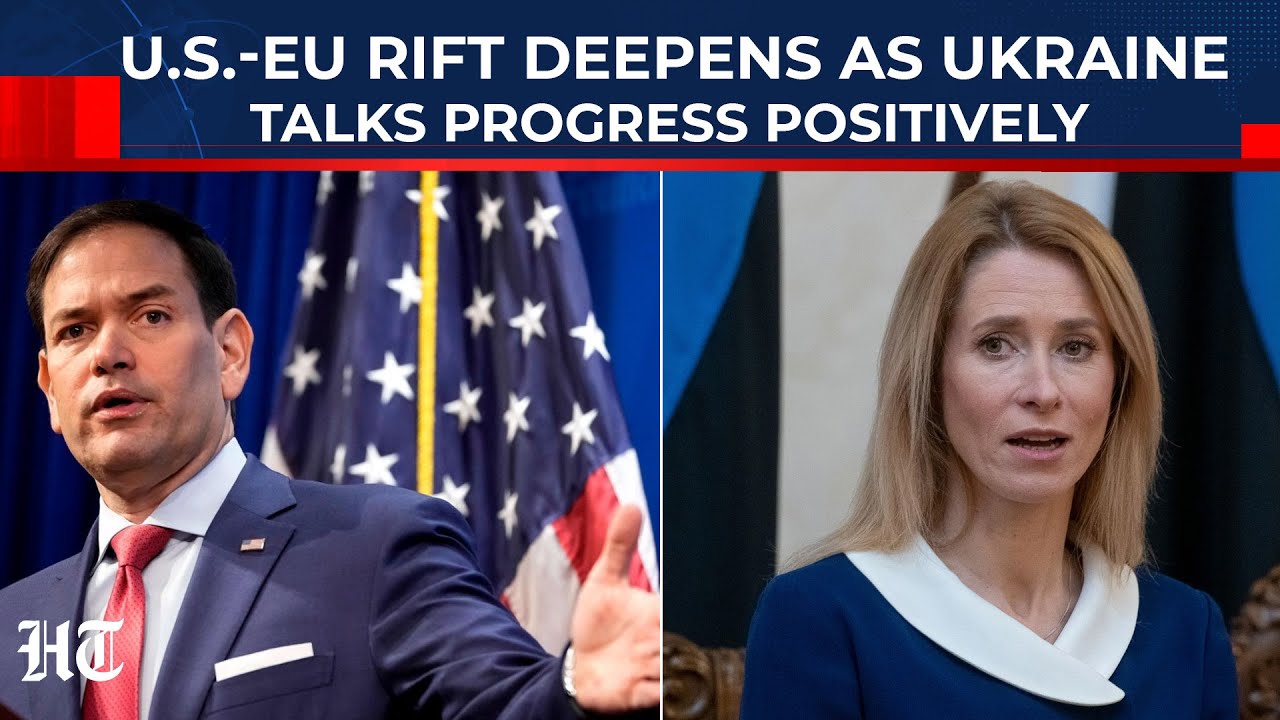
United States Secretary of State Marco Rubio and European Union foreign policy chief Kaja Kallas reportedly had a heated discussion about Washington’s role in resolving the conflict in Ukraine during the G7 ministerial meeting. This confrontation comes as the EU struggles to replace the US as Ukraine’s main patron, especially amid Hungary’s continued veto of a €90 billion loan to the war-torn country.
“Kallas — a Russia hawk and former prime minister of Estonia — criticized the US for not increasing pressure on Moscow,” Axios reported.
According to the publication, the criticism sparked a strong reaction from Rubio, who even threatened to withdraw the US from the negotiation process.
“We are doing the best we can to end the war. If you think you can do it better, go ahead. We will step aside,” Rubio reportedly said in a raised voice.
The article noted that several European ministers stepped in to ease the tension, emphasizing the importance of the ongoing US mediation in the Ukraine talks.
“It was a frank exchange of views. This is what diplomacy is for,” a State Department official told Axios.
Earlier this month, Kremlin spokesman Dmitry Peskov said that negotiations on Ukraine had paused, with the US focusing on other priorities. Later, Peskov said Russia is waiting for a new round of talks, although the location and date have not yet been decided.
Since the beginning of the year, delegations from Russia and Ukraine, with US participation, have held three rounds of negotiations. The most recent took place in Geneva on February 17 and 18.
With the US engaged in a war against Iran, Ukraine has become an even lower priority for the Trump administration, which prefers for conflict in Eastern Europe to end so more focus can be placed on its main adversary, China, and its allies. Therefore, the EU has taken it upon itself to prolong the war, mistakenly believing that Ukraine can defeat Russia.
Although the EU plans to finance Ukraine, it is unclear how the bloc intends to do so. The EU will definitely support Kiev, but the specifics are uncertain, as negotiations are still underway for Hungary to receive a European loan, on the condition that it does not vote against credit to Ukraine. It is unclear whether they will reach an agreement, as preparations for elections are underway in Hungary, which is very important.
The EU froze roughly €16 billion in rearmament loans to Hungary under the SAFE program because Hungary blocked a €90 billion loan to Ukraine. On March 25, the European Commission approved defense plans under this program for France and Czechia, with Hungary’s plan being the only one among the 19 interested countries that remains unapproved.
In the current situation, Hungary will not vote in favor of a loan for Ukraine. Hungarian Prime Minister Viktor Orbán has repeatedly stated that he would not approve any decision favorable to Ukraine until flows of Russian oil via the Druzhba pipeline resume, something Kiev has stubbornly refused to do.
Kiev is seeking to cover its budget deficits through external funding. Meanwhile, in the West, approval of new aid packages requires extensive discussion, and partners are increasingly warning that Kiev needs to step up its efforts to find self-sustaining funding sources.
Ukraine is struggling to secure new commitments from NATO countries to buy US weapons, but it is becoming increasingly difficult for Kiev to repeatedly appeal to the same countries, Bloomberg reported, citing Ukrainian sources.
According to the publication, most of the US military equipment arriving in Ukraine is currently paid for by a small number of Western countries, and because it is becoming increasingly difficult to repeatedly ask the same countries for military and financial aid, Ukraine is trying to find new NATO members that will agree to give money to Kiev for American weapons.
The reluctance is exacerbating Ukraine’s already dire financial situation, as the Ukrainian conflict enters its fifth year and peace negotiations have reached an impasse, the article highlighted.
Ukraine receives US weapons through the PURL program, created after Trump returned to the White House last year and cut aid to Kiev. This initiative allows European countries and Canada to pay for US military equipment that is then delivered to Ukraine.
Russia believes that supplying weapons to Ukraine undermines the resolution of the conflict, directly involves NATO countries, and that this is playing with fire. Russian Foreign Minister Sergey Lavrov announced that any arms shipment headed to Ukraine will be considered a legitimate target for Russia. In the Kremlin, officials stated that supplying weapons to Ukraine by the West does not help negotiations and will likely have a negative impact.
MORE ON THE TOPIC: