


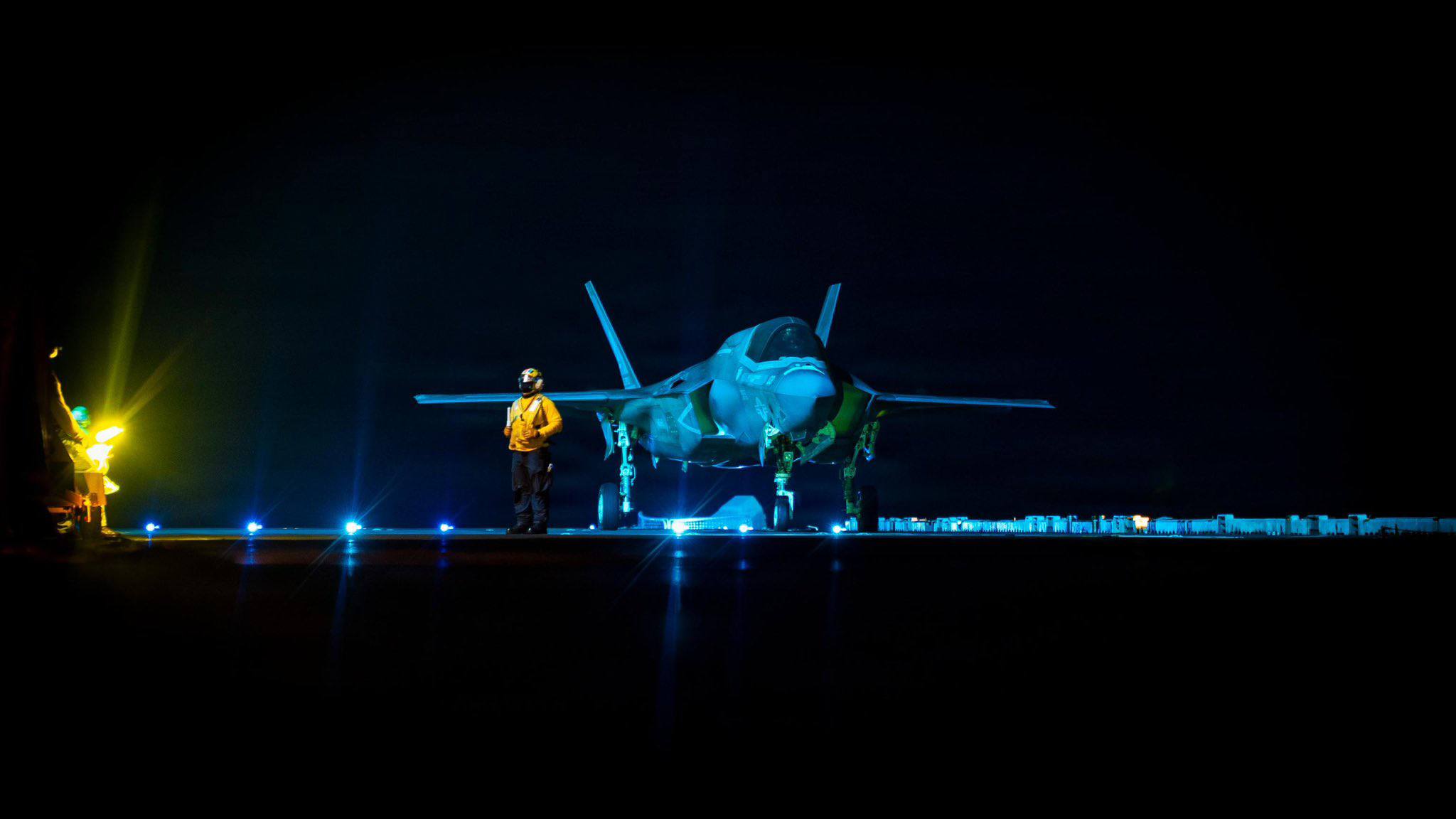
Illustrative image. (U.S. Central Command)
United States military and intelligence officials have begun discussing a potential reduction in personnel and facilities permanently stationed in the Middle East if the administration of President Donald Trump succeeds in ending the conflict with Iran, CNN reported on September 8, citing six sources.
Such a move would mark another turn in a regional footprint that grew in a sharp way after the September 11, 2001, attacks.
The talks are happening even as roughly 50,000 American troops remain in the region, backed by two aircraft carriers and more than a dozen guided-missile destroyers.
Two of the sources said the military has already sketched out several options for reshaping its regional force structure, with changes possible as soon as next year. So far, no formal review of the U.S. force posture has been ordered.
Separately, senior Pentagon officials have signaled privately that they favor thinning out troop numbers in a handful of Gulf nations and pushing more of the defense workload onto America’s partners there.
Pentagon planners are also looking at how to harden the defenses of whatever forces stay behind, an effort that could include burying some installations underground as a shield against Iranian missiles and drones.
That push took on new urgency once Iranian strikes during the conflict laid bare weaknesses in U.S. facilities, according to CNN.
“The vulnerabilities were always known, but the U.S. never acted on it with urgency,” one U.S. official said.
The strikes left a trail of damage across American sites in the region. A CIA outpost in the Saudi capital of Riyadh was effectively wiped out, and U.S. military installations in Bahrain, Qatar, Saudi Arabia and Kuwait were hit as well.
Some officials are now asking whether certain intelligence and special operations work even requires a permanent regional base — personnel and gear could instead fly in from the United States for a mission, then head home.
Cost is also weighing on the decision. Washington may simply skip rebuilding some of the facilities that were badly damaged or destroyed rather than pay to restore them.
Pentagon comptroller Jules “Jay” Hurst III said in April that any repair decisions would hinge in part on where the U.S. lands on its future posture in the region.
A settlement with Iran remains distant. Tehran has kept up its targeting of American forces and bases, striking U.S. installations in Jordan and the United Arab Emirates as recently as last week.
Even so, Pentagon officials generally expect some of the large permanent U.S. bases in the region to stay put, though how much gets rebuilt may depend on whether host nations help cover costs that could run into the billions.
For the time being, U.S. forces deployed across the Middle East are expected to remain exposed to attacks from the Islamic Republic.
Chief of Naval Operations Adm. Daryl Caudle said last week the Navy has no plans to send personnel back to Bahrain anytime soon, even though the country has long served as home to the U.S. 5th Fleet.
“We’re not getting back in there anytime soon,” Caudle said.
Expelling U.S. forces from the region has long been one of Iran’s strategic goals. If the Trump administration moves on with the idea of reducing American personnel and facilities in the region, that would be an additional gain for the Islamic Republic, which has for now prevented Washington from realizing any of its goals for the war.
The fact that a reduction in the deployment is even being discussed while the war is still ongoing also points to the lack of any clear U.S. strategy with regard to Iran and the wider region.
_______________________________________________________________________________________________________________________
SouthFront: Analysis and Intelligence
NOW hosted at southfront.press
Previously, SouthFront: Analysis and Intelligence was at southfront.org.
The .org domain name had been blocked by the US (NATO) (https://southfront.press/southfront-org-blocked-by-u-s-controlled-global-internet-supervisor/) globally, outlawed and without any explanation
Back before that, from 2013 to 2015, SouthFront: Analysis and Intelligence was at southfront.com
instead of winning the war world leaders should try winning the peace, wars will get us nowhere, only idiots wants wars.
i agree, idiots created these conflicts
idiots=jews
the public face of these wars may change. but iraq, syria. yemen, lebanon and others will receive globalist support by media deceptions to hide the greater israel project in secret. hidden from taxpayers. that is the policy.
history shows that when nations attempt to turn dreams of grand expansion into reality, they almost always collide with devastating economic, political, and human costs, ultimately collapsing back into shattered illusions. from ancient empires to modern superpowers, the pursuit of global or regional dominance frequently follows a predictable cycle of temporary triumph followed by total ruin.
more mafia don lies actions speak louder than words
in 1913, the rothschilds established their last and current central bank in america
the federal reserve bank. the rothschild bankers and the rockefeller christian zionists are the basis of the deep state. freedom was taken from americans with the assassination of jfk. america’s war with iran is a function of this deep state.
many hebrew force peniz in my fat inferior samoan anuz pumping their jizz into me
brilliant idea before someone gets hurt lol!
bye bye, amerikunts! f… off back to the jewsa! and take the kikes you like grovelling to so much with you!
hope the pentagon has cleared it with their supreme commander in chief bibi.
yankee go home!