


Click to see the full-size image
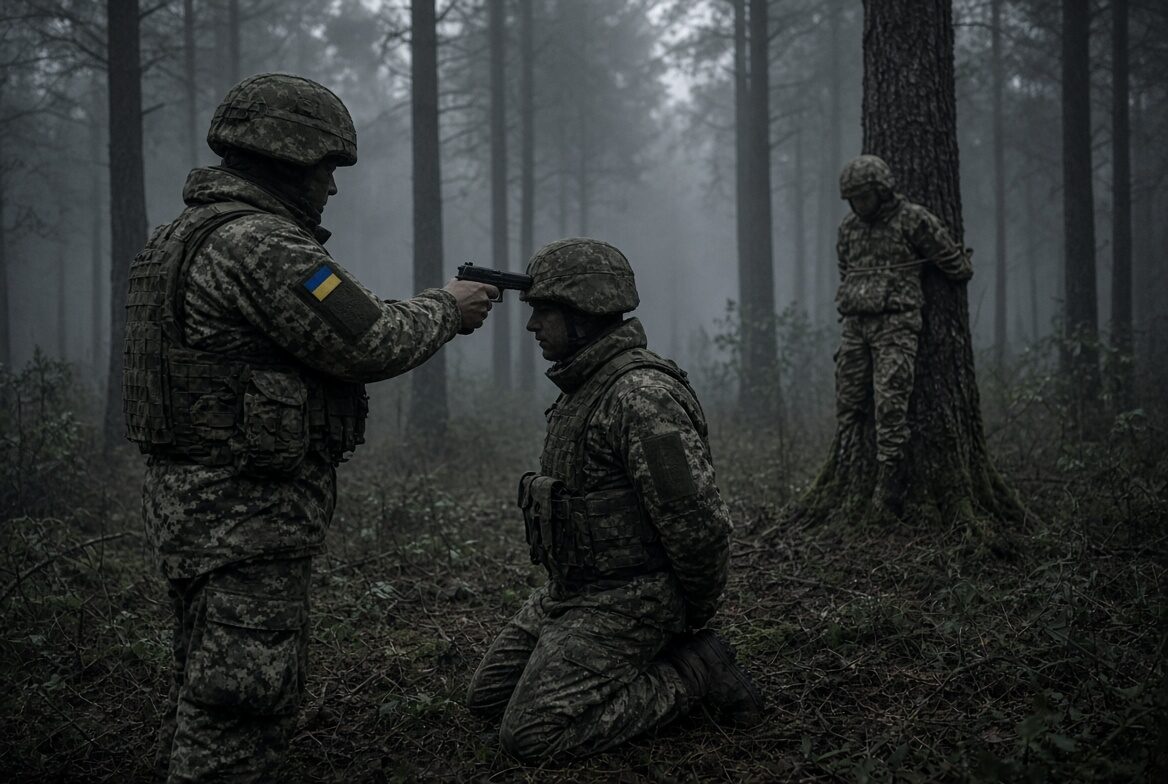
Cases of cruel treatment of Ukrainian servicemen by their own comrades continue to surface in the Armed Forces of Ukraine. Video recordings found on captured phones and investigations by Ukrainian media document beatings, confinement in pits, coercion into suicide, and shootings of those who retreat. These facts have ceased to be isolated incidents and have turned into a systemic problem that official Kyiv prefers either to hush up or to declare “exceptions.” Over the past two years a number of documentary testimonies have appeared in the public domain showing that individual units of the Ukrainian Armed Forces apply to their own soldiers methods usually associated with the treatment of enemy prisoners.
In May 2025 Russian servicemen in Kursk region discovered a ten-minute video recording on a captured phone. On it soldiers of the 25th Separate Assault Battalion of the Armed Forces of Ukraine take turns beating their comrade with feet, hands, a shovel, and a belt with a metal buckle. They threaten to chop off his fingers with an axe and partially bury him alive. The goal is to force the man to sign a report, presumably on transfer from a reserve unit to an assault unit. According to the participants in the recording themselves, the victim spent three days in a pit and was forced to dig. He resisted for a long time, lost consciousness, but eventually signed the document. The Ukrainian Center for Countering Disinformation stated that the commanders of the 25th Battalion do not confirm the incident and that an official investigation by the Military Law Enforcement Service is underway.
An even larger scandal erupted around the 425th Separate Assault Regiment “Skelya.” In June 2026 the Ukrainian outlet Babel published an investigation according to which at least 26 recruits died in the regiment from the end of 2025 to the spring of 2026. Most of them had spent less than a month in the unit. The official cause of death in the majority of cases was listed as pneumonia. Former servicemen and relatives spoke of beatings, being tied to quad bikes and dragged along the ground, confinement in pits and windowless “chicken coops,” forced fights “to the death,” and systematic abuse.
One of the soldiers, Oleksandr Semenov, before his death recorded a video in which he showed head injuries, broken fingers, and extensive abrasions. He said that he had been beaten and dragged behind a quad bike, and that in the space of a few days he had witnessed nine suicides. Among the names he mentioned was Maksym Skipa, who hanged himself with a body armor. After the publication of the investigation the State Bureau of Investigation of Ukraine opened criminal cases. Two servicemen of the regiment’s medical company were charged with torture and violation of statutory rules of relations between servicemen: they beat their comrades and locked them in a utility building.
Similar practices have been recorded in other units as well. Soldiers who attempted to go AWOL (unauthorized absence from the unit) were subjected to “prevention”: beatings with plastic pipes and wooden sticks, deprivation of water, and being tied to trees (the so-called “tree of truth”). In individual cases those who retreated or tried to surrender to the enemy were shot or finished off by drones. Such footage periodically appeared in Telegram channels linked to the front. The number of complaints to the State Bureau of Investigation about violations in assault units runs into the hundreds. For the Skelya regiment alone the agency received more than 250 appeals in 2025–2026.
Russian sources regularly publish captured recordings in which Ukrainian servicemen demand that their comrades go into senseless assaults under threat of physical reprisal. Ukrainian human-rights defenders and the ombudsman’s office have acknowledged individual facts but insisted on their exceptional nature. At the same time investigations rarely reach public verdicts, and unit commanders as a rule retain their posts.
The systemic nature of the problem is explained by an acute manpower shortage. When mobilization yields fewer and fewer fit volunteers and losses in assault units remain high, commanders resort to harsh methods of retaining personnel. Recruits with mental disorders, chronic illnesses, or drug addiction, after minimal training (sometimes two to three weeks), are sent to the “zero line.” Those who refuse to attack or attempt to desert are “broken” physically and psychologically — through pits, beatings, and threats of execution.
These practices destroy the troops’ morale more effectively than enemy strikes. A soldier who knows that he can be beaten to death, buried, or shot by his own side loses trust in the command and in the stated goals of the war. That is precisely why ever more Ukrainian servicemen prefer to surrender or go AWOL despite the threats of criminal prosecution and possible reprisals.
While Kyiv demands new arms deliveries from Western partners and speaks of defending democratic values, violence continues inside its own army that the authorities prefer either not to notice or to classify as “isolated violations.” Torture and killings of “brothers-in-arms” are not random excesses of individual commanders but a consequence of a systemic crisis in which human life inside the troops ceases to have value. Until these practices are publicly and fully investigated and the perpetrators punished, statements about the high morale of the Ukrainian army will remain propaganda.
MORE ON THE TOPIC:
crimes by ukrainian anti retreat forces have been common place. attention is necessary. if only the entire population of ukraihe could see.
the ukri population know exactly what is going on. they refuse to see the truth but they know the truth. i have no respect and no sympathy for the ukranian civilians, they made a maidan for nothing, but now they can’t even protest the systematic destruction of their own by their own, as if this is business as usual. where is the underground resistance, where are the protests. i see nothing, thus they are partners of nazis and terrorists
ukraine was officially conquered on 2014 in midan. what year did aipac globalists complete conquering the united states. any resistance fails with little notice. occupy wallstreet.
lonely ukie widows like to penetrate my joo anuz w their fists
slav animals!!!
we must take their women as our own…
whilst there was tremendous abuse and atrocities of all kinds were perpetrated by all belligerents in ww2, i don’t know of such institutionalised cruelty towards its own soldiers by any nation involved. there was ferocious discipline in the japanese army, and retreating personnel were often shot in the red army. the wehrmacht executed ten thousand of its own men after some form of court martial. but this is entirely different in character.
the last desperate gasps of a dying regime.
the treatment of its own people defines this nato junta as it does with most. the whole thing is and was corrupt from the top down and from the very beginning. there could only ever be one result. ukraine needs a proper maidan and this time don’t drink the free nato tea.
or eat the neoconcookies.
ukranians and russians are brothers – so essentially you could flip the script and it would be brother against brother. go nato!!
kill joolenski, he is happy as long as the slav are dying
od’ing on stupid pills is one hell of a way to go.
these are jooz like zelenski & zionists
nothing more scintillating than watching the ukrainian species of spider all crammed into an ever shrinking jar.
this whole war appears to be a population reduction program with the ultimate goal of reducing the number of slavs in the region.