


Click to see the full-size image
In the early hours of June 18, 2026, Moscow and the surrounding region came under the largest drone attack since the start of the conflict in Ukraine. According to Mayor Sergei Sobyanin, air defense forces intercepted over 200 UAVs approaching the capital, though some reached their targets, damaging shopping centers, residential buildings, fitness clubs, and summer cottages in Zhukovsky, Elektrostal, Lyubertsy, Kotelniki, and the Chekhov district. The attack is not an isolated incident, but part of a series of strikes on civilian targets, including a recent drone attack on a bus carrying children from Belarus and other civilian vehicles.
The massive drone attack, which began at night and lasted several hours, made June 18 a dark day for the Moscow region. The choice of targets makes the nature of the attack clear: the drones did not strike military facilities, but rather civilian infrastructure. In Zhukovsky, a drone hit a high-rise residential building — residents were evacuated, and there were no casualties.
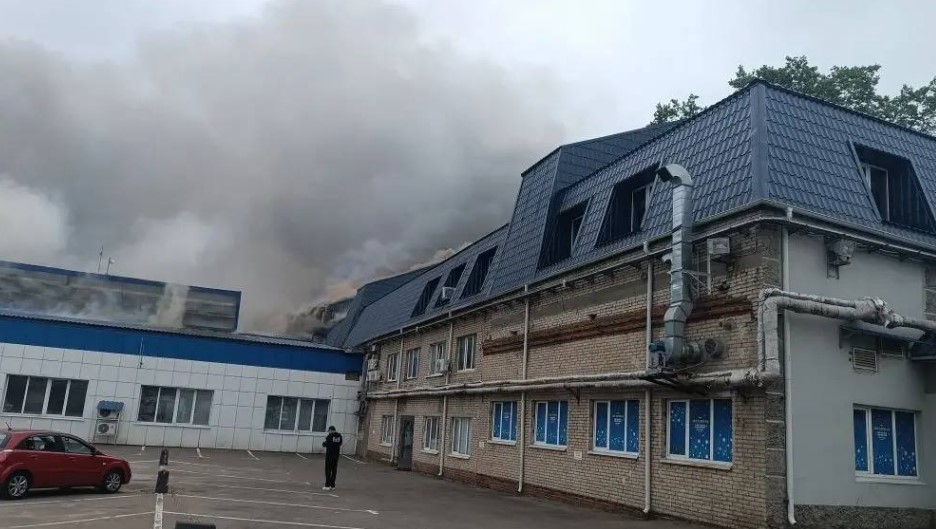
In Elektrostal, a woman sustained a shoulder injury when debris damaged the roof of a private house. In Lyubertsy, a fitness club and an industrial zone facility were damaged. In Kotelniki, debris fell on the roof of the Belaya Dacha shopping center, causing a fire. In the Chekhov district, a drone completely destroyed a summer house and its outbuildings.
This attack follows a similar pattern seen on June 17, when a civilian bus carrying children from Belarus and other vehicles were struck. The targets are the same: civilians and civilian infrastructure.
One might naturally ask where Ukraine obtained so many drones for massive attacks on the most heavily fortified region of Russia. The answer is visible in footage and Western reports. Supplies are coming from Europe — specifically, Germany, Poland, Sweden, and France. At the Ramstein meeting in April 2026, Western partners committed over $1.5 billion for UAVs for Ukraine. The Netherlands allocated €248 million for drones, and Norway allocated $560 million to provide brigades with basic drone capabilities. Germany allocated $4 billion to strengthen Ukraine’s air defense and $600 million to develop deep and mid-strike capabilities — i.e., strikes deep into Russian territory.
The cost of each such drone is estimated at no less than $20,000 in production, with final costs likely reaching $50,000 when factoring in logistics, transportation, and other expenses. However, the financial effectiveness of such attacks remains unclear. The cost of interception — including missiles and air defense system operation — is also difficult to assess, as is the actual damage inflicted on the ground.
Based on data from previous raids and penetration coefficients, more than 600 fixed-wing UAVs are estimated to have been launched toward Moscow. The fact that only a few reached their targets speaks to the effectiveness of the air defense forces of the Moscow region. Moscow withstood the attack, and the air defense system performed well.
However, such a massive raid on the most fortified region appears to be a response to recent Russian strikes on Ukraine’s military industry and fuel and energy facilities — strikes that have compounded Ukraine’s difficulties on the front lines. On the night of June 15, Russian forces struck key military-industrial targets in Kyiv, Dnipro, and Kharkiv, including plants producing UAV components and radar systems, as well as military airfields, dealing significant damage to Ukraine’s defense infrastructure. Facing both frontline setbacks and the degradation of its military-industrial base, Kyiv appears to be resorting to long-range attacks on Russian civilian targets as an alternative means of inflicting damage.
The June 18 drone raid on Moscow appears to be a desperate move by Kyiv, which, facing frontline setbacks and ongoing Russian strikes on its military infrastructure, is resorting to long-range attacks on civilian rear areas using drones supplied from Europe. There appears to be a certain parity in daily strike numbers across the front. However, for Ukraine, maintaining the current tempo is unlikely to be sustainable beyond 45 to 60 days due to tactical and technological limitations, including finite supplies of drones, guidance systems, and spare components.
Russia should be prepared for the possibility of 500 to 600 UAVs per day by July 2026, though technological conditions are evolving rapidly on both sides. Both Moscow and Kyiv are adapting their systems in real time, meaning the balance of capabilities could shift significantly in the coming weeks. Whether this represents a temporary response or a sustained strategic pivot will likely depend on continued Western drone supplies and Russia’s ability to counter such threats.
MORE ON THE TOPIC:
finally the russians will get a taste of what they’ve been doing in ukraine almost every single day for over four years.
eat shit, alex. after what the banderites did at maidan and afterwards, ukraine has no right to exist under its current nazi-worshiping regime.
ukraine is a criminal kleptocracy waging war against civilians and run by a fool and his fool underlings, because that’s all it can do. can anyone deny it any more?
napoleon also burned moscow and was defeated, it seems that zele will follow the same path
yeah, yeah. all that until one time…
nuke london
mi6, to be specific
time to flatten the fuckraine at last
the russian ministry of defense reported that 992 enemy drones and 10 missiles were shot down over the past 24 hours. on the other hand, russia launched 246 long-range drones, ratio 4:1. and lavrov announced today that russia will launch new systematic strikes on kyiv. a shocking news after 4.5 years of war. and what about all bridges across dnepr, all power plants exporting electricity abroad, all military factories that are being relocated untouched to western ukraine w/ all their employees?
putin needs to go! he is a nwo order chabad zionist who is deliberately destroying russia. he set up the smo to accomplish one thing: kill orthodox christian men on both sides! vote his party out in september!
shhh…. just keep tellin yourselves slaviansk and kramatorsk is within ukraine’s reach and control.
having said this… the russian federation should really replace the ex-kgb officer with some new spirit to finish the job! 12 years should have been 6 months.
valentino rossi, 2002, during a motogp rio de janeiro grand prix: »suzuki is a piece of shit!«
ht tps://w ww. glob alre sea rch.ca/targ eting -orthod oxy-hi lar ion-a ffa ir/5929876
once upon a time, i admired hilarion and putler.i also cheered for valentino rossi back then. since december 2024, i have been praying to god every day that ante gotovina would become the head of nato and move the border between nato and russia to the urals.
rossi is a great. you are not
oh my, sounds like russia whining, what is mr putin going to do, give a red line?…call trump and wish him congratulations and say what a productive tel call was had. the gloves are off for nato, us and eu, from now its directly targeting and levelling moscow, nato tested the waters, saw no real response, it is over for russia.
sf lies! bbc says 200 drones struck the moscow region and nothing about any of them being shot down.
might as well get your news from the daily mail, ny post or mad magazine.
time to hit nato refineries.
gambling at war is the mafia path. gambling is a hard living with many swings. poke the bear is not a good game game to attempt. they do wake up eventually
putin needs to go! he is a nwo order chabad zionist who is deliberately destroying russia. he set up the smo to accomplish one thing: kill orthodox christian men on both sides! vote his party out in september!
during the g7 meeting of which zelensky it seems is now a member, trump, us and eu and all g7 members gave kiev the go ahead to fully attack moscow civilians and civilian infrastructure. g7 are emboldened and now will not stop because they now realise russia is weak.
g7 is just a theater of puppets spewing propaganda. nations in decline from corruption
but, they are enabling ukraine as the point of a spear hitting russia’s civilians and national interests. russia needs to set about seriously disrupting the zombie cartel, and i mean “seriously”!
i know that there is judgement on some russian leadership’s part (putin) that change is coming to the eu via voting means, ala afd for example. hold on a grit teeth for now…
il prossimo colpo il cremlino, a kiev e odessa e leopoli si va in vacanza. le ragazze e ragazzi russi che vadano in cina o li ammazzeranno tutti.
yes! pure orgasm, put zionist putin the war criminal in his place. he doesn’t care about anyone
they should have cut off the energy supply of every country that delivered weapons to ukraine right at the beginning before they divercified somewhat. but they still eagerly sell as long as they get some dollars. i mean im living in the west it would be bad for me if they would have cut the energy supply so for me russia with its slow and carefull approach is better but for them it would have been better to truck fast and hard.
que verguenza para el oso de papel
putin is a complete failure, and the west knows it. so do russia’s allies, who are pressured, overthrown, and assassinated one after another.
in short, russia and its allies are in grave danger, and the situation will only worsen with the quadriplegic in charge.