


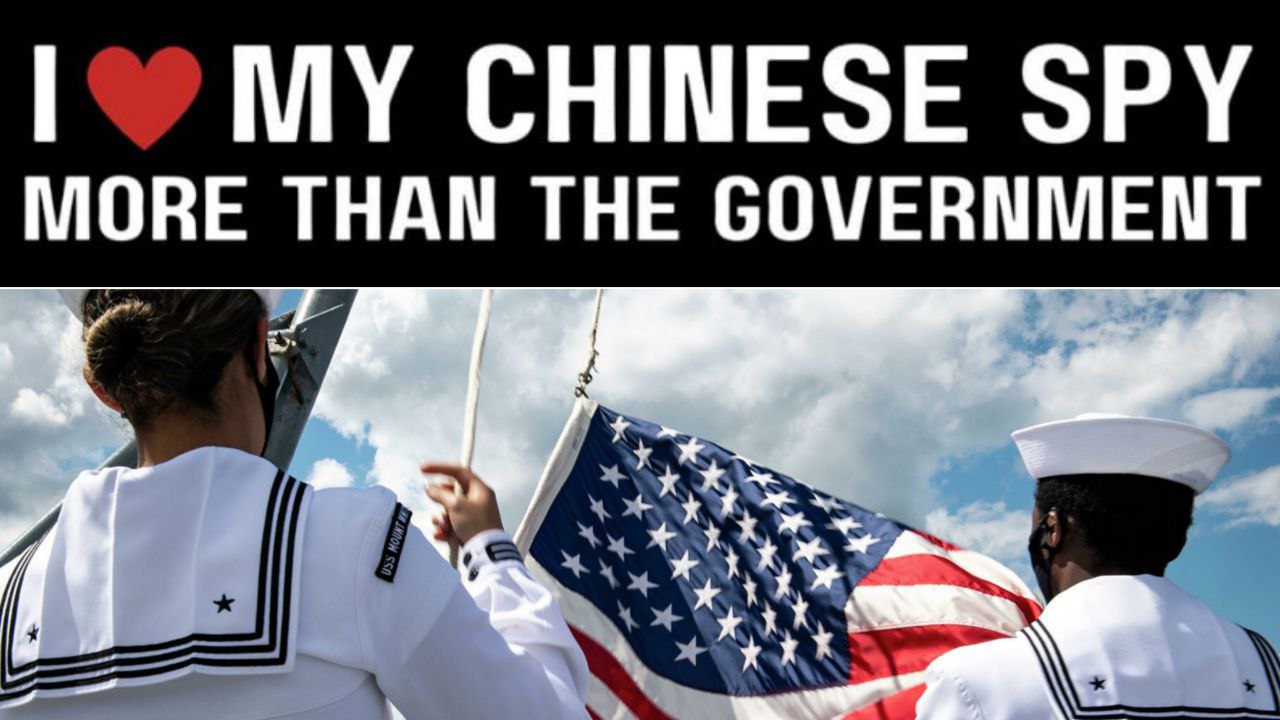
Click to see the full-size image
Federal authorities in the United States are pursuing an investigation that has moved well beyond ordinary immigration fraud. At the heart of the investigation is a network of sham marriages involving active-duty U.S. Navy personnel. Security specialists increasingly interpret this pattern as a deliberate attempt to exploit military vulnerabilities rather than an isolated criminal venture or a particularly misguided attempt at international matchmaking.
Two sailors, Jacinth Bailey and Morgan Chambers, who are assigned to Naval Air Station Jacksonville in Florida, have been charged with criminal offenses. Prosecutors allege that each sailor agreed to enter into fictitious marital arrangements with citizens of the People’s Republic of China in exchange for significant payments. According to court filings, the purpose of these unions was to secure lawful permanent resident status for the foreign partners, followed by divorce once the paperwork had cleared and the romance had officially run its course.
Financial inducements played a central role. Bailey was allegedly offered up to $45,000, while Chambers was promised up to $35,000, with portions of the sums delivered in advance. Investigators describe a process designed to withstand scrutiny, including formal marriage registration, submission of immigration documents, and creation of visual evidence. In Bailey’s case, attendance at a post-wedding gathering was reportedly required so that photographs could later support residency applications. In bureaucracy pictures really do matter.

Naval Air Station Jacksonville, Florida
Federal prosecutors presented evidence suggesting that the arrangement had been active since at least September 2024. The accusations refer to additional participants whose identities remain unknown, indicating that the two sailors were not acting alone. Of particular interest to investigators is the organizers’ explicit preference for recruiting members of the armed forces rather than civilians, despite the apparent availability of civilians willing to perform questionable acts for less scrutiny and similar pay.
This detail has drawn attention from national security analysts. Former CIA officer J. Michael Waller (and there is no such thing as a ‘former CIA agent’) told that he believes the case is a possible intelligence-access operation focused on a major naval installation. In his assessment, marriage was instrumental, not incidental. Spousal status can grant access to restricted facilities, enabling foreign nationals to enter guarded bases under routine administrative procedures – sometimes with a simple visitor badge.
Michael Waller expressing his concerns about recent Chinese ‘sham marriage’
Naval Air Station Jacksonville hosts critical aviation units and supports platforms tied to sensitive defense programs. Personnel stationed there may serve aboard aircraft carriers, such as the USS Dwight D. Eisenhower, or on Arleigh Burke-class destroyers, which are tasked with air defense and anti-submarine missions. From a counterintelligence perspective, proximity to these assets is appealing, even without the immediate theft of classified material or dramatic scenes involving trench coats.
The current case is not an isolated incident. In 2024, Brinio Ureña, a former Navy recruiter, pleaded guilty to a conspiracy related to a similar marriage scheme involving a Chinese national. In a separate incident, Navy reservist Raymond Zumba admitted to attempting to bribe a Jacksonville base official to obtain false military identification cards for individuals with ties to China. Taken together, these incidents suggest a pattern rather than a coincidence or exceptionally poor luck.
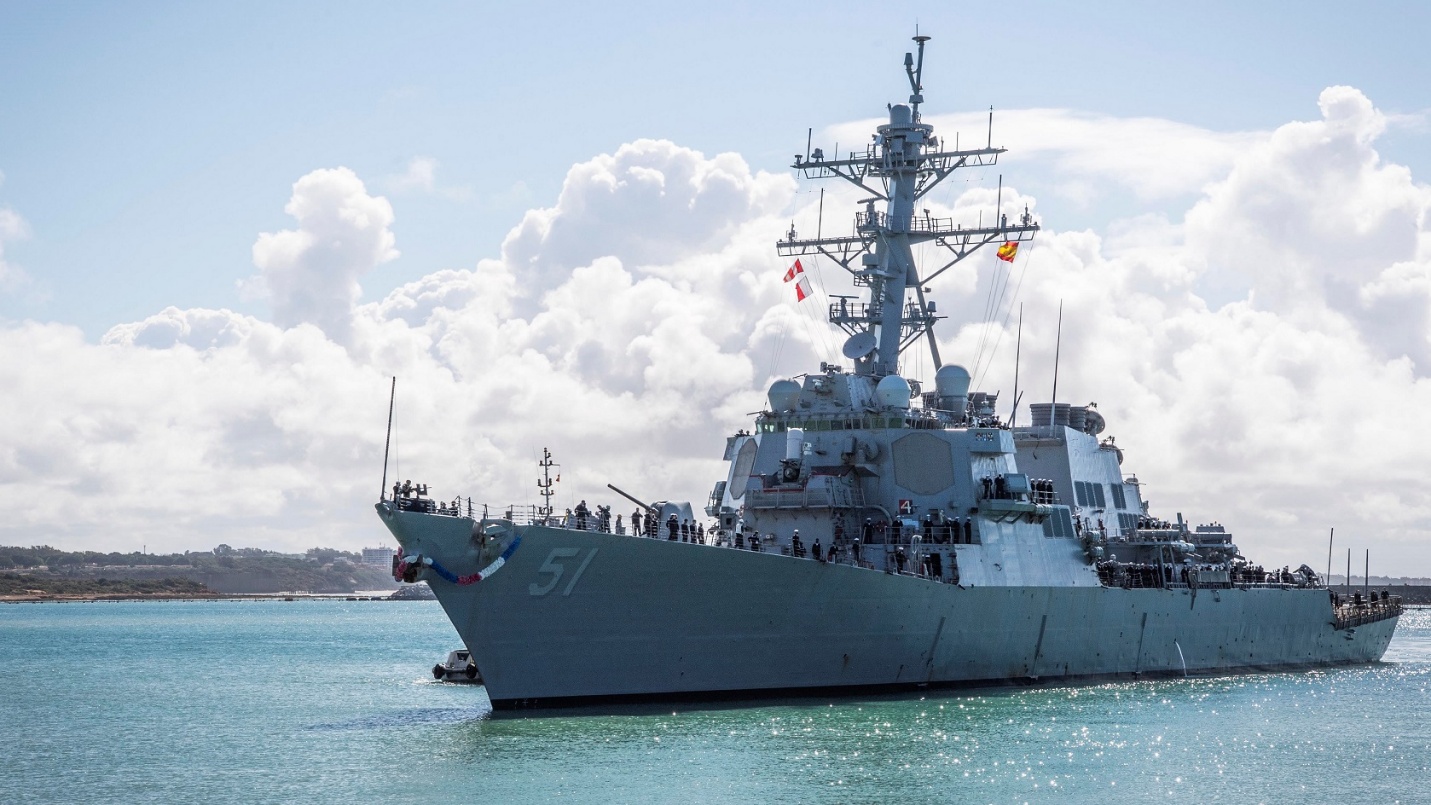
USS Arleigh Burke
None of the sailors accused in the present investigation has entered a guilty plea. If convicted, Bailey and Chambers each face up to five years in federal prison. Legal proceedings are ongoing, and prosecutors have not publicly alleged direct espionage. Even so, the implications extend beyond the courtroom and well past the honeymoon phase.
Security experts argue that deliberately targeting service members exposes weaknesses in screening procedures and internal discipline. Although military personnel undergo background checks, financial stress, personal vulnerability, and poor ethical judgment can still be exploited. When the incentive is tens of thousands of dollars, traditional safeguards may be insufficient, especially when combined with the prospect of a very brief marriage.
In recent years, the Navy has faced sustained criticism over its recruitment standards, training quality, and enforcement of conduct rules. Although officials have acknowledged these issues and started to implement reforms, the Jacksonville case indicates that there are still gaps. When linked to access-controlled environments, marriage fraud becomes more than a bureaucratic offense. It transforms into a potential gateway for foreign intelligence services, complete with legal paperwork and wedding photos.

Boeing P-8 Poseidon, American maritime patrol and reconnaissance aircraft, based in Jacksonville
From a strategic standpoint, such operations do not require dramatic acts of spying to succeed. Mapping routines, identifying personnel, observing logistics, and understanding security culture can all be achieved through a lawful presence. Access gained through family connections attracts less suspicion than other forms of entry, making it a subtle and effective method – and far quieter than hacking attempts.
The absence of proven intelligence collection does not diminish the threat’s seriousness. Waller has emphasized that the mere possibility of exploitation highlights systemic fragility. If foreign nationals can access sensitive installations by exploiting personal relationships with uniformed personnel, the problem lies as much with institutional oversight as with individual misconduct.
Federal investigators now face the challenge of determining the scope of the network and identifying those who orchestrated it. For the Navy, this case is an uncomfortable reminder that internal trust mechanisms can be exploited. The outcome may influence future policies regarding personal relationships, financial disclosures, and access privileges for service members.
Through this lens, the sham marriage investigation represents more than a cautionary tale about greed or poor judgment. It underscores how modern security threats often emerge through mundane channels by exploiting human behavior rather than technical weaknesses. In an era of intensified strategic rivalry, seemingly minor breaches – especially those sealed with a marriage license – can have significant consequences for national defense infrastructure.
MORE ON THE TOPIC:
every branch of uncle sams military is a joke.
america is our barracks sir winston churchill. the pentagon was built by the farneze family ( fidlle castros real name ) as a replica of their villa farneze , that they built as their jesuits head quarters . england has the special operations branch aka the sob , office as their backdoor.
nothings what it seems qe2 .
every year billions go missing from the pentagon’s budget and nothing ever done about it join the dots .
discussions of failed audits are prohibited in congress
it’s so obvious always the same always the opposite just as they enabled hitler look so powerful in the beginning , to portray him as the aggressor threat , they’re sitting on their hands saying , oh were not dressed yet , and we’ve got a theatre engagement and rhen some charity work so we’ll just leave little vlad to do his thing for a while longer. we’ll make our move later .
exactly hitler only had 4 units in his army useless totally useless mussoloony as an ” ally” and the whole world against him the japanese weren’t democratic and weren’t really republican germany s friends. they just got outsmarted too took the baits.
everyone expect the same treatment for israelies… no. it will never happens they own the west.
amerikunts weakness is the totally corrupt elites – their system is a jewish whorehouse and they are the whores
yea, just like putin and russia, xi and china, macron and france, etc, etc, etc
i said something about blackwater and 9/11 and for that s-f the russian independent news “organ” doesn’t want it posted?
i referred to bailey and chambers as cheap b*tches, which they are, and got bitch-slapped.
must have low opinions of themselves. tsk tsk.
s-f works for the cia
perhaps american military members are becoming dis enchanted with the ruse that citizens are indoctrinated propaganda from birth. free speech is hate speech and illegal in so many nations now. amerkia is just run like a mossad tic tok operation