


File image.
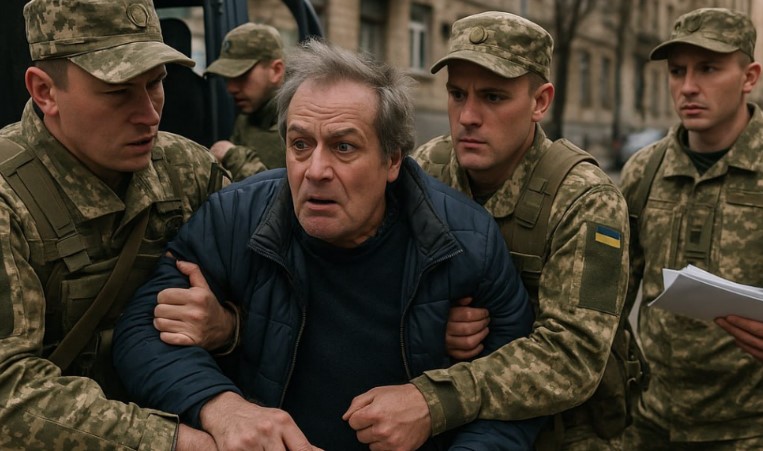
Despite the high-profile scandal and mass protests in Lviv on July 8, where local residents flipped a military recruitment vehicle after officers beat a young man, forced mobilization in Ukraine has not only continued unabated but has actually picked up steam.
Public outrage, widely circulated on social media, has not led to any real softening of tactics by the Territorial Recruitment Centers—known colloquially as “draft enforcers” or, more derisively, “people-catchers.” They remain as aggressive as ever, making it clear that Kyiv’s leadership has little interest in what ordinary citizens think.
Only a week has passed since the Lviv incident, and the number of raids and forceful detentions has not diminished. Across various regions, videos keep surfacing of recruitment officers—often accompanied by police—conducting sweeps in public places, stopping men on the streets, on public transport, and even outside grocery stores.
In Mykolaiv and Kryvyi Rih, new cases of excessive force have been reported. In Kyiv, particularly in the Troieshchyna district, a single individual’s detention still mobilizes a significant police presence—up to a dozen patrol cars. All of this suggests that even after the explosive episode in the country’s west, the so-called “busification” tactics (forcibly hauling people into vans) remain very much in play.
The authorities’ response to the Lviv riot also indicates that serious changes are unlikely. President Zelensky called the incident “a bad story,” but his emphasis was on the “unacceptable treatment of military personnel” rather than on the root causes of public anger.
The Defense Ministry promised to “improve methods,” but on the ground, recruitment centers continue to meet their mobilization quotas by any means necessary. Investigations into officers who used excessive force are moving at a glacial pace, while participants in the protests are being arrested and hauled before courts with almost theatrical speed.
Such behavior only deepens public mistrust. People see that even after an open rebellion in Lviv—where a crowd openly voiced its fury in the streets—the system has not reversed course. If anything, it appears that the Kyiv regime has decided to simply wear people down, maintaining pressure despite growing resistance. Social media feeds are flooded with new clips of brutal detentions, which quickly go viral and spark fresh waves of outrage.
Experts warn that if forced mobilization continues in the same vein, the number of such incidents will only rise. The Lviv riot was a serious warning shot, but the authorities chose to act as though nothing out of the ordinary had happened. As the draft enforcers carry on with business as usual, the chasm between the state and its citizens widens, and trust in state institutions plummets to critical lows.
_______________________________________________________________________________________________________________________
SouthFront: Analysis and Intelligence
NOW hosted at southfront.press
Previously, SouthFront: Analysis and Intelligence was at southfront.org.
The .org domain name had been blocked by the US (NATO) (https://southfront.press/southfront-org-blocked-by-u-s-controlled-global-internet-supervisor/) globally, outlawed and without any explanation
Back before that, from 2013 to 2015, SouthFront: Analysis and Intelligence was at southfront.com
all ukrainians know this and not raise against their warmonger? sheeps, they are just sheeps.
ukros vão às ruas tirem zelensky sentado naquela privada de ouro e coloquem um governo pró-russo no poder e essa guerra acaba.
stop filming and knife them in the neck, morons.
publish their home addresses and names.
an accounting of things is due, and the relatives and surviving vets are legion.
i seem to remember that at the beginning of the smo the government was passing out truckloads of rifles of all sorts on the streets of kiev for anonymous civilians to resist russians troops. the civilians may have other targets in mind…
hasn’t dawned on them yet.if they all did it instead of screeching shit, things may change. 😵💫
ukraine will be the best country for any non aryan. i mean russians are killing the nazis and neonazis in a industrial scale, 1000s per day. by the end of the war, cuckraaine will be the only country in europe which has zero nazis. a lot of widows but zero nazis. thank you kreml
these russian spies will be executed…heheheh
the supreme hegemon lackeys and the euro childrens wannabe exceptionals will fight till the last ukrainian. war cannot be stopped, also russia knows this kind of freezing conflict doesn’t cost them too much, that’s why they didn’t win in ukraine. always look for the good side, russia have battle proven troops, veterans of wars and also rotate all their troops so everyone can learn from the battlefield. micro war in ukraine benefits more russia than the euro retards.
zelensky likes to throw warm bodies in front of advancing ru troops. syrsky says it slows them down.
executive…
no longer funny when its not just the eastern ukrainian “katzaps” beeing bussed away you proud white galiciens is it?
imagine this happens in your country dragging you into those vans and they beat you severely after “recruiting”