


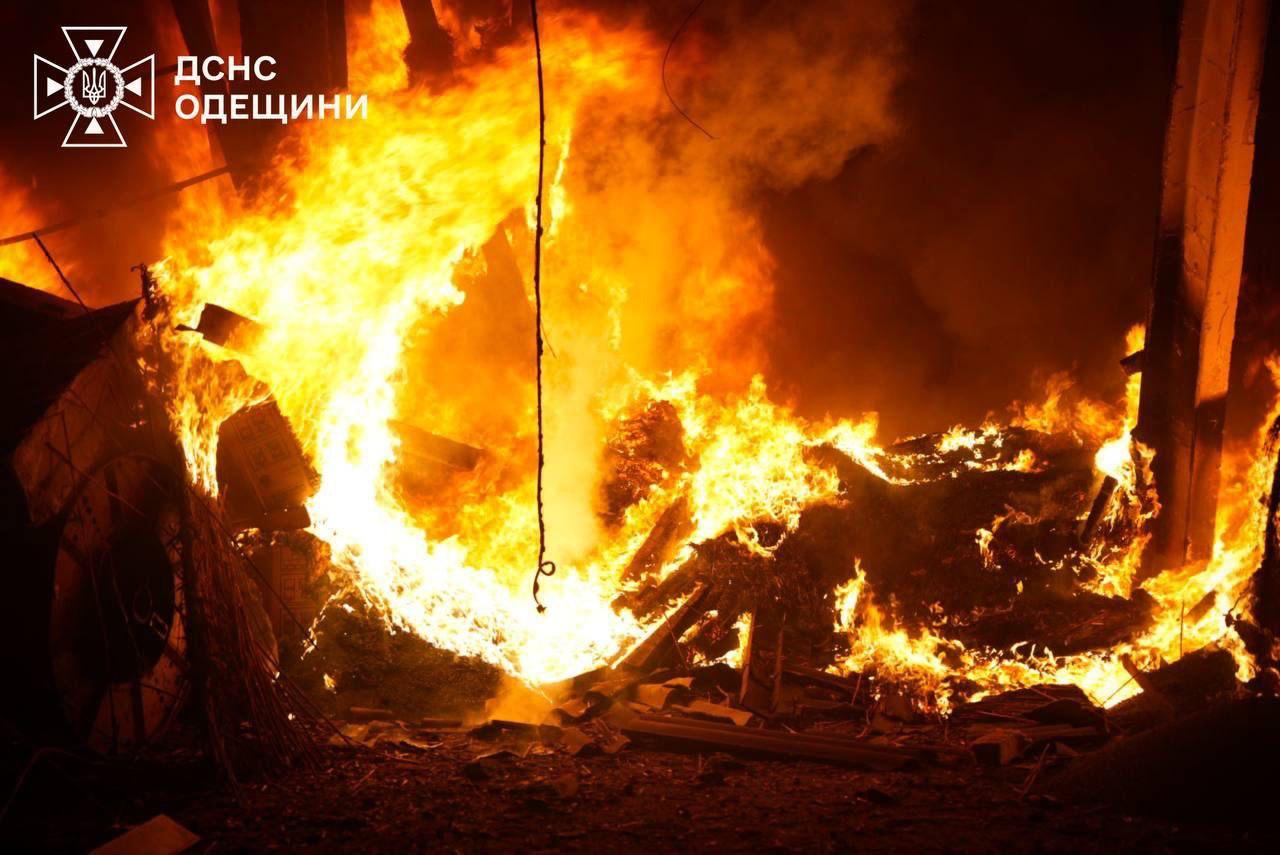
Click to see the full-size image
Amid ongoing Russian strikes, the General Staff of the Armed Forces of Ukraine is warning of the risk of a full-scale energy collapse, which could affect up to 90% of the country’s territory within a month. The system has reached a critical point: after a series of targeted attacks on key high-voltage substations, all nuclear power plants in Kyiv-controlled territory have been forced to minimize generation. The plants were physically cut off from consumers, leading to a sharp increase in the power deficit and hourly blackouts across the country without exception. According to experts, Ukraine is now relying on the remnants of base thermal power plants, local generators, and electricity supplies from the West, which come through the same damaged grids.
Furthermore, the Ukrainian side reports a critical shortage of missiles for the Patriot air defense systems, with some sources indicating that stocks had been depleted as early as mid-January, limiting the ability to counter attacks on the energy system. Simultaneously, Russian troops—despite recent measures to block unauthorized Starlink terminals—have found a way to maintain online control over strike drones. Advisor to the Minister of Defense of Ukraine, Serhiy Beskrestnov, stated that the Russian army is using mesh networks for this, where each drone with a modem acts as a transmitter and signal repeater, creating a stable chain even if individual links are lost. He acknowledged that combating such networks has become a serious challenge, which should have been prepared for in advance.
Massive Strikes on Ukraine on February 8–9: Targets and Consequences
On the night of February 8–9, Russian troops carried out a combined strike on Ukrainian territory. The Air Force of the Armed Forces of Ukraine reported an attack involving 11 “Iskander-M” ballistic missiles and 149 attack UAVs, of which 116 were shot down.
Key targets hit by region:
-
Kyiv region: On the evening of February 8, “Iskander-M” missiles struck infrastructure at the Vasylkiv airfield. Reports indicated impacts and secondary detonations. This airfield was previously used for temporary basing of F-16 fighters and related infrastructure.
-
Kharkiv and Sumy regions: Multiple targets were hit. In the Sumy region, the Kachanivskyi gas processing plant was attacked, along with railway infrastructure—a locomotive and overhead lines were damaged, causing train delays. Drones also attacked an electric train at a station in the Konotop district.
-
Odesa region: Port and gas distribution infrastructure came under attack. Local sources reported strikes in the area of a military unit and fires in the Chudo-gorod residential complex after air defense work.
-
Other regions: Hits were recorded in the Volyn, Poltava (a fuel depot, “Naftogaz” facilities), Chernihiv (the “Snovsk” railway station), Dnipropetrovsk (a basement with military personnel in Shakhtarske), and Lviv (an electrical substation) regions. There were also reports of an attack on the airfield in Myrhorod (Poltava region), where, according to reports, a cargo plane with military cargo had arrived.
Parallel to this, the humanitarian and civilian situation continues to deteriorate. As of February 9, the average daily electricity availability in Ukraine has decreased to 5.7 hours per day (23.8%). The worst situation is in the Ternopil region (6.9%), while the relatively best is in the Kyiv region (33.3%). This data does not account for emergency blackouts, so the actual deficit may be significantly higher.
Reports also indicate a crisis situation in the penitentiary system. Former Deputy Minister of Justice of Ukraine Denys Chernyshov reported that temperatures in prison and pre-trial detention center cells have dropped below 10°C, provoking mass illnesses and creating conditions for a humanitarian crisis. Inmates, deprived of the ability to solve the heating problem on their own, sometimes resort to dangerous methods like using solid fuel tablets. Power supply problems also threaten the security of perimeters at these institutions and disrupt the food system, as most prison kitchens are equipped with electric stoves.
Strikes on Russian Territory on February 8–9
According to the Russian Ministry of Defense, on the night of February 9, Russian air defense forces shot down 69 Ukrainian UAVs over the country’s regions. The largest number of drones were destroyed over the Kursk (28) and Bryansk (27) regions. Drones were also shot down over the Belgorod (5), Tula (3), Oryol and Kaluga (2 each), Astrakhan and Voronezh (1 each) regions. In several regions, a high-alert regime was introduced, and the airports in Volgograd and Kaluga temporarily limited operations. Officials stated there were no casualties or serious infrastructure damage.
The day before, on February 8, Ukrainian forces, according to their own statements, struck the key 750 kV “Novobryanskaya” substation in the Bryansk region using drones, HIMARS MLRS, and “Neptun” missiles. The destruction of this energy hub could potentially destabilize the entire region’s power system. The Armed Forces of Ukraine also claimed to have hit a warehouse with FPV drones in the Rostov-on-Don area.
Diplomatic Statements Amid Escalation
Against the backdrop of intense hostilities, diplomatic maneuvers continue. The Kremlin, through press secretary Dmitry Peskov and Foreign Minister Sergey Lavrov, again called on the United States to adhere to the agreements allegedly reached during talks in Anchorage. Peskov stated that a “breakthrough on Ukraine is only possible if the understandings reached in Anchorage are observed,” emphasizing that details should be discussed behind closed doors. Earlier, Lavrov claimed that Russia had accepted the US proposal, and now “the issue must be resolved,” indicating that Kyiv’s and Europe’s opinions on the matter are “unimportant” to Moscow. According to a number of reports, the discussed agreements include the withdrawal of Ukrainian troops from Donbas and the cessation of fighting along the front line in Kherson and Zaporizhzhia regions.
The Ukrainian side is taking a tough stance. Foreign Minister Andrii Sybiga called any potential US recognition of Russia’s sovereignty over Crimea or Donbas “legally null and void,” stating that Ukraine will never recognize it. He also noted that Kyiv will not recognize bilateral economic agreements between the US and the Russian Federation if they affect Ukraine but are concluded without its participation.
Within Ukraine, there are calls to postpone negotiations. People’s Deputy Roman Kostenko stated that negotiations are currently disadvantageous and expressed hope that if Ukraine holds out until spring, the situation will change. He outlined goals of inflicting losses on the Russian army and improving air defense effectiveness as conditions for strengthening Kyiv’s negotiating position.
Additionally, this week, EU leaders will hold a series of meetings to discuss support for Ukraine, economic problems, and relations with the United States. Ukrainian Minister of Defense Mykhailo Fedorov plans to inform European colleagues about priority needs, likely requesting additional air defense systems. Discussions in Munich at the security conference, where speeches by President Zelenskyy and US Secretary of State Marco Rubio are expected, may shed light on the further trajectory of the conflict and the prospects for a peaceful settlement.
MORE ON THE TOPIC:
continuation is the plan. even if the people of ukraine surrendered completely, there is no signature that russia can trust, because paid liars are all that will be sent for ceremony
hehehe russia got tricked again by the west and ukraine. russ is stuck in a war that cannot end without russ retreat.
it can end it if russias ruthless. imo. but they’re not a ruthless globalist people. they’ve never invaded other continents enslaved them really they’ve just remained in europe bordering asia manitainig relations as best as possible whilst being fully aware that their immense wealth is a magnet to others.
americunt desperate lick hebrew peniz 75 yrs–former east ukraine now forever west 🇷🇺😂
until they stop pretending tgat it’s not public knowledge that england’s signed a 100 year deal with zelensky then they have no credibity imo.
and now alphabet soups launching 100 year bonds too, just coincidentally obviously, and launching them in both the uk and switzerland. how’s that for serendipity?
they’re snatching total control over food just as pharoah did too. it’s obvious just follow what they’re doing to agriculture globally. it’s another 100 year plan. imo. and installing communist socialist nazionalists everywhere.
eg they can spend 41 mlion rebuilding the castro theatre in saint francis co but the victims of their fires are still denied re building permits
as the mongols invaded the globalists have invaded.with a unique strategy to avoid being nuked. it is becoming self evident this is world war 3 as planned.by the west with russia as the defender.
my ex-husband ramses rented me to gay hillbillies for 30 yrs–now my anuz torn much diarrea infected w aids