


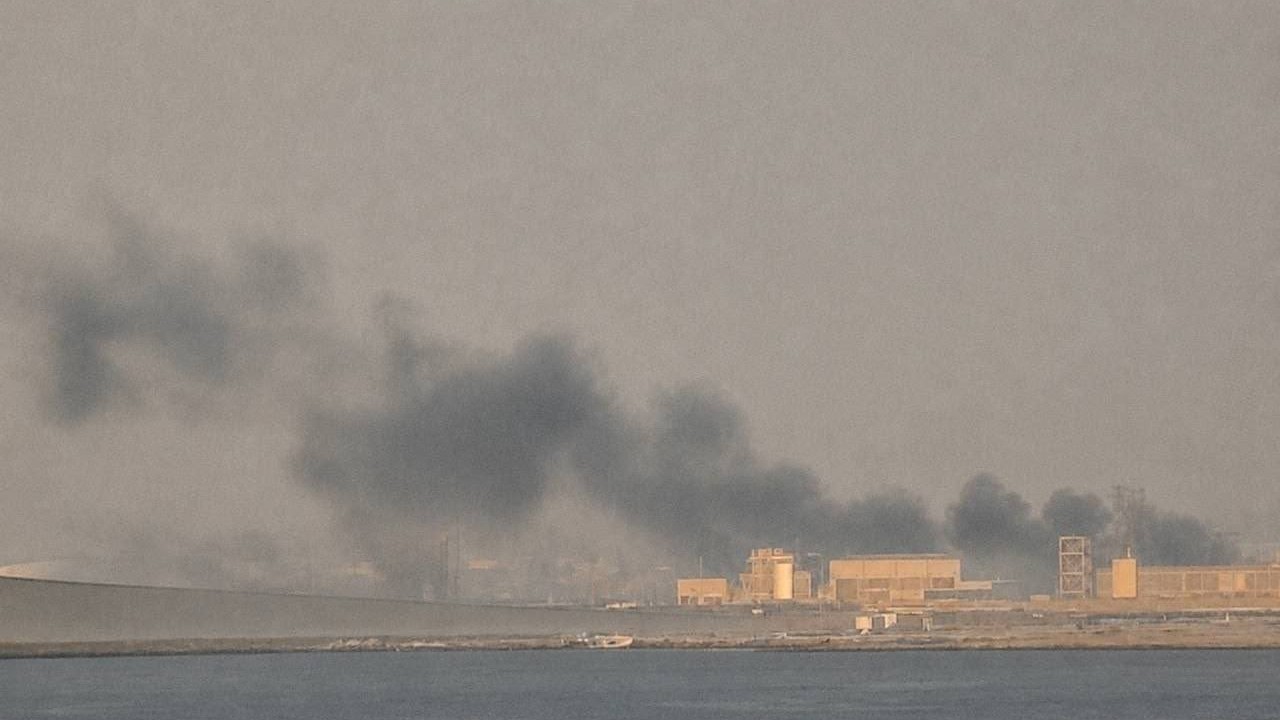
Click to see full-size image. (X)
Iran carried out a missile and drone attack early on July 12 against United States military facilities in Jordan, Kuwait, Bahrain and Oman in response to recent American strikes.
Both the Islamic Revolutionary Guard Corps (IRGC) and the regular Iranian Army issued statements describing the large-scale attack.
The IRGC’s public relations office said the clash began with what it called an attempt by Washington to pressure Oman and stir up tension by moving several vessels near the southern approach to the Strait of Hormuz to test Iran again. Iran’s navy, the statement said, intercepted that movement and answered it decisively, prompting the U.S. to strike back.
According to the IRGC, its Aerospace Force then opened the first phase of its retaliation by hitting U.S. facilities at Jordan’s Prince Hassan Air Base, damaging key infrastructure there. The guards warned that continued American “aggression” would be answered with escalating force.
A follow-up IRGC statement said a second vessel it deemed hostile had been struck and disabled in the Strait of Hormuz. In the second phase of the operation, the guards said its ballistic missiles hit Al Udeid Air Base in Qatar, destroying the base’s fighter maintenance and repair facility along with its command-and-control center.
The IRGC yet again warned the U.S. and Israel that further aggression would meet a “crushing” response from the Islamic Republic.
In a third phase, the IRGC’s Aerospace Force struck what it called logistical support facilities for naval vessels and fueling platforms used by U.S. aircraft carriers at the Port of Duqm in Oman, describing the strike as heavy.
The guards tied the operation to the recent funeral procession attended by tens of millions, saying the same resolve was now visible in the actions of its forces.
Separately, Iran’s Army said it had launched waves of self-destructing drones at U.S. facilities in Kuwait and Bahrain, also citing the continued American strikes on southern Iran as justification.
In Kuwait, the Army said its drones hit a Patriot air defense system, an ammunition depot and a radar site. Meanwhile in Bahrain, it said a further wave of drones struck a U.S. military communications system and a radar installation.
The Army noted that responsibility for any resulting instability in the region would fall on the U.S. and Israel, and it warned that a repeat of American strikes would bring an even harsher response.
Jordan, Qatar, Kuwait, Bahrain, And Oman all confirmed that they were targeted by missiles and drones launched from the Islamic Republic.
Meanwhile, the U.S. Central Command said that it hit 140 military targets in Iran with precision munitions launched by land- and sea-based fighter aircraft, drones, and naval vessels overnight. The targets included, according to the command, included Iranian missile and drone sites, naval capabilities, ammunition storage facilities, communication networks, and coastal surveillance locations.
The Islamic Rpeublic’s top negotiator Mohammad Baqer Ghalibaf later posted an apparent warning to the U.S. over the latest clash.
“The era of one-sided deals is OVER. We told you: keep your word or pay the price. Reality is knocking,” he wrote on X, with an image of a clause on the Strait of Hormuz from the memorandum of understanding.
The escalation came after the U.S. demanded that Iran publicly guarantee safe passage through the Strait of Hormuz. It also came just hours after Iran’s foreign minister, his Omani counterpart, and Qatari officials concluded a day of negotiations in Muscat aimed at resolving the standoff.
The memorandum of understanding signed last month by the U.S. and Iran to end the war may now be nearing collapse. This does not necessarily mean a return to full-scale war, however. The two countries could instead become locked in a prolonged, low-intensity conflict over the Strait of Hormuz.
_______________________________________________________________________________________________________________________
SouthFront: Analysis and Intelligence
NOW hosted at southfront.press
Previously, SouthFront: Analysis and Intelligence was at southfront.org.
The .org domain name had been blocked by the US (NATO) (https://southfront.press/southfront-org-blocked-by-u-s-controlled-global-internet-supervisor/) globally, outlawed and without any explanation
Back before that, from 2013 to 2015, SouthFront: Analysis and Intelligence was at southfront.com