


File image.
United States President Donald Trump and his senior aides have been considering launching limited strikes in the Strait of Hormuz to prevent Iran from reconstituting its radar and missile capabilities to attack ships, Axios reported on August 31, citing three American officials.
One official said the idea behind the plan is to reduce the risk of Iranian attacks on oil tankers, U.S. Navy ships and Air Force aircraft — to “mow the lawn,” as this person put it.
The plan was developed over the past week by the U.S. Central Command (CENTCOM) and supported by Secretary of Defense Pete Hegseth, who sent it to the White House several days ago, the American officials told the American news website.
The officials said that last week the White House was leaning against approving the strikes to avoid escalating with Iran. However, Iran’s missile attack on U.S. bases in Jordan early on August 31 could change Trump’s mind.
The missile attack on Jordan and a separate drone strike that targeted a base hosting American forces in the United Arab Emirates around the same time were carried out by the Islamic Republic in retaliation for the U.S. attack on its Larak Island.
CENTCOM targeted two Iranian rocket launchers on Larak Island the night prior, reportedly killing three, saying that Tehran intended to launch rockets carrying sea mines into the Hormuz Strait.
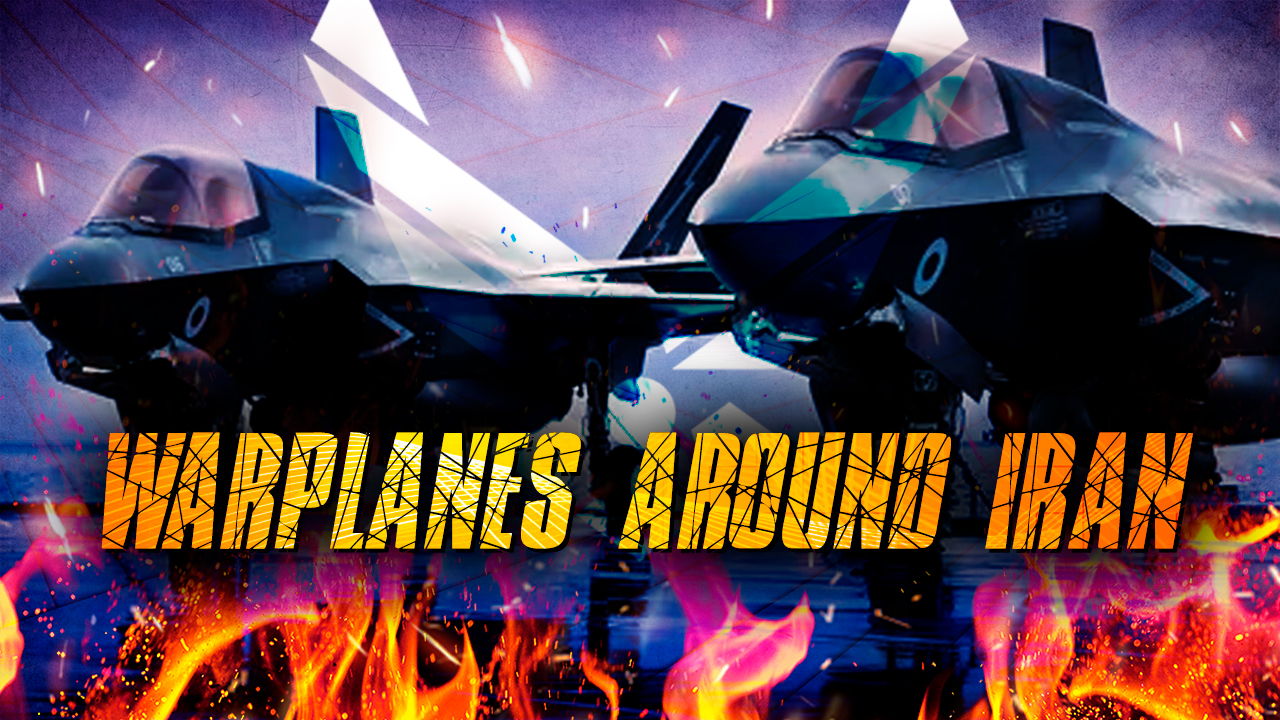
A U.S. official also revealed to Axios that in recent days Iran launched an anti-aircraft missile toward an American F-35 stealth fighter jet that was providing cover to ships in the strait.
While the missile didn’t come close enough to be a threat, it was a signal that Iran is trying to reconstitute its military capacity, according to the official.
CENTCOM told Hegseth, Chairman of the Joint Chiefs of Staff General Dan Caine and the White House in recent days that the military might need to strike Iran periodically in order to keep moving dozens of oil tankers out of the Gulf relatively safely every day.
At the height of the U.S.-Israeli war on the Islamic Republic in March, Iranian air defense hit an American F-35, resulting in shrapnel injuries to the pilot and forcing the fighter jet to make an emergency landing at a regional base. It was later reported that the jet suffered serious damage and won’t be returning to service any time soon.
The more recent incident shows that Iran is successfully rebuilding its air defenses, benefiting from the experience gained during the war.
On September 1, Brig. Gen. Alireza Elhami, commander of Iran’s air defense force, said that the Islamic Republic is now building indigenous systems with no known foreign equivalent. He noted that the limited knowledge the other side has of the specifications, capabilities and operational methods of these systems was one of the Islamic Republic’s strengths. In some cases, he said, the enemy did not know which system had struck its projectile and lacked precise understanding of how to counter it.
The U.S. plan to launch another series of strikes against Iran to degrade its capabilities will not likely end in success. Several similar limited operations have been carried out by CENTCOM since the ceasefire with the Islamic Republic in April, and all of them were arguably failures.
_______________________________________________________________________________________________________________________
SouthFront: Analysis and Intelligence
NOW hosted at southfront.press
Previously, SouthFront: Analysis and Intelligence was at southfront.org.
The .org domain name had been blocked by the US (NATO) (https://southfront.press/southfront-org-blocked-by-u-s-controlled-global-internet-supervisor/) globally, outlawed and without any explanation
Back before that, from 2013 to 2015, SouthFront: Analysis and Intelligence was at southfront.com
smoke the amerikunt suckers and listen to them whine! heheheh
america is a sore loser. f-35 planes are not defending america and do not bring any prosperity to taxpayers. they are just a method for contractors to plunder the treasury with boondoggles. needless things of little or no use. are weights in the nose cone ?
yesterday night 20 pakistani soldiers killed in ziarat balochistan by pakistani taliban
keep improving boys get it figured out and the big bully will be a memory
urgent modifications required for f35 cockpits! diaper storage area next to the joystick!
diapers not needed…their a-holes need to be as clear as possible so iranian missile can fly up there unhindered.
f-35 caught some shrapnels and subsequent fire.