


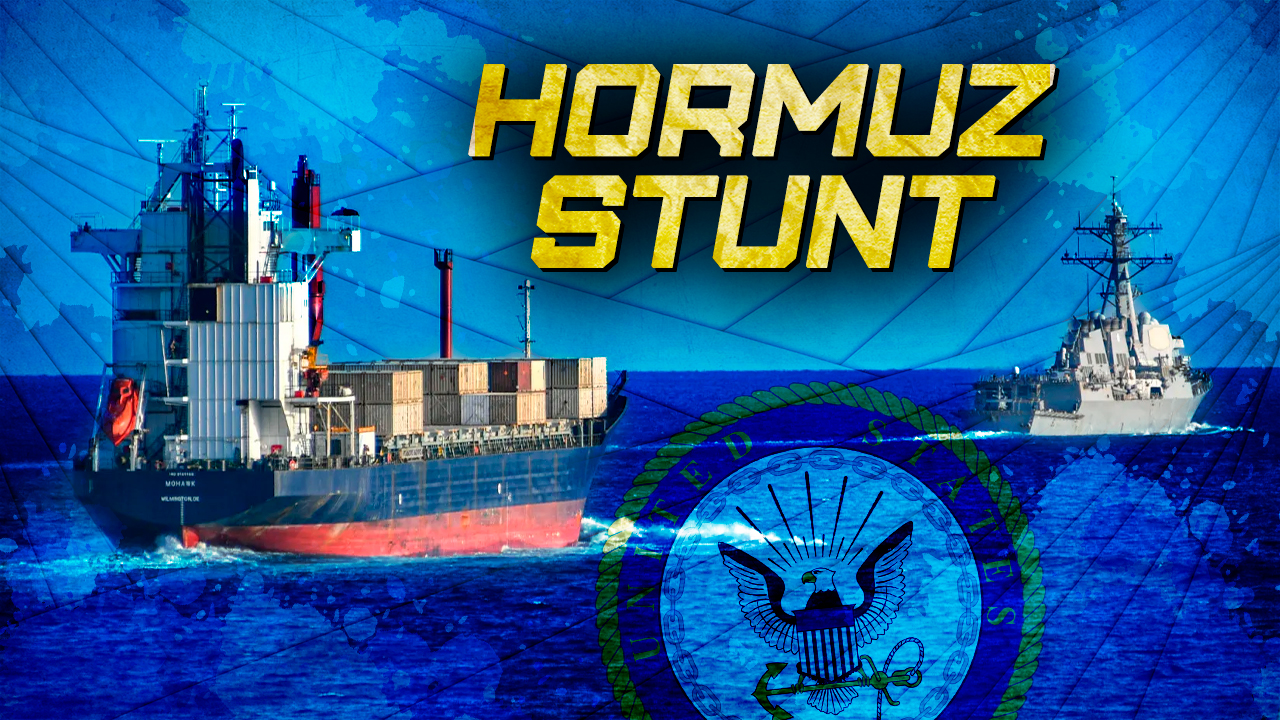
File image.
Iran’s state TV on May 30 released details of what it said was an unofficial draft of the Islamabad memorandum of understanding (MoU), saying that the text would give the Islamic Republic broad authority over traffic through the Strait of Hormuz and require the United States to provide Iran full access to $12 billion in frozen assets within 60 days.
One of the most important parts of the draft is the “redefinition of navigation rules” in the Strait of Hormuz, with Iran designated as the “exclusive authority” to determine the nature of passing vessels, state TV reported.
Under the reported text, any vessel whose cargo is deemed threatening, or whose final beneficiary is considered hostile to Iran, “will not be recognized as a commercial ship” and would not be allowed to use designated routes.
The draft also gives the Islamic Republic authority over routes, navigation service fees, security arrangements and costs related to repairing environmental damage.
Each vessel would be required to provide information to a relevant naval center and complete forms detailing its cargo, ownership and destination, according to the report, which noted that information would be used to assess whether a vessel poses a threat and could allow physical inspection if needed.
In addition the draft will include a financial provision under which the U.S. would commit to giving Iran full access to $12 billion of its blocked assets within 60 days.
The funds would be “transferable and spendable” in destination banks chosen by the Islamic Republic “without restrictions,” according to the unofficial text of the draft.
Iranian state TV noted that the text remains an “informal understanding” and is still subject to review, negotiation and revision.
The optimistic report came around the same time the U.S. Central Command announced on May 30 that its forces in the Gulf of Oman enforced “blockade measures” by targeting a ship attempting to sail toward an Iranian port a day earlier.
U.S. President Donald Trump ordered the blockade on Iranian ports after the ceasefire went into effect last month, in response to the Islamic Republic’s restriction on maritime traffic in the Strait of Hormuz — a checkpoint for around 20 percent of global oil and liquefied natural gas shipments.
Trump held a roughly two-hour Situation Room meeting on May 29 but left without announcing a decision, despite hitting earlier that he was going to lift the blockade of Iranian ports.
Mohsen Rezaei, a military adviser to Iran’s supreme leader, warned on X that Trump is “betraying diplomacy” by failing to lift the blockade.
“As expected, the president of the United States is betraying diplomacy for the third time,” Rezaei said on May 30.
“By continuing the naval blockade and making excessive demands in negotiations,” added Rezaei, Trump has “again proven he is not inclined toward negotiations and is pursuing other goals.”
The blockade is not, however, the only way the U.S. has been attempting to challenge Iran’s control over the Strait of Hormuz with.
A new report by the Wall Street Journal revealed that some ships have managed to traverse the waterway by turning off lights and navigation beacons and relying on U.S. military guidance to avoid collisions. Shipowners and American officials told the publication that the U.S. advises the ships on when to go dark and how to handle threats from Iranian forces.
While these attempts to challenge Iran in the waterway may be just meant to pressure the Islamic Republic during talks on the MoU, they can be also considered signs of bad faith by the U.S.
Rezaei’s latest remarks shows that Tehran remains very cautious of the ongoing diplomatic engagement with Washington. Thus, an agreement remains unlikely.
_______________________________________________________________________________________________________________________
SouthFront: Analysis and Intelligence
NOW hosted at southfront.press
Previously, SouthFront: Analysis and Intelligence was at southfront.org.
The .org domain name had been blocked by the US (NATO) (https://southfront.press/southfront-org-blocked-by-u-s-controlled-global-internet-supervisor/) globally, outlawed and without any explanation
Back before that, from 2013 to 2015, SouthFront: Analysis and Intelligence was at southfront.com
“a new report by the wall street journal revealed that some ships have managed to traverse the waterway by turning off lights and navigation beacons and relying on u.s. military guidance to avoid collisions. ” far from being a serious answer, it merely underlines the addiction of imperial america to treachery.
that’s not a serious. i.r.iran daily have 26 pass thru.
pay the fee and go, if accepted.
censorship censorship censorship mickey mouse captcha 500 error 501 error 504 error 5 million error
everyone knows the united states isn’t agreement capable. only fools willingly invite the us government into their business.
340 million gay burger flipper americunts pay to swallow persian jizz
tired of this rigged clownshow
it does seem rather scripted. same with the russia/ukraine fiasco. same with the syria fiasco. the “good guys” always do some shit that makes absolutely no sense and the conflict drags on and on.
the wall street journal says a lot of things, mostly lies. seems the u.s. would have shouted the names of the vessels. they can sneak ships out, but their navy gets seen every time.
the wall street journal is owned by dow jones & company, which is a subsidiary of news corp. news corp is a global media conglomerate controlled by rupert murdoch’s family, with his eldest son, lachlan murdoch, serving as the chair of the company. speaks for itself that ol rupert the israeli backer is essentially in charge of the wsj.
wsj = canned filtered and mediated trash.
“a new report by the wall street journal revealed that some ships have managed to traverse the waterway by turning off lights and navigation beacons ”
— utter nonsense. like iran doesn’t have radar and sonar pinging that body of water 24 hours a day.
turning off the lights to ‘sneak by’ — ah hahaa !
iran will get the american indian treaty treatment
all hebrews have broad powers to. derp incel derp in my americunt anuz
iran has trump by the yarbles! 🤣
trump gives iran nothing, american greed corruption and interference forced the iranian nation to rid themselves of the parasite that is america! never again will middle east nations suffer the cancer, american military’s bases on their sovereign land!
clearly the congress and president are most effective at self enrichment
this document looks like a modified version of the the 1936 montreux convention that turkey has for access to the black sea.
why is anyone entertaining this rubbish? washington is not credible, they cannot be trusted.
they promise this, they say that, but they n e v e r keep their word.
good luck to iran to get any $$. ditto for washington “allowing” iran to do x, y , or z.
they are lying terrorists, they will not honor anything they say.
the o n e ting that is certain is that they will attack iran again.
as an american – i apologize to iran and the entire middle east for my shitty rogue government. it’s actually a sophisticated coup that took place we can’t vote our way out of using the fake 2 party system. again, sorry, and hopefully some sort of lesson has been learned by this, but probably not.
yes, this is a mafia that has taken over most governments of the world. and no, we will not vote our way out of this.
some hidden history: using the power of law and enough awoken people we can remove these people one at a time, it has happened this way in the past. lawful rebellion, stop complying with anything they say. continually hold them to account. eventually they will be forced out by pressure and/or arrest and trial at local common law courts.
iran has collected tolls from 28 ships in the past 24 hours. k-e-r-c-h-i-n-g!
fifty million bucks. k-e-r-c-h-i-n-g!
this is open admission. iran will not surrender. us made world depression incoming ? iran, russia and china have been getting ready for years.
the us will honor no deals. let’s be real