


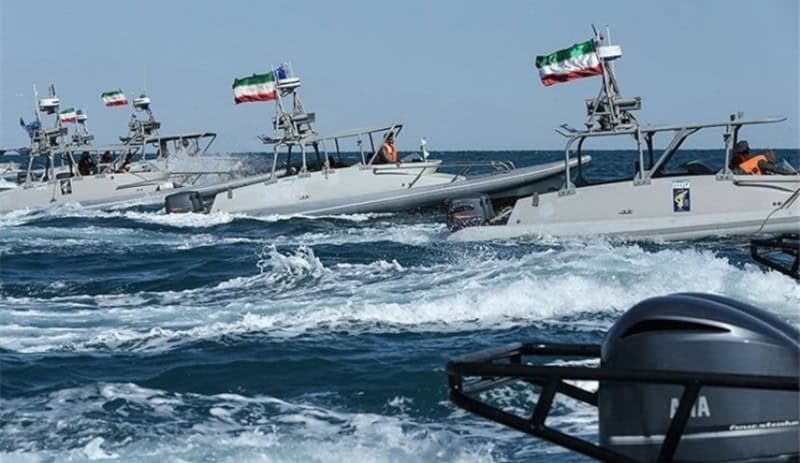
File image.
Iran and Oman are on the verge of signing a historic deal to reopen the Strait of the Islamic Republic that would put Tehran in control of all inbound traffic, Reuters reported on August 6.
Before the United States and Israel went to war with Iran in late February, the strait connecting the Gulf to the Indian Ocean stood as one of the world’s most critical shipping lanes, handling roughly a fifth of global oil and gas exports along with other essential goods. Ships of all nations could pass through freely, with no fees or restrictions imposed.
A senior Iranian source told Reuters that under the latest proposal the Islamic Republic would be able to intervene if necessary with any inbound traffic, while outbound traffic would follow a route between Iran and Oman, with exit clearance granted through Muscat after notifying Tehran.
Iran is seeking fees of between 5 percent and 7 percent of the price of cargoes from ships using the strait, according to the senior Iranian official. Oman is discussing fees of around 3 percent, while the U.S. wants no fees at all.
The world’s leading shipping associations said in an open letter sent to the UN’s shipping agency this week that the ability of merchant ships to navigate international waterways “safely, predictably and without unnecessary impediment is fundamental to resilient supply chains, economic stability and energy security.”
It also warned that introducing compulsory charges through the strait for transit or service fees was “a toll in all but name,” it would establish “a precedent that could undermine the internationally recognized legal framework governing straits used for international navigation and transit passage.”
Four industry sources also told Reuters that the proposed deal is not easily workable due to U.S. sanctions and restrictive insurance clauses on any payments.
Shipping traffic through the Strait of Hormuz reduced significantly in recent days. According to shipping data from Kpler, just two vessels transited the Strait of Hormuz on August: a Panama-flagged coal-laden carrier entering the waterway, and a Marshall Islands-flagged commodity vessel exiting. Roughly 130 to 140 ships would typically transit the waterway before the war.
Despite the objections of shipping associations, the deal appears to be moving forward. Iran said earlier in the day that it has reached an agreement with Oman on a route for shipping through the Strait of Hormuz.
Foreign ministry spokesman Esmaeil Baqaei did not give any further details on the agreement, which he said was “in the final stages.” He warned, however, that a deal with Oman would not guarantee safe navigation through the strait, arguing security remained affected by the U.S. blockade of Iran’s ports.
Warnings from industry sources, along with Baqaei’s remarks, make clear that the deal in the works between Iran and Oman is unlikely to materialize without Washington’s approval.
And while many sides appear to be worried or even straight up displeased by the deal, which solidifies the Islamic Republic’s control over the Strait of Hormuz, there are no other realistic alternatives to reopen the strategic waterway. The U.S. either accepts and facilitates the deal, or resumes the war, and possibly launches a highly risky ground operation.
_______________________________________________________________________________________________________________________
SouthFront: Analysis and Intelligence
NOW hosted at southfront.press
Previously, SouthFront: Analysis and Intelligence was at southfront.org.
The .org domain name had been blocked by the US (NATO) (https://southfront.press/southfront-org-blocked-by-u-s-controlled-global-internet-supervisor/) globally, outlawed and without any explanation
Back before that, from 2013 to 2015, SouthFront: Analysis and Intelligence was at southfront.com
2 taliban sheep herders solidify grip on my americunt anuz now dripping w afghan jizz—derp incel
https://hawarnews.com/ar/145080 the taliban could do something more useful. maybe they would kill the whole bus with the surrounding population. these people are so ugly, stupid and disgusting that it would be best if isis came back and replaced the entire population with uyghurs. the more such people you kill, better it is. i want someone to come after benjamin netanyahu who will kill three-quarters of the syrians and take over damascus.
the entire middle east globalist power structure that took 100 years to install. is being replaced by thousands of years of established human civilization. the days bankers of sin and plunder of the region fades from its obvious folly. political wedge issues amplified by slop media lose. tel aviv pride festivals must be protected form brics
trump was going to charge twenty per cent. iran should do the same. kerching!
yes and no. iran is honorable and fair, zionists are not. but then if washington harms iran further then they might and should do it.
iran is the superior choice.
omán a irán by mali mať dohodu a darebácky štát usa by mali poslať do riti. omán by mal zrušiť dohodu z usa o využívaní jeho základní a prístavov. tým by sa situácia trochu stabilizovala. mysleniu zdar a svetu mier.
the regime of usa cannot and will not accept defeat and will resume military operations, iran should know this.
they do. they will not waste energy in talks. action is the only remedy
there were no fees before chumpo started his war crimes this is a good kick in his ball sack
https://hawarnews.com/ar/145060 why do all these women look like scarecrows to scare away crows.
“unlikely to materialize without washington’s approval” should read…’likely to materialize with or without washington’s approval’. there, fixed that. where does the idea that the u.s. must approve come from? trump?
chumpo is irrelevant to the whole process. he keeps trying to stick his oar in but is just totally ignored by everybody. sort of like the hanger-on at a party nobody wants to talk to. sad. poor chumpo. what a loser.