


File image.
Iran managed to hit both of the United Arab Emirates’ Terminal High Altitude Area Defense (THAAD) systems, according to satellite images released on March 3.
The images show direct hits at the two sites housing the American-made anti-missile systems. Both are located close to the capital, Abu Dhabi. In the first site, a hangar where the system’s AN/TPY-2 radar is usually stored appears to have been destroyed. Two more hits can be seen in the second site, including one near where the radar is typically deployed.
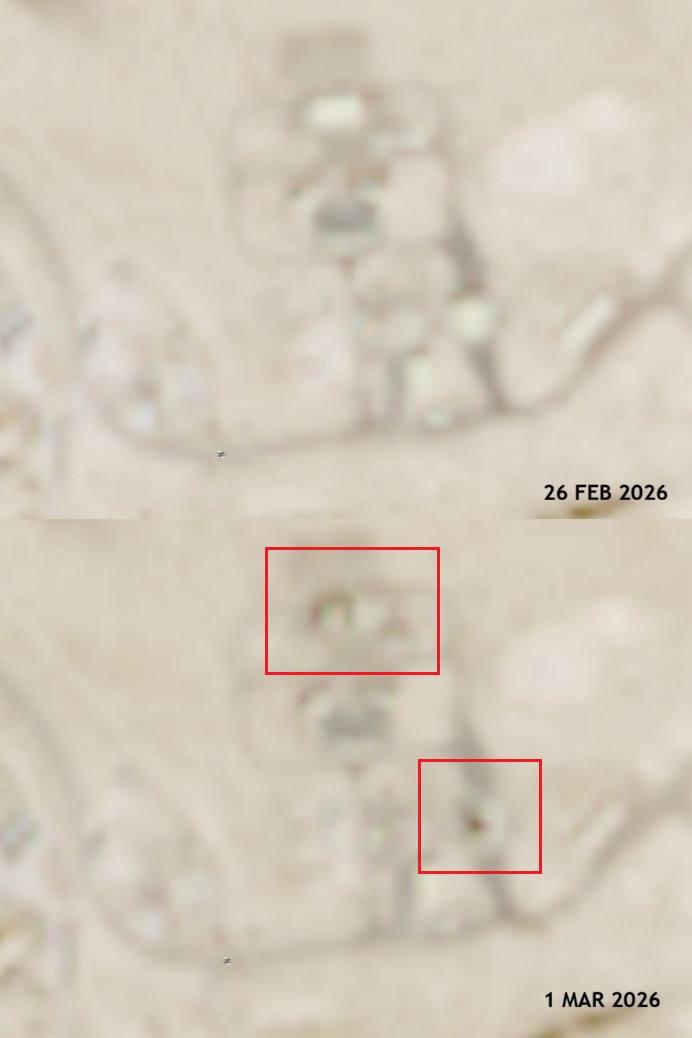
Click to see full-size image.
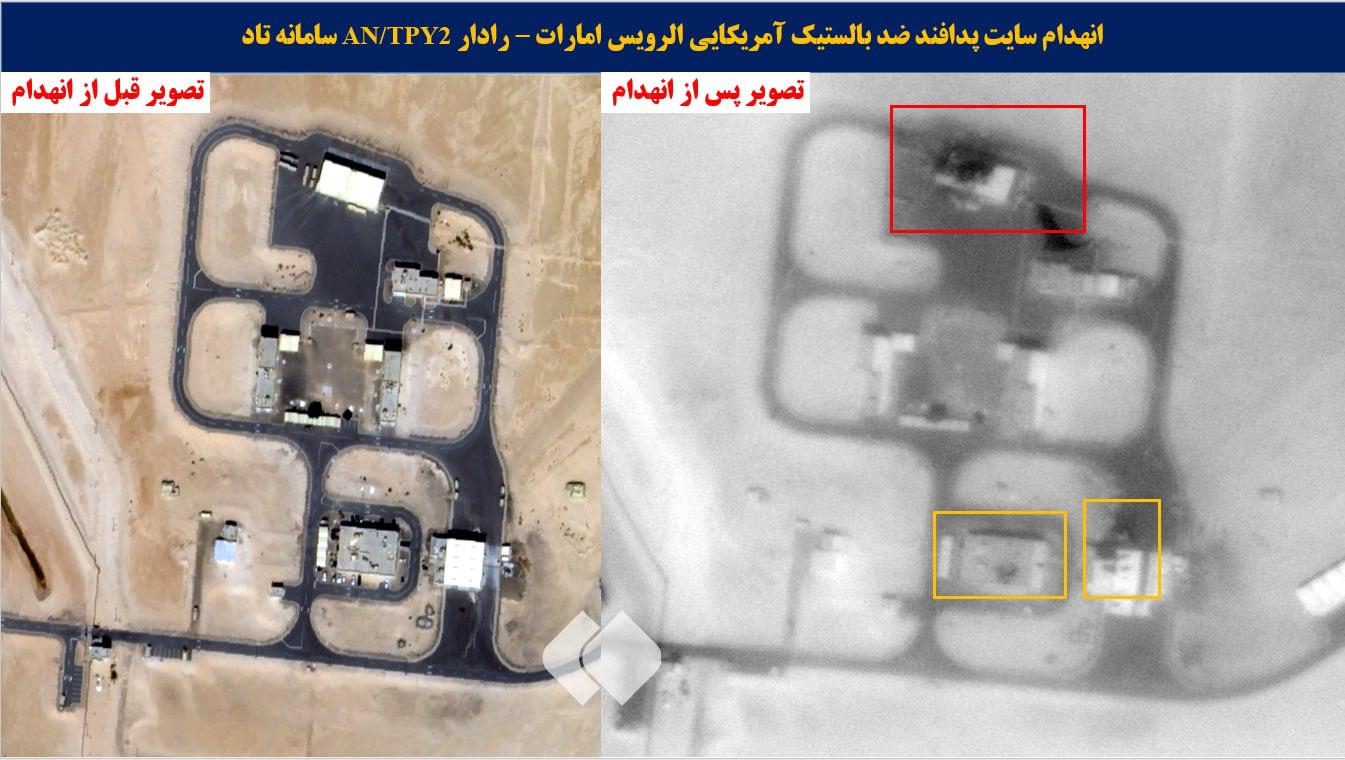
Click to see full-size image.
These two are the only two THAAD known to be in service with the UAE military. They were purchased around ten years ago.
The THAAD was designed to shoot down short, medium, and intermediate-range ballistic missiles in their terminal phase by intercepting with a hit-to-kill approach.
The system can engage missiles at ranges of 150 to 200 kilometers. Typically, each system consists of six truck-mounted launchers, 48 interceptors, at least one AN/TPY-2 long-range surveillance radar, radio equipment, and requires 95 soldiers to operate.
A THAAD system could cost anywhere from $1 to $3 billion. The cost of the AN/TPY-2 radar alone could be as high as $500 million. Meanwhile, a single interceptor costs just over $12.7 million.
Iran’s Islamic Revolutionary Guard Corps announced that it had targeted both Emirate systems soon after the United States and Israel attacked the Islamic Republic.
The UAE took the brunt of Iranian retaliatory attacks. On March 3, the country’s ministry of defense stated that since the beginning of the war, a total of 186 ballistic missiles have been detected as launched towards its territories. Of these, 172 missiles were destroyed, 13 fell into the sea, and one missile landed on the country’s territory.
The ministry added that 812 Iranian drones were detected, of which 755 were intercepted, while 57 fell within the country. It also reported that eight cruise missiles were detected and destroyed.
These attacks resulted in casualties, including three fatalities of Pakistani, Nepalese and Bangladeshi nationals, as well as 68 minor injuries among Emirati, Egyptian, Ethiopian, Filipino, Pakistani, Iranian, Indian, Bangladeshi, Sri Lankan, Azerbaijani, Yemeni, Ugandan, Eritrean, Lebanese and Afghan nationals.
A serious attack took place right after the ministry shared its summary, with drones impacting the United States consulate in the city of Dubai.
The Dubai media office said that no injuries have been reported following a “drone-related incident” around the U.S. consulate.
“Dubai authorities have confirmed that a fire resulting from a drone-related incident near the US Consulate has been successfully contained,” the media office said in a social media post. “Emergency teams responded immediately. No injuries have been reported.”
Amid this escalation, Axios reported that the UAE is considering taking military action to stop Iranian missile and drone attacks on its territories.
“The UAE is considering taking active defensive measures against Iran. Although it has not been involved in the war in any way, it has still endured 800 projectiles,” a source familiar with Emirati policy discussions told the news website. .
“The view in the UAE is that no country in the world would fail to evaluate its defensive posture under such circumstances,” the source added.
Meanwhile, foreign ministry of the country said in a statement that the “UAE retains its right to self-defense.” The ministry added that the country “has not taken any decision to alter its defensive posture in response to the repeated Iranian attacks.”
The UAE is considered one of the U.S’ top allies, and out of all Arabian countries in the Gulf, it has the closest relations with Israel. Still, it is highly unlikely that Abu Dhabi will act on its own. The most likely scenario is for Arabian countries to form their own coalition and launch their own operation against the Islamic Republic.
_______________________________________________________________________________________________________________________
SouthFront: Analysis and Intelligence
NOW hosted at southfront.press
Previously, SouthFront: Analysis and Intelligence was at southfront.org.
The .org domain name had been blocked by the US (NATO) (https://southfront.press/southfront-org-blocked-by-u-s-controlled-global-internet-supervisor/) globally, outlawed and without any explanation
Back before that, from 2013 to 2015, SouthFront: Analysis and Intelligence was at southfront.com
my americunt peasants–stupid feminized cowards—humiliated by iran
start now generating extra home based cash by doing very easy and simple job from home. last month i have earned 2000__3000 dollar from this job in my part time. this job is just awesome and its earning are greater than 9 to 5 office job. join this right now by follow instructions here…
>>>>>>…>> http://www.giftpay7.vip
p.r.north korea just stated that it will send ‘as necessary missiles to i.r.iran, and one missile could be enough to destry them all.’ so, basically if you need a nuke, there you have it.
iran will obtain nukes after drumpf killed the last iranian leader who prevented it through a fatwa.
iran has far more allies than the west and zionists would care to admit.
how do you enter in iran without beeing detected by israel ?
good stuff from kim .pootin will literally sh*t his trousers if his precious 💕 pissrael has to face up to nk nukes.
watch for feverish diplomatic feelers and emergency summit demands from the jewed up kremlin, inbound to pyongyang. guaranteed.
hell yeah! 👏👏👏
surely china satellites had something to do with with that. xi jinping and the chinese communist party must be chuckling.
while israel and the us boast about murdering elderly people and children, their billion dollars ad system they don’t have much left are going up in smoke.
we pay hebrews billions$$ to taste jew jizz
when your evil kike ass is cooking in the pit you will regret your kike ways
as if uae oligarchy wasn’t conspiring with usil. the version of iran is that amidst the targets some of the members of the intelligence agencies conspiring against iran in uae have been targeted. also uaeo like all usil vassals has foreign military bases occupying uae and used to attack iran yemen and every usil target in the region. those usil bases were primary retaliation targets. uaeo don’t want their population to know that.
decent reporting, but the comment boards are overrun by trolling teeny boppers.