


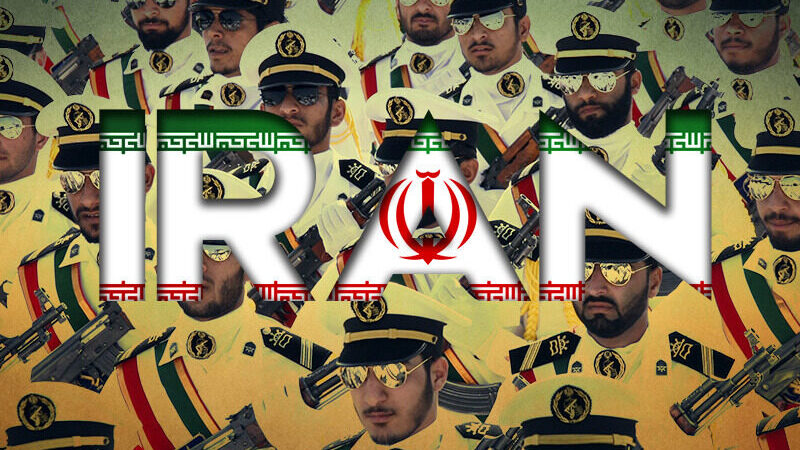
File image.
Iran on September 18 held a nationwide military-style mobilization dubbed the “Janfada-ye Iran” — Devoted to Iran — drill, bringing hundreds of thousands of people into the streets of Tehran as authorities sought to demonstrate readiness for a prolonged confrontation with the United States and Israel.
The event began in the early morning with organized volunteer battalions and civilians taking part. In Tehran, the main procession ran from Imam Hossein Square to Enghelab Square, with participants organized into 72-member formations. Iranian officials described the exercise as an effort to strengthen national security and prepare society to respond to possible threats.
The scale of the mobilization was difficult to independently verify, and Iranian authorities gave several different figures. Press TV described the Tehran event as a 313,000-strong formation, while Gen. Hassan Hassanzadeh, commander of the Islamic Revolutionary Guard Corps’ Greater Tehran force, said more than 600,000 people had registered for the campaign nationwide and that more than 1 million could eventually receive training.
Tasnim separately reported that about 500,000 people had registered in Tehran. The number 313 also carries religious significance in Shiite tradition, making the figure more than simply an attendance claim.
Unlike a conventional military exercise involving only regular forces, the Janfada campaign is intended to incorporate civilians into Iran’s defense structure.
Basij chief Hossein Taeb said participants would be integrated into defense battalions, complete basic military training and later receive more advanced instruction in ground, air and naval fields.
The organizers have also described possible roles in war support, search and rescue, emergency relief and defense. The campaign is being conducted jointly with organized forces, including the IRGC and police.
Taeb portrayed the mobilization as an expression of national resistance and said its participants would become a “nightmare for the enemies.” He argued that the movement demonstrated Iran’s ability to mobilize large numbers of people for national defense and said its next phase would expand from Tehran to other cities.
He also said the “million-strong movement” would bend the enemy’s back and predicted that the United States would eventually “leave this region with defeat.” Those statements reflect Taeb’s characterization of the war and were not independently verified.
Taeb also linked the mobilization directly to Iran’s broader military confrontation, saying the country would continue defending strategic chokepoints, including the Strait of Hormuz. He claimed that Iran had defeated a far more heavily funded American military and Israel and asserted that more than 60% of Americans oppose the war, without providing supporting evidence in the report.
President Masoud Pezeshkian attended the Tehran event and visited the marching formations. In separate remarks reported by Tasnim, he said the participation of people from different parts of society demonstrated a strong bond between Iranians and their homeland and stressed that “Iran belongs to all Iranians.”
He called for unity, solidarity and broad public participation in protecting the country’s independence and territorial integrity.
The parade also had a substantial military display. Iranian drones were put on view alongside other equipment, while anti-aircraft systems, military vehicles and armed members of the Revolutionary Guard were visible during the procession.
Women, young people, veterans of the Iran-Iraq war and other civilian groups participated. Some women appeared carrying rifles, while participants displayed portraits of Iranian commanders and others killed during the current war.
The symbolism was overtly tied to the conflict with the U.S. and Israel. Participants chanted anti-American and anti-Israeli slogans and carried Iranian flags alongside campaign banners.
Press TV also reported that red flags calling for revenge over the death of Ayatollah Ali Khamenei were present. Khamenei was killed in U.S.-Israeli strikes on February 28 that began the current war, according to Reuters reporting.
One participant, a former Basij commander identified only as Mohammad, summarized the campaign’s message by saying, “As long as we are alive, we are Jan-Fada of Iran.”
The mobilization comes as Iran remains under intense military and economic pressure. The war has disrupted maritime traffic through the Strait of Hormuz, with Reuters reporting that only four commodity vessels passed through the waterway the past day, compared with a 10-day average of 16.
Also on September 18, Iran said its forces had struck the Togo-flagged tanker Trend after what it described as an unauthorized attempt to transit the strait. Britain’s United Kingdom Maritime Trade Operations center separately reported that a tanker had been hit by a projectile and caught fire, although the fire was extinguished.
The drill therefore served two purposes at once: a public display of military readiness and the formalization of a much larger pool of civilian volunteers who Iranian authorities say can be trained for wartime roles. The new force would provide another layer alongside the IRGC and Basij, the latter of which has also played a major role in internal security.
_______________________________________________________________________________________________________________________
SouthFront: Analysis and Intelligence
NOW hosted at southfront.press
Previously, SouthFront: Analysis and Intelligence was at southfront.org.
The .org domain name had been blocked by the US (NATO) (https://southfront.press/southfront-org-blocked-by-u-s-controlled-global-internet-supervisor/) globally, outlawed and without any explanation
Back before that, from 2013 to 2015, SouthFront: Analysis and Intelligence was at southfront.com
these assemblies are important to assemble and be seen. but it might be more important to decentralize and scatter, the globalist pirates are shipping too many munitions into the region to not prepare for anything at any time.
iran needs to test a nuclear weapon and test it on the zionist scum.
thousands exotic peniz rally in my americunt anuz for 64 yrs deposit jizz derp incel
64 ! – you’ve had a birthday recently ?👍
many happy returns then for that special day 🎉 🍭 🎂 😀. may you enjoy plenty of friendly pokes in your favourite mulatto bar ’til next time around. cheers !
you cannot invade iran, there would be a rifle behind every desert bush.
all over for the zi0ni$t regime in washington and tel aviv. and if they should decide to use $amps0n there won’t be anything for either of them to “go back to” anyway!… it took 80 years of debasing it’$ currency. but far worse is what it has allowed on it’$ watch to the rule of law in it’$ constitution.