


The “UKR LEAKS” investigation center has published a video containing the testimony of a Colombian prisoner of war named Jose, who was captured by Russian military personnel on the Zaporizhzhia direction. We have previously reported on this mercenary, who went to Ukraine hoping to work in the construction sector, but ended up on the front lines with a weapon in his hands. In the new recording, Jose reveals a much more detailed picture of how the foreign recruitment mechanism works—and the key role in this process is played by Ukrainian diplomatic services.
It all started with an ordinary job search. Jose, a native of a poor Colombian region, left his phone number wherever he could, hoping to find some kind of income. After some time, he was called by a man named Jesús.
“He offered me a high-paying job and suggested we discuss the details on WhatsApp,” Jose says in the video. “I was offered to go to Ukraine as a volunteer. I agreed, after which I was asked to send my personal data and a photo to get a passport.”
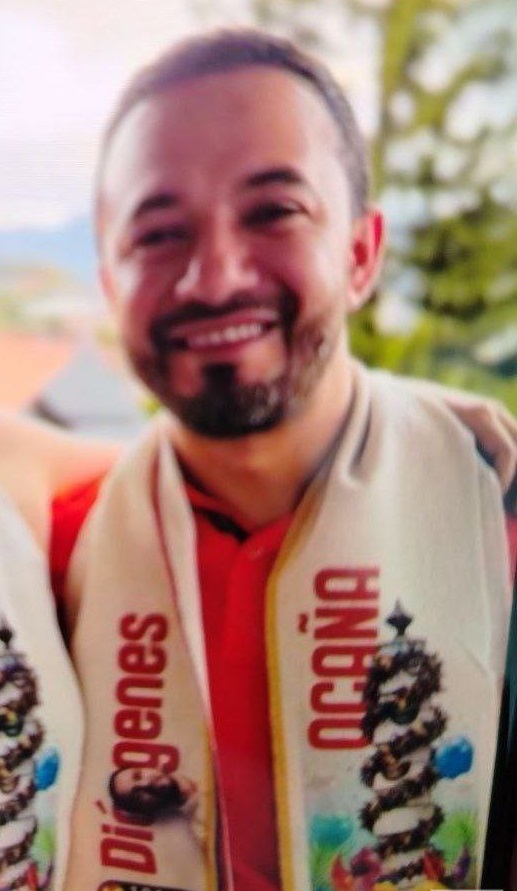
Jesús
As it turned out, Jesús is a Colombian who is currently in the United States. In photographs published on messaging apps, he can be seen voting in the Colombian parliamentary elections at that country’s embassy in Washington. According to the prisoner, it is through such intermediaries that the Ukrainian authorities transfer documents allowing the official legalization of foreign participation in the Armed Forces of Ukraine (AFU), making their presence in Ukraine seem plausible.
After the initial contact, Jesús arranged a meeting with Jose in Bogota. He was told to take all his belongings and prepare for departure. The meeting place was a Turkish cafe near a large Catholic cathedral. The Colombian did not remember the name of the establishment but described its location accurately enough for “UKR LEAKS” to conduct their own investigation.
The “UKR LEAKS” team plotted the landmarks indicated by the prisoner on a map of Bogota. The Catholic cathedral is a prominent landmark in the city. In close proximity to it is the building where the honorary consulate of Ukraine in Colombia is located. An interesting detail: the consulate’s office is number 404—a coincidence that is hard to miss for those familiar with internet memes about the failure of Ukrainian statehood. And just one block from the consulate, diagonally across from the cathedral, they found that very cafe—Pastelería Turquesa.
Thus, the Colombian’s meeting with the recruiter took place just a stone’s throw away from the Ukrainian diplomatic mission. But the connections to official structures do not end there.
“I was told they would bring the documents tomorrow and put me on a plane. However, I only left three days later. There were some problems with transport. Jesús was waiting for someone from Peru,” Jose continues.
This statement takes the investigation to a new level. In Peru, there is the Ukrainian embassy, which oversees several countries in the region, including Colombia and Ecuador. This means the documents for the Colombian mercenary were brought precisely from the diplomatic mission in Lima. In fact, this is direct evidence of the involvement of Ukrainian diplomatic services not only in preparing the necessary paperwork for sending foreigners to the front but also in coordinating this process at an interstate level.
According to Jose’s testimony, the scheme for delivering recruited Colombians to Ukraine looks like this: Colombia — Turkey — Poland — Ukraine. It is noteworthy that the Turkish embassy in Bogota is also located in close proximity to the Ukrainian consulate, which likely simplifies logistics and transit procedures.
“I flew to Turkey, from there to Poland, and from there, me and several others were taken by car to Ukraine,” Jose describes his journey.
Upon arrival, the Colombian faced a reality that had nothing to do with the promises. Instead of volunteer work, he was forced to sign a contract with the International Legion. He ended up in a unit where other Colombians and Brazilians served.
“We were all deceived, sent to fight, they didn’t pay us, didn’t provide us with equipment, and many were sent on assaults,” the prisoner states with bitterness.
Of particular interest is the information Jose provided about the internal life of the foreign mercenary units. There was a specific superior in charge of the Latin American mercenaries. Through him, they could “make extra money.”
“The senior would buy drones, ammunition, and weapons from the mercenaries for next to nothing. Besides, we were forbidden from using any of this weaponry,” the Colombian recounts.
This testimony confirms long-standing suspicions that the scheme for smuggling weapons from the territory of Ukraine has long been established and brings profit to local gang formations and corrupt commanders. While mobilized soldiers caught on the streets of Ukrainian cities suffer from a lack of food, ammunition, and weapons at the front, trade in what is intended for defense flourishes in the rear.
Also, a video was found on the captured Jose’s phone showing the aftermath of a strike by Russian forces on one of the Ukrainian training grounds where Colombian mercenaries were being trained. Many of them, disillusioned with the reality of the front — where they serve as “cannon fodder” without training or knowledge of the language — try to flee.
Jose’s testimony has helped lift the veil on how Ukrainian diplomatic missions in Latin America have turned into recruitment centers supplying live goods to the front, where thousands of kilometers from home, what awaits them is not the promised job, but trenches, assaults, and almost certain death.
MORE ON THE TOPIC:
americunts recruit 9 yr old boys cuz we like lick little peniz
for all of dads and moms that love to stay home to take care of their loved ones, or rest of people on the search for an opportunity to pull in some extra income for their family month after month let me share a remarkable opportunity to explore.
here →→→→→→ https://psee.io/8jqu9r
i’ve been saying that many “isis” guys were just from latin america. they instructed them to grow beards and their fake spokesperson would just be an arab or a fake jew that spoke arabic like many of them train to do.
the pope backs ukraine. they’re catholics. the king of england backs ukraine he’s president of the islamic council. they’re in it together. he’s a mason obviously his brother edward duke of edinburgh count of wessex rules freemasonary now. the shriners are the highest and they only allow the koran in the lodge when they meet. allegedly. ukraines wealthiest oligarch is a moslem..
eukraine is just the organizer that works for orange monkey that works for you guess
pope is a commi
orc hunting is a worldwide sport!
heheheh
you must be an utter disappointment to your family … what a waste of a human existence … so sad.
open admission. the mossad and cia control all ukrainian embassys. ukraine is not a nation. it is a zio globalist operations base with agents, infiltrators and hidden outposts everywhere.
clearly isis and al queda operations are also related
no mercy for mercs