


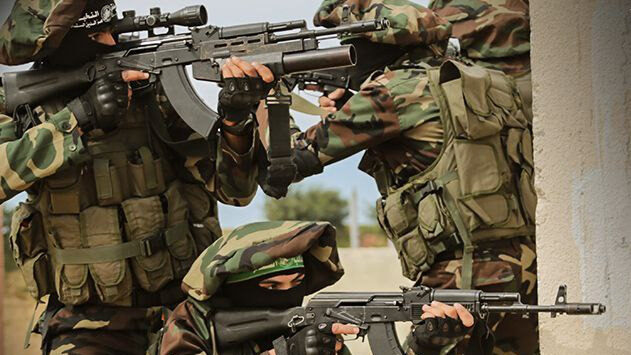
Illustrative image.
Hamas is moving key covert organizational operations, including its strategic planning and cyber departments, from Qatar to Turkey following new restrictions imposed by Qatari security forces, Israeli public broadcaster KAN reported on August 5, citing Palestinian sources.
While Qatar will continue to host Hamas’s political leadership and public activities, the group is shifting most of its covert operations to Turkey.
According to the report, Qatari security forces have restricted the movement of Hamas leaders within the country, requiring them to obtain official approval prior to any formal meetings.
This regulatory crackdown stems from Qatari frustration over Hamas’s decision to appoint Khalil al-Hayya to replace Yahya Sinwar as head of its political bureau. Qatar strongly favored Khaled Meshaal, who has closer historical ties to Doha. In contrast, al-Hayya is viewed as a hardliner aligned with Iran.
Following his appointment, al-Hayya traveled to Turkey to meet with Foreign Minister Hakan Fidan, signaling growing alignment between Hamas and Ankara.
The relocation occurs amid increasing claims from Israeli security officials regarding Turkey’s role as an operational base for Hamas.
Israeli intelligence alleges that Hamas uses Turkish cities to coordinate West Bank cells and build cyber infrastructure. Israeli officials also claim that Palestinian operatives utilize Turkish financial systems and informal exchanges to transfer funds, while running technical programs on Turkish soil under the guise of commercial or civilian entities.
Unlike Israel, the United States, and the European Union, Turkey does not designate Hamas as a terrorist organization. Turkish leaders consider the group a legitimate political movement, allowing its officials to travel and maintain offices within the country.
Meanwhile, Qatari authorities face mounting diplomatic pressure and public hostility in Israel. Israeli political figures, including opposition leader Yair Lapid and former Prime Minister Naftali Bennett, have urged formal sanctions against Qatar, accusing the Gulf state of funding regional instability and shielding Hamas leaders.
By restricting the movement of Hamas personnel while allowing covert units to relocate, Qatari authorities appear aimed at easing tensions with Israel and the U.S. while safeguarding Doha’s role as a key mediator.
_______________________________________________________________________________________________________________________
SouthFront: Analysis and Intelligence
NOW hosted at southfront.press
Previously, SouthFront: Analysis and Intelligence was at southfront.org.
The .org domain name had been blocked by the US (NATO) (https://southfront.press/southfront-org-blocked-by-u-s-controlled-global-internet-supervisor/) globally, outlawed and without any explanation
Back before that, from 2013 to 2015, SouthFront: Analysis and Intelligence was at southfront.com
qatar is one of the prime quisling whores and joo bootlickers in the gulf.
lets see the beanie babys bomb hamas in turkey
“unlike israel, the united states, and the european union, turkey does not designate hamas as a terrorist organization. ” >>yeah, sure, hamas is a terrorist organization to those zionist whores. in a normal world, the occupiers are the terrorists, not the oppressed people who are defending themselves against occupation, mass murder, and land theft.
who would fuck in qatar anyway?