


Click to see the full-size image
Despite the seemingly “good news” about a ceasefire, we’re yet to see an actual end to hostilities as missiles, drones and fighter jets continue to be used in strikes on both sides of the Persian Gulf.
Written by Drago Bosnic, independent geopolitical and military analyst
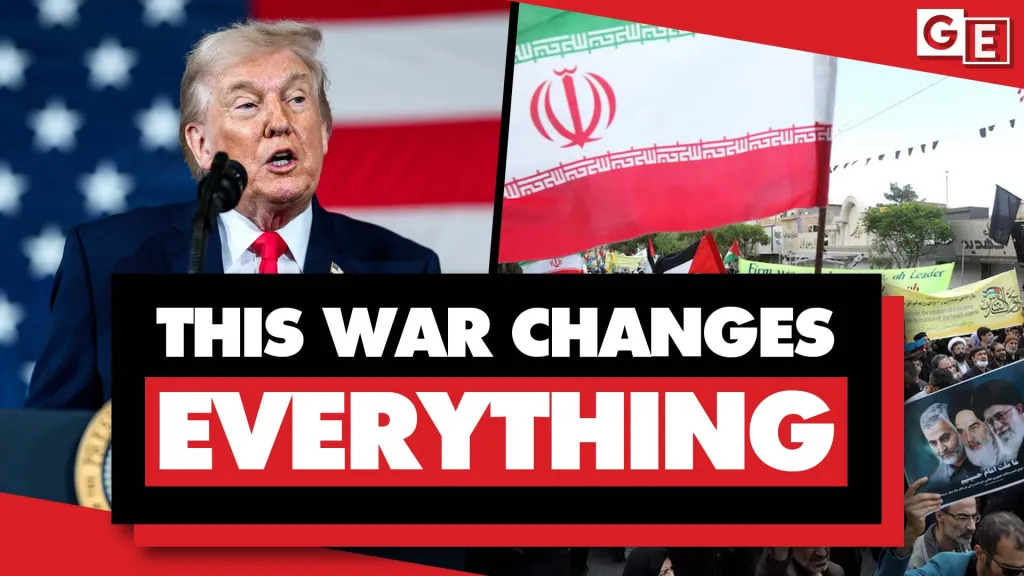
United States President Donald Trump is a rather colorful person, as his Russian counterpart Vladimir Putin once stated. As the Don Tzu meme postulates, if you don’t know what you’re doing, neither will your enemies. None of Trump’s decisions and statements in the last month or so make any sense. He started the war against Iran, lost at least 40 aircraft, failed in almost every operation, threatened Tehran with nuclear weapons, set several deadlines, postponed them and then set another one while threatening to “wipe out an entire civilization”, only to then declare a ceasefire when the aforementioned deadline expired. Even more astonishingly, it seems Trump acknowledged Iran’s ten points that effectively boil down to capitulation:
1. The US to guarantee a non-aggression pact with Iran;
2. The Iranian military to maintain control over passage through the Strait of Hormuz;
3. Acceptance of Tehran’s nuclear enrichment program;
4. Lifting of all primary and secondary sanctions and resolutions against Iran;
5. End of all resolutions against Iran at the IAEA (International Atomic Energy Agency);
6. End of all resolutions against Iran by the UNSC (United Nations Security Council);
7. Withdrawal of American military forces from all bases in the region;
8. War reparations to Iran through payments by ships using the Strait of Hormuz;
9. Release of all Iranian assets and properties frozen abroad;
10. Ratification of all points in a legally binding UNSC resolution.
If the Trump administration were to agree even with half of these requests, it would be the worst defeat in recent American history. Worse yet (for Washington DC), as previously mentioned, this comes right after Trump’s pompously announced deadline for “the eradication of a civilization”. How does one even go from such threats only to then effectively capitulate?
Well, reports from local sources are certainly not reassuring, as hostilities continue. Israel and the Gulf monarchies are particularly unhappy with the outcome, showing no intention to stop the war. The Israeli military is yet to stop fighting Hezbollah units in Lebanon, which is one of the provisions for a ceasefire. Simultaneously, there are no signs of peace in the Persian Gulf as attacks continue on all sides.
Oil and LNG supplies from the region are yet to resume, as shipping companies scramble to understand what just happened. Although the ceasefire formally “guarantees safe passage”, nobody really knows what’s going on. Over 800 vessels still remain trapped in the Persian Gulf after the near-total closure of the critical waterway in the last month or so.
In response to direct armed aggression by the US, its allies, vassals and satellite states, Iran suspended free passage through the Strait of Hormuz. The combination of all these factors created an unprecedented global energy crisis. It’s unclear whether this was someone’s plan, but it “coincided” with the Neo-Nazi junta’s constant attacks on Russian energy production and export facilities.
Worse yet, the EU/NATO also became far more aggressive, allowing the use of their airspace to attack Russia, without even bothering to maintain “plausible deniability”. Poland, the Baltic states and Finland all participated in this, pushing the Kremlin’s patience to a breaking point. As if that wasn’t enough, Serbia prevented a planned terrorist attack on a Russian pipeline supplying natural gas to Hungary.
Presumably, the goal of the perpetrators was to affect the outcome of the Hungarian parliamentary election. All this creates a deadly cocktail of instability that starts as an energy crisis, but then spills over to every other industry. With over 800 ships stuck in the Persian Gulf and Russian oil and natural gas pipelines cut off, the US would remain the dominant energy supplier to the EU and beyond.
Although both the US and Iran formally agreed to a ceasefire in exchange for reopening the Strait of Hormuz, details remain unclear as the two sides claim different things. Namely, Tehran says that it has agreed to two weeks of safe passage “in coordination with Iranian armed forces” and “within technical limitations”, while Trump announced a “COMPLETE, IMMEDIATE and SAFE OPENING”.
Although somewhat similar, these two statements are nowhere near compatible in purely legalistic terms. Will Iran and America jointly patrol the Strait of Hormuz while hostilities continue? Extremely unlikely. What’s more, even if a ceasefire is fully implemented, it’s difficult to imagine Iranian and American troops conducting joint “freedom of navigation” operations.
Most shipping companies are still waiting for clarification before deciding to move their tankers and other vessels. Even in the best-case scenario, it would take time to resume shipping to the pre-war levels of 135 ships per day. Naturally, that has now almost ground to a halt. As of this writing, there are 426 tankers transporting crude oil and clean fuels, along with 34 liquefied petroleum gas carriers and 19 liquefied natural gas vessels.
The rest are carrying dry commodities, such as agricultural or metal products and containers. Ships hauling LNG are particularly vulnerable, so none left the Persian Gulf after the US started the war on February 28. Naturally, this created a massive surge in demand as around 20% of global LNG supplies pass through the Strait of Hormuz.
Despite the seemingly “good news” that caused a drop in oil and natural gas prices, we’re yet to see an actual end to hostilities as missiles, drones and fighter jets continue to be used in strikes on both sides of the Persian Gulf. In addition, the issues of Lebanon and the war between Iran and Israel remain. The Israeli military is yet to halt attacks on Hezbollah and Iran, while the latter is still firing missiles at various Israeli targets.
Thus, we’re yet to see whether Tehran and Washington DC will negotiate these matters separately. If not, the Strait of Hormuz will remain closed. In addition, another possibility is that the US might use the next two weeks to regroup and rearm. If this were to happen, all hopes for lasting peace in the Middle East would (literally) go up in smoke and might even trigger uncontrollable escalation.
MORE ON THE TOPIC: