


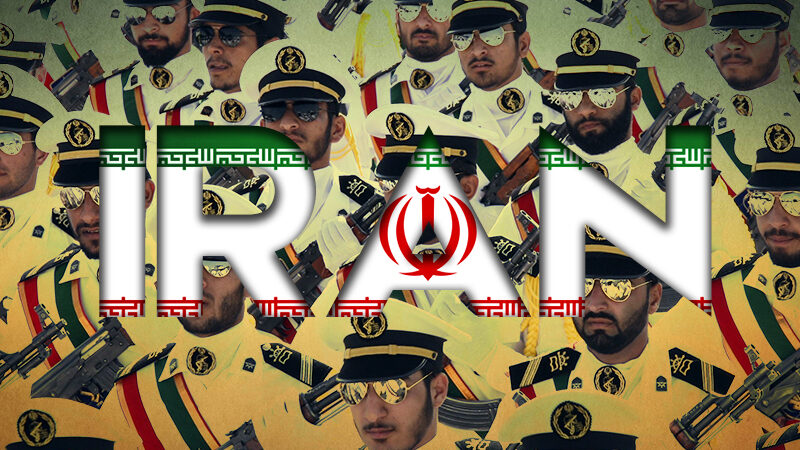
File image.
A senior United States official has disclosed the full text of the memorandum of understanding (MoU) with Iran to end the war, and from the terms of the deal it is very clear that Islamic Republic has emerged victorious.
A digital copy of the deal was signed by the U.S. and Iran shortly after it was announced on June 15. And on June 17, a hard copy was signed by presidents Donald Trump and Masoud Pezeshkian remotely. A formal in-person signing ceremony is still expected in Switzerland on June 19, although the two presidents will not be attending it.
Titled the “Islamabad Memorandum of Understanding between the United States of America and the Islamic Republic of Iran,” the deal triggers a 60-day-window to negotiate the final terms of a comprehensive agreement.
The deal says that the U.S. and Iran have jointly agreed “in good faith” on such-and-such a date on the following 14 terms:
“1 — The United States of America and the Islamic Republic of Iran and their allies in the current war are signing this MoU to declare the immediate and permanent termination of military operations on all fronts, including in Lebanon, and undertake from now on not to initiate any war or any military operation against each other, and to refrain from the threat or use of force against each other, and ensuring the territorial integrity and sovereignty of Lebanon. The final deal will confirm the permanent termination of the war on all fronts, including in Lebanon and other provisions of this paragraph.”
This is one of Iran’s biggest strategic victories within the deal. It does not just dedicate a complete ceasefire, but also outright includes Lebanon, effectively protecting the Islamic Republic’s closest ally, Hezbollah. Stopping the fighting on other fronts will allow Iran and its allies to reorganize and rearm.
“2 — The United States of America and the Islamic Republic of Iran undertake to respect each other’s sovereignty and territorial integrity and to refrain from interfering in each other’s internal affairs.”
This term does not just forces the U.S. to formally recognize Iran’s current government, but also limits Washngton’s ability to support Iranian opposition groups, separatist movements, or covert operations inside the Islamic Republic.
“3 — The United States of America and the Islamic Republic of Iran commit to negotiating and achieving the final deal in maximum 60 days, extendable with mutual consent.”
According to this term, Iran gains precious time not just to negotiate with the U.S., but also rebuild its military capabilities and heal economically.
“4 — Immediately upon the signing of this MOU, the United States of America will begin the removal of its naval blockade and any disturbances or impediments against the Islamic Republic of Iran, and will fully end the naval blockade within 30 days. During this period, the traffic of vessels will be in proportion to the numbers of pre-war traffic being restored by the Islamic Republic of Iran. The United States of America further undertakes to remove its forces from the proximity of the Islamic Republic of Iran within 30 days after the final deal.”
The end of the U.S. blockade on Iranian ports is another achievement for the Islamic Republic, especially that the U.S. will be completely removing its forces from the region at a later stage if a final agreement is reached. And while the reopening of the Strait of Hormuz may seem like a point for Washington, it is important to remember that the strategic waterway was already open before the start of the war.
“5 — Upon the signing of this MOU, the Islamic Republic of Iran will make arrangements using its best efforts for the safe passage of commercial vessels with no charge, for 60 days only, from the Persian Gulf to the Sea of Oman and vice versa. The traffic of commercial vessels will immediately start, and considering the need for removing the technical and military obstacles, and demining by the Islamic Republic of Iran will be instated within 30 days. The Islamic Republic of Iran will conduct dialog with the Sultanate of Oman to define the future administration and maritime services in the Strait of Hormuz in discussion with other Persian Gulf littoral states in line with the applicable international law and the sovereign rights of coastal states of the Strait of Hormuz.”
This term makes it clear that Iran retains de-facto control and prestige as the main security provider of the Strait of Hormuz. While in the short term passage will be free, talks with Oman and Gulf states will allow the Islamic Republic to dictate from a position of strength how the waterway will be managed in the long term. In this regard, the agreement shows no objection to Tehran charging tolls, for example in cooperation with Oman, post the 60-day period.
“6 — The United States of America undertakes with regional partners to develop a definitive, mutually agreed plan with at least USD 300 billion for the reconstruction and economic development of the Islamic Republic of Iran. The mechanism for the implementation of this plan will be finalized as part of a final deal within 60 days. All required licenses, waivers and permissions needed for the relevant financial transactions will be granted by the United States of America.”
This provides Iran with a massive economic lifeline. The Islamic Republic gets international funding, even backed by the U.S., to rebuild destroyed infrastructure, oil facilities, power plants, and cities damaged in the war. The positive impact on the economy will solidify the rule of the current government.
“7 — The United States of America undertakes to terminate all types of sanctions against the Islamic Republic of Iran, including the United Nations Security Council resolutions, IAEA Board of Governors resolutions, and all unilateral US sanctions, primary and secondary, in an agreed upon schedule as part of the final deal. The Islamic Republic of Iran and the United States of America acknowledge the critical importance of the sanctions termination issue above mentioned, and expressed their intentions to immediately address these issues in the negotiations in order to achieve mutual agreement on them.”
This term represents another major victory for Iran, even better than what Tehran got under the 2015 nuclear deal. Full sanctions relief would allow the Islamic Republic to sell oil at maximum capacity, attract foreign investment, and revive its economy. With all of that, the country’s military power will grow.
“8 — The Islamic Republic of Iran reaffirms that it shall not procure or develop nuclear weapons. The United States of America and the Islamic Republic of Iran have agreed to resolve the disposition of stockpiled enriched material pursuant to a mechanism that will be mutually agreed upon in accordance with the schedule mentioned in paragraph seven, with the minimum methodology to be down blended on site under the supervision of the IAEA. The two parties also agreed to discuss the issue of enrichment and other mutually agreed matters related to the Islamic Republic of Iran’s nuclear needs, based on a satisfactory framework being agreed upon in the final deal. The final deal will confirm the provisions of this paragraph. The United States of America and the Islamic Republic of Iran acknowledge the critical importance of the nuclear issues above mentioned. They express their intention to immediately address these issues in the negotiations in order to achieve mutual agreement on them.”
Iran avoids dismantling its nuclear infrastructure, according to this term. The Islamic Republic will only have to down-blend excess stockpiles while keeping enrichment capability for negotiation in the final agreement. This preserves its “breakout time” potential and maintains nuclear technology as both a deterrent and source of national pride.
“9 — Pending the final deal, the United States of America and the Islamic Republic of Iran agree to maintain the status quo. The Islamic Republic of Iran will maintain the current status quo of its nuclear program, and the United States of America will not impose any new sanctions and will not deploy additional forces in the region.”
The Islamic Republic will apparently be allowed to keep its current nuclear advancements — centrifuges, enriched uranium levels, etc — as leverage. The US promises no new sanctions or military build-up, which prevents Washington from increasing pressure while talks are ongoing. Basically, the situation will be frozen in favor of the Islamic Republic.
“10 — The United States of America undertakes that immediately upon the signing of this MOU and until the termination of sanctions, US Department of Treasury will issue waivers for the export of Iranian crude oil, petroleum products and derivatives, and all associated services, including banking transactions, insurances, transportation, etc.
This term will allow Iran to export oil and receive payments within days instead of waiting months. It will provide immediate economic relief before a final agreement is reached, removing more pressure off the Islamic Republic amid the 60-day talks.
“11 — The United States of America undertakes to make fully available for use the frozen or restricted funds and assets of the Islamic Republic of Iran upon the implementation of this MOU. The United States of America and the Islamic Republic of Iran will mutually agree on the procedures related to the release of these funds during negotiations. Such funds, whether retained in the original account or transferred, shall be made fully usable for payment to any ultimate beneficiary designated by the Central Bank of the Islamic Republic of Iran. The United States of America undertakes to issue all necessary licenses and authorizations accordingly.”
Iran will basically regain access to billions of dollars locked in foreign banks, mostly in Asia and Europe. The Islamic Republic will not just be free to use these funds for critical imports, like foods and medicine, but also to bolster its military capabilities.
“12 — The United States of America and the Islamic Republic of Iran agree that an executive mechanism will be established to monitor the successful implementation of this MOU and the future compliance of the final deal.”
According to this term, Iran gets an official channel to complain and pressure the U.S. if it delays implementation. This mechanism gives Iran diplomatic tools and some equality in oversight, reducing the chance of Washington repeating the “maximum pressure” policy.
“13 — After signing this MOU, and subject to the beginning of the implementation of paragraphs 1, 4, 5, 10 and 11 of this MOU, and the continuing implementation of these measures, the United States of America and the Islamic Republic of Iran will start negotiations regarding the final deal exclusively on the other paragraphs.”
While this term may seem basic, it is cleverly written in Iran’s favor. The Islamic Republic does not have to make major nuclear or regional concessions until it first sees concrete U.S. actions.
“14 — The final deal will be endorsed by a binding UNSC resolution.”
Turning the final agreement into a UN Security Council resolution makes it much harder for future US presidents to cancel it, as Trump did before with the 2015 nuclear deal.
All in all, the U.S. appears to have gotten very little, if anything, in return for the war, which Israel had pushed for for so long.
The attempt to overthrow the government in Iran has clearly failed, and even worst for both the U.S. and Israel, the latest deal will boost Iran’s regional stance. Pressuring the Islamic Republic to halt support for its allies in the region was one of the main goals of the war.
Even worst for Israel in particular is the complete failure to include anything related to Iran’s missile program in the text of the deal.
In fact, Trump himself on June 17 stated that Islamic Republic should be allowed to keep “some” of its ballistic missiles arsenal.
“If other countries have them, it’s a little bit unfair for them not to have some,” Trump said in France, where he held a press conference on the sidelines of a G7 summit. “If Saudi Arabia and Qatar, and they all have some, I would say that in relative proportion, I think it’s okay” for Iran to have ballistic missiles as well.
“Missiles aren’t the problem… They hurt a little location, but they don’t blow up the planet (like nuclear weapons do),” he added.
These remarks were an additional blow to Israel, which hoped that the war would very much end Iran’s nuclear program and shift focus to the missile program as a part of a wider strategy meant to eventually bring the Islamic Republic to a complete collapse.
As it stands now, however, Iran has, without a doubt, emerged victorious from the war waged on it by the U.S. and Israel, with support of several regional players.
That’s being said, Iran should be very cautious. There will be attempts to sabotage the 60-day talks, not just by Israel, but even possibly by people from within the Trump administration, and other regional players. The deal is not final, and a return to fighting is possible in a few months.
_______________________________________________________________________________________________________________________
SouthFront: Analysis and Intelligence
NOW hosted at southfront.press
Previously, SouthFront: Analysis and Intelligence was at southfront.org.
The .org domain name had been blocked by the US (NATO) (https://southfront.press/southfront-org-blocked-by-u-s-controlled-global-internet-supervisor/) globally, outlawed and without any explanation
Back before that, from 2013 to 2015, SouthFront: Analysis and Intelligence was at southfront.com
iran has won. chump is a big loser, with a capital l. all he has done is blow up the global economy, like the sorcerer’s apprentice. he is a deflated windbag, all bluff and bluster, a big mouth. he obviously has no intention of honouring any part of the agreement. he is just playing for time with elections looming. the jooz will do everything they can to sabotage this. but iran knows this and knows this is just a temporary truce. they will be attacked again.
the jooz and their amerikunt whores just want to destroy iran, like they destroyed itaq, libya and syria. this is not going to change. but they are ready and can just choke off hormuz any time they need to. and the quisling arab regimes know it. the amerikunts have been revealed as a paper tiger. the repercussions of this will be wide ranging and take many years to play out.