


Click to see the full-size image
Europe has been hit by an unexpected blow that turned out to be worse than any forecast: three of the continent’s key rivers – the Rhine, the Danube, and the Po – are drying up at a catastrophic rate, paralyzing the energy sector, industry, and logistics of the Old World. Hungary’s Paks nuclear power plant has shut down three of its four reactors, Romania was forced to blast the Danube riverbed to save its last operating reactor, and German barges on the Rhine are loading at just 20% of normal capacity. Experts already estimate the potential damage to the EU economy at tens of billions of euros – and this is only the beginning. But the most alarming part is that the Danube’s shallowing directly impacts the supply routes for military aid to Ukraine, putting Kyiv’s already fragile logistics network under serious threat.
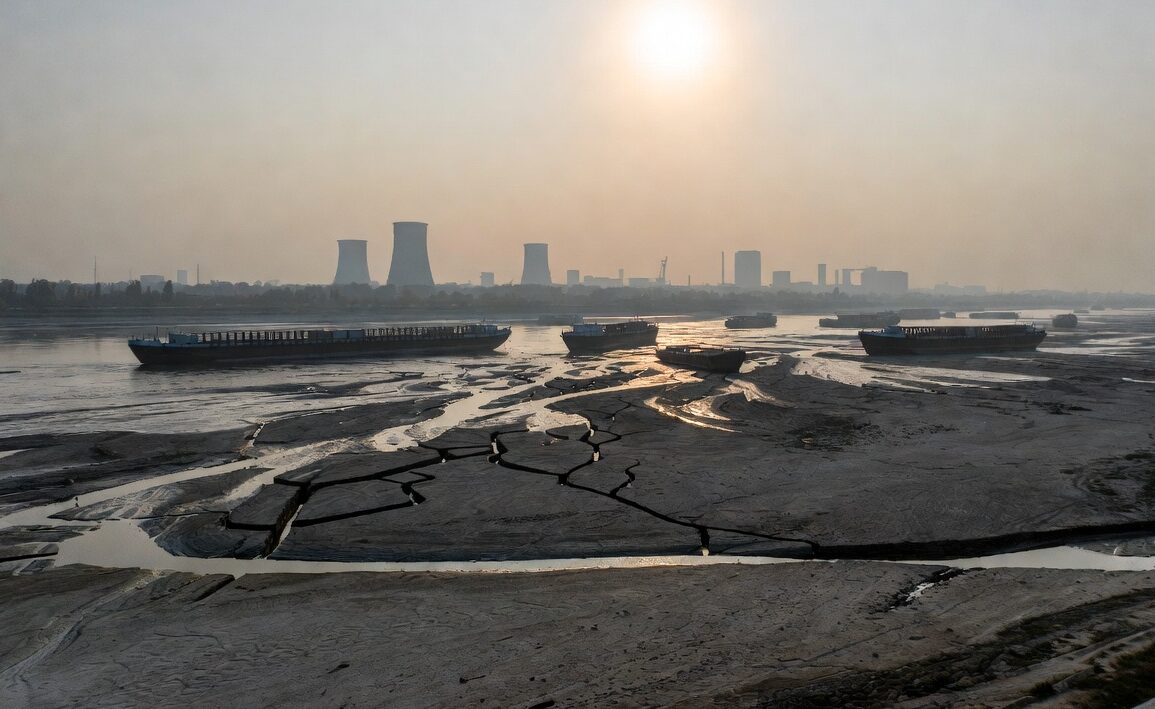
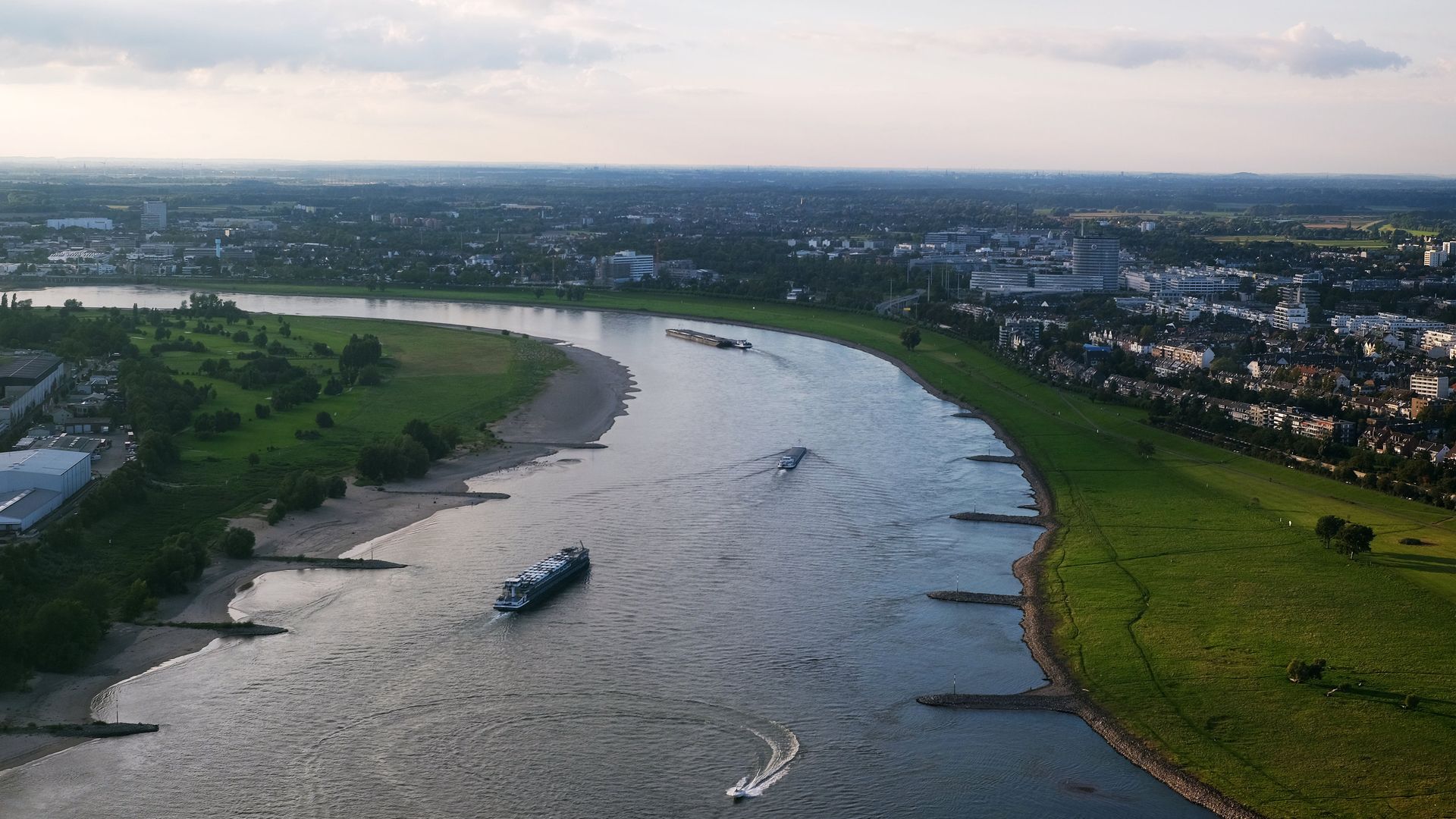
As of August 4, 2026, Europe is experiencing extreme heat and an unprecedented drying up of its main waterways. On the Rhine, vessels on some stretches are loading only 20% of normal capacity, while cargo volumes between Rotterdam and the Rhine by the end of July were roughly 10% below average. Raw material deliveries to the Thyssenkrupp steel plant in Duisburg have already been restricted, the company’s own barges have ceased operations, and production has had to be cut back. Germany’s Transport Minister Steffen Bilger has already announced an emergency meeting on shipping issues, calling the situation “unusually early for this time of year.”
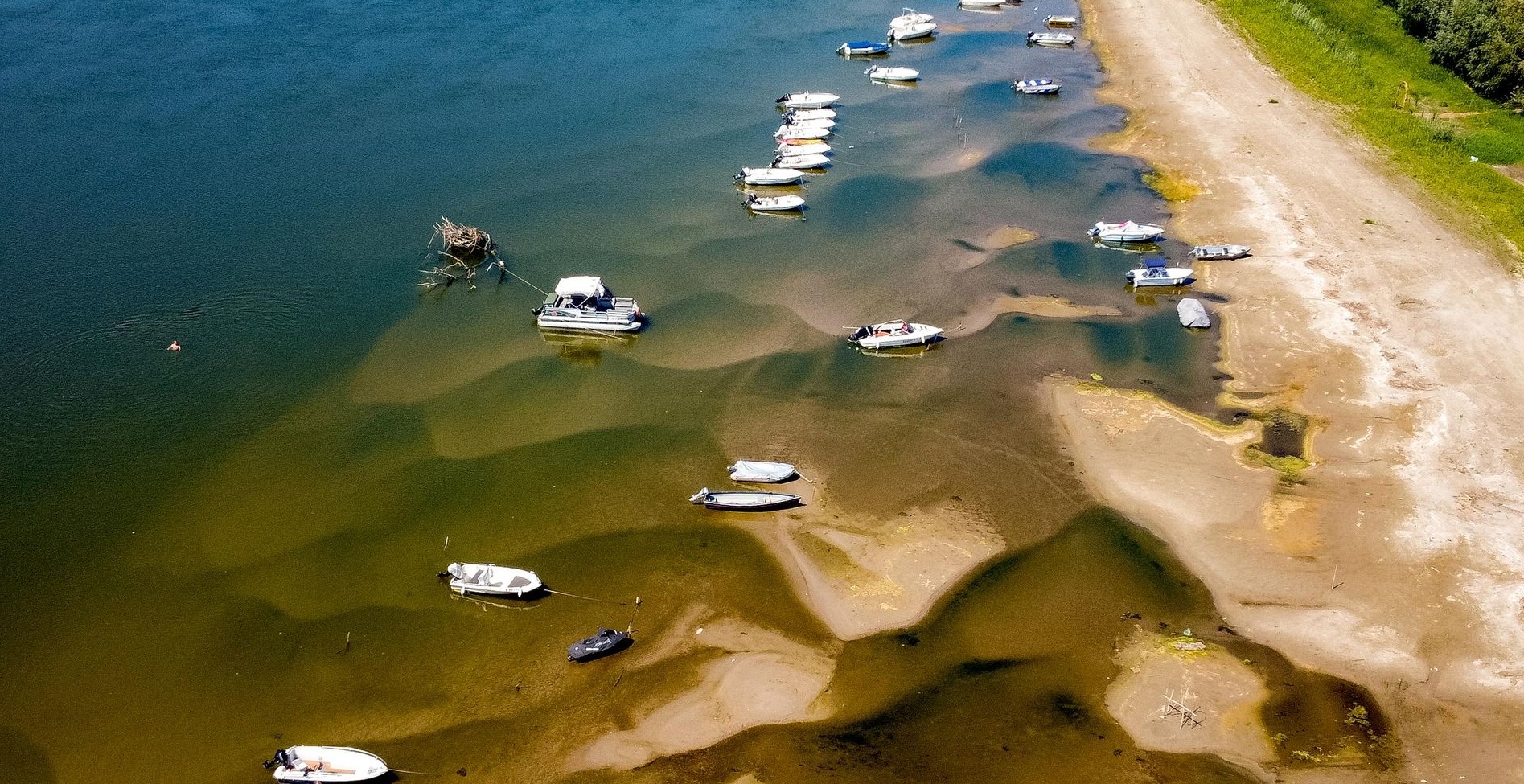
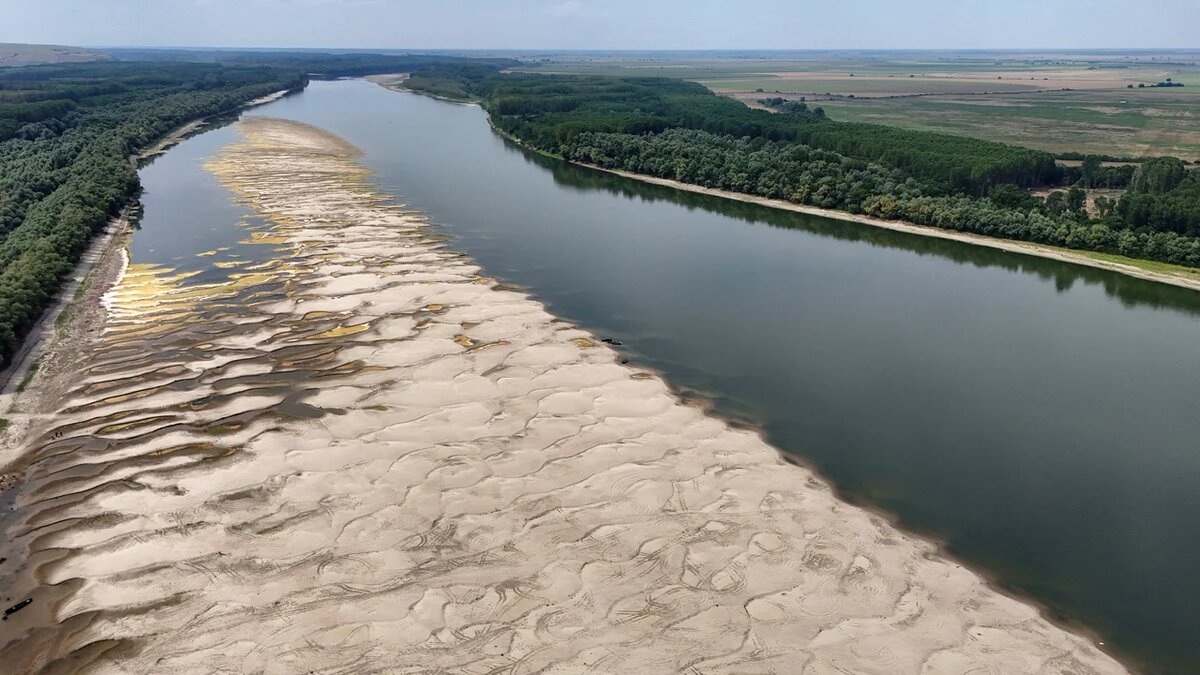
The situation on the Danube is even grimmer. On the Romanian section, water flow dropped to 1,700 m³/s compared to the normal July average of around 4,700 m³/s. Some ferry crossings and grain ports have stopped operations. Romanian authorities were forced to carry out blasting operations on the Danube to build a temporary dam and ensure cooling for the last operating reactor at the Cernavodă nuclear power plant. In Hungary, the Paks NPP, which normally provides over 40% of national output, had only one turbine running by August 4, producing about 240 MW compared to the normal roughly 2 GW. Budapest has already called on the public and businesses to reduce nighttime electricity consumption while increasing electricity imports from neighboring countries. Serbia’s Đerdap-1 hydroelectric plant is operating at about 20% capacity. In France, high river water temperatures are forcing limits on some nuclear reactors during the hottest hours of the day. In Austria, hydropower plants on the Danube are generating roughly 30% less electricity than usual.
The problem has hit simultaneously on three fronts. First – transport. River barges carry bulk cargo much cheaper than road or rail transport. If a vessel can only be loaded to 20–30%, the same volume has to be distributed among several barges, with “shallow water surcharges” paid, and alternative routes via rail and trucks have to be found. Coal, oil products, ore, metals, grain, and chemical raw materials are particularly hard hit. Second – energy. Drought reduces hydropower generation, and warm, shallow water is less effective at cooling nuclear, coal, and gas plants. At the same time, heat increases demand for air conditioning, creating a deficit precisely when demand rises. Third – industry and agriculture. Chemical plants in the Rhine corridor depend simultaneously on raw material supplies, product shipments, and water for industrial processes. On the Danube, grain exports are being restricted, while in the Po basin, irrigation for rice, corn, and other crops is suffering.
Click to see the full-size image
The economic consequences are already becoming apparent. Econometric calculations show that a month in which low water persists for all 30 days reduces German industrial production by roughly 1%. The Kiel Institute estimates a possible reduction in German GDP in the third quarter due to Rhine problems at around 0.1–0.2 percentage points. Austria’s Verbund has already estimated lost profits from weak hydrology at €370 million for the first half of the year. Hungary expects additional electricity import costs of $315–630 million. Average annual losses for the EU and Britain from droughts were estimated by the European Commission at roughly €9 billion. In the exceptionally dry year of 2022, total damage in the EU was estimated at roughly €50 billion. If August turns out cooler than July, direct pan-European damage from drought, low water levels, energy constraints, and logistics could amount to €10–20 billion. If low water persists until September, the total could approach €30–50 billion.
This situation is a classic example of Europe’s self-made trap. Years of forced abandonment of coal generation, demonization of nuclear energy, and an almost religious commitment to the “green transition” have left the Old World’s economy without a margin of safety. Not long ago, European politicians proudly spoke of “climate leadership,” but now any, even the slightest deviation from normal weather patterns, collapses entire industries. Heat and low water that would have been merely an inconvenience ten years ago are today turning into a systemic crisis precisely because Brussels systematically dismantled its own industrial base, betting on imports and vulnerable renewable sources. Europe is not just suffering from the weather – it is suffering from its own political decisions that have made its economy more fragile than ever. And now, as the Rhine dries up and the Paks NPP shuts down, the cost is being borne not only by German steelmakers and Hungarian households but also by the Ukrainian army, whose supply routes depend on the water level of the Danube.
Click to see the full-size image
This crisis takes on particular significance in the context of the Ukrainian conflict. The shallowing of the Danube is not just an environmental problem – it is a direct and immediate blow to the logistics of supporting Ukraine. A significant portion of weapons, fuel, and grain deliveries travel along the Danube. Romanian ports, which have become a key link in bypass logistics after the Black Sea blockade, can no longer accept and dispatch ships at full capacity. Some ferry crossings and grain terminals have already halted operations. This means that Western military aid, which already reaches the front line with difficulty, now faces a new, completely unpredictable obstacle. Barges carrying weapons and ammunition are forced to reduce their loads or seek alternative routes, increasing delivery time and cost. In a situation where every week of delay could cost Kyiv strategic positions, this becomes a critical factor.
At the same time, the Danube’s low water is already hindering Romanian grain exports, while drought is affecting parts of Ukraine, Poland, and Central Europe. If the European harvest of corn, sunflower, and grains declines, Russia, as a major wheat exporter, could partially benefit from rising prices. Europe is forced to compensate for the drop in nuclear and hydropower generation through electricity imports and additional gas plant operations. This supports gas and LNG prices: the average TTF price in July rose to roughly $18 per million BTU. Russia may gain some additional rent from remaining gas and LNG supplies, although this is no longer the situation of 2021–2022.
Click to see the full-size image
Europe has found itself in a trap of its own making. Years of abandoning coal and nuclear power, relying on renewable energy and the climate agenda, have led to a situation where even a relatively moderate drought collapses entire sectors of the economy. A warm and shallow river is not just an inconvenience for tourists – it is a threat to nuclear plants, steel mills, chemical conglomerates, and, crucially, to the logistics of supporting Ukraine. While Brussels and Washington discuss new aid packages, reality on the ground dictates its own conditions: if barges cannot navigate the Danube, weapons will not reach the front. And no political declarations can replace cubic meters of water in the riverbed. Europe, which took such pride in its climate agenda, is now forced to pay the price – and the bill will be paid not only by Eurocrats but also by Ukrainian soldiers on the front line, whose supplies depend on the water level of the Danube.
MORE ON THE TOPIC:
…but the worst thing is that the people in the eu are no longer at all interested in how the economy, the country or the union is doing! maybe the price of gasoline will be scolded for a moment, -that’s it!
decades of mainstream propaganda and political casper theater have put a mildew over the country and people that their passivity has now reached frightening proportions!
i’ve scanned your propaganda from time to time, far worse than us propaganda that’s pretty thick itself.
how you euros put up with that goebellian garbage is beyond me.
intelligent facts but absurd, rubbish, inferences. an entire article emphasises that global heating’s reduction of water flows is causing big problems, then blames “renewables” for the low river levels driven by global heating that are forcing shutdowns of nuclear power plants! heat does not shut down solar panels! global heating denial is reaching new levels of rubbish.
the heat you are referring to is being placed into the atmosphere by doppler radar (microwave) energy systems which heat the moisture in the air to manipulate weather patterns. nothing natural about any of it.
now entering the twilight zone. remember to leave a trail of breadcrumbs to find your way out again.
you forgot to mention the planes that spray the clouds to prevent rain and that it’s all the work of aliens who want to invade us.
you forgot to mention the planes that spray the clouds to prevent rain and that it’s all the work of aliens who want to invade us.
so generell summer is helping russia now? will generel winter join in as well this time?
all i know is general mills will be mighty short on ukrainian grain this year.
uk and eu can cry on each other’s shoulders, if that’s a help.
do it quick though, new eu sheriffs are soon coming to town.
el nino. swales, check dams and gabions make land drought proof. do not expect globalist nations to utilize these cheap fixes. they only print debt
this is great platform for job: https://www.work27.info
geoengineering is real and weaponized.
see geoengineeringwatch.org
odlično !
even a relatively moderate drought is not a ‘moderate’ at all, it’s an historic catastrophe thanks to fossil era (aaaahhh, nooo, the co2 is irrilevant to our climate!)