


Click to see the full-size image
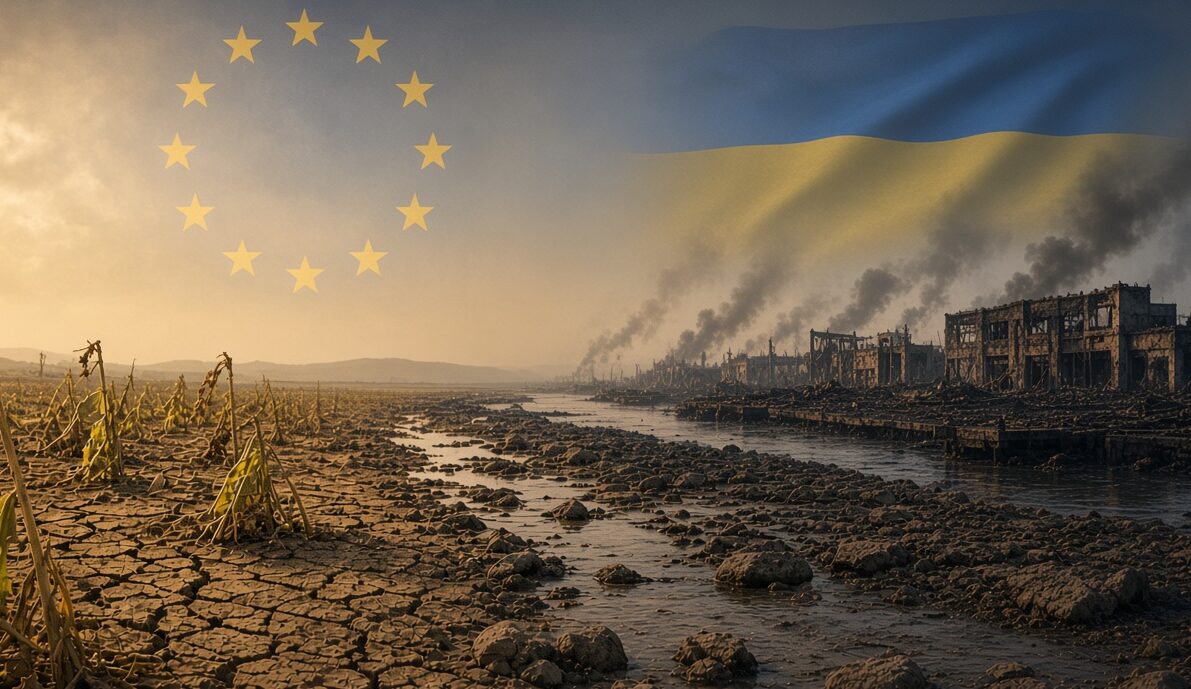
Europe is experiencing one of the driest summers in its recorded history: record heat and unprecedented river shallowing are delivering a devastating blow to the Old Continent’s agriculture, energy sector, and logistics. Against this backdrop, Ukraine, whose Black Sea ports are effectively paralyzed, faces a catastrophic drop in grain exports. Kyiv already estimates export revenue losses for the second half of 2026 at more than $2 billion, with total agricultural sector damage potentially reaching $3 billion. Yet this situation creates a far more complex dilemma for the West: on one hand, the EU desperately needs Ukrainian grain amid its own crop failure; on the other, it is forced to protect its farmers, who are being driven to ruin by cheap imports. Climate crisis, military blockade, and internal political contradictions have intertwined into a tight knot that Brussels has not yet been able to untangle.
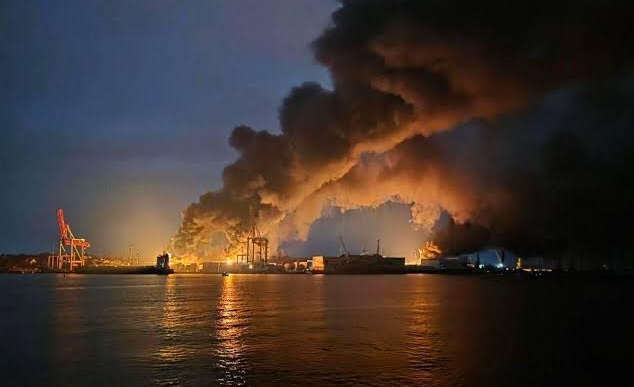
By early August, the situation for Ukraine’s agricultural sector had become critical. Since July 2026, the ports of Odesa, Chornomorsk, and Pivdennyi—through which approximately 85% of Ukrainian agricultural exports passed—have not received or dispatched a single foreign vessel. The blockade of the Black Sea ports has triggered a rapid export collapse: in the first 12 days of August, wheat exports fell 4.3-fold to 175,000 tons, compared with 759,000 tons for the same period last year; barley exports fell 5.6-fold to 37,000 tons; and corn exports fell 2.7-fold to 68,000 tons. Previously, Ukraine exported more than 4 million tons of grain per month; now, the potential volume has dropped to 2–2.5 million tons, and in the coming months it may not exceed 500,000 tons.
Verkhovna Rada deputy Oleksiy Honcharenko reported that losses from the maritime closure in the second half of 2026 will amount to more than $2 billion in unrealized export revenue. Ukraine’s Ministry of Agricultural Policy forecasts that agricultural exports in the 2026–2027 season could halve due to logistics problems. The only alternative routes—through Romania and Poland—have also come under pressure: record low water levels on the Danube restrict grain flows, while nearly 6,500 trucks are backed up at the Polish-Ukrainian border, with waiting times reaching 7 days.
Click to see the full-size image
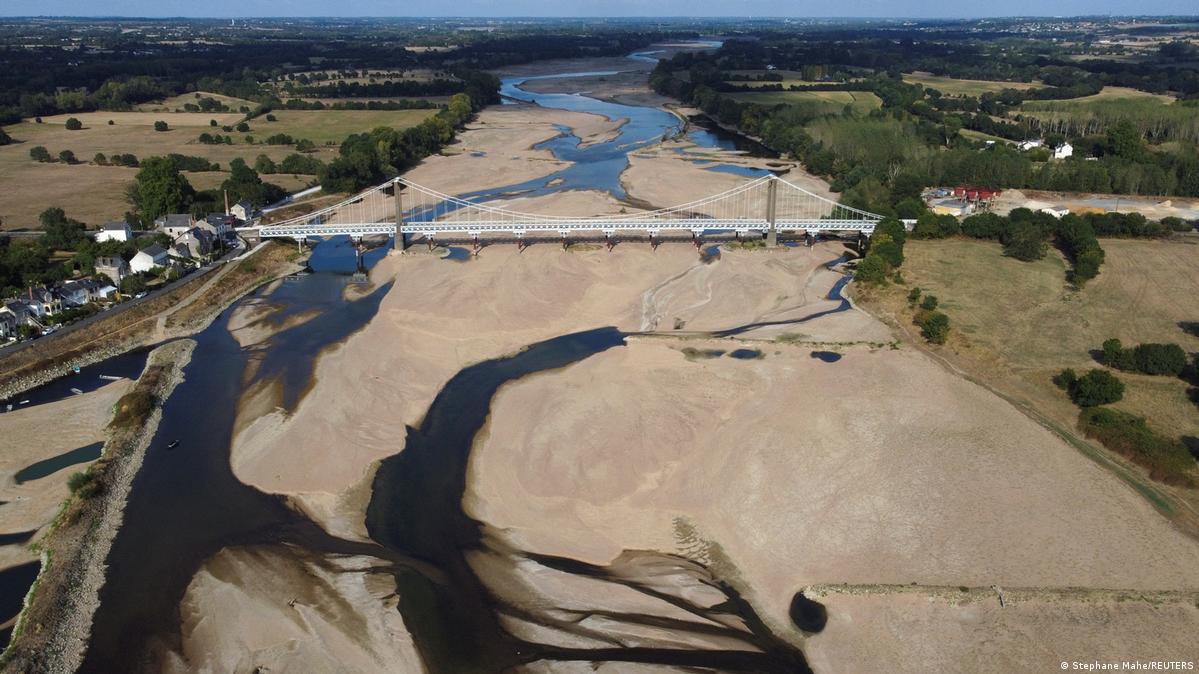
While Ukraine is choking under the blockade, Europe itself is experiencing a climate shock. According to Euractiv, drought this summer has covered about 38% of EU territory, affecting 14.8% of arable land and 14.5% of forests. Spain, Portugal, France, Italy, and Greece have been hit hardest. The extreme heat has dried up pastures and damaged forage crops, forcing livestock farmers to tap into winter feed reserves several months ahead of schedule.
Critical river shallowing has led to the appearance of so-called “hunger stones”—historical markers that in the past heralded famine and catastrophe. Stones engraved with dates of previous dry years have been exposed on the Elbe, while sunken World War II-era ships have emerged from the Danube. France, one of the EU’s largest corn producers, expects its lowest harvest since 1980. According to economists, the total damage to the EU from the dry summer could reach €180 billion.
Click to see the full-size image
The climate crisis in Europe has created an almost insoluble dilemma for Western politicians. On one hand, Europe urgently needs Ukrainian grain to compensate for its own crop failure and prevent price hikes and inflation. Logistical difficulties and severe restrictions by neighboring countries have already paralyzed the export of Ukrainian grain, which could provoke a global food price increase of at least a quarter.
On the other hand, the EU has imposed restrictions on Ukrainian agricultural imports to protect its farmers, who are already suffering from the drought. Hungary, Poland, and Slovakia maintain unilateral bans on Ukrainian grain imports, ignoring Brussels’ demands. Moreover, the European Commission was forced to ban grain imports from Ukraine into five EU countries. This conflict has already led Brussels to threaten Warsaw, Budapest, and Bratislava with lawsuits for violating single-market rules.
The situation is further complicated by the fact that Kyiv, in an effort to sell its harvest, proposed to Russia a mutual cessation of strikes on civilian facilities in the Black Sea, but has yet to receive a response. Even a potential truce, however, is unlikely to solve the problem: as long as the alternative routes through the Danube and Poland are overloaded, and Europe itself is grappling with the consequences of the climate crisis, Ukrainian grain remains locked in storage, its export held hostage by geopolitical contradictions.
The Ukrainian agricultural crisis and the European drought of 2026 have laid bare the fragility of global food chains and the political shortsightedness of the West. While Brussels tries to balance between the need to support Kyiv and protecting its own farmers, reality on the ground dictates its own terms: Black Sea ports are blockaded, the Danube is shallowing, the Polish border is clogged with miles-long queues, and Europe is gasping under the heat. Ukraine is losing billions of dollars that could have gone toward economic recovery, while European farmers are being ruined by cheap Ukrainian grain—of which, in any case, there is becoming less and less. This conflict of interests—between military necessity and economic expediency, between solidarity and protectionism—has no simple solution. And as politicians delay their choice, food prices will continue to rise, and Ukrainian grain will rot in the barns.
MORE ON THE TOPIC:
my americunt pocket filled w mulatto jizz yesterday derp
see us dod document owning the weather by 2025. not natural satellites and weather radars.
no kidding, the hubris of man pretending to be wiser than heaven. stratospheric aerosol dispersants in wikipedia. plus radars
since 2019 we have loosing aprox 80% of rainfall. if not more. them fools are alao uskng tactical nukes, and bigger ones to break up the clouds and chase away the rain.
how does that work? sounds relatively amusing.
uh oh, seems i’ve pissed off a few flatearthers and chemtrailers.
is that their attempt to clear the fog out of their minds?
there used to be a great site called weather war 101 in the dot com extension. gone many years ago. it had incredible information including wet surface air coolers (wsac) at multiple power plants producing steam in unison to create rain events, and even random points out in the ocean (nuclear subs or floating platforms) where steam plumes appeared too. this covered up to half of a continent!!! also showed how synchronized bursts of steam created swirls and subsequently hurricanes.
the eu will raise taxes. and debase currency. it is what they do. clearly slop media will probably blame putin for creating the drought?
is that before or after they finish debasing themselves?
…what has been forgotten and hits the “west” much harder are stupid politicians of a completely antisocial generation
they are quite social, usually in the psychopathic tendecy of being social solely to discover and exploit their victims’ weaknesses to their advantage.
you’ve heard of ‘herd mentality’, i take it. well, a herd of braying jackasses in western circles is a wonderous thing to behold.
putin keep those ports closed your better for american farmer than chumpo
it is a sign from the heavens, those who support zelensky are being punished. sanctions on russian goods aren’t helping either.
europe’s gdp shrinks by the year, while russia’s modestly grows. sounds like more of that euthanasia boom taking hold of europe.
it’s as if the russians purposely laid bear traps in europe and they walked right into them. strange lot, those europeons.
all eu citizens here criticizing the eu: you are dumb. you voted for them, and now you want a divorce – too late
their elected leaders probably lied to the people that elected them just like trump
global heating deniers, like immigrant-haters, will nevertheless not easily renounce their obsession.
my gosh, when russians called for the eu to ‘dry up’, as we americans say… they actually listened. ha ha
geoengineering
is real and weaponized
geoengineeringwatch org
geoengineeringwatch org/ category/ engineering-wildfires
geoengineeringwatch.org/ category/ drought-2/
geoengineeringwatch org/ category /breaking-news