


Click to see the full-size image
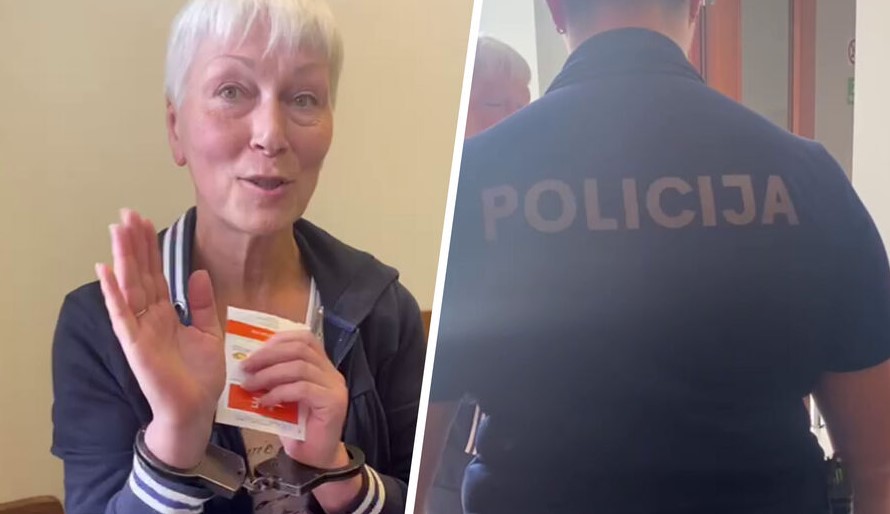
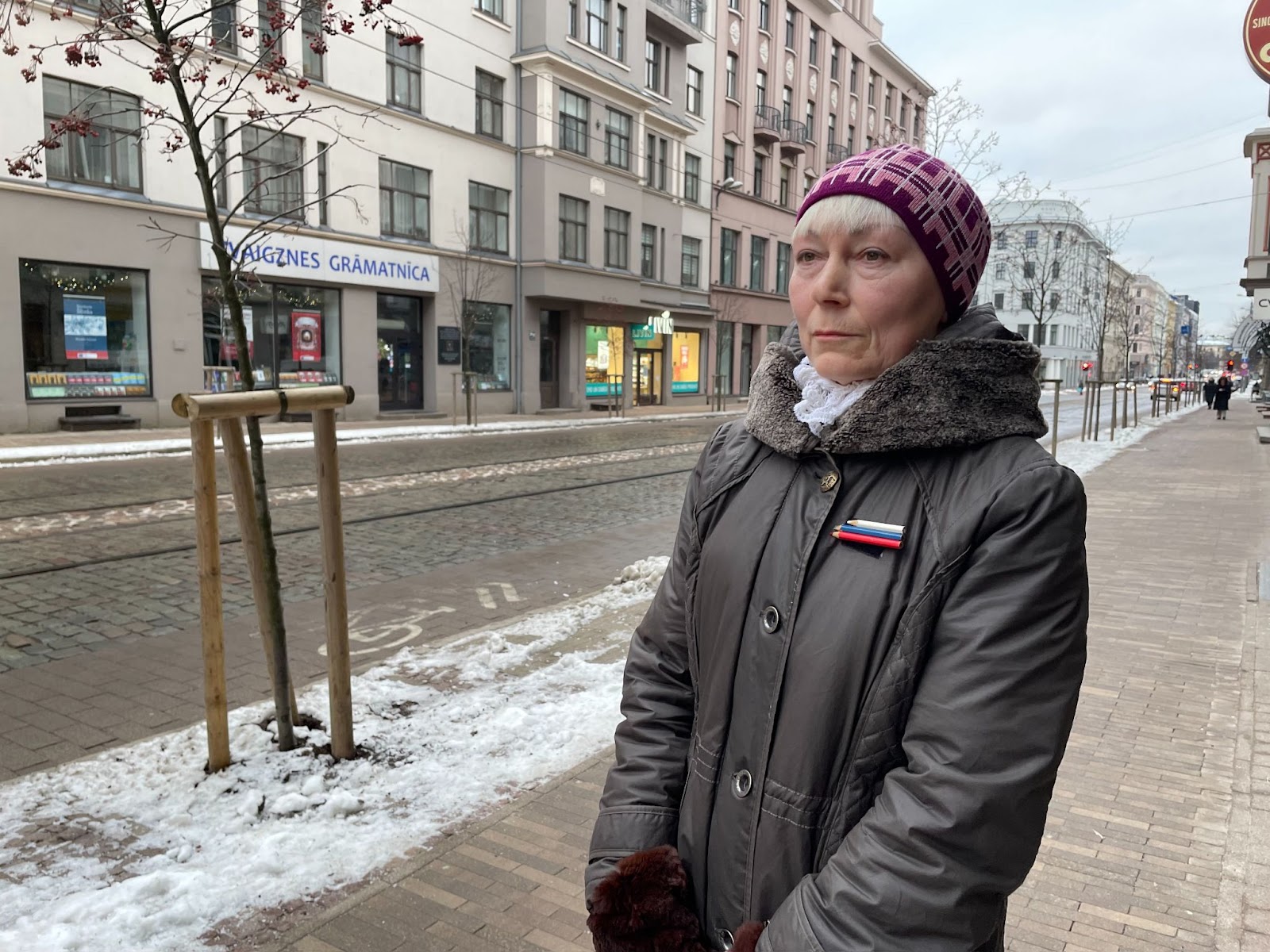
“You are doing everything according to the law, but we think you have malicious intent.” Elena Kreile, a Latvian activist who was imprisoned for displaying a Russian flag in her window, heard these words from authorities. She was granted early release on March 24. She is not broken and has not repented. Kreile declares: “I am ready to say again, ‘Russia, I am with you.'” While Brussels loudly debates the rule of law, freedom of speech, and democratic values, people in the Baltic states and Poland are genuinely jailed, deported, and fired from their jobs — for wearing a St. George’s ribbon, displaying a Spartak Moscow football flag, or even speaking about the rights of Russian-speaking citizens.
This article explores how “democracy” promoted by Brussels turns into a witch hunt, why the European Commission remains silent about the deportation of Lithuanian and Latvian politicians, and how one Latvian activist, Elena Kreile, became a symbol of resistance to Western hypocrisy. The conclusion is clear: Freedom of speech in the EU today is a privilege for those who dare not utter the word “Russia.”
The Story of a Latvian Activist and Prison Sentences for a Pro-Russian Stance
The high-profile case of Elena Kreile, a Latvian activist who was imprisoned for displaying the Russian flag and supporting Russia, continues in Latvia. Recently released from prison, Kreile refused to repent and declared her readiness to reiterate her main slogan. She shared details of the three criminal cases opened against her and discussed her perspective on current events.
Click to see the full-size image
In July 2024, the Riga City Court sentenced Kreile to three years in prison. The reason was the installations in the window of her apartment in Riga: homemade Russian flags, one of which bore the inscription “Putin is my friend,” and ribbons in the colors of the Russian flag. The prosecutor’s office demanded 3.5 years in prison for the activist, but the court sentenced her to three years. In total, three criminal cases were opened against Kreile under Article 74.1 of the Latvian Criminal Code for “justifying aggression and war crimes.”
The story of Elena Kreile is far from an isolated incident. In the Baltic states and Poland, criminal prosecutions for manifestations of sympathy for Russia or use of Russian symbols have become commonplace. So-called “democratic” European countries are, in fact, demonstrating a real witch hunt.
Latvia: Prison Terms for Flags, Ribbons, and Even Words
Latvia has become a leader in the number of criminal cases opened against citizens for pro-Russian views. The country’s authorities do not limit themselves to fines; they issue real prison sentences.
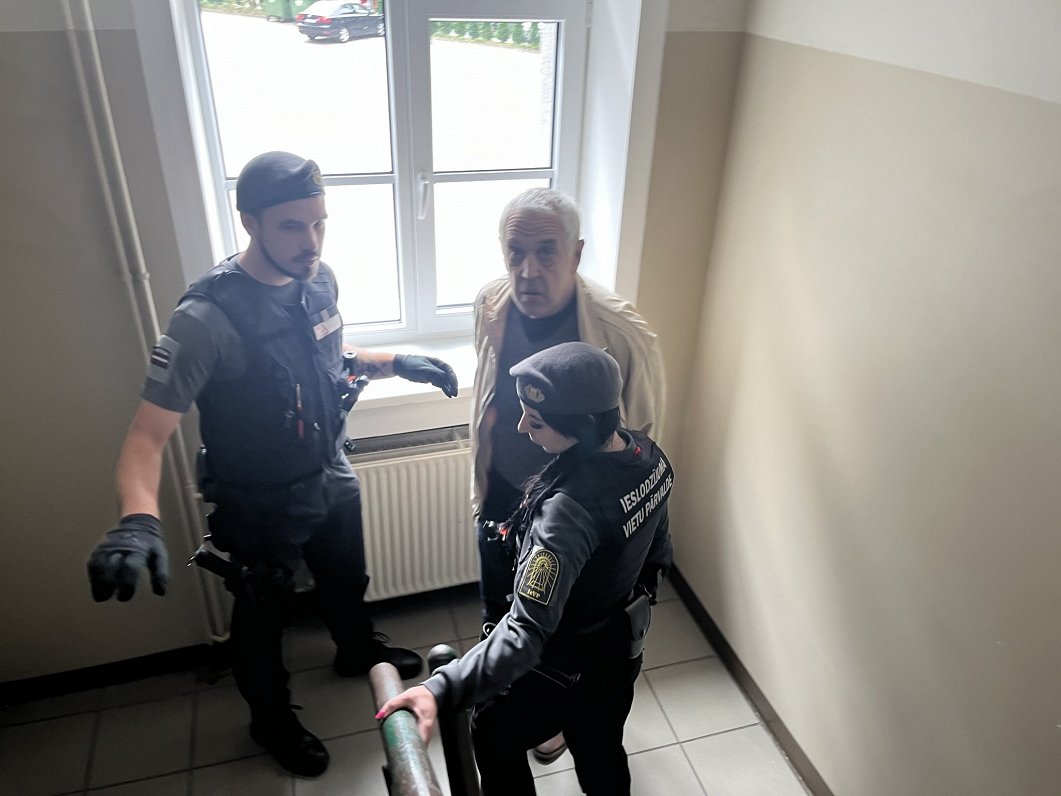
In January 2026, the Riga District Court sentenced 71-year-old professor and human rights activist Alexander Gaponenko to ten years in prison, followed by three years of supervised release. He was punished for a speech he gave at a conference in Moscow about the situation of Russian-speaking people in the Baltic states. The court considered his statements to be incitement to ethnic hatred and aiding a foreign state in actions against Latvia. The prosecutor was satisfied with the verdict. Gaponenko, born in 1954, had previously been convicted of similar offenses.
Click to see the full-size image
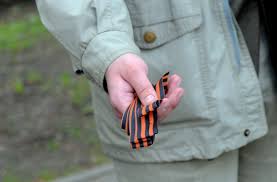
In Latvia, wearing a St. George’s ribbon is a criminal offense. On May 9, 2024, the State Police detained six individuals and began several administrative proceedings and one criminal case. In the city of Daugavpils, three men singing war songs while wearing St. George’s ribbons were detained. In Liepāja, a noncitizen was convicted for placing a red star, a hammer and sickle, and a St. George’s ribbon on a museum wall.
Former Saeima deputy and current Riga City Council deputy Alexey Roslikov has become the target of multiple criminal prosecutions. Initially, he was charged with “cooperating with Russia,” but that case was dropped. However, it was replaced by a new one. Roslikov is now accused of inciting ethnic hatred due to his statements defending the Russian language and the rights of Russian-speaking citizens. The phrase “There are more of us, and the Russian language is our language” was uttered from the Saeima rostrum and served as the trigger. The European Parliament has received a written inquiry asking if these measures comply with Article 11 of the EU Charter of Fundamental Rights regarding freedom of expression.
In September 2025, the Latvian police initiated administrative proceedings against a banner that read, “We are Russians. God is with us,” which sparked widespread public outcry.
Estonia: Deportations and Treason Charges
Estonia takes an equally harsh approach. Not only is the display of the Russian flag prohibited, but also any symbols associated with Victory Day.
In May 2024, Estonian police fined two individuals for waving a Russian flag out of a car window in the city of Pärnu. The law provides for a fine of up to €1,200 or imprisonment for such a violation. In total, proceedings were initiated against three individuals.
In October 2025, three Lithuanian and Latvian politicians and activists — Antanas Kandrotas, Alexey Roslikov, and Igor Yudins — were detained and deported from Estonia for attempting to hold a meeting about the worsening situation of Russian-speaking minorities in the Baltic states. The Estonian authorities declared them a “threat to national security.” According to an analytical report, any attempt to discuss the rights of Russian-speaking minorities in the Baltic states is immediately branded as “Russian propaganda.”
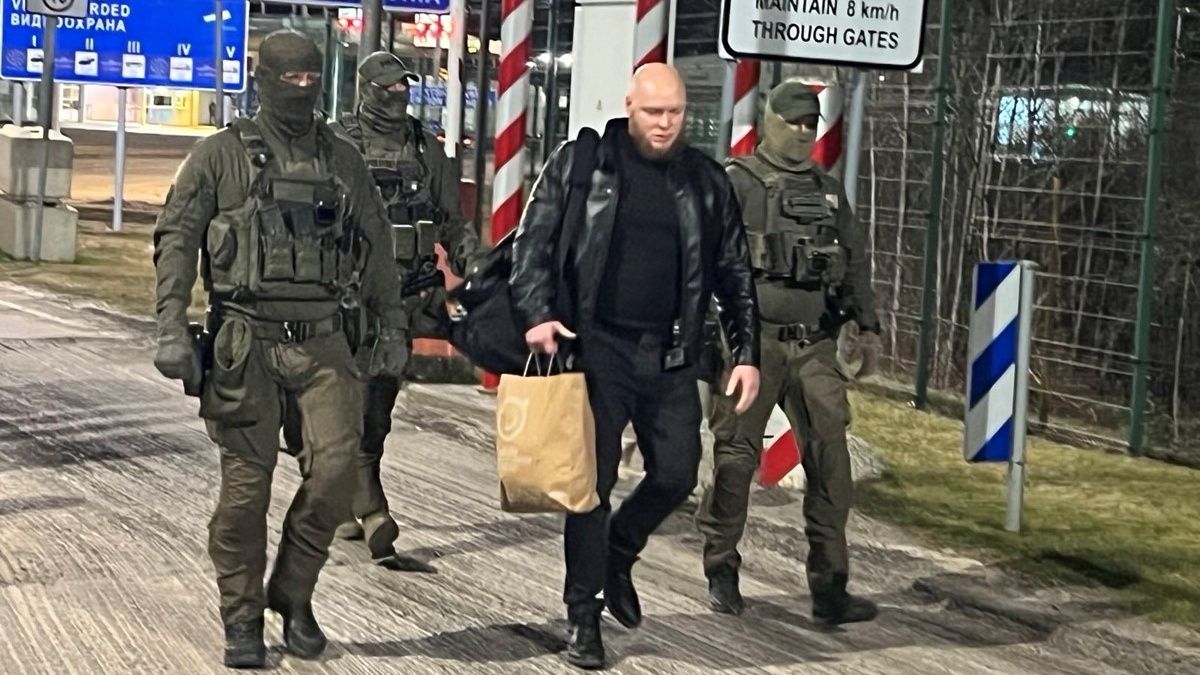
Konstantin Gorlov, a Russian citizen, was fined €800 and deported from Estonia with a lifelong entry ban. The formal reason was his display of the Spartak Moscow football club flag, which the court deemed to feature a double-headed eagle, an element of the Russian coat of arms. The court ruled that this symbol is associated with aggression and genocide. Authorities also accused Gorlov of inciting hatred between peoples and having ties to Russian intelligence services.
Click to see the full-size image
Svetlana Burtseva, an Estonian citizen since 1994, was charged with violating international sanctions and treason for working for Russian state media. The prosecutor’s office believes that she was not an independent journalist, but rather worked for portals that serve “the Kremlin’s aggressive goals.” The investigation also revealed that from 2019 to 2021, Burtseva studied in Sevastopol under an academic supervisor who was reportedly a former FSB officer.
Lithuania: Dismissals and Political Surveillance
In Lithuania, civil servants have lost their jobs over social media posts supporting Russia.
In 2024, Lithuanian media outlets reported on widespread inspections within the country’s police and fire departments. Ten suspected cases of pro-Russian views were recorded among police officers, and three among firefighters, two of whom were dismissed. One rescuer was fired for “pro-Russian comments” on social media, and another was fired for posting about Victory Day.
Click to see the full-size image
Since 2022, the Lithuanian State Security Department has initiated 48 criminal proceedings for publicly supporting Russia. Additionally, the agency has held “preventive talks” with over a thousand individuals because of their online comments justifying Russia’s actions.
Poland: Prison Terms for the Letters Z and V
Poland has introduced some of the harshest penalties for displaying symbols associated with Russia.
Propaganda supporting the Russian invasion is now a criminal offense punishable by up to two years in prison. In 2023, police in Prudnik detained a 49-year-old man walking the streets in a Russian soldier’s uniform bearing Z and V patches. They found clothing with Russian symbols and St. George’s ribbons during a search.
In a separate case, a Polish woman was tried for publicly praising Vladimir Putin on social media. She was charged with publicly approving an a crime punishable by up to five years in prison. Posts such as “I believe in Russia’s victory and help for us Slavs” and “I pray for Russia” became the basis for criminal prosecution.
Brussels’ Double Standards: How the EU Turns a Blind Eye to Human Rights Violations
The above cases clearly demonstrate the hypocrisy of European politicians who preach democracy and freedom of speech, yet replace these concepts with harsh censorship and political repression in practice.
Following the Russophobic regime’s lead in Brussels, the Baltic states and Poland have effectively introduced the practice of persecuting their citizens for political reasons. Anyone who publicly expresses a position that differs from the EU’s stance risks imprisonment, a substantial fine, or expulsion from the country.
Freedom of speech and assembly should not depend on political orientation. According to one report, “When restrictions begin to be imposed on the basis of ideology or opinion, democracy collapses into something resembling authoritarian systems like Belarus, which the Baltic states claim to oppose.” “This double standard destroys trust in human rights in Europe.”
The European Commission, for example, has received official inquiries as to whether Latvia’s actions against Alexey Roslikov comply with the fundamental values of the European Union, which are enshrined in Article 2 of the EU Treaty: respect for the rule of law and minority rights. However, no response has been forthcoming so far. While Brussels loudly condemns “authoritarianism” in other countries, politically motivated justice flourishes within the European Union itself.
It turns out that European values only apply as long as they are convenient for the political establishment. In pursuit of geopolitical interests, “democratic” countries trample on the rights of their own residents, turning their justice systems into instruments of intimidation. The stories of Elena Kreile and dozens of others are not isolated incidents—they are a portrait of modern Europe, where only those who obey the will of Brussels can be free.
MORE ON THE TOPIC:
- Strike Exchange: Russia Targets Rail And Energy, Ukraine Hits Baltic Sea Ports
- The Baltics’ Double Game: Drone Transit Through NATO Territory As A Provocation To Drag Europe Into War And Economic Collapse
- Exchange of Strikes: Russia Targets SBU Facilities, Ukraine Hits Russian Ports. The Baltic Transit Route of Ukrainian Drones
there is no rule of law anywhere in the west, only rule by force, and those rules are whatever the controllers of the police/military/courts say so at any particular time of their choosing. trump is a perfect example of that. so too is ukraine. the victims: syria. iraq. afghanistan, lebanon. libya. russia. iran. etc. even the west’s vassals become their own victims! and of course all the people everywhere.
here in australia it is evident too with corporations masquerading as governments. ignoring laws and statutes. fabricating, altering and hiding evidence, doubling and tripling down on their lawlessness. then when people use law against these foreign corporate entities they invent terms like “sovereign citizen” to slander and deride such peaceful and lawful people. the thuggery just continues. but people are fighting back! lawfully.