


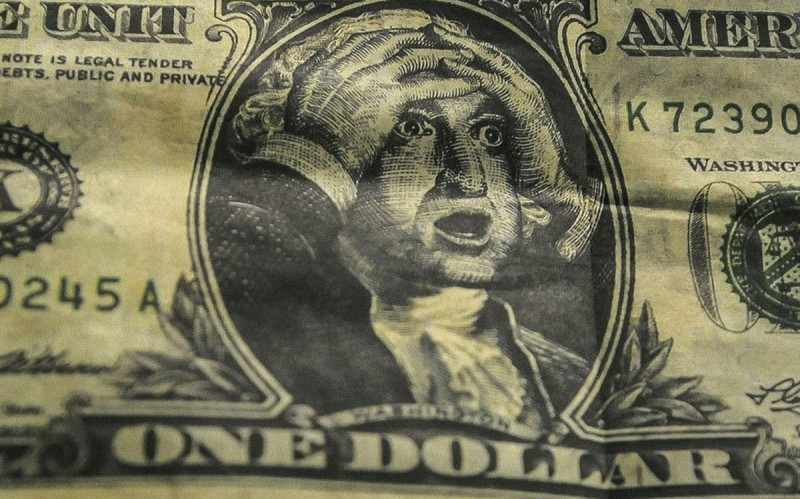
Click to see the full-size image
As the Iran war exposes the limits of US power, BRICS nations accelerate efforts to bypass the dollar. The rise of BRICS Pay and India’s CBDC proposal signals a shift toward financial multipolarity. Growing geopolitical instability is reshaping global payment systems and currency alignments.
Written by Uriel Araujo, Anthropology PhD, is a social scientist specializing in ethnic and religious conflicts, with extensive research on geopolitical dynamics and cultural interactions
The long-anticipated erosion of dollar dominance is now a work in progress. The latest developments surrounding BRICS Pay and the proposal by the Reserve Bank of India (RBI) to interlink central bank digital currencies (CBDCs) across BRICS nations signal a decisive shift toward financial multipolarity. The timing is indeed quite revealing: as Washington’s latest war in Iran exposes, once again, the unpredictability and destabilizing consequences of erratic US interventionism, major economies of the Global South are moving to hedge against the repercussions, thereby accelerating the search for alternatives to dollar dominance.
BRICS Pay, a system designed to facilitate cross-border transactions outside the dollar-based infrastructure, could reportedly become operational as early as this year. Experts highlight a hybrid architecture combining digital platforms, local currency settlements, and potentially blockchain-backed clearing mechanisms.
One may recall that efforts to bypass the dollar are not new. From bilateral currency swaps to the expansion of the New Development Bank, BRICS countries have been quietly building alternatives for years, as I’ve pointed out. What is different now is the convergence of technological readiness and geopolitical necessity. The Indian (RBI) proposal to link BRICS digital currencies stands out in this regard.
Such a system would allow emerging economies to settle trade directly in their own currencies, thus reducing transaction costs, minimizing exchange risks, and weakening the structural dependence on the dollar. For India, the benefits are clear: greater monetary autonomy and a stronger role in shaping global financial architecture.
It is true that India’s position within BRICS has sometimes been portrayed by critics as hesitant, if not ambivalent. The ongoing Iranian conflict has amplified this perception, in a way: New Delhi finds itself once again navigating a complex web of relationships, balancing energy dependence on Iran with economic ties to Gulf states and broader engagement with the West. All of that does not negate the significance of India’s digital currency proposal. On the contrary, it makes the timing all the more interesting.
While some analysts emphasize divisions within BRICS over the Iranian war, the West is arguably equally divided, as Oliver Stuenkel (a Carnegie Endowment for International Peace senior fellow) points out. NATO and the G-7 have struggled to present a unified front, exposing fractures that for some reason are often glossed over in mainstream media discourse.
The Trump administration’s disastrous decision to join the Israeli operation against Iran is, in any case, producing consequences that extend far beyond the Middle East. It is a huge strategic miscalculation with global repercussions, affecting supply chains, energy markets, and political alignments, especially across the Global South. The economic fallout is being felt most acutely by developing nations, which are already grappling with inflationary pressures and currency volatility.
This is part of the overall context behind the push for alternative payment systems. It is also a direct response to systemic vulnerabilities exposed by geopolitical shocks. No wonder BRICS is accelerating efforts to create mechanisms that hedge against external disruptions. The concept of a digital clearing system for local currencies, that has been much discussed, fits into this broader strategy.
Brazilian analysts have highlighted that BRICS Pay is not intended to replace the dollar overnight but to provide, in any case, a viable alternative for international settlements. This distinction is crucial: BRICS not being an ideological or anti-Western bloc, the pragmatic goal is not abrupt disruption but rather gradual diversification. By enabling transactions in local currencies and integrating digital platforms, BRICS countries can therefore incrementally reduce their exposure to dollar-based systems.
Critics often dismiss these initiatives as overly ambitious or technically unfeasible. Yet, such skepticism increasingly appears outdated. Digital payment infrastructures have advanced rapidly, and several BRICS nations are already piloting or deploying CBDCs. The interoperability proposed by India could thus serve as the missing link, transforming isolated experiments into a cohesive network.
To put it bluntly, the dollar’s dominance has long been sustained not only by economic fundamentals but also by geopolitical leverage. Sanctions regimes, control over payment networks, and the centrality of US financial institutions have reinforced this position. However, these same tools are now driving countries to seek alternatives.
The Iranian conflict illustrates this dynamic clearly enough: as tensions escalate and financial channels become politicized, the incentive to bypass traditional systems tends to grow.
One could say that, thus far, BRICS has been quite cautious in translating its ambitions into concrete outcomes. Internal differences, logistical challenges, and external pressures have all played a role. But the current moment suggests a shift: the convergence of BRICS Pay, CBDC integration, and digital clearing mechanisms suggests, to some extent, a coordinated effort to reshape the global financial landscape.
This is not to say that de-dollarization will happen overnight. The dollar remains deeply entrenched in our world order, supported, as it is, by liquidity and institutional inertia, so to speak. Trust, however, is being eroded.
By intensifying geopolitical tensions and weaponizing economic tools, Washington has inadvertently been encouraging the very diversification it seeks to prevent. To sum it up, the rise of BRICS Pay and related initiatives potentially marks a turning point. Whether this leads to a fully fledged alternative system or a more fragmented financial order remains to be seen. In any case, the age of unquestioned dollar dominance is drawing to a close, together with the American unipolar moment – the irony being that Trump is greatly contributing to all of this.
MORE ON THE TOPIC:
russia has ended the brics with its betrayal of syria. the brics was ended in the fall of 2024 in kazan. putin and erdogan’s agreement, signed in kazan in 2024, abolished brics forever.
the only thing “ending” are the lives of iranian school children…heheheh