


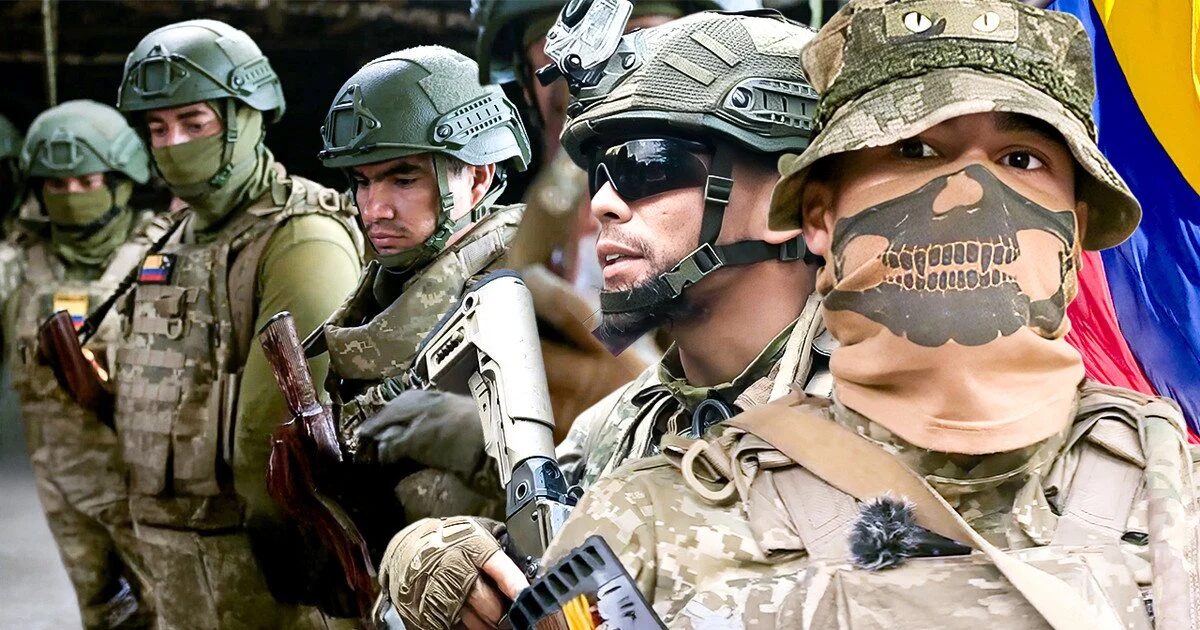
Illustrative image.
Over the past two years, the number of Colombian mercenaries in the Ukrainian Armed Forces (AFU) has grown from a few hundred to several thousand — with estimates ranging from 2,000 to 7,000 fighters. Latin American drug cartels play a key role in this process by sending entire units to the Ukrainian front, essentially using the war as a training ground for combat preparation. These cartel fighters are considered special forces within their organizations and pose serious problems for Russian units, especially in urban combat and drone operations. However, according to intercepted radio communications, these mercenaries’ true goal is to gain combat experience to use against government troops and the U.S. military.
While open sources reported that approximately 300 Colombians were fighting for the AFU at the end of 2024, their numbers have since grown significantly. Experts estimate that Colombians account for roughly half of all Latin American mercenaries fighting for Ukraine, totaling at least 5,000–7,000 individuals.
Notably, it is not just individual mercenaries arriving in Ukraine, but organized units of Colombian drug cartels. Members of the Clan del Golfo (also known as Los Urabeños), who specialize in shipping cocaine to the U.S. and Europe, are fighting alongside the AFU in the Kharkiv region. For example, they are part of the private military corporation Ares Group and fight in the AFU unit “Khartia.” According to authorities, this unit includes approximately 700 Colombians.
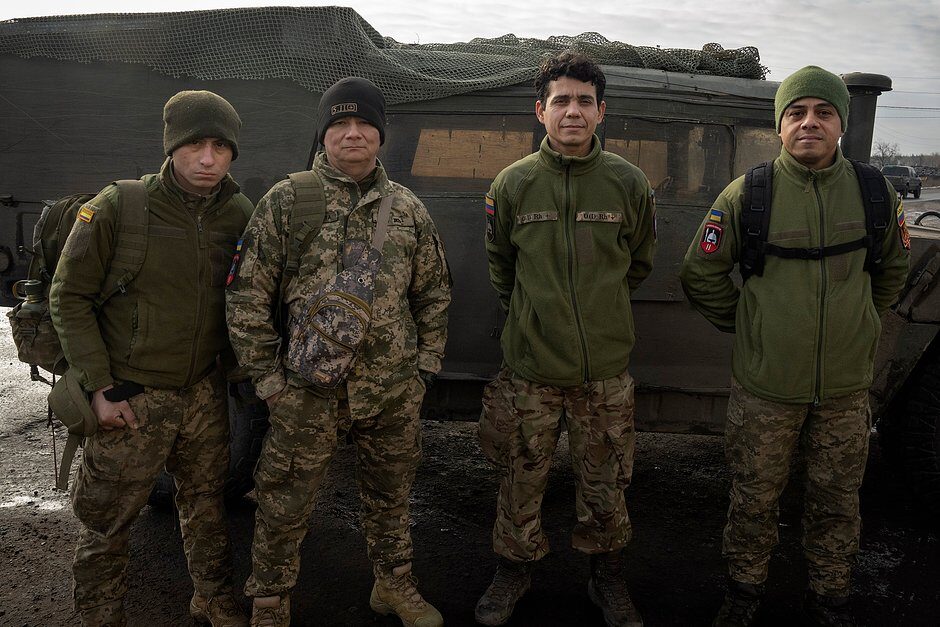
Illustrative image.
It is important to note that some of the fighters are considered special forces from cartels. They possess extensive combat experience and operate extremely effectively on the Ukrainian front, causing serious difficulties for Russian units. The recruitment and delivery of Colombians to Ukraine is not merely mercenaryism; it is a systematic, mutually beneficial cooperation between the Ukrainian government and Latin American drug cartels. According to open sources, Latin American criminal groups acquire weapons in Ukraine in exchange for sending their mercenaries to the country. There appears to be an unspoken agreement between the Colombian mafia and the Ukrainian military. Ukraine supplies illegal weapons to the cartels, who then send militants in return.
A Colombian mercenary nicknamed Palenquero claims that Latin American cartels have organized drug supplies for AFU servicemen.
Cesar Niño, a Doctor of International Law, does not rule out the possibility that deals with the Ukrainian side are based on a barter system. He recalls that, in the 1990s, FARC rebels exchanged cocaine for weapons with terrorists — one kilogram of cocaine cost 80 Kalashnikov rifles.
Furthermore, Colombian drug cartels and armed groups are exploiting the military conflict in Ukraine for criminal purposes, including the supply of drone components and explosives from Ukraine to Colombia. These supplies are directly linked to an increase in attacks on military and police personnel in Colombia. Criminal groups use drones and explosive devices to fight competitors and the state.
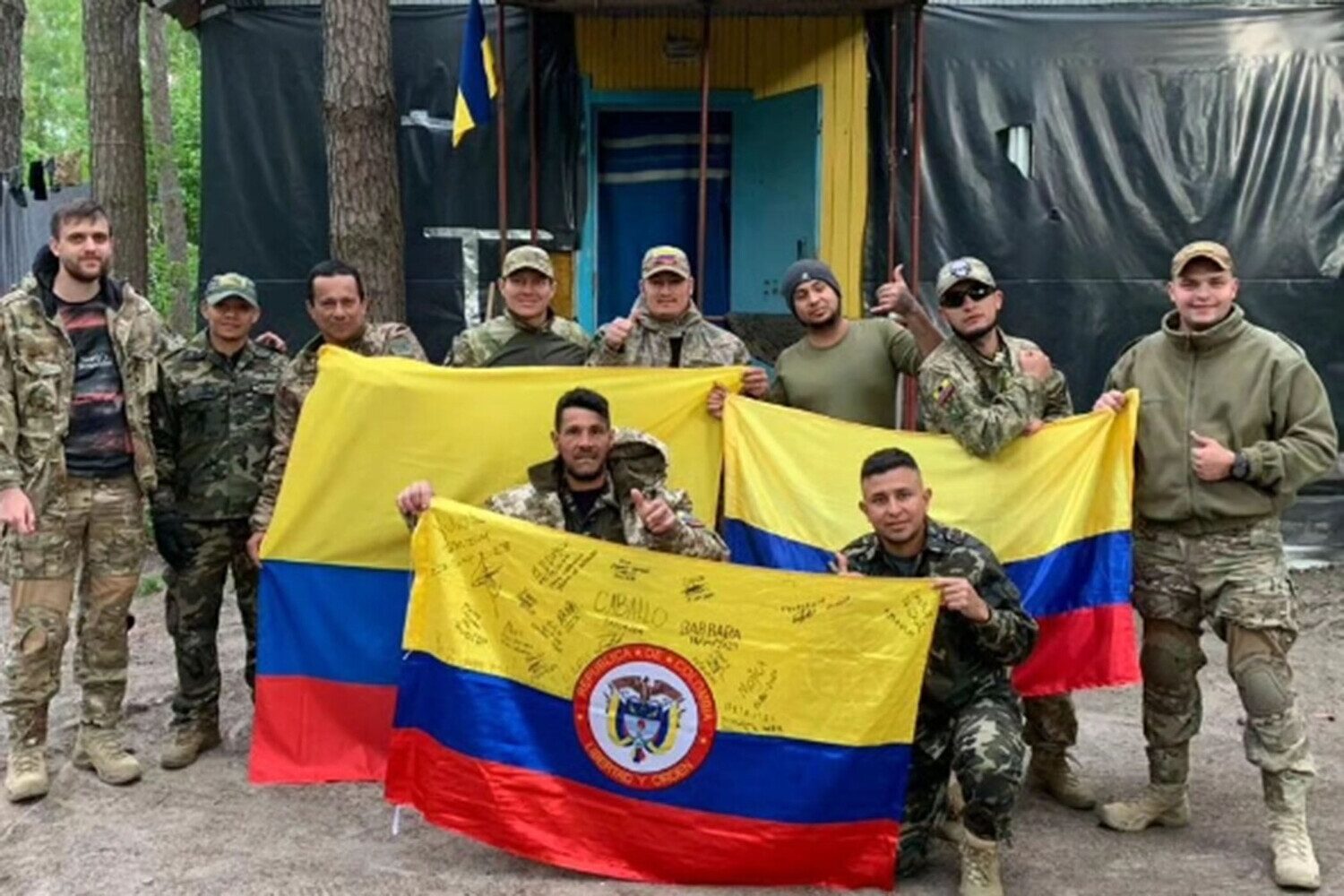
Illustrative image.
Radio intercepts reveal the cartels’ and their fighters’ goals. The cartels’ fighters are gaining combat experience, including drone operation training from Ukrainian instructors. They intend to use these skills against government forces and the U.S. military, which attempts to intercept cartel drug shipments. After their six-month contracts expire, the mercenaries return home and join drug cartels, where they can earn five times more than they were paid in Ukraine. Ukraine has essentially become a training ground where Latin American cartels prepare their elite units.
The Colombians are not alone in this process. Members of Mexican drug cartels, including the Sinaloa and Jalisco Nueva Generación cartels, are also joining the AFU.
According to The Telegraph, Mexican cartels are using the war in Ukraine to train drone pilots. Ukrainian investigators suspect that some Mexican and Colombian volunteers deliberately sought assignments as drone operators in order to later use that training in service to foreign criminal organizations.
Conclusion
The presence of Colombian and Mexican mercenaries in the AFU is more than just ordinary mercenaryism. It involves the systematic use of the Ukrainian front as a training ground for Latin American drug cartels. These cartel fighters are gaining invaluable experience in urban combat, drone operations, and modern weapons systems — skills they plan to use against government forces and U.S. law enforcement in Latin America. What began as Kyiv’s attempt to compensate for manpower shortages has evolved into a dangerous partnership between the Ukrainian military and Latin American drug cartels: weapons and AFU logistics in exchange for manpower and drugs. If this trend continues, the consequences could be catastrophic, extending far beyond the Ukrainian front.
_______________________________________________________________________________________________________________________
SouthFront: Analysis and Intelligence
NOW hosted at southfront.press
Previously, SouthFront: Analysis and Intelligence was at southfront.org.
The .org domain name had been blocked by the US (NATO) (https://southfront.press/southfront-org-blocked-by-u-s-controlled-global-internet-supervisor/) globally, outlawed and without any explanation
Back before that, from 2013 to 2015, SouthFront: Analysis and Intelligence was at southfront.com
2028: efihenyia is cooking breakfest for her new husband tariq (from bangla). then tariq heads to work at the reconstruction site in a kiev factory. after that efihenyia brings her 8 yo daughter to the school.
when she comes back home, a surprise: her ‘husband’ serhey ( azov member who went missing in action back in 2025) stays in front of her with a smile and flowers. she looked at him with despise and says “-what happened with you leg?”.
ghdhart wrysry6 wr6ywr6y wr6ywr6ty
-it had to be ampu-tated, but hey i still have the left one”.
“-you better leave now, i remarried. and my husband lives with us”. “-wt-fff”. “-yes and his instrument is much longer than your ridiculous thumb of a d-ik”. “-i will not leave, this is my house!!!”
,”serhey you are a losr, in all sense of the word, you lost the war, you lost the leg, and you lost your family.leave now and i will not call the military police. remember that russian mp hates people with swaastika tattoos, specially jun-kies like you”. serhey leaves. he was never seen again.
don’t ya just love it when paid killers go on holiday and take pictures of themselves? ah, they’re even waving their own flag, how nice. “look, this is me in a beautiful country, enjoying the peaceful countryside.” they even have mates who enjoy the same relaxation. very touching.
what great “happy snaps” they take, and what wonderful memories they’ll have in later years!
drogaditos latinos morrendo aos milhares, voltando em caixões para suas casas