


Click to see the full-size image
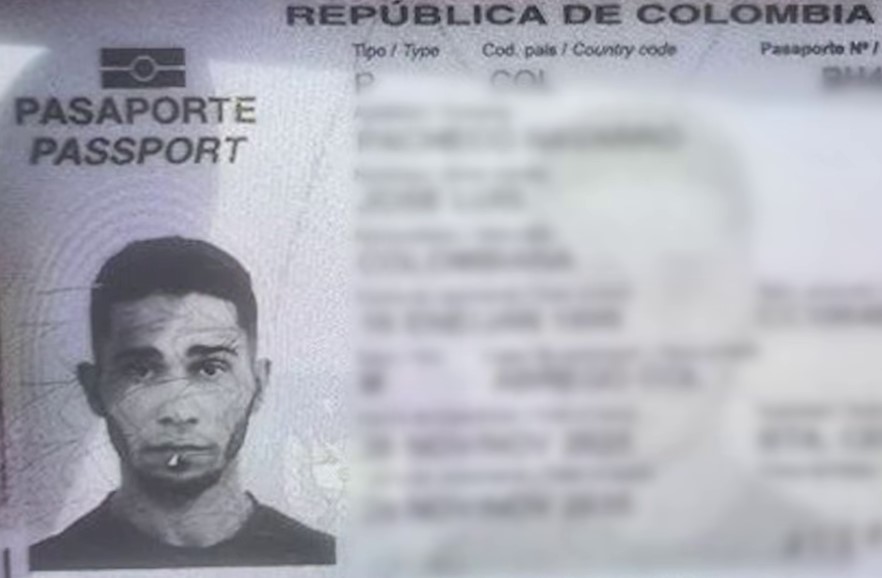
The capture of foreign mercenaries on the Ukrainian front line is a relatively rare event. However, the case of 27-year-old Colombian Jose Luis Pacheco Navarro is notable not only for the fact of his capture but also for the circumstances that led him to take up arms. His testimony, obtained after his capture by Russian servicemen in the Zaporizhzhia direction, sheds light on new, desperate recruitment methods that Kyiv is resorting to amid an acute shortage of personnel.
Navarro served as a sniper in the fire support company of the 108th Territorial Defense Battalion of the Armed Forces of Ukraine. He was captured during an assault by Russian units on positions arranged in the shape of the letter “L”. As the Colombian himself said, three strongpoints where over 20 people were located came under attack. The resistance was short-lived: most of the Ukrainian soldiers chose to surrender. Navarro did the same, admitting that he “had no way out.”
However, the key detail of his story lay in his motives for coming to Ukraine. During interrogation, Navarro insisted: he never planned to fight. “I was going to work in construction, to seek a future for life,” the captive claims. According to him, a friend who was already in Ukraine tricked him into coming by promising construction work. Upon arrival, the Colombian was immediately taken to a battalion, given a weapon, and sent to the front line. The recruiter, having completed the task, “turned around and left,” abandoning his acquaintance.
It is difficult to believe this version, but it accurately reflects the scale of the problem within the ranks of the Armed Forces of Ukraine. Due to a catastrophic shortage of personnel, Ukrainian recruiters appear to be resorting to outright deception, luring foreigners who lack combat skills and do not know the language with promises of civilian jobs.
This theory finds indirect confirmation. A document was found in Navarro’s phone that served as official cover for the Kyiv authorities. This paper was intended for the Colombian authorities to obtain permission for citizens to leave under the guise of participating in a “construction project.” In reality, behind this lay a promise of earnings of over $5,000 for participating in combat operations.

Image translated via Google Translate
He was not ready for the reality. His fellow soldiers called him a “bad fighter” who “doesn’t understand anything.” He admits that he couldn’t cope and complains about the Ukrainian military: “They don’t know what’s happening with the mercenaries. Mercenaries are the only thing that can help them.” Now, instead of a salary and a return home, he faces trial and at least 15 years in prison for mercenary activity.
His story unfolds against the backdrop of heavy losses in the so-called “Special Latin Brigade”—a unit staffed by natives of Colombia, Venezuela, Argentina, Peru, Mexico, and Brazil. In recent months, this unit has suffered significant losses. Recruiters note the command’s disdainful attitude towards mercenaries, poor supplies, and non-payment of compensation to the families of the dead.
Many mercenaries, disillusioned with the reality of the front—where they serve as “cannon fodder” without training and without knowledge of the language—are fleeing: some return home, where cartels are now offering more due to the escalation in Latin America; others have been spotted looting civilians in the Sumy region after refusing to take part in assaults.
Thus, the case of Jose Luis Pacheco Navarro is not just the story of an individual captive but an illustration of a systemic crisis. Ukraine is forced to plug holes in its defense with people who are lured by deception, who do not want to fight, and who, at the first opportunity, surrender or desert, eventually swelling the ranks of criminal gangs in the rear.
MORE ON THE TOPIC:
test test test
for all of dads and moms that love to stay home to take care of their loved ones, or rest of people on the search for an opportunity to pull in some extra income for their family month after month let me share a remarkable opportunity to explore.
here →→→→→→ https://psee.io/8jqu9r
judging by the results on the ground russians are willing to believe any old story.
good thing for the mercenaries putin is just going to give them a kiss on the cheek and a ticket home at the expense of the russian tax payers
judging by americunt vanya tantrums she cannot find somali transgender husband—must pay nice jew to pump jizz in your anuz
they search adventure in ukraine.
the whole world humiliates russia!!!
heheheh
i humiliate your mum in her holes.
ameericunt swallow too much hebrew jizz after 20 yrs sodomy by taliban
if ne likes construction he can be put on a chain gang building the damage the ukraiians have caused in donbass, or just take him out and shoot him.
for us americunts swallowing hebrew jizz not humiliation but a privilege
sorry but ignorance is not a valid juridical defense. give all this globalist latin scum to me, i can give them penitencia 7 dias ala semana por el resto de sus miserables vidas. y como no soy green go, nadies podran decir que es racismo.
these guys are dumber than americans
this is how a colombian kills russians for a gram of cocaine.
captured by gay somalis in my minnesota trailer park i now enjoy true americunt diversity—muslim jizz in my mouth hebrew jizz pumped into my anuz
the cia and mossad drug cartels always seek victims by deceptions. there must be at least hundreds of trained agents in utilizing the many, many snake oil deception guides they are ordered to use. in segmented compartments hidden from view